
The Legendary Graf Zeppelin
In the late 1920s, the world was captivated by the sight of massive airships gliding gracefully through the skies. Among them, none was more famous than the German-built Graf Zeppelin. Launched in 1928 and named for Count Ferdinand von Zeppelin, the pioneering figure of lighter-than-air flight, the Graf Zeppelin stretched an impressive 776 feet and was powered by five engines. At a time when airplanes were still proving their reliability for long-distance travel, the Graf Zeppelin demonstrated that global air travel was possible.
Over nearly a decade of service, the Graf Zeppelin flew hundreds of flights across Europe, North and South America, and even into the Arctic. These voyages carried passengers, cargo, and—most importantly for collectors—mail. Each letter and postcard flown aboard the airship became a piece of living history, marked with special cachets and postal markings that recorded its journey through the skies.
The Birth of Zeppelin Stamps
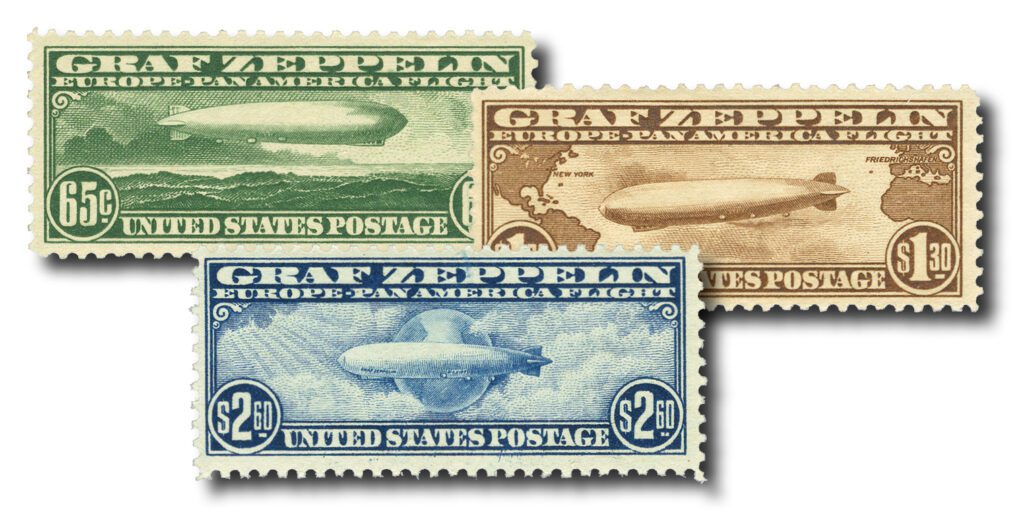
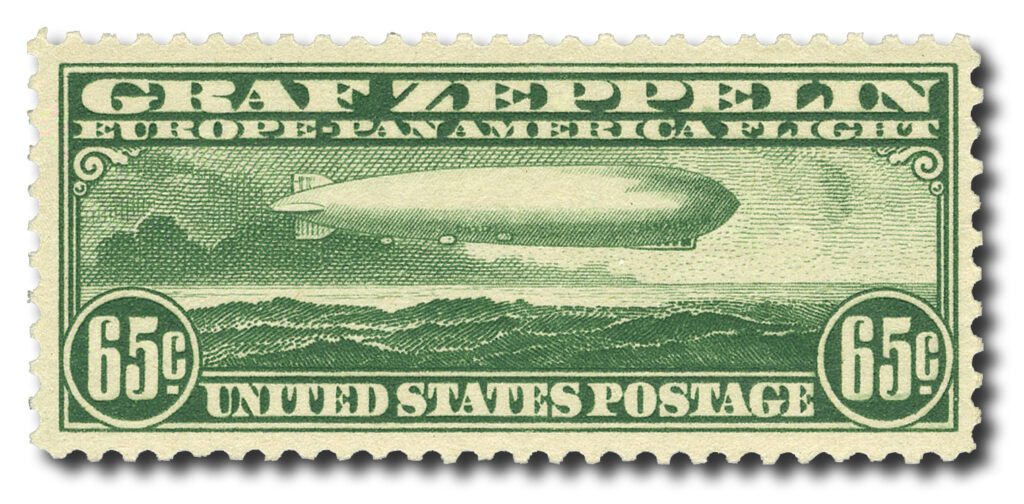
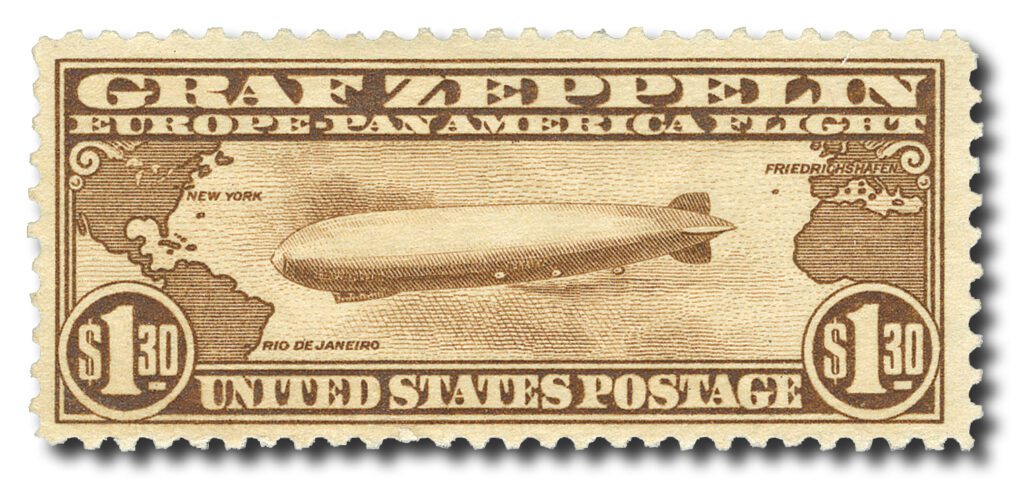
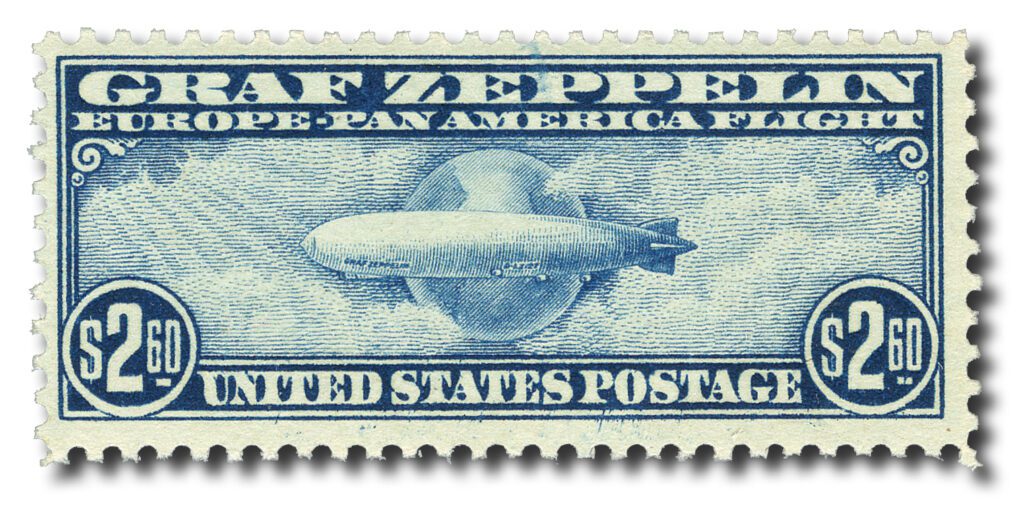
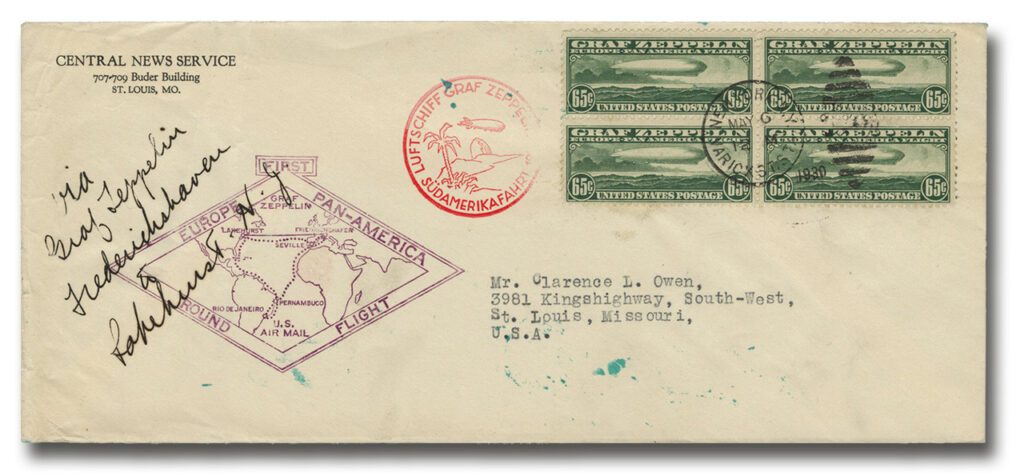
Because the Graf Zeppelin carried so much mail, postal administrations quickly recognized the opportunity to issue special stamps. The most famous of these are the United States Graf Zeppelin stamps of 1930. This striking set of three—65¢ green, $1.30 brown, and $2.60 blue—was produced for the airship’s Pan-American flight, which traveled between Europe and the Americas. The designs showed the Graf Zeppelin crossing oceans and continents, symbolizing the promise of international air travel.
At the height of the Great Depression, however, these stamps were prohibitively expensive. Their combined $4.55 cost was far more than most Americans could afford, and unsold remainders were destroyed by the Post Office. That scarcity has made the Zeppelin set one of the crown jewels of US stamp collecting.
The “Baby Zep”
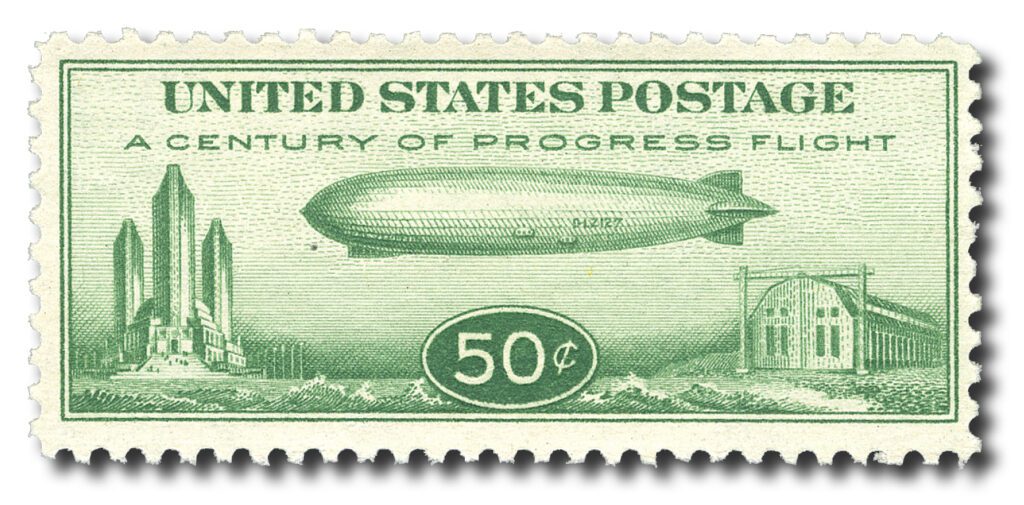
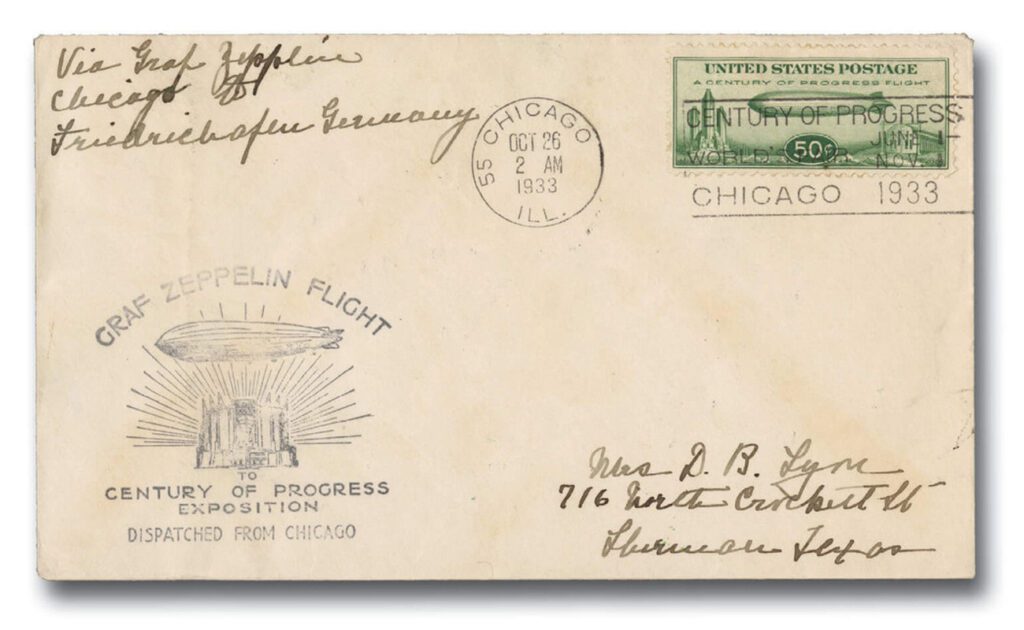
Not every collector could manage the high cost of the 1930 Zeppelin set, so the Post Office tried again in 1933 with the 50¢ “Baby Zep.” Issued to mark the Century of Progress Exposition in Chicago, this smaller and more affordable stamp pictured the Graf Zeppelin over the fairgrounds. While still expensive for the time, it was far more attainable than the earlier set and allowed more collectors to participate in the excitement of Zeppelin mail. The Baby Zep quickly became a beloved issue, and today it remains a favorite for those who want a Zeppelin stamp without the steep price tag of the 1930 set.
Covers Flown on the Graf Zeppelin
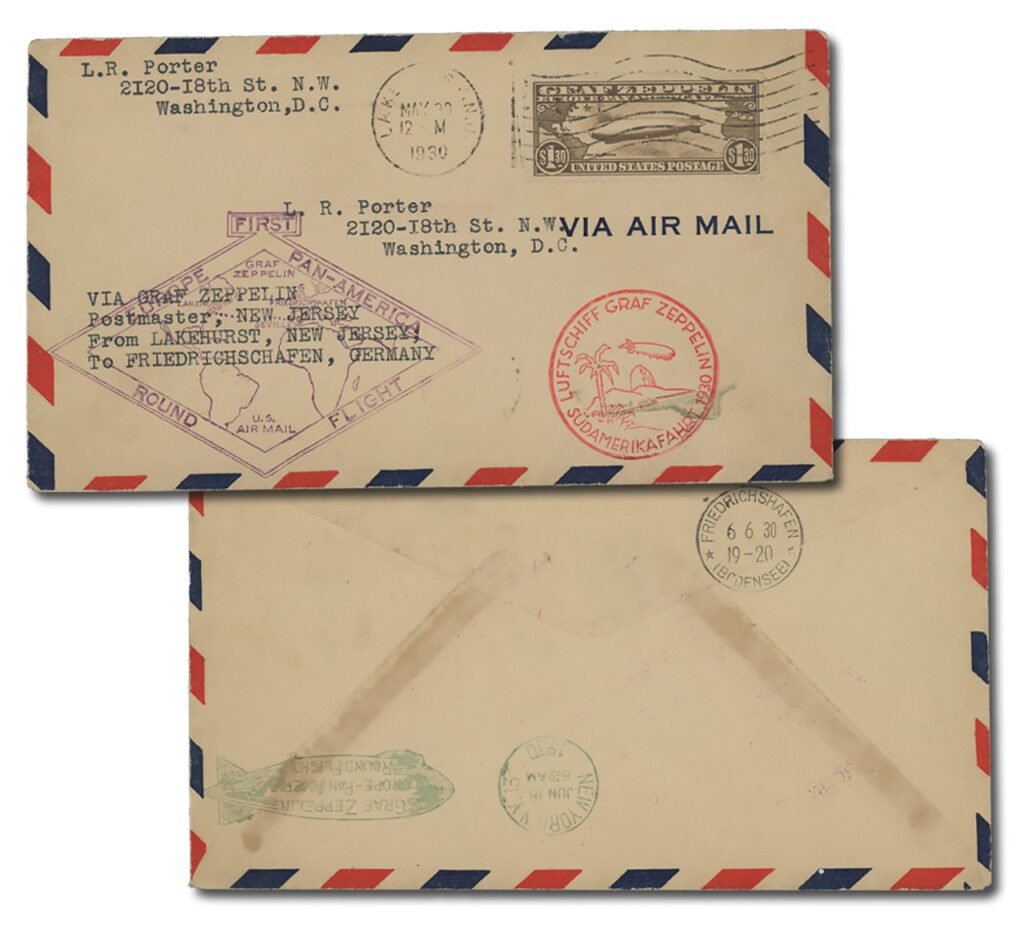
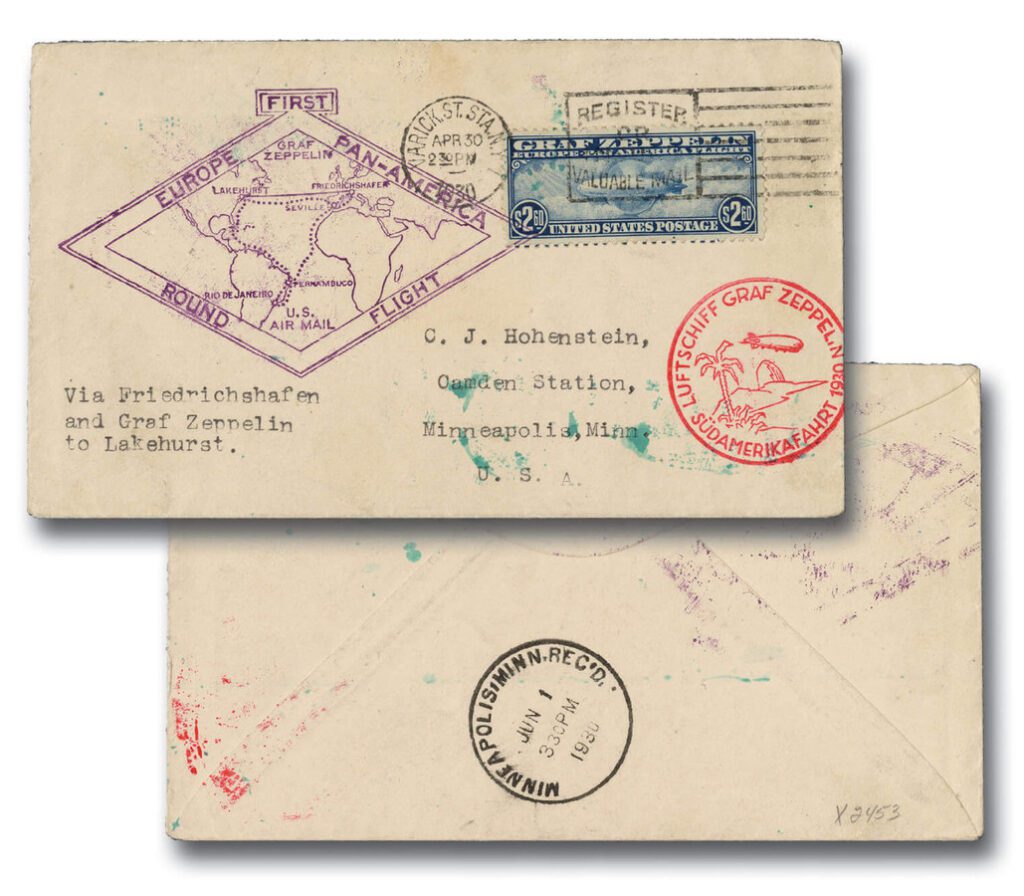
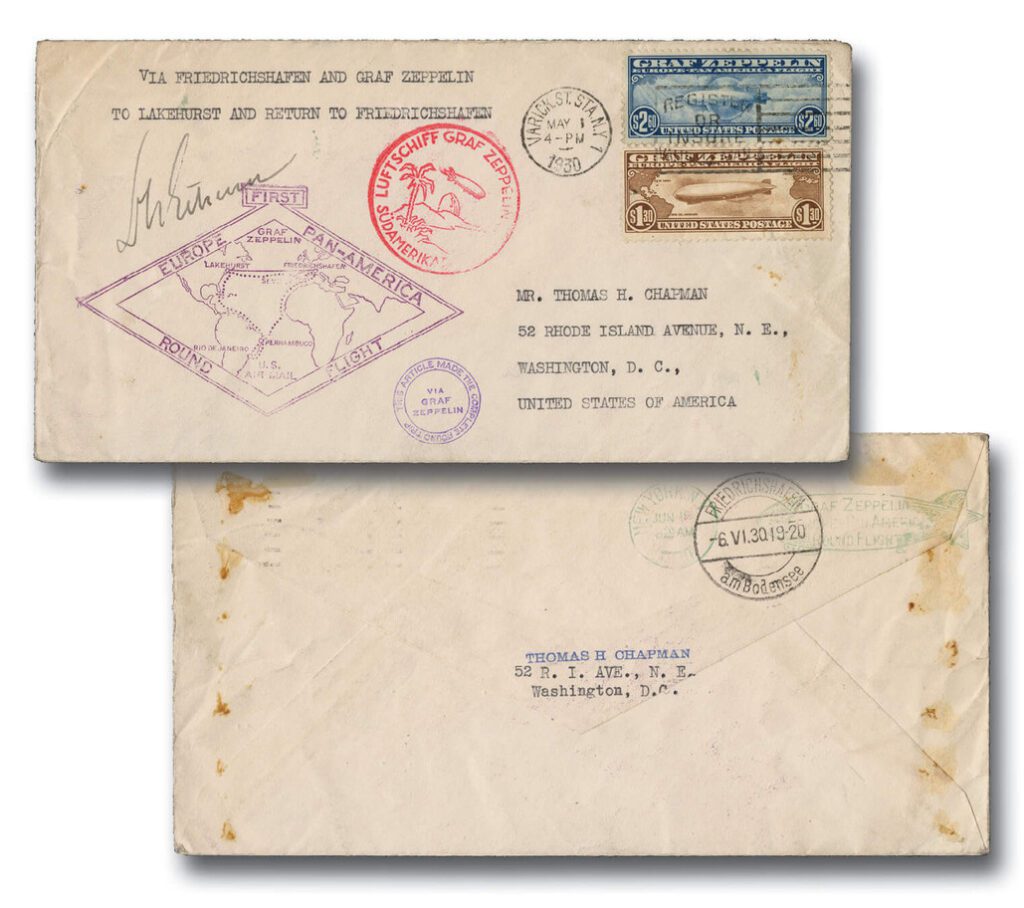
Just as prized as the stamps themselves are covers actually flown aboard the airship. These envelopes and postcards were franked with Zeppelin issues, carried on specific flights, and marked with special cachets or handstamps. Each piece connects directly to a documented voyage of the Graf Zeppelin, making them highly collectible. From transatlantic mail to special event flights, Zeppelin covers allow collectors to trace the routes of one of aviation’s most legendary craft.
Lasting Legacy
Although the golden age of airships ended with the Hindenburg disaster in 1937, the Graf Zeppelin remains a symbol of daring innovation. For stamp collectors, its legacy lives on through the beautiful Zeppelin stamps and flown covers that survive today. These items embody the excitement of an era when the skies seemed limitless, and when a single airship could inspire the world with its size, grace, and promise of connection.
Owning a Zeppelin stamp—whether the scarce 1930 set, the more affordable Baby Zep, or a cover flown aboard the Graf Zeppelin—isn’t just about rarity. It’s about holding a tangible piece of history, a reminder of a time when aviation and imagination lifted human hopes to new heights.