
Explore the History of Spaceflight with Stamps
Collecting space-related stamps is a fascinating way to explore the story of spaceflight around the world, from early rocket experiments and pioneering astronauts to satellites, moon landings, space stations, and deep-space missions. These stamps feature dramatic artwork, detailed spacecraft designs, and major milestones in exploration, making them a favorite theme for collectors at every level. Many space stamps highlight science, engineering, and discovery through memorable scenes of launches, lunar views, and missions beyond Earth. A space stamp collection brings history and imagination together—one stamp at a time.
To view Mystic’s complete collection of space-themed stamps, plus coins and covers, click here.
Get a Flown Cover Carried Aboard the Space Shuttle Challenger
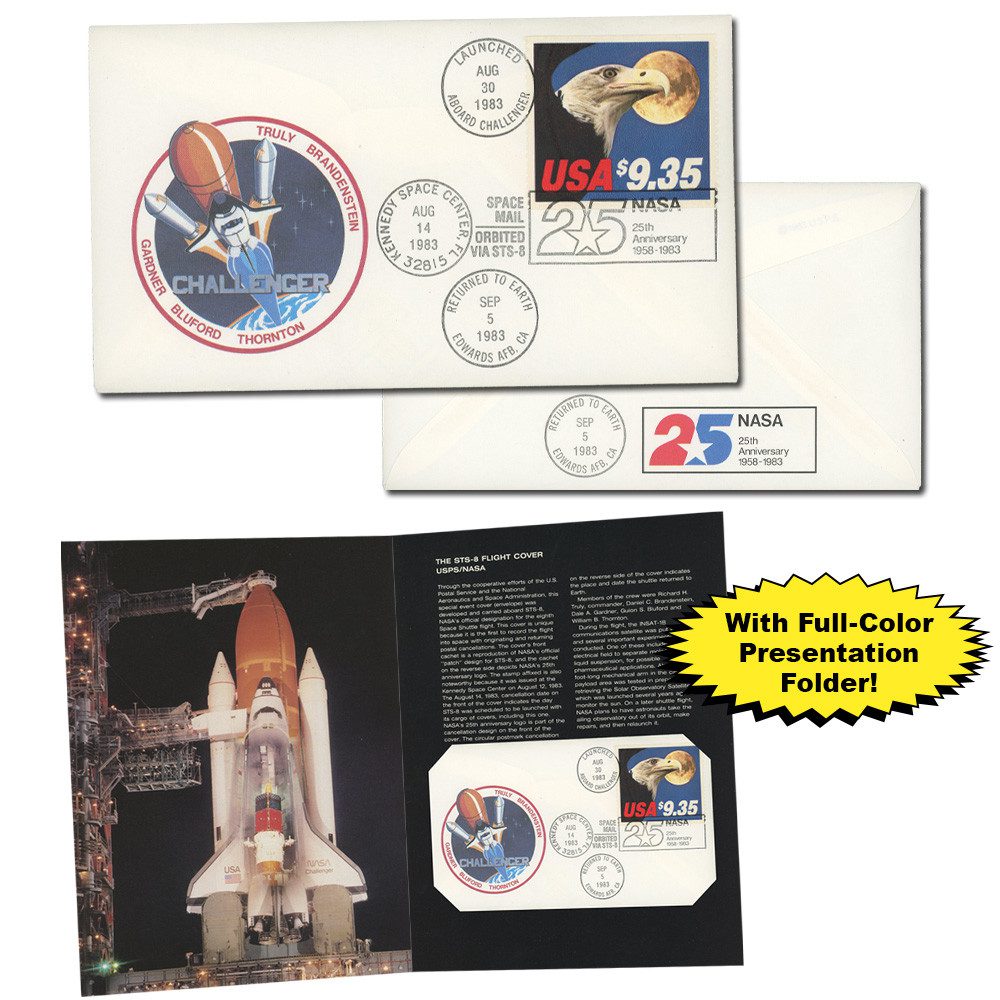
Stamp collectors have always loved items that actually traveled, and the stamp covers flown aboard Space Shuttle Challenger are about as exciting as it gets. These aren’t just souvenirs with a space theme — they’re real pieces of postal history that were carried beyond Earth and brought back again. Just imagining a stamped envelope riding inside a spacecraft, orbiting the planet at incredible speed, is enough to make them feel truly unforgettable.
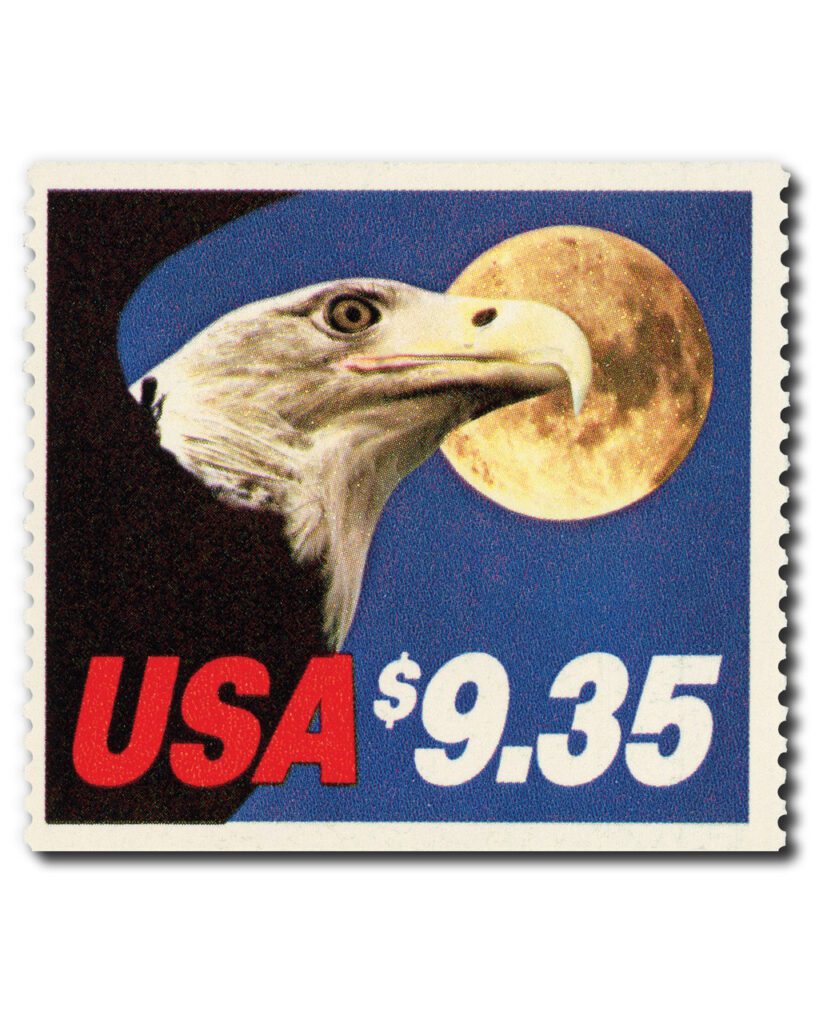
The three postmarks show the day the STS-8 mission was originally supposed to launch (August 14, 1983), the date it did (August 30), and the date it returned from space (September 5). It bears the high-value 1983 Express Mail stamp and the full-color catchet pictures STS-8’s official mission patch.
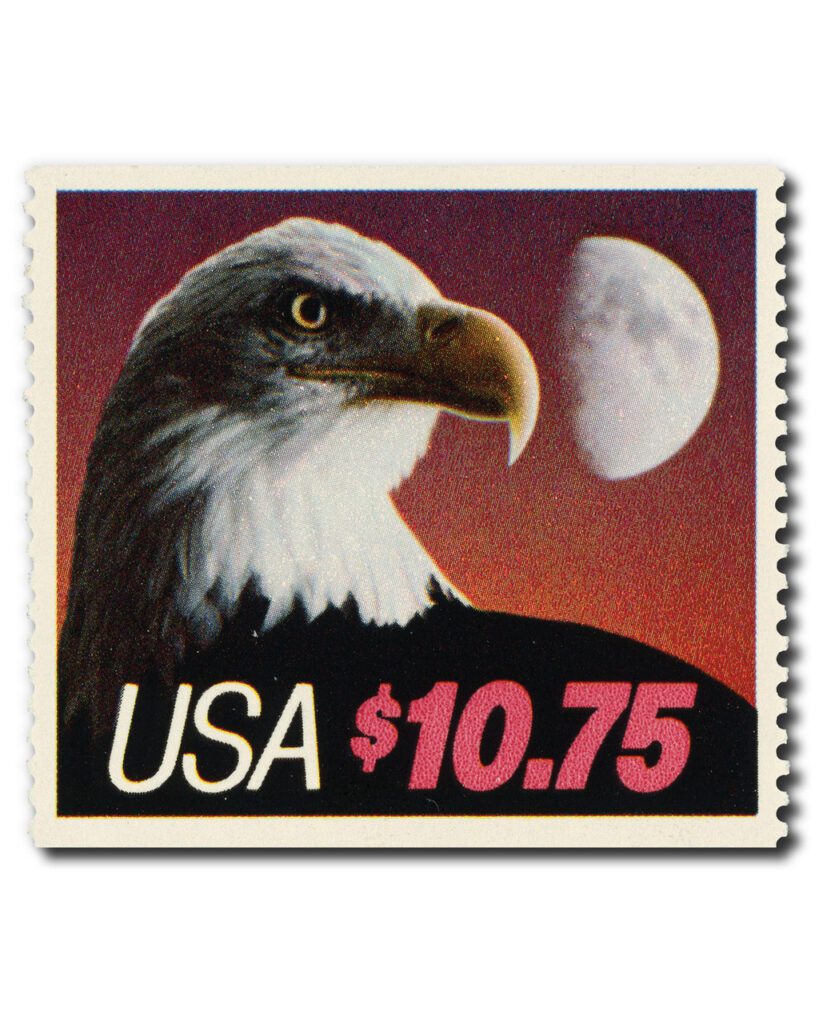
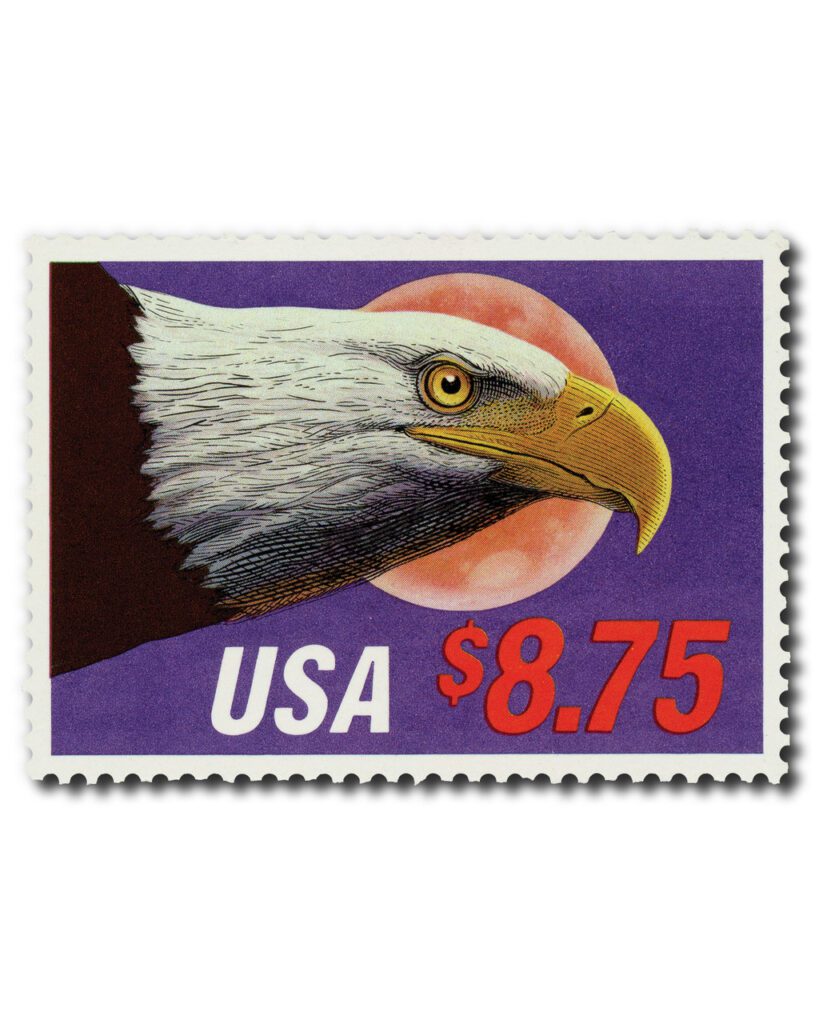
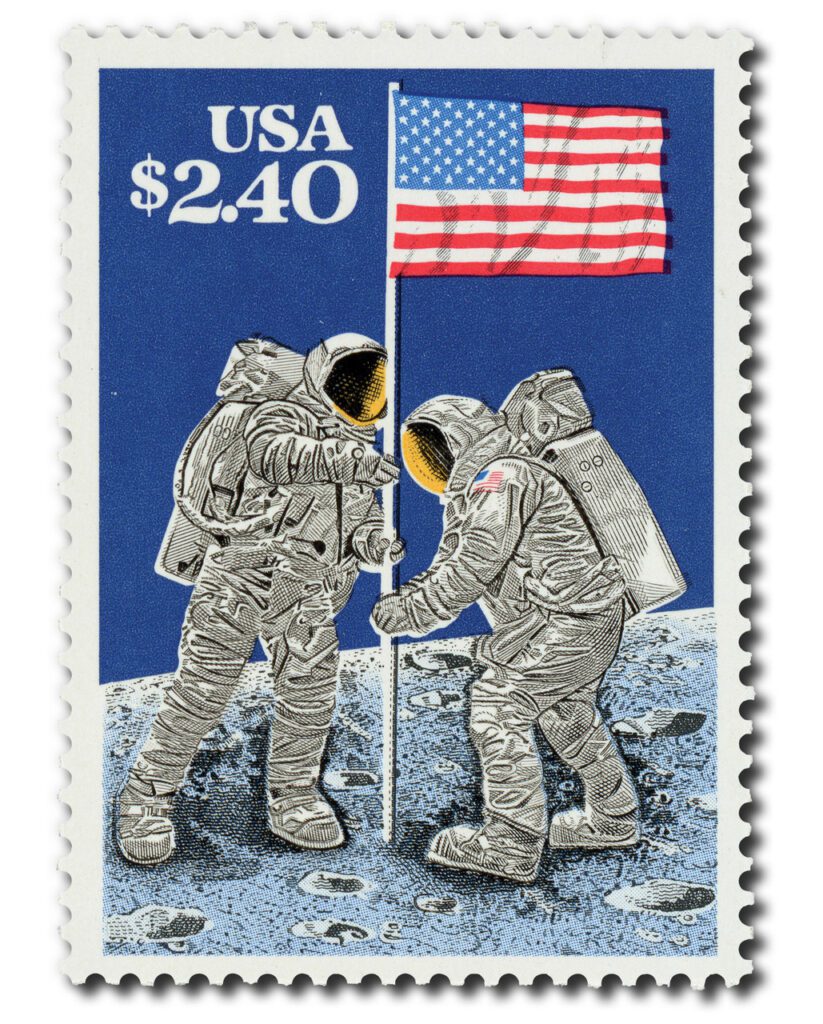
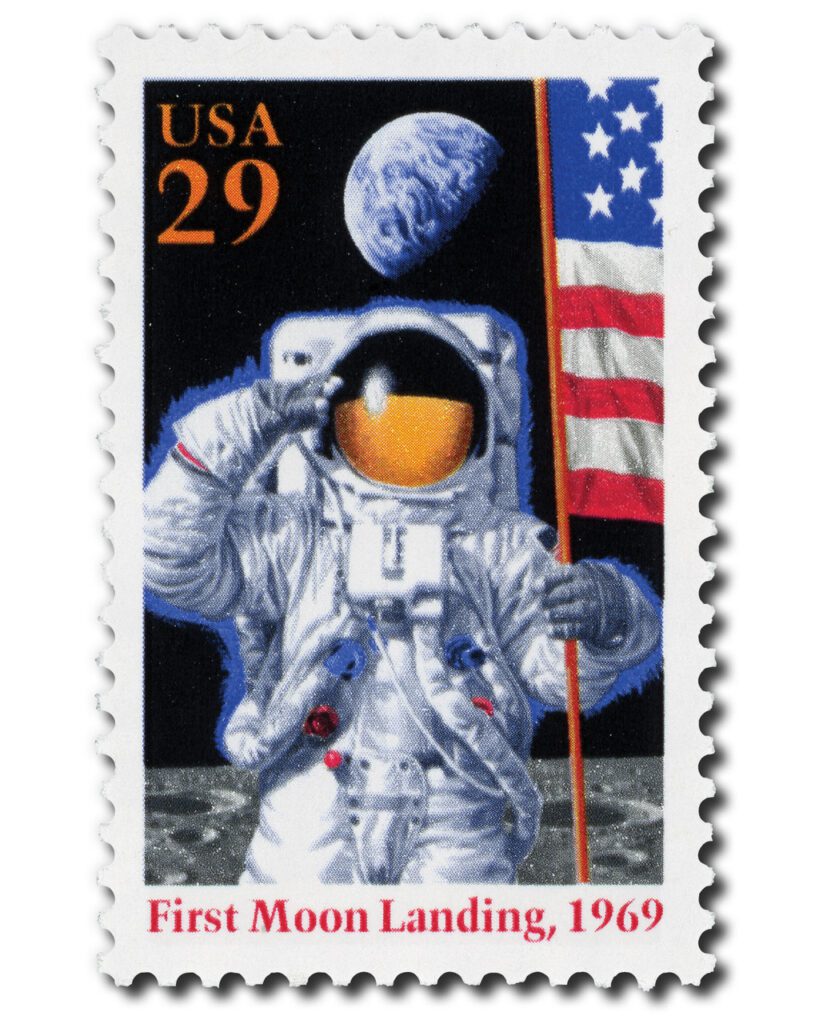
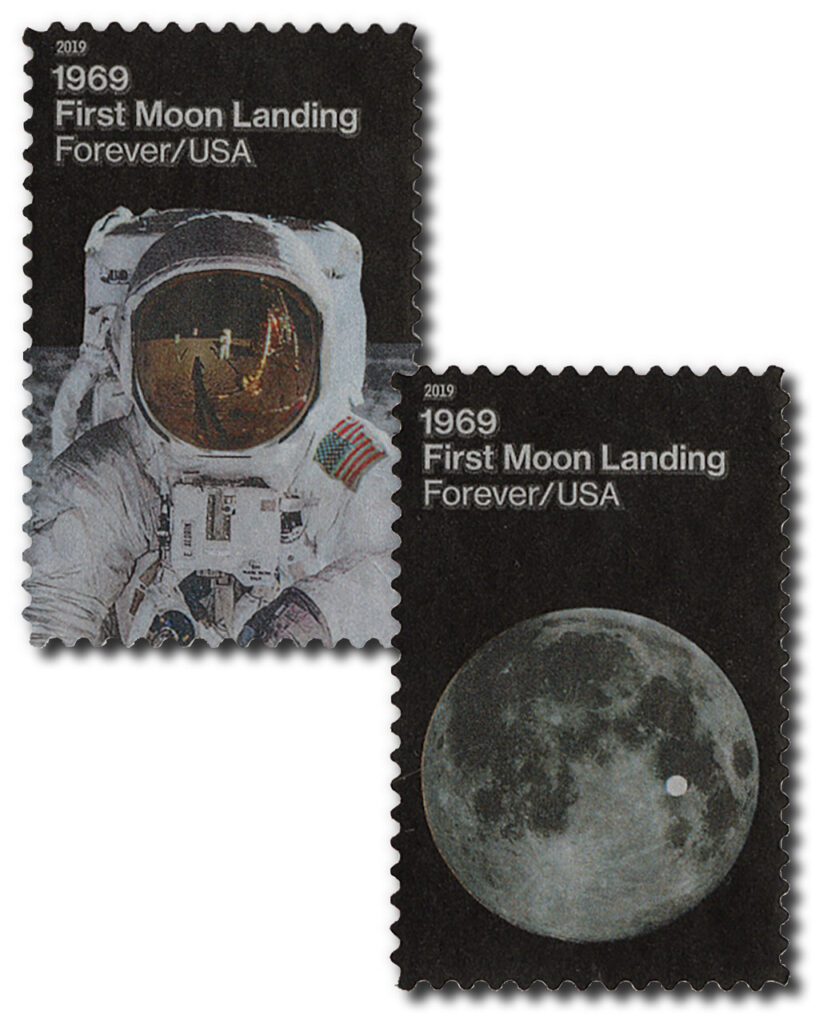
Check out the Eagle and Moon express mail stamp that can be found on this cover, along with the other Eagle and Moon stamps issued, below:
Join Mystic’s Worldwide Space Stamp Collectors’ Club
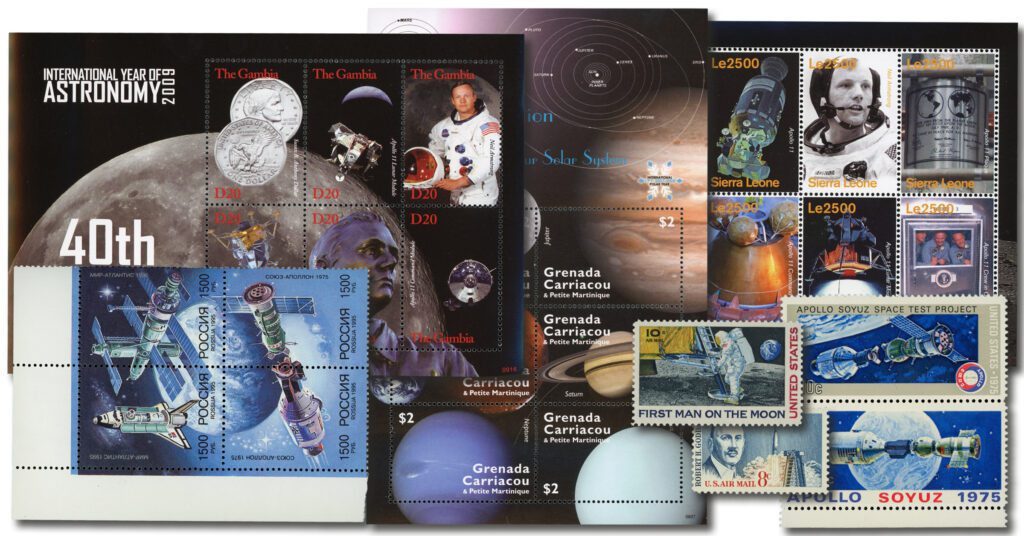
Get the first shipment of Mystic’s Worldwide Space Stamp Collectors’ Club—with a special introductory price of 50% off! The Worldwide Space Stamp Collectors’ Club lets you build a collection of postage stamps issued by countries from around the world in honor of important moments in space exploration. They showcase famous missions like Apollo 11, discoveries of new stars or galaxies, history-making astronauts, and much more. A new stamp shipment will be delivered right to your door every few weeks. Click the link above to learn more.
The 2000 Space Achievement and Exploration Stamps
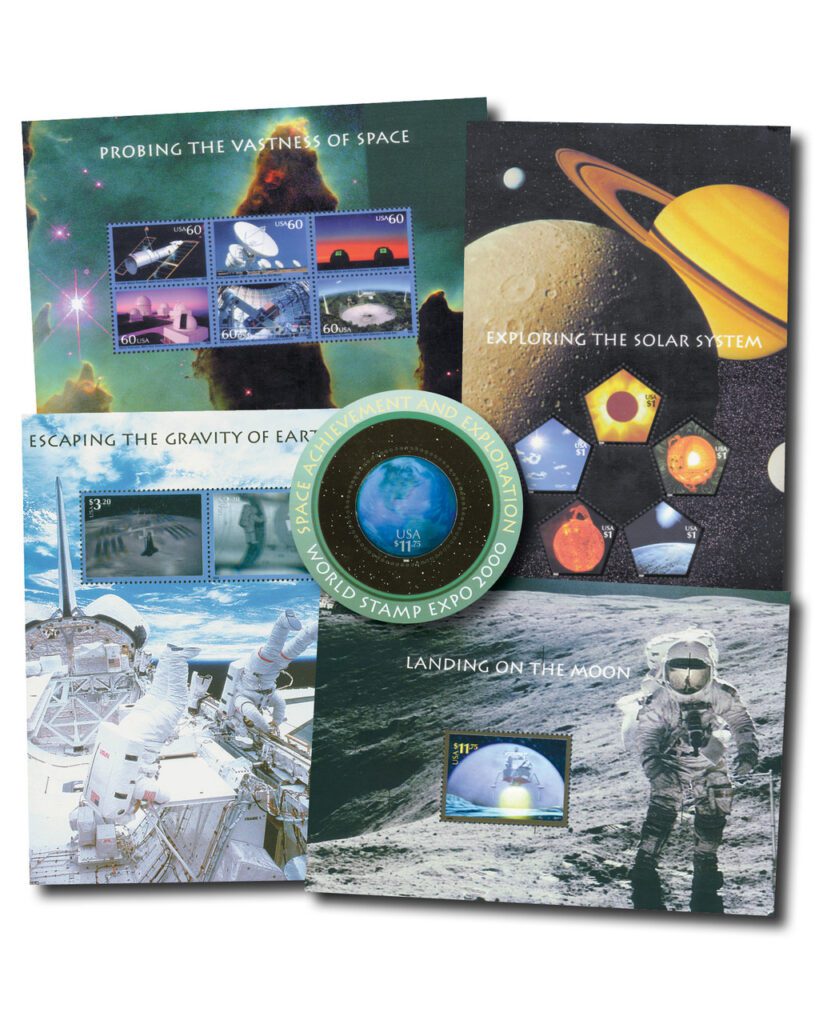
In 2000, the USPS released one of the most eye-catching space-themed issues ever: the Space Achievement and Exploration set, first introduced during World Stamp Expo 2000 in Anaheim, California. Across the set, the designs celebrate the big ideas of spaceflight—human ingenuity, bold launches, and the thrill of discovery—while highlighting classic milestones like landing on the Moon and pushing beyond Earth’s pull.
What makes these 2000 Space stamps especially memorable is how experimental they were as collectibles. The 15-stamp set was created as five souvenir sheets, and it included multiple “firsts” for US philately—most famously, the first US hologram stamp. Even the formats were attention-grabbing, including America’s first round stamp as part of the first round souvenir sheet, and the first five-sided stamps—a perfect match for a subject all about breaking boundaries.
The Space Race & the Moon Landing
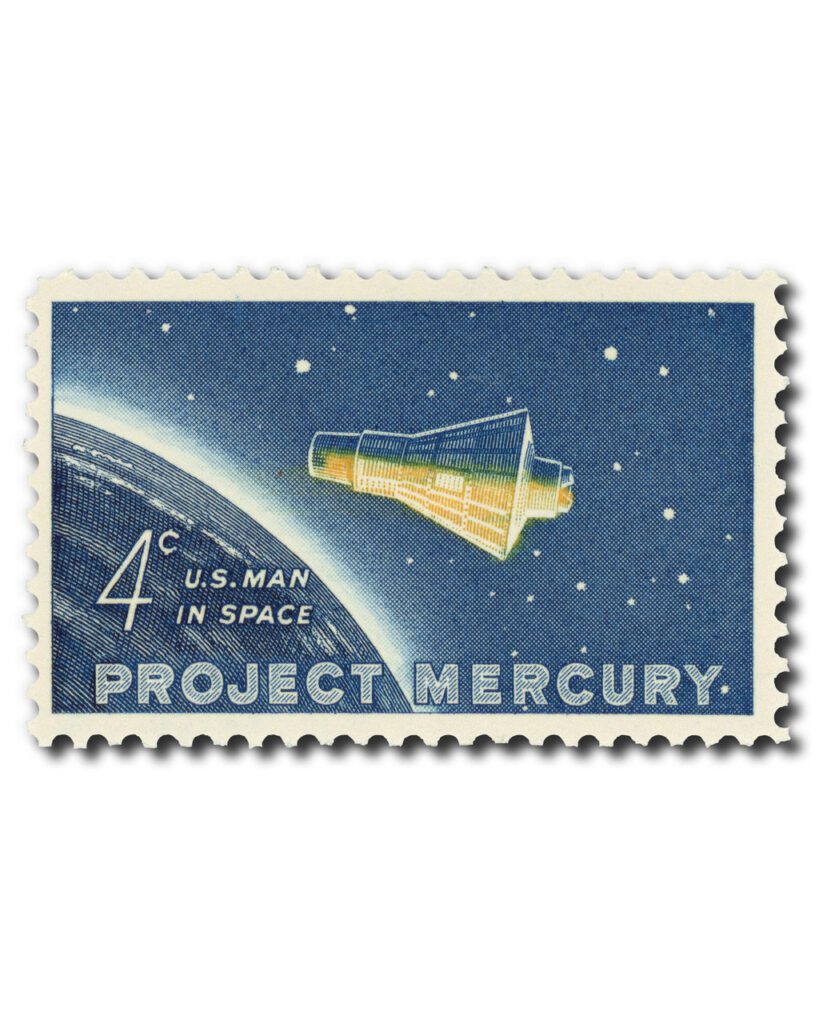
America’s first big step into human spaceflight was Project Mercury (1958–1963), created to learn the basics: launch a person, keep them alive, control the spacecraft, and bring them home safely. It introduced the Mercury Seven astronauts and delivered milestone moments that felt personal to the public, especially when Alan Shepard became the first American in space and John Glenn became the first American to orbit Earth. Mercury wasn’t about reaching the Moon yet—it was about building confidence, skill, and belief that Americans could compete in space and win.
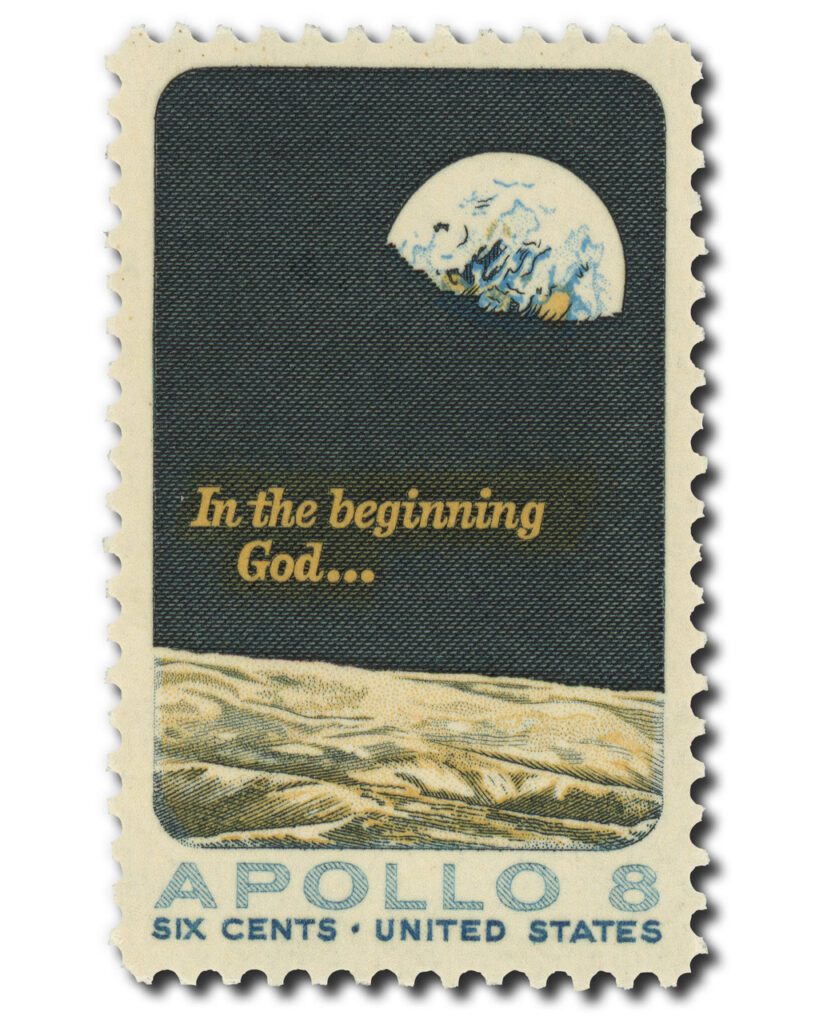
Then came Apollo 8, the mission that changed everything. In December 1968, astronauts Frank Borman, Jim Lovell, and William Anders became the first humans to leave Earth and orbit the Moon, circling it ten times and returning home. For people watching back on Earth it felt like the world had entered a new era overnight. Apollo 8 didn’t land, but it proved the Moon was truly within reach, and it turned a bold national goal into something that finally felt real.
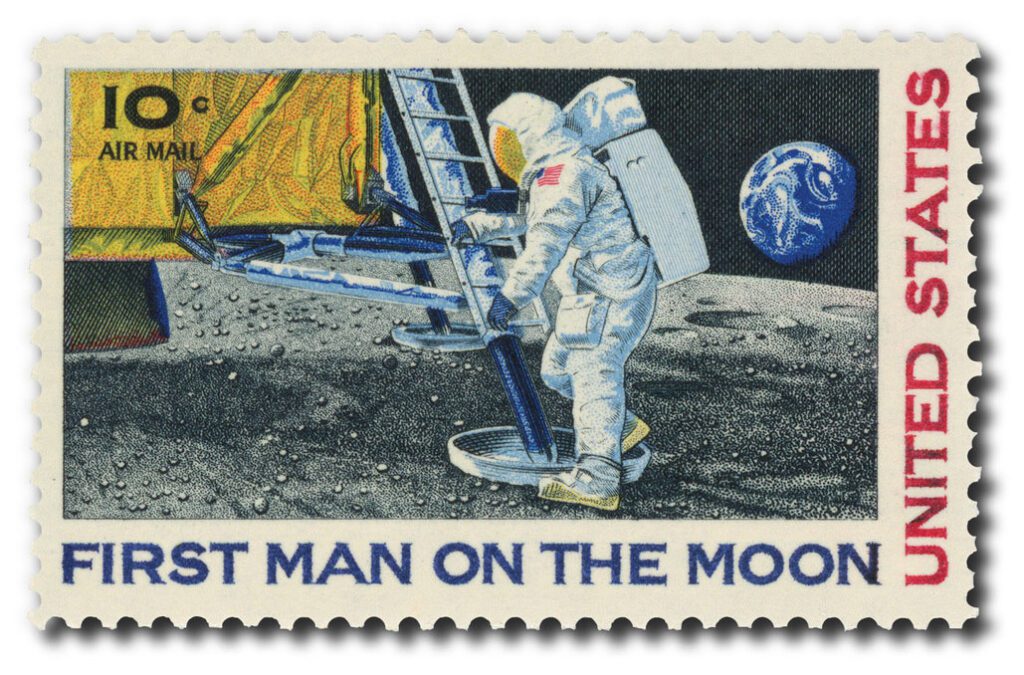
Then in July 1969, the Moon landing felt like the entire world paused at once. Families crowded around TV sets, classrooms followed every update, and millions watched as Apollo 11 made the impossible reality. When Neil Armstrong stepped onto the lunar surface on July 20, 1969, it wasn’t just a scientific breakthrough—it was an emotional moment that made people feel united, hopeful, and proud of what human beings could accomplish when they worked toward something bigger than themselves.
Later that year, the USPS captured that feeling in the 10¢ First Man on the Moon Airmail stamp, issued on September 9, 1969. The design shows an astronaut standing on the Moon with Earth visible in the distance—simple, powerful imagery that reflected what people had just lived through together. For many, it was a symbol of a new era—proof that human curiosity, courage, and determination could turn a dream into history.
Stamps Featuring the Space Shuttle Program
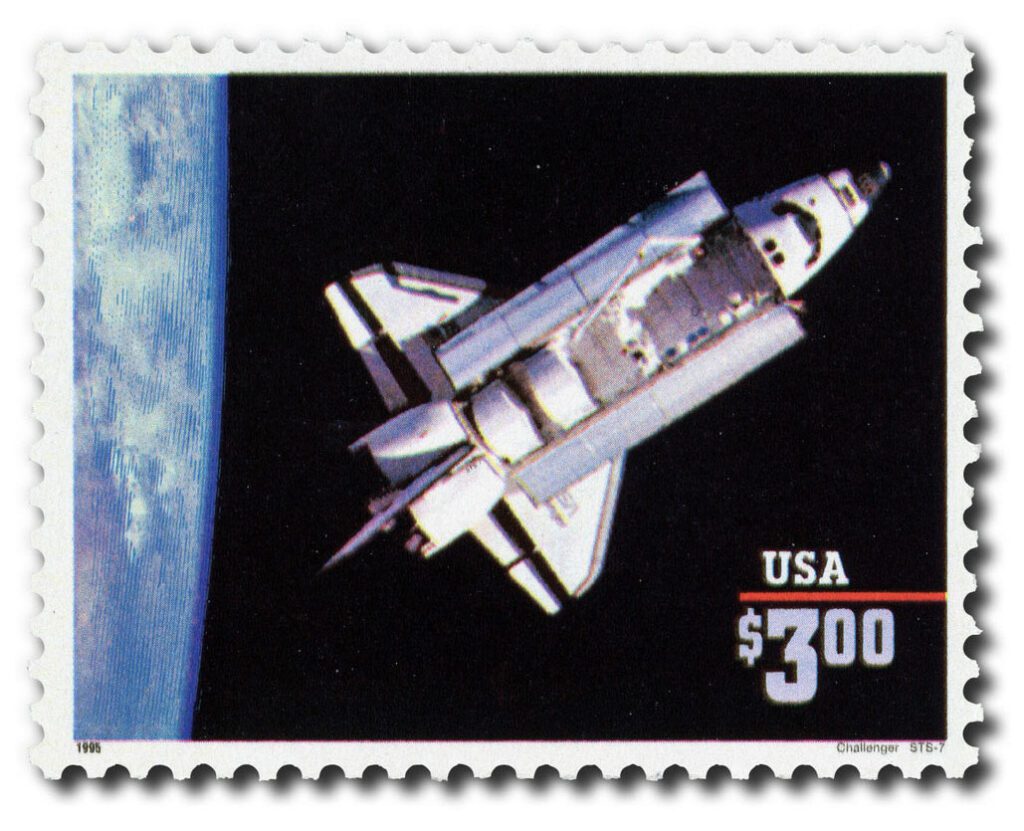
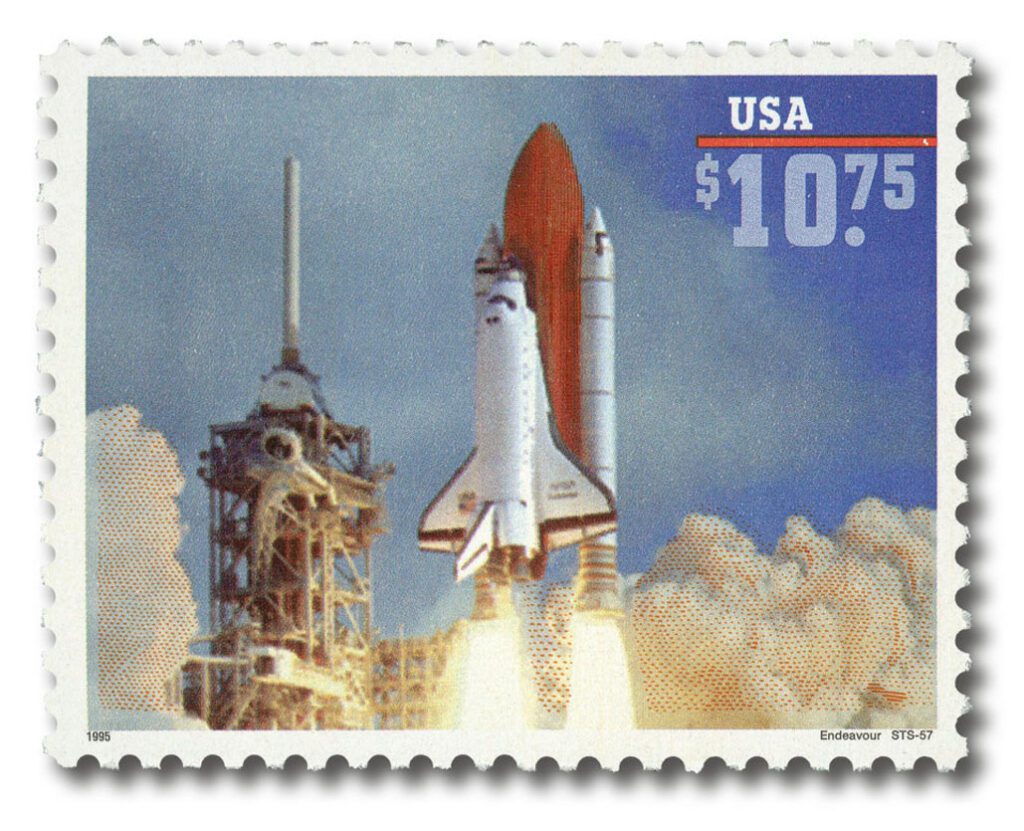
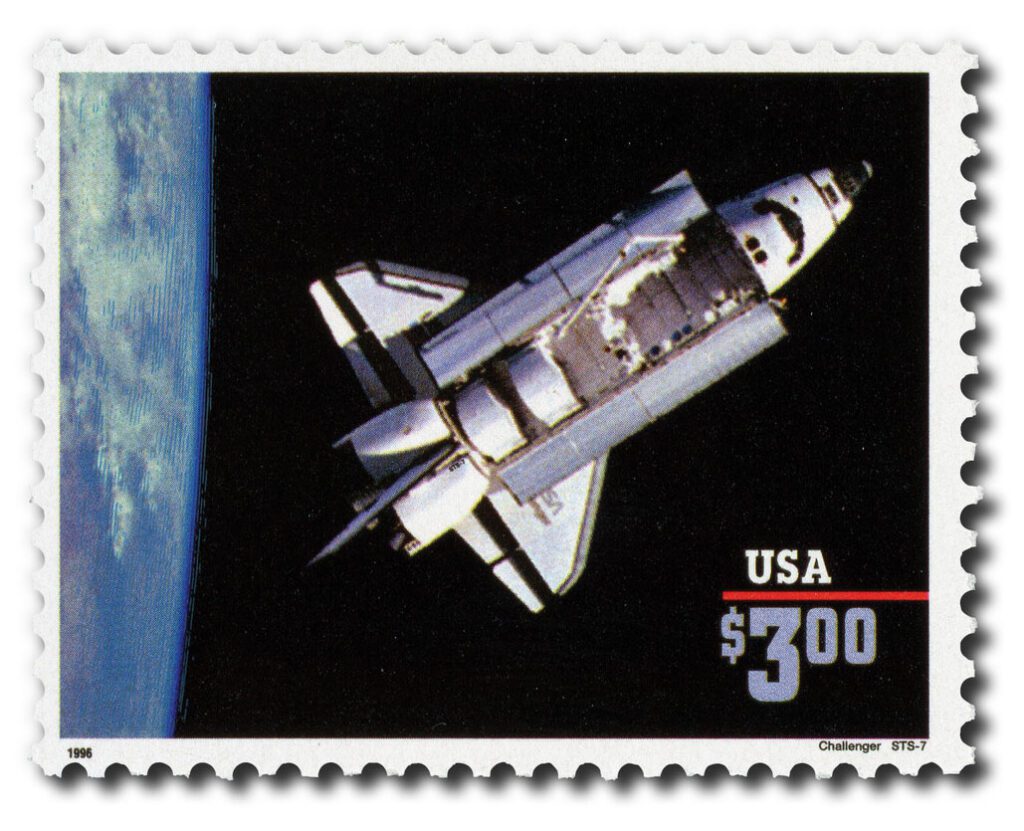
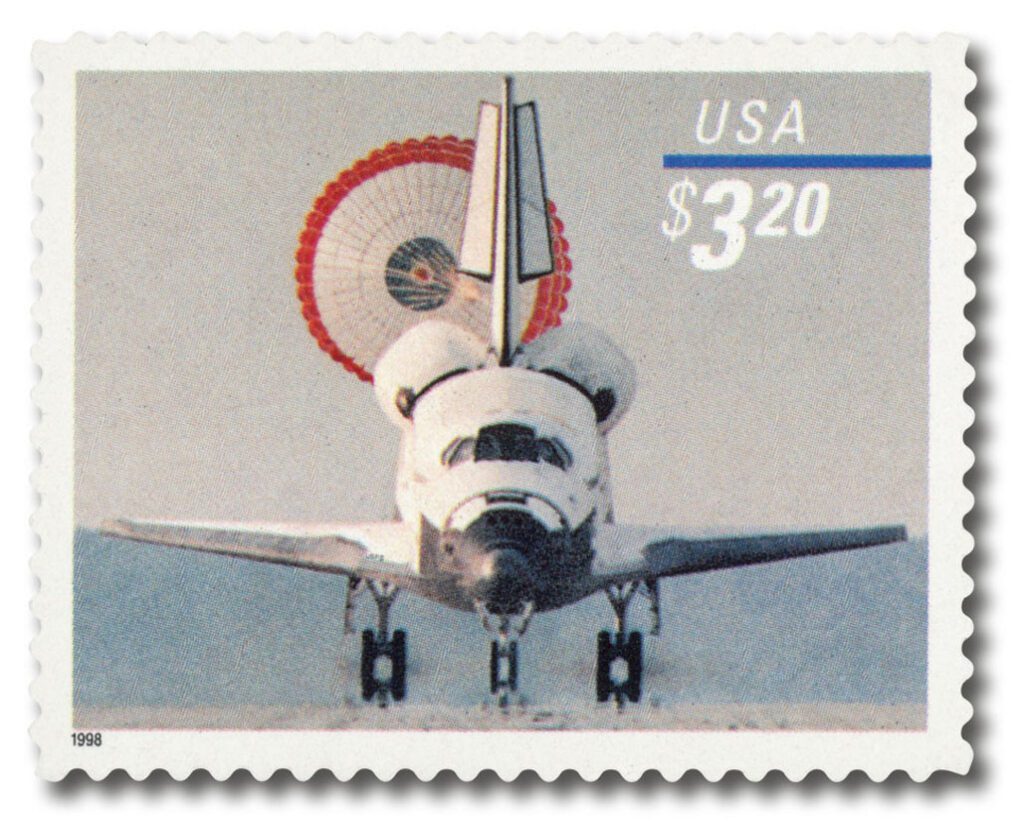
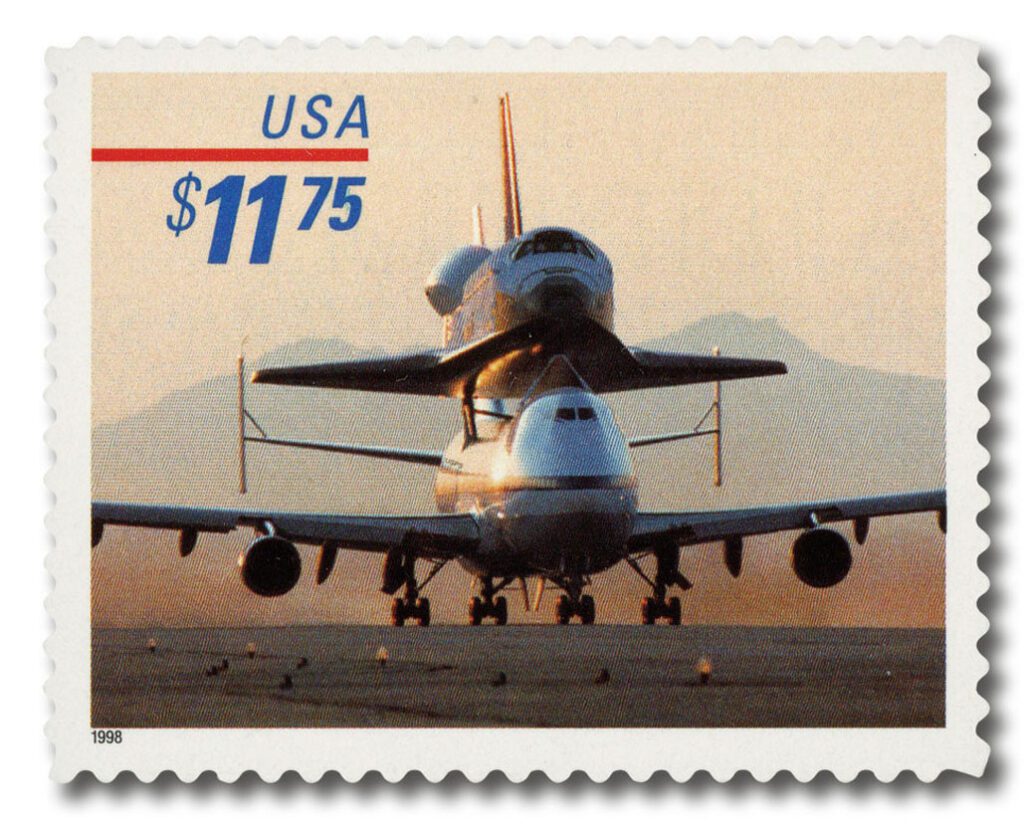
The Space Shuttle program was NASA’s workhorse for more than three decades, reshaping how people thought about spaceflight. Beginning with Columbia’s first launch in 1981, the shuttle introduced a new kind of spaceflight: a reusable vehicle that launched on a rocket and returned to Earth as a glider. It carried astronauts, satellites, and scientific payloads, and it became a familiar symbol of American space exploration. Over the years, the shuttles flew hundreds of missions that expanded our ability to live and work in space, supported military and commercial needs, and helped scientists learn more about everything from Earth’s atmosphere to distant galaxies.
Just as important, the shuttle made major achievements possible that would have been far harder without it. Astronauts used it to deploy and repair satellites, most famously servicing the Hubble Space Telescope and turning it into one of the most productive scientific instruments ever built. The program also played a central role in building the International Space Station (ISS), delivering key modules, equipment, and crew members that helped turn the ISS into a permanent orbiting laboratory. The shuttle era wasn’t without heartbreak—Challenger in 1986 and Columbia in 2003 were devastating losses that changed NASA forever—but the program’s legacy remains enormous. When it ended in 2011, it closed a chapter defined by bold engineering, unforgettable missions, and a lasting impact on space science and human exploration.
US-Soviet Cooperation on Stamps
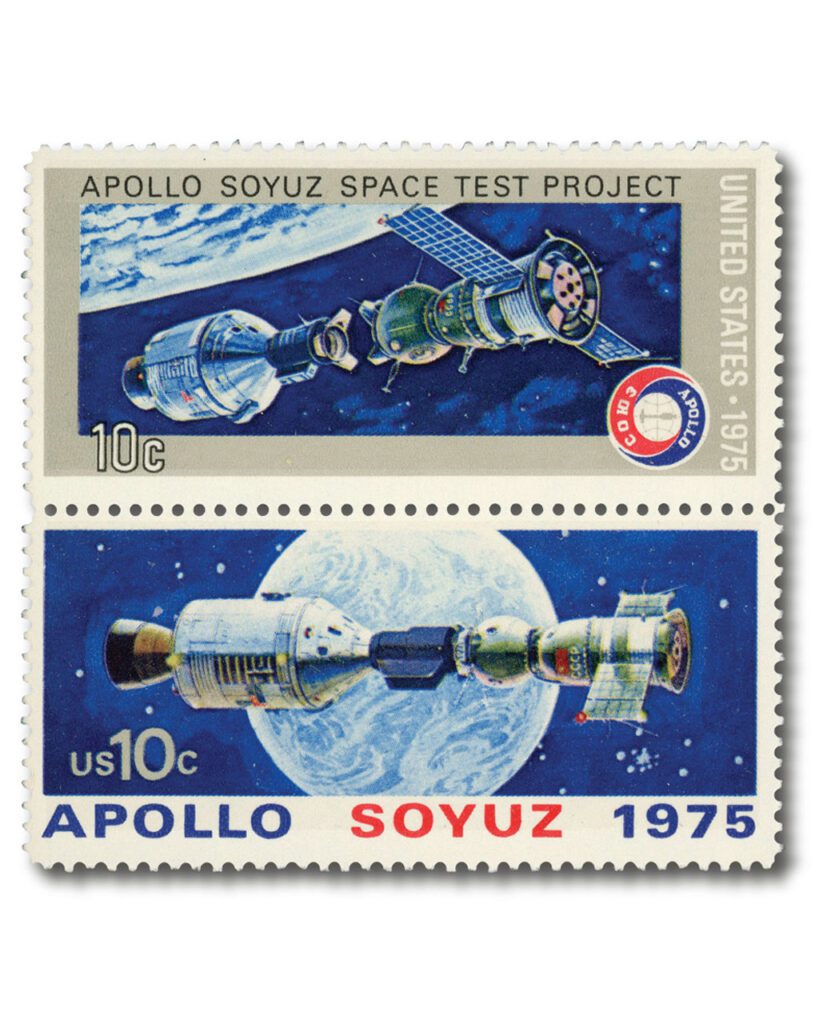
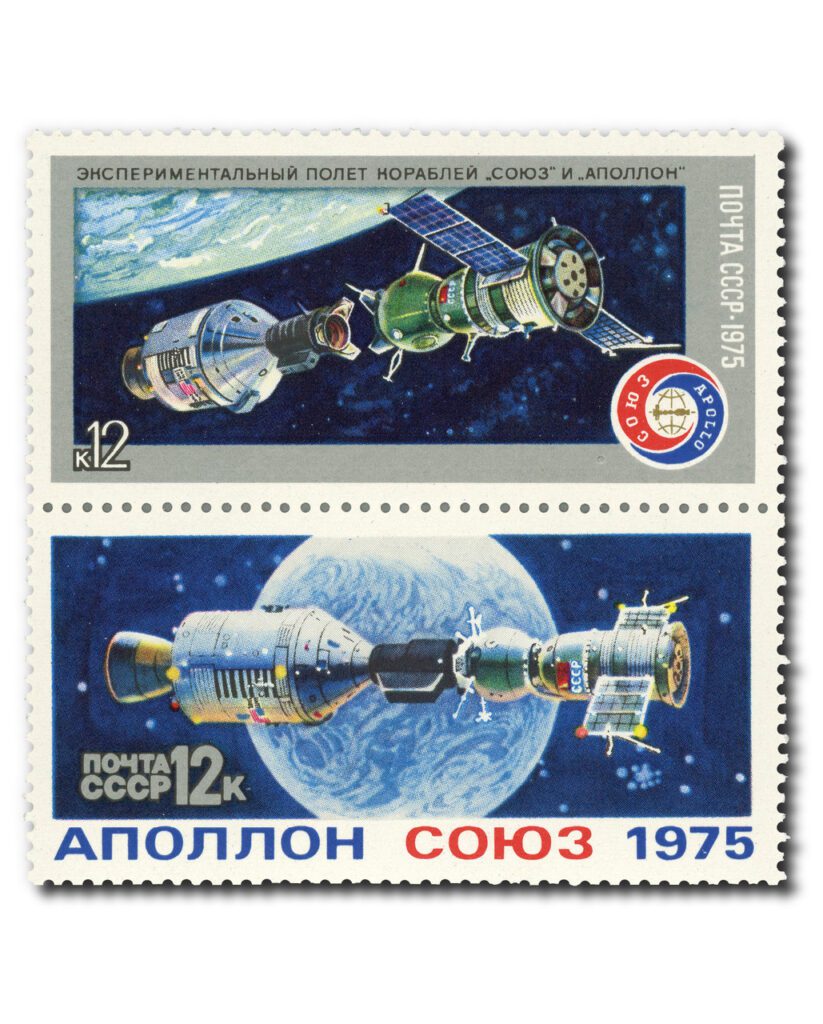
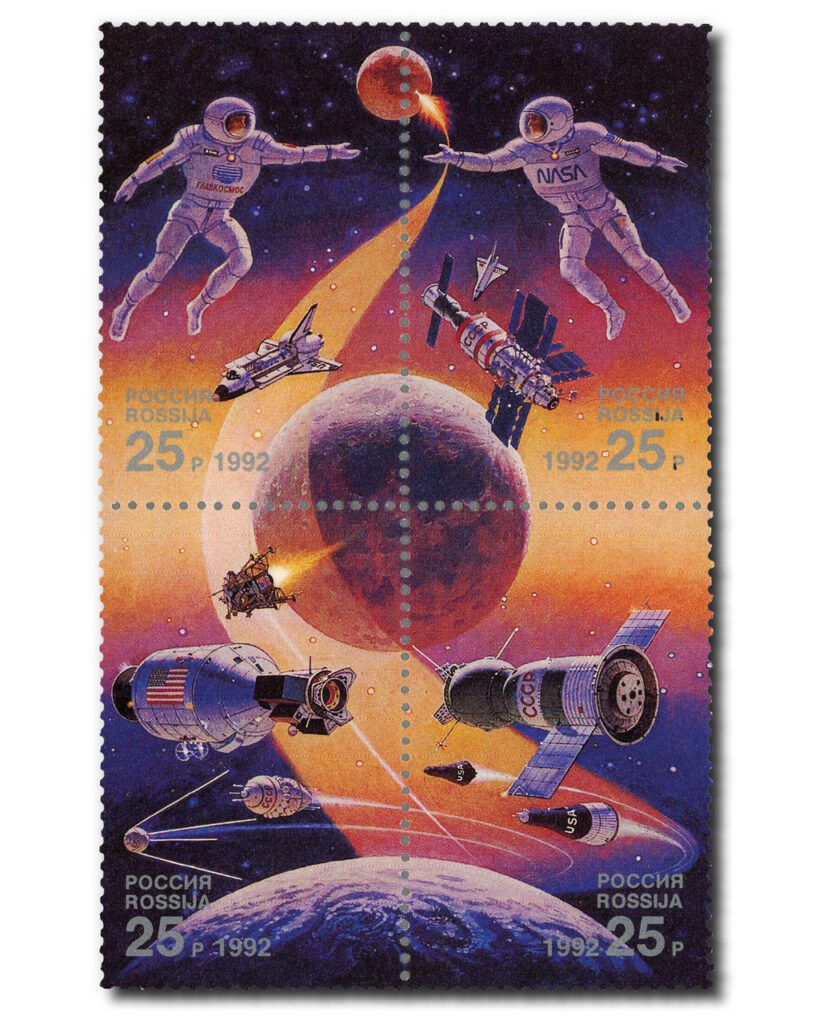
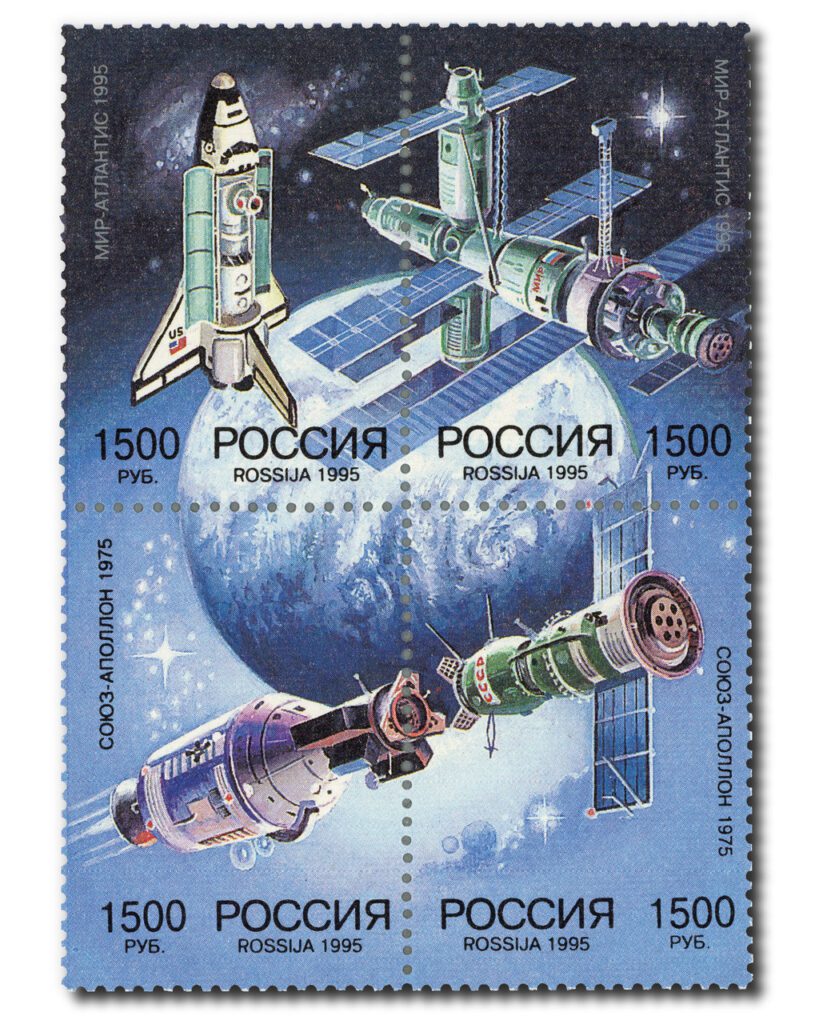
For decades, space was framed as a contest between the United States and the Soviet Union—two superpowers racing to prove who could go higher, faster, and farther. But over time, the story started to change. One of the most meaningful turning points came in July 1975, when an American Apollo spacecraft and a Soviet Soyuz capsule docked in orbit during the Apollo-Soyuz Test Project. It wasn’t just a technical achievement. For people watching back on Earth, it felt like a rare moment of relief and possibility—a sign that space could be a place where cooperation mattered more than rivalry.
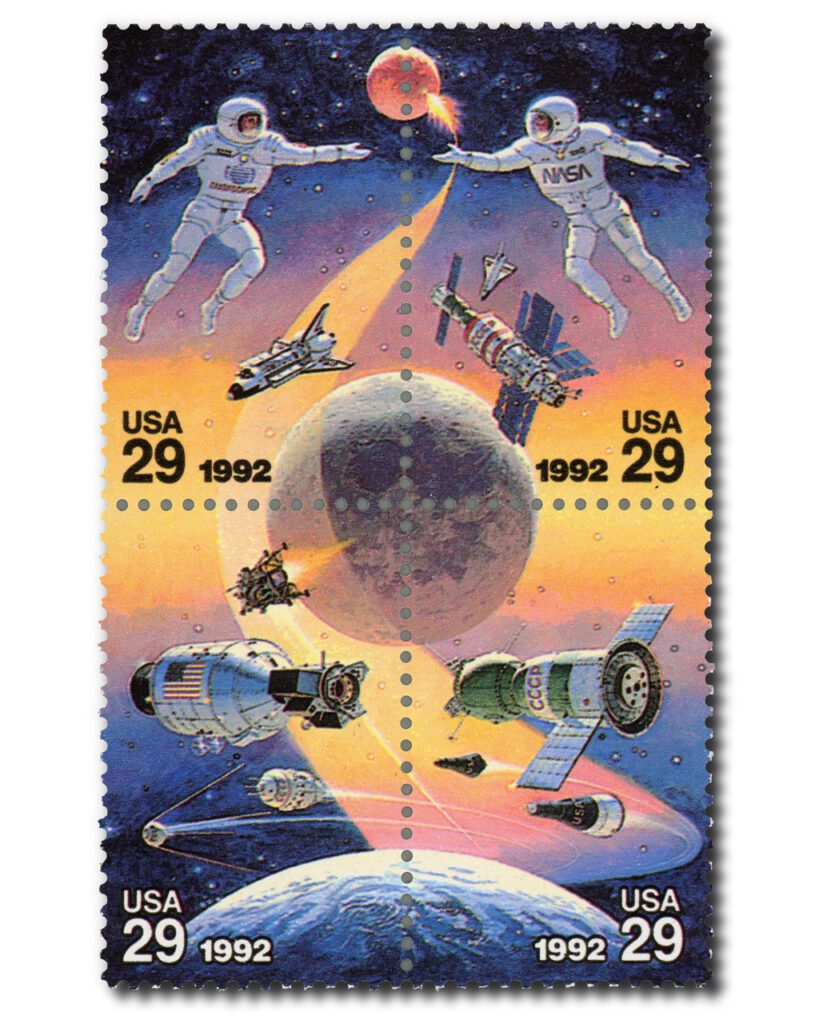
That idea grew even stronger after the Cold War. In the 1990s, astronauts and cosmonauts began living and working together during the Shuttle-Mir Program, which sent US crews to Russia’s Mir space station for long stays and built the habits of teamwork needed for something bigger. The clearest symbol of that partnership has been the International Space Station, whose first module (Zarya) launched in November 1998—a project built on the reality that no one nation had to carry the future alone.
Collectors can also see this progress through US-Soviet and US-Russian joint-issue stamps, created when postal administrations in both countries released coordinated designs to commemorate cooperation in space. These join-issues capture the spirit of collaboration in a uniquely tangible way—two nations telling the same story in stamp form, from historic dockings to the long-term teamwork that has kept astronauts and cosmonauts working side by side in orbit. Even as politics on the ground have shifted over the years, the day-to-day work in space has often remained remarkably steady: shared training, shared missions, and a shared responsibility to keep humanity’s outpost running.
Find More Space Stamps at MysticStamp.com
Click here for more space stamps, plus space-themed covers and coins. There are many more to choose from. Start or add to your space collection today!