First U.S. Steam Fire Engine
On March 27, 1841, the first steam-powered fire engine was tested in New York City. Though that first engine was only in use for a short time, it marked the start of a new era in firefighting…
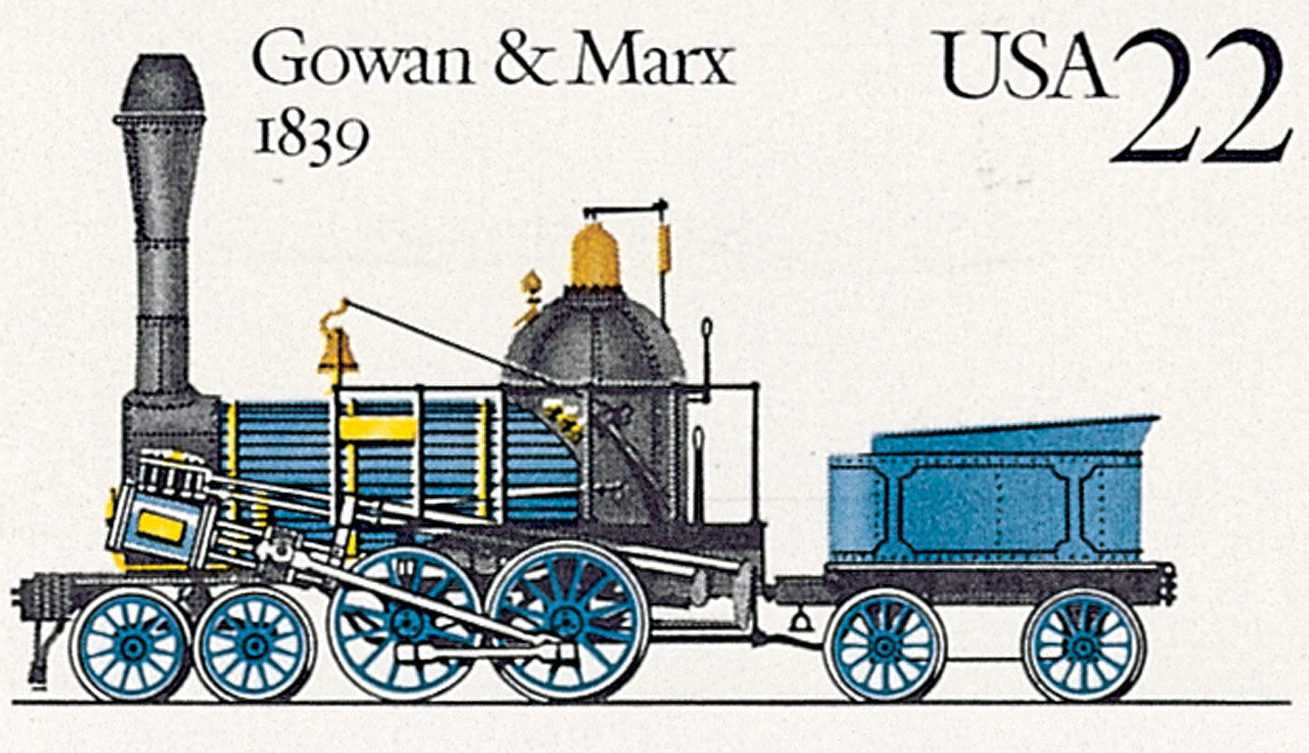
On February 20, 1840, the Gowan & Marx made an impressive run, hauling more than 100 cars weighing 423 tons. It was one of the earliest 4-4-0 locomotives with equalizing levers and became internationally known for hauling a train 40 times its own weight.
Frederic Eugene Ives was born on February 17, 1856, in Litchfield, Connecticut. He developed the first successful half-tone process and invented the “Kromskop,” which projected three identical images through different colored filters to produce some of the first color photographs.
On February 15, 1946, the Electronic Numerical Integrator and Computer (ENIAC) was unveiled to the public. It’s considered the first general-purpose electronic digital computer.
On January 28, 1887, it was claimed that a snowflake 15 inches across and eight inches thick fell on Fort Keough, Montana. While this claim hasn’t been verified, unusually large snowflakes are possible…
On January 27, 1938, the Honeymoon Bridge at Niagara Falls collapsed from the force of ice on the river pressing against its supports. It had been the largest steel arch bridge in the world.
On November 27, 1932, the Bixby Creek Bridge opened on the Big Sur coast of California. It was the longest concrete arch span in California and the highest single-span arch bridge in the world at the time of its completion.
On October 24, 1931, the George Washington Bridge was dedicated, officially opening to traffic the next day. One of the world’s busiest bridges, the George Washington Bridge is also the world’s only 14-lane suspension bridge.
On October 1, 1940, the Pennsylvania Turnpike opened to drivers. Measuring 160-miles at the time of its opening, it’s considered the first superhighway in the US and helped inspire other state turnpikes and America’s Interstate Highway System.