Death of Irving Berlin
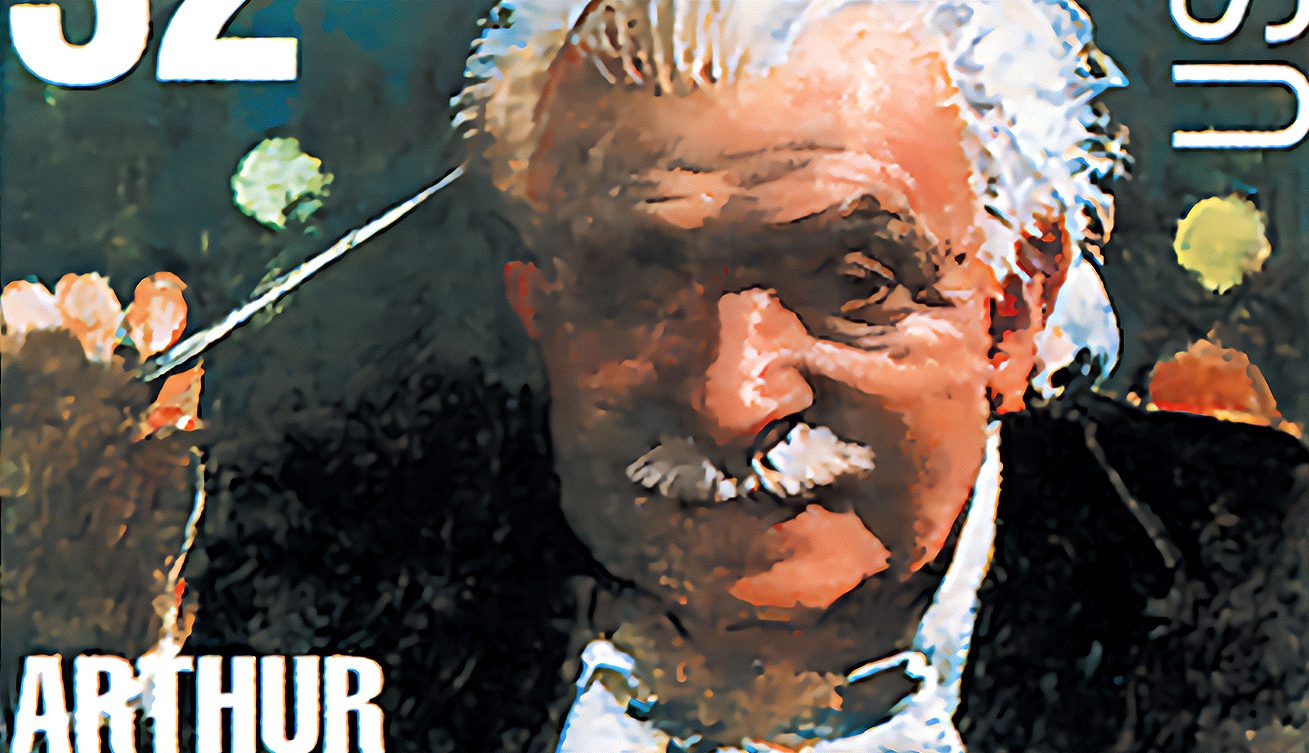
On September 22, 1989, legendary composer Irving Berlin died in New York City at the age of 101. A year earlier, he was just the second living person to be honored on a US stamp!
On September 21, 1897, The Sun, a New York City newspaper, published what would become one of the most famous editorials ever written. It was titled simply, “Is There a Santa Claus?” but is better known today as “Yes, Virginia, There Is a Santa Claus.” The editorial was written in response to a letter from an eight-year-old girl named Virginia O’Hanlon, whose simple question sparked an answer that has inspired generations.
On September 20, 1863, the first major Civil War battle fought in Georgia, the Battle of Chickamauga, came to a close. One of the bloodiest battles of the war, it had the second-highest number of casualties after Gettysburg.
On September 19, 1968, the American Philatelic Society (APS) officially introduced the World Series of Philately (WSP)—one of the most prestigious competitive platforms in US stamp exhibiting. The WPS came as a result of years of requests from serious collectors for a way to highlight top-tier exhibits at a national level.
On September 18, 1870, a group of explorers stood on the banks of the Firehole River and watched as a geyser erupted in a towering column of steam and water. Amazed by its power and regularity, they gave it a name that has endured for more than 150 years — Old Faithful.
On September 17, 1787, 39 delegates from 12 states signed the US Constitution, laying the groundwork of our country’s government. Much of the document was inspired by the ideas of James Madison, leading him to be called the “Father of the Constitution.”
The Battle of Harlem Heights, fought on September 16, 1776, was one of the most important early morale-boosting victories for the Continental Army during the Revolutionary War. It came at a time when General George Washington and his troops were reeling from several defeats and desperately needed a reason to believe they could stand against the powerful British Army. Though the battle was relatively small compared to others in the war, it played an important role in lifting the spirits of the American troops and proving that they could go toe-to-toe with the British on the battlefield.
On September 15, 1831, the John Bull steam locomotive made its inaugural trip on New Jersey’s first railroad. It became a symbol of early railroad innovation and the beginning of a new era of transportation, marking a turning point that demonstrated the promise of steam power to move goods and passengers faster than ever before.
Eight days after being shot by an assassin at the Pan-American Expo, President McKinley died on September 14, 1901. His passing sent a wave of grief across the nation, as more than 200,000 people attended memorial ceremonies in Washington, DC and his home state of Ohio.