

On April 1, 1883, Lon Chaney was born Leonidas Frank Chaney in Colorado Springs, Colorado, beginning a life that would reshape character acting in early film. Known as the “Man of a Thousand Faces,” he built a career on transformation, using makeup, body language, and physical endurance to create some of the silent era’s most memorable roles.
Chaney was born to parents who were both deaf, a fact that shaped his early life in practical ways. As a child, he learned to communicate through gesture, expression, and pantomime. These skills later became central to his acting style. Silent film relied on visual storytelling, and Chaney’s ability to convey emotion without spoken words gave him a clear advantage. He could express subtle feelings or intense distress through posture and movement alone.
As a teenager, Chaney worked in theater. He joined traveling stage companies, including a troupe managed by his brother. There, he learned a wide range of skills beyond acting. He worked as a prop man, stagehand, and occasionally as a director. This hands-on experience gave him a strong understanding of how productions were built from the ground up. It also led to his interest in makeup and costume design, areas where he would later become known for innovation.
Chaney’s early years in film were modest. He began with small roles, often uncredited, in the 1910s. His breakthrough came with The Miracle Man (1919), where he played a fraudulent faith healer who pretends to be crippled. The role required him to contort his body into unnatural positions and then suddenly appear healed. The performance drew attention for its realism and physical control. After this success, Chaney began to receive more prominent roles.
Throughout the 1920s, Chaney became one of the most respected character actors in Hollywood. He was not known for conventional leading-man roles. Instead, he specialized in portraying outsiders, villains, and physically altered figures. His performance as Quasimodo in The Hunchback of Notre Dame (1923) required hours of preparation each day. He wore a heavy hump, restrictive harnesses, and detailed facial prosthetics. The costume limited his movement and caused physical strain, but it allowed him to create a convincing and sympathetic character.
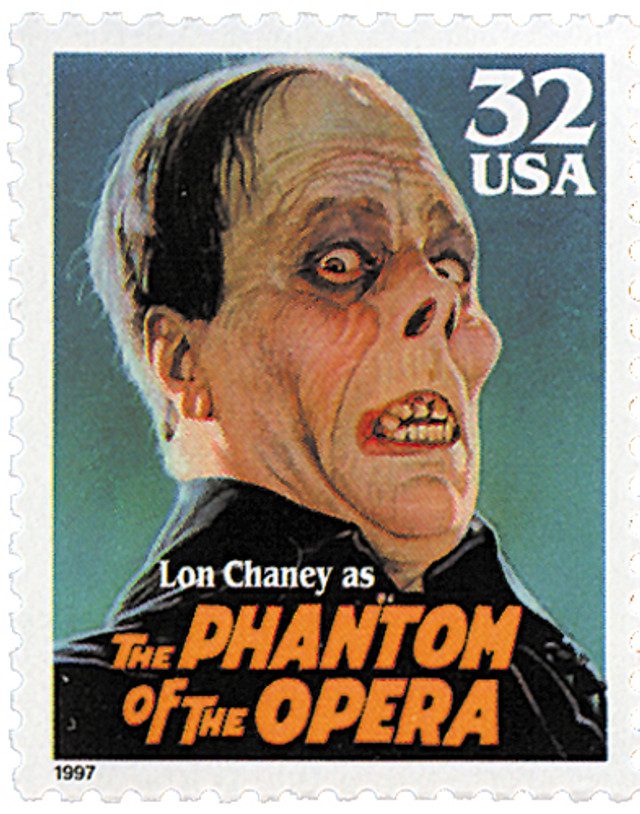
Chaney’s work in The Phantom of the Opera (1925) is often considered his most famous role. He played Erik, a disfigured musician living beneath the Paris Opera House. Chaney designed his own makeup for the part. He used wires and putty to reshape his face, creating a skull-like appearance that startled audiences. Reports from the time describe viewers reacting strongly when his face was first revealed on screen. The effect was achieved without modern materials or techniques, relying instead on careful planning and endurance.
Another notable performance came in London After Midnight (1927), where Chaney played both a Scotland Yard inspector and a vampire-like figure. Although the film is now considered lost, surviving images show his exaggerated features and unsettling presence. This dual role demonstrated his ability to shift between characters within the same story, further reinforcing his reputation for versatility.
Chaney was not limited to horror or grotesque roles. In Tell It to the Marines (1927), he played a tough but disciplined Marine sergeant. The role required a more restrained performance and was well received by both audiences and critics. He continued to show range in films like While the City Sleeps (1928) and Thunder (1929), taking on roles that focused more on character development than physical transformation.

A key part of Chaney’s reputation came from his approach to makeup. At a time when studios often provided basic materials, he preferred to design and apply his own. He experimented with greasepaint, cotton, collodion, and other tools to create detailed effects. Some of his techniques involved discomfort or even pain, such as using wires to distort facial features or binding parts of his body to alter posture. These methods allowed him to achieve a level of realism that stood out in silent film.
Chaney’s career extended briefly into the early sound era. His final film, The Unholy Three (1930), was a remake of one of his earlier silent successes and showcased his ability to adapt to talking pictures. However, his life was cut short by throat cancer. He died later that year, on August 26, 1930, at the age of 47.
Lon Chaney’s work remains closely tied to the visual style of silent film. His performances relied on physical expression, detailed makeup, and careful control of movement. While film technology has changed, many of the techniques he used continue to influence actors and makeup artists. He did not receive major awards during his lifetime, largely because formal honors like the Academy Awards were only just beginning. In later years, he was recognized with a star on the Hollywood Walk of Fame and induction into film and horror halls of fame. His legacy rests not on a single role, but on a consistent ability to transform himself into characters that were both striking and believable.
Did you know there are hidden images in the 1997 Movie Monsters stamps (two of which are pictured in this article)? If not, click here to order the special decoder. And its not just the Movie Monsters stamps – there are hidden images in several US commemoratives issued since 1997. Click here for the complete collection of 42 scrambled indicia stamps.
| FREE printable This Day in History album pages Download a PDF of today’s article. Get a binder or other supplies to create your This Day in History album. |
Discover what else happened on This Day in History.
Very interesting — thank you!
I had forgotten that he was born to deaf parents. Truly an amazing actor.