
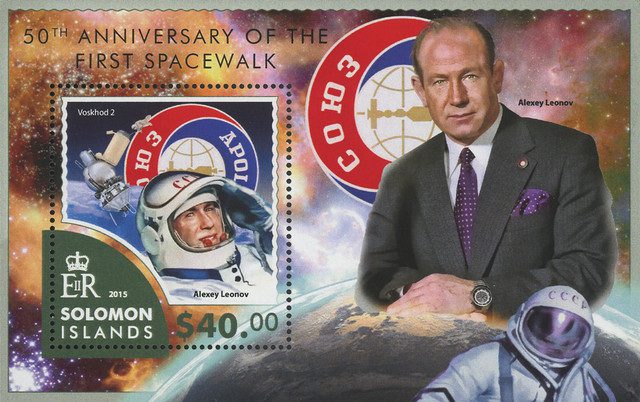
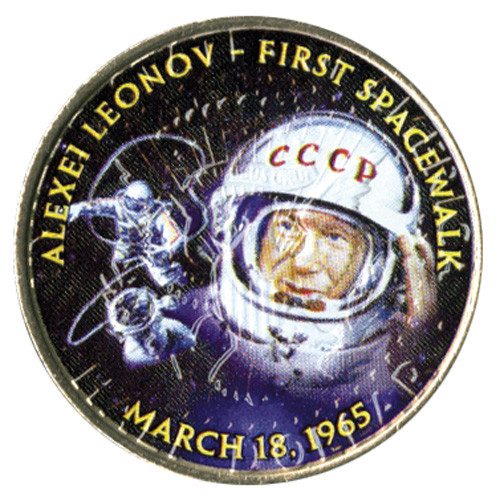
On March 18, 1965, Alexei Leonov did what no human had ever done before—he stepped out of a spacecraft and into the vacuum of space. Suspended above Earth with only a thin tether holding him to life, Leonov’s daring walk marked a turning point in the early Space Race.
Leonov’s historic spacewalk took place aboard the Soviet spacecraft Voskhod 2. At the time, the US and the Soviet Union were competing intensely to achieve milestones in space exploration. The Soviets had already scored several early victories, including launching the first satellite and sending the first human into orbit. Leonov’s mission was another bold step meant to demonstrate Soviet technological strength.
To exit the spacecraft, Voskhod 2 was equipped with an inflatable airlock. This allowed Leonov to leave the cabin without depressurizing the entire craft. Once outside, he was connected by a 17-foot tether, often called an “umbilicus,” which supplied oxygen and communications. Without it, he would have drifted away into space, beyond any chance of rescue.
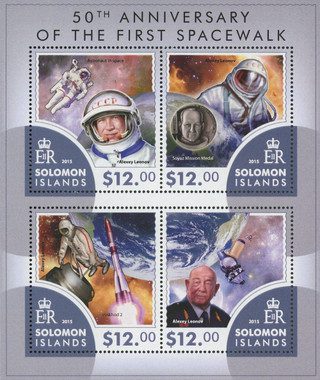
Leonov remained outside the spacecraft for 12 minutes and 9 seconds. During that time, he floated freely, taking in a view no human had ever seen firsthand. Below him, Earth appeared as a curved, glowing sphere against the blackness of space. But while the moment was historic, it was also extremely dangerous.
Almost immediately, Leonov encountered a serious problem. His spacesuit began to overinflate in the vacuum of space. The pressure inside the suit increased to the point that it became rigid. He could no longer bend his arms or legs properly. This prevented him from operating his chest-mounted camera to take photographs, but more importantly, it made it difficult to move.
The real danger came when Leonov attempted to re-enter the spacecraft. The airlock was narrow, and his stiffened suit would not fit through the opening. Faced with a life-threatening situation, Leonov made a risky decision. He manually released some of the oxygen from his suit, lowering the pressure inside. This allowed the suit to become flexible again, but it also exposed him to the risk of decompression sickness, often called “the bends,” a condition known from deep-sea diving.
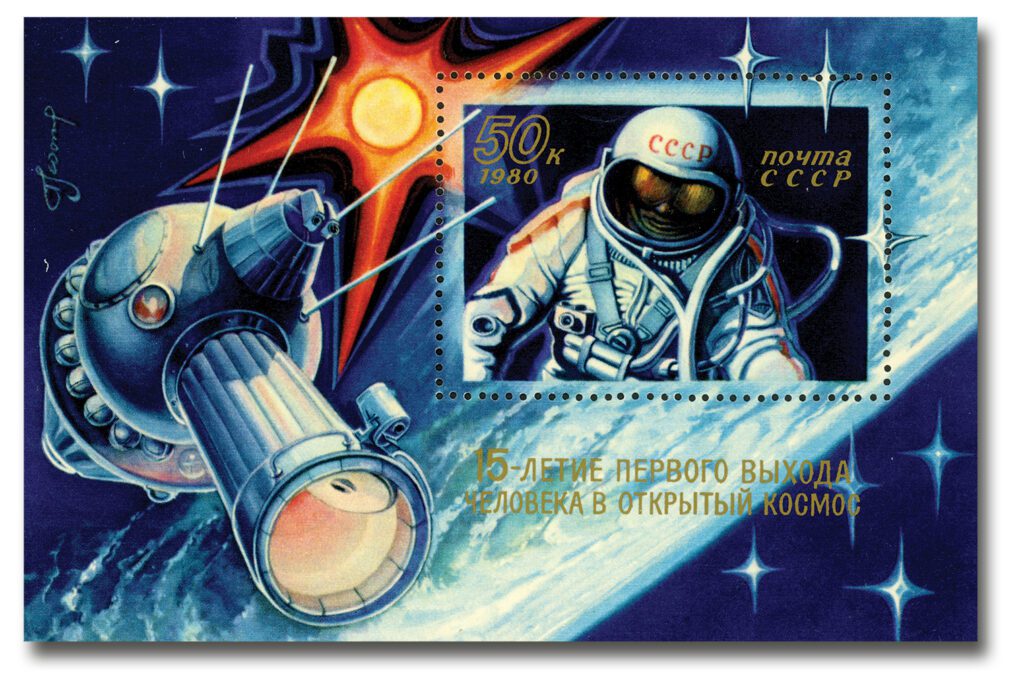
Despite the danger, Leonov managed to squeeze back into the airlock and return safely to the cabin. By the time he reentered, his body temperature had risen sharply, and he was drenched in sweat. The physical strain was intense, and he had come close to heat exhaustion.
The mission’s challenges did not end there. After completing their orbit, Leonov and his fellow cosmonaut, Pavel Belyayev, encountered problems during reentry. Their spacecraft landed far off course in a remote, snow-covered region of the Ural Mountains. Rescue teams could not reach them immediately. The two men spent a cold night in the wilderness, reportedly hearing wolves nearby, before being recovered the next day.
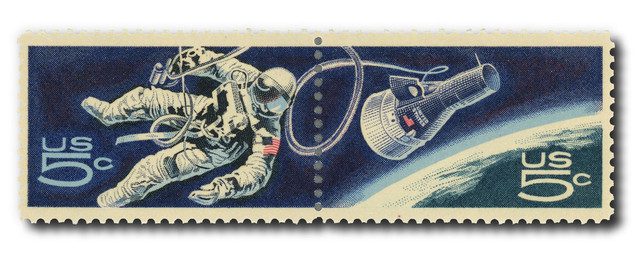
Leonov’s achievement had an immediate impact on the United States space program. Just a few months later, on June 3, 1965, American astronaut Ed White performed the first American spacewalk during the Gemini 4 mission. Managed by NASA, this mission showed that the United States could match Soviet advances. White’s spacewalk lasted about 23 minutes and used a handheld maneuvering gun for movement, demonstrating a different approach to working outside a spacecraft.
These early spacewalks were critical for future missions. They proved that astronauts could function outside their vehicles, a skill that would later be essential for repairing spacecraft, conducting experiments, and assembling structures in orbit. After his historic Gemini 4 spacewalk, Ed White was selected for Apollo 1 but never flew again, as he was killed in the 1967 launch pad fire—an event that led to critical safety improvements for future Apollo missions.
Leonov remained an important figure in space exploration. In 1975, he commanded the Soviet spacecraft Soyuz 19 during the Apollo–Soyuz Test Project. This mission marked the first time American and Soviet spacecraft docked in orbit. Leonov met and shook hands with American astronaut Thomas P. Stafford through the open hatch, symbolizing a brief easing of Cold War tensions.
The first human spacewalk was a technical and physical test that revealed both the possibilities and dangers of working in space. These experiences helped engineers improve spacesuit design, airlock systems, and safety procedures – lessons that became essential as space programs grew more ambitious in the years that followed.
| FREE printable This Day in History album pages Download a PDF of today’s article. Get a binder or other supplies to create your This Day in History album. |
Discover what else happened on This Day in History.