Wildlife on Stamps: Small Canvases, Big Stories
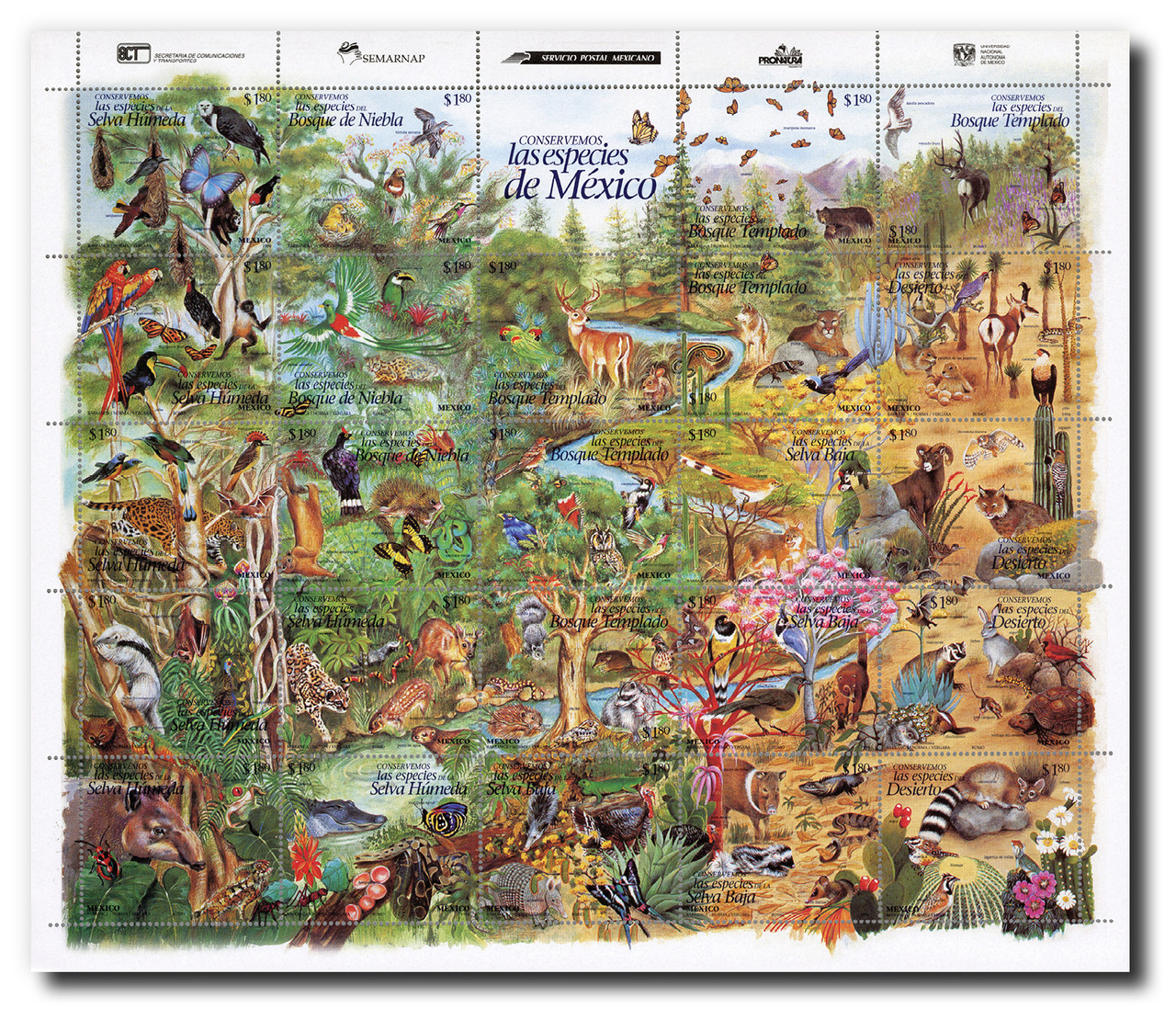
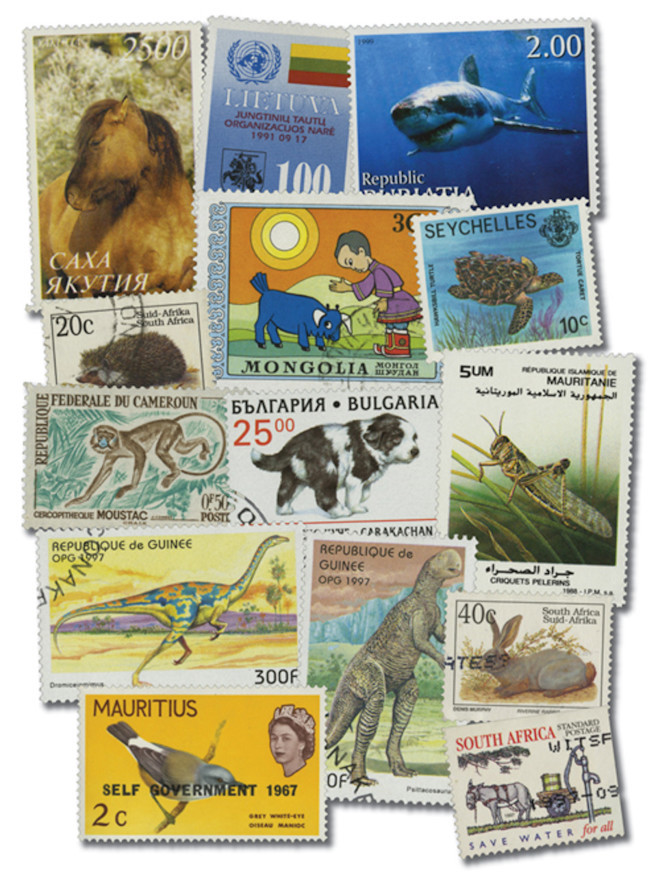
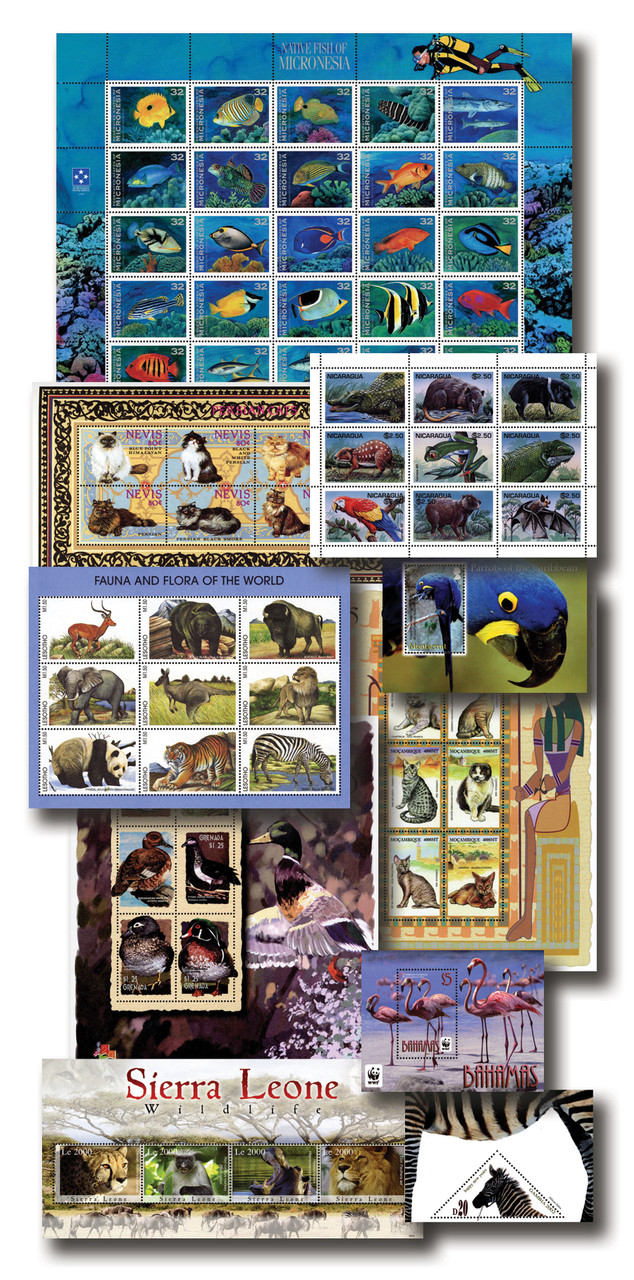
Wildlife has always had a way of capturing our attention — the call of a bird, the quiet strength of a deer, the smallest butterfly in the garden. It’s no surprise, then, that stamps have long served as one of the simplest ways to honor the creatures we admire. Each design carries more than an image; it tells a story about the animals we love and the importance of protecting them.
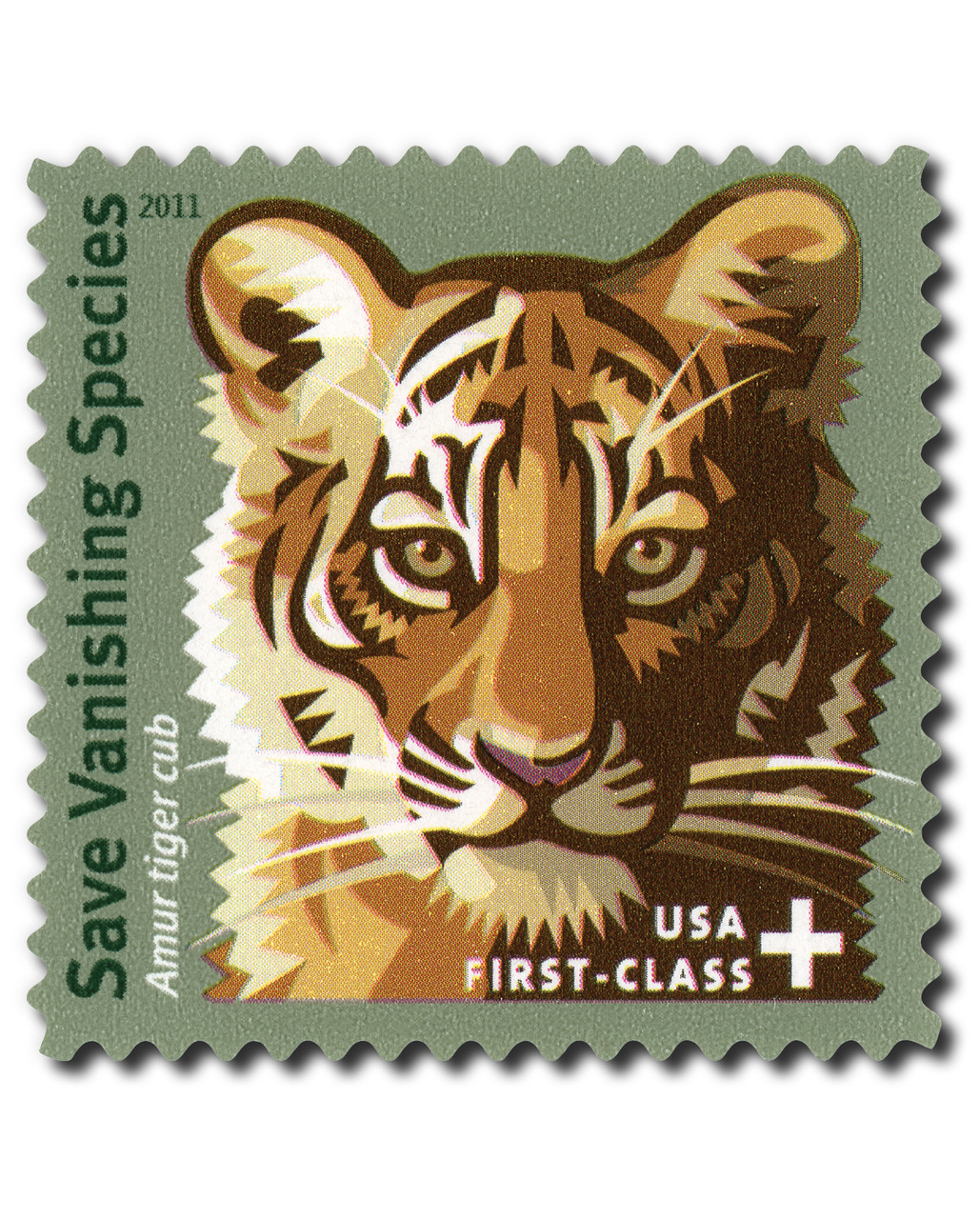
Some wildlife stamps go a step further. The Save Vanishing Species semipostal, issued in 2011, features an Amur tiger cub and sells for a small amount above the postage rate. That extra bit goes straight to conservation — to date, more than $8 million raised to help protect elephants, rhinos, tigers, marine turtles, and great apes.
Take a look below at a few more stamps that celebrate wildlife in their own way.
1956-87 Wildlife Conservation Series
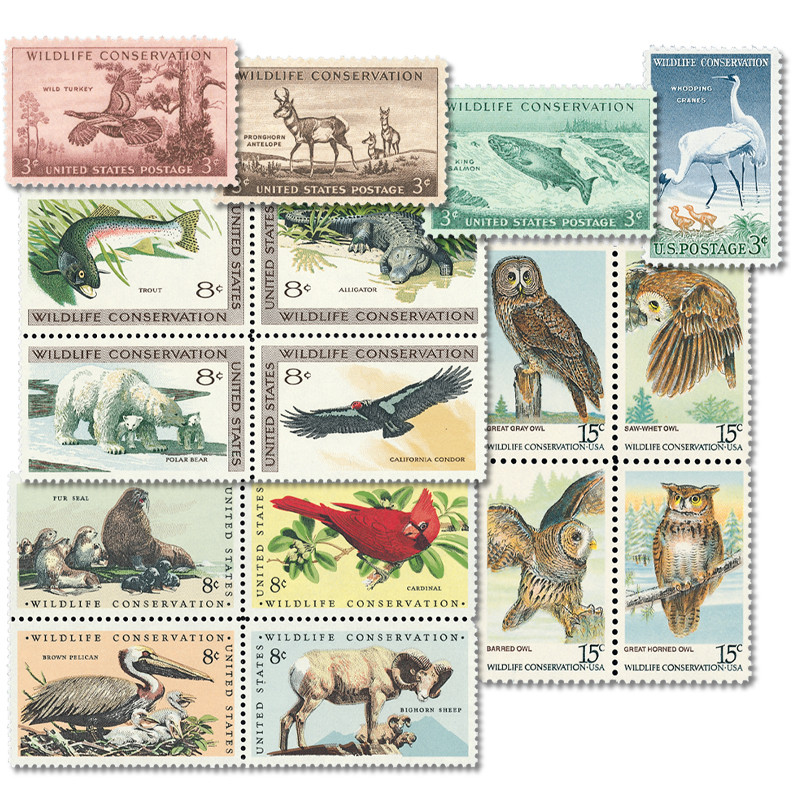
Issued between 1956 and 1978, the Wildlife Conservation Series featured animals such as the wild turkey, pronghorn, salmon, whooping crane, endangered species, and owls. Each stamp highlighted conservation successes and raised awareness of the need to protect America’s wildlife for future generations.
1978 CAPEX Wildlife Souvenir Sheet
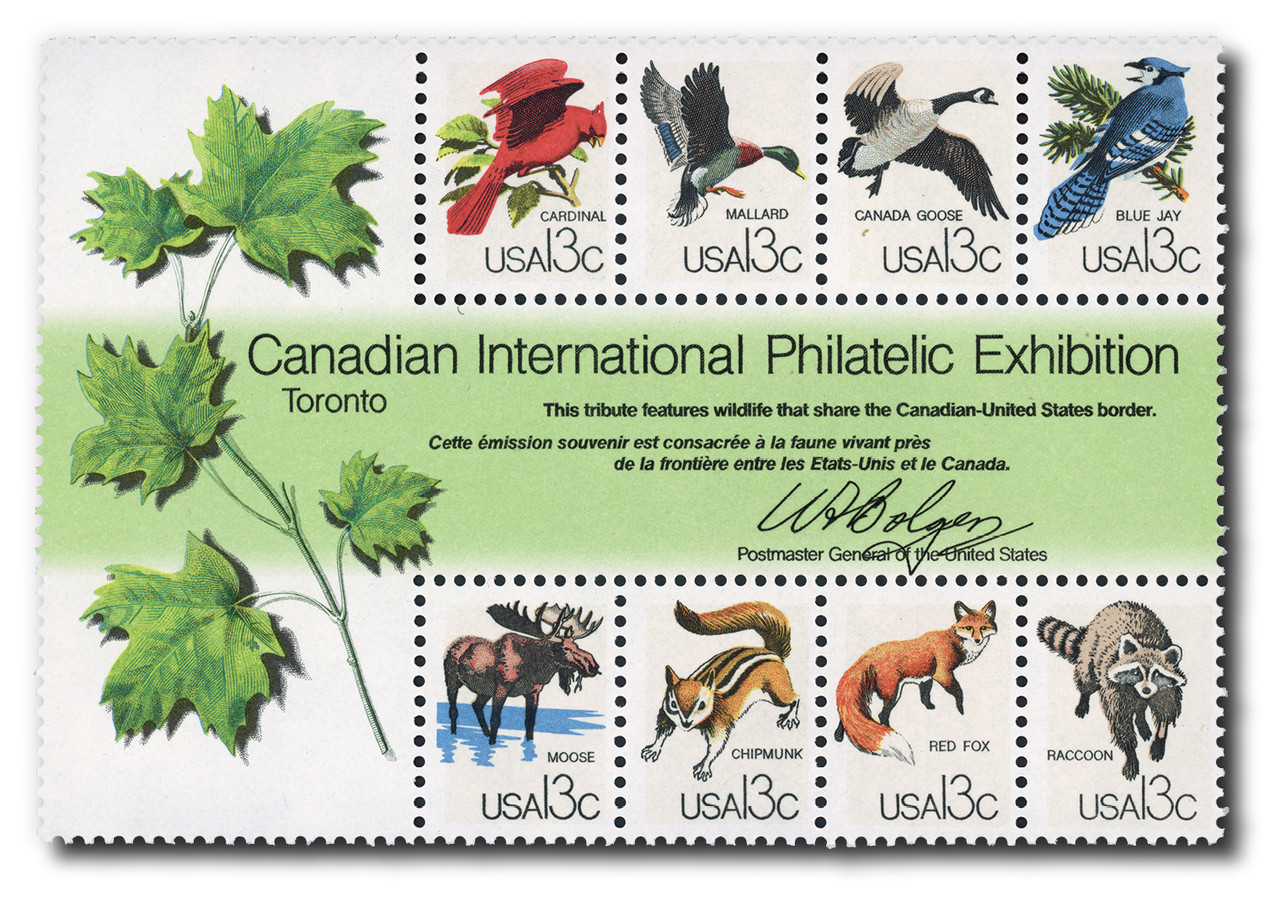
Issued in conjunction with the 1978 Canadian Philatelic Exhibition in Toronto, the CAPEX souvenir sheet was the first US souvenir sheet to be released outside the country. Eight different stamps, featuring popular animals and birds from North America, appear together on this colorful sheet.
1981 Wildlife of America
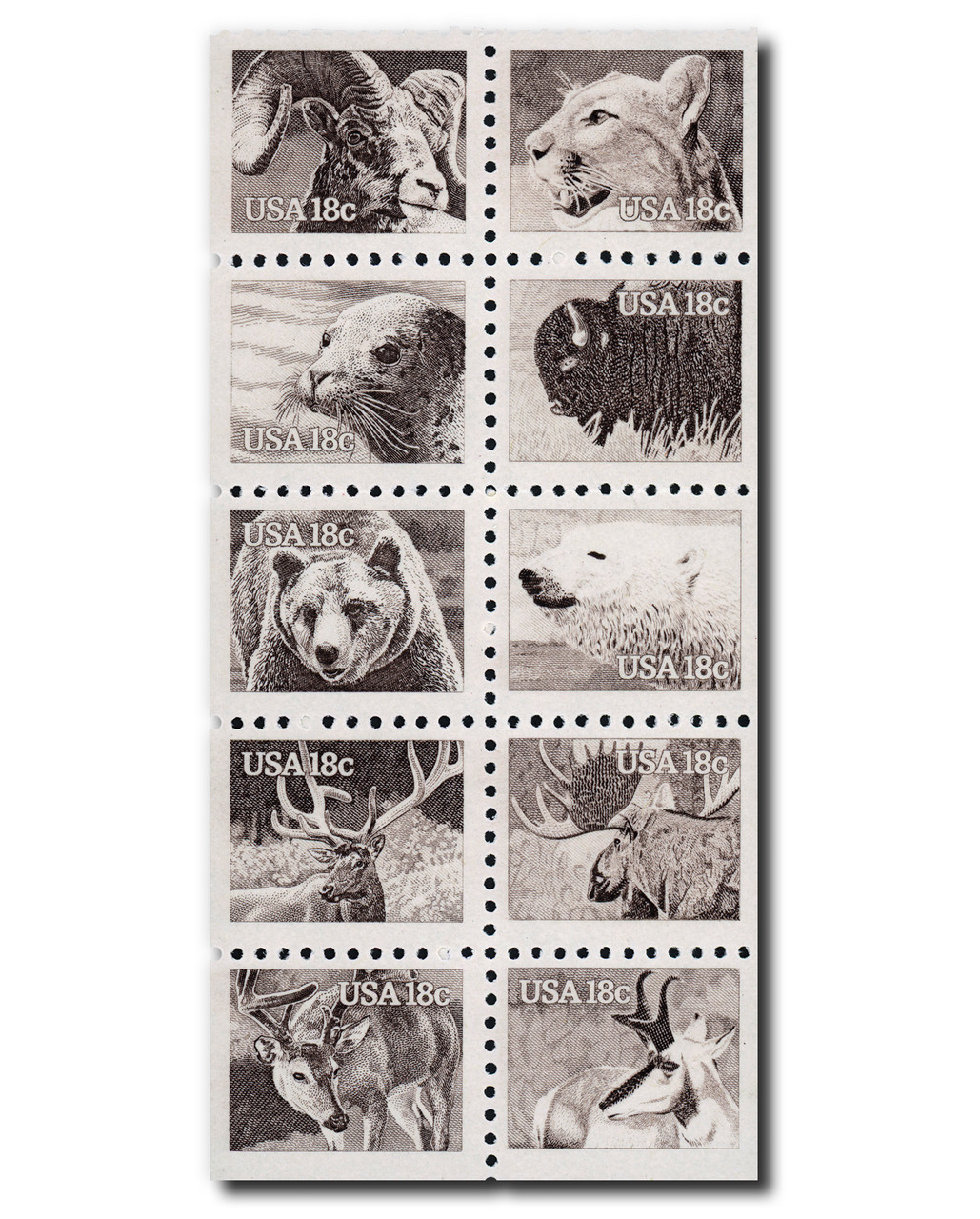
Created from photos taken by National Geographic’s Jim Brandenburg, the stamps highlighted conservation successes and raised awareness of endangered species. The First Day ceremony was held in Boise, Idaho, with many of the pictured animals native to the region. This issue reflected America’s growing commitment to protecting wildlife, as many of the animals once threatened with extinction had been preserved through sanctuaries, laws, and restoration efforts.
1981 Preservation of Wildlife Habitat
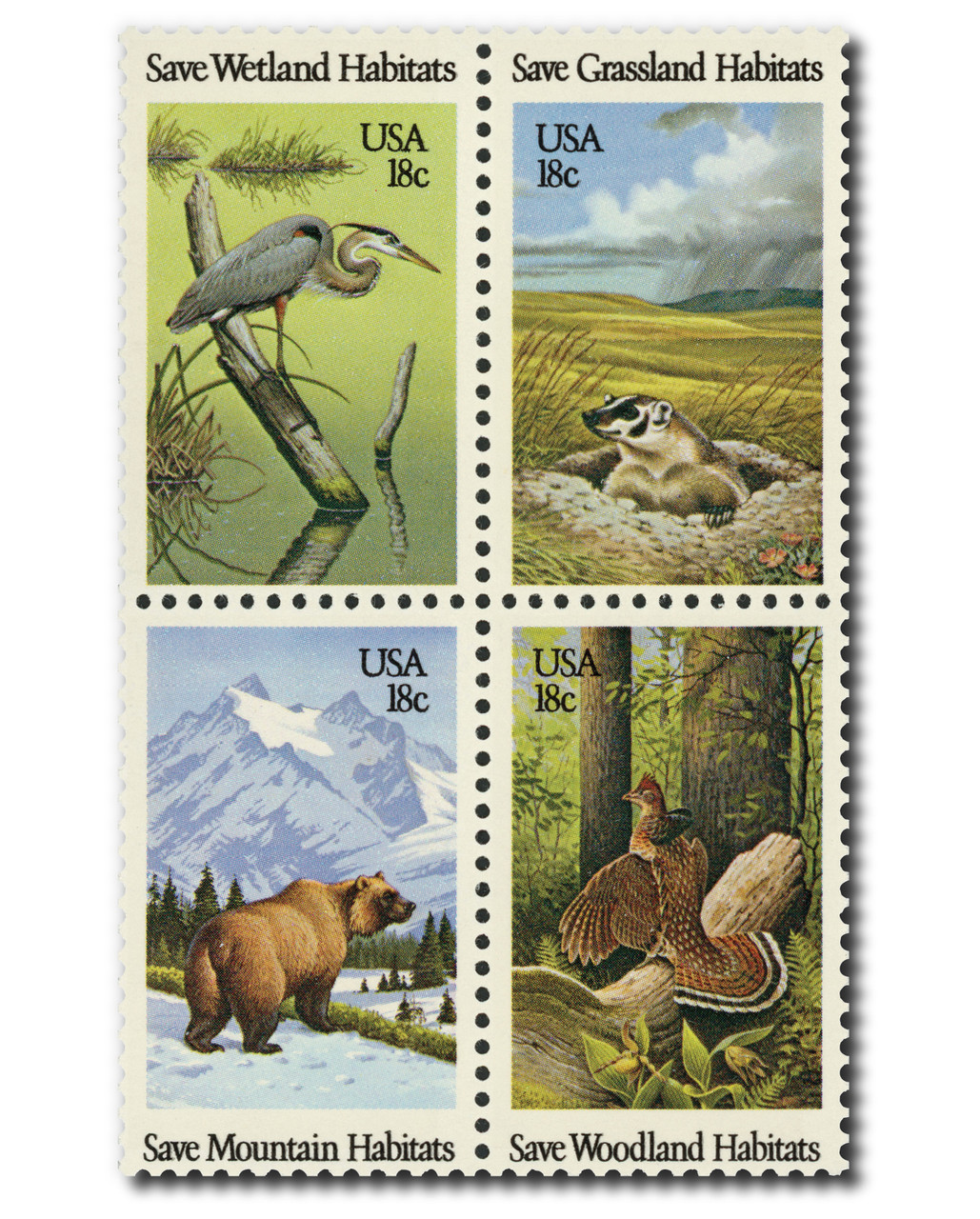
In an effort to draw support for the preservation of wildlife habitats, this series of four stamps illustrates four habitats threatened by humanity and it’s progress. Pictured are a great blue heron (wetland habitats), a badger (grassland habitats), a grizzly bear (mountain habitats), and a ruffed grouse (woodland habitats).
1987 North American Wildlife
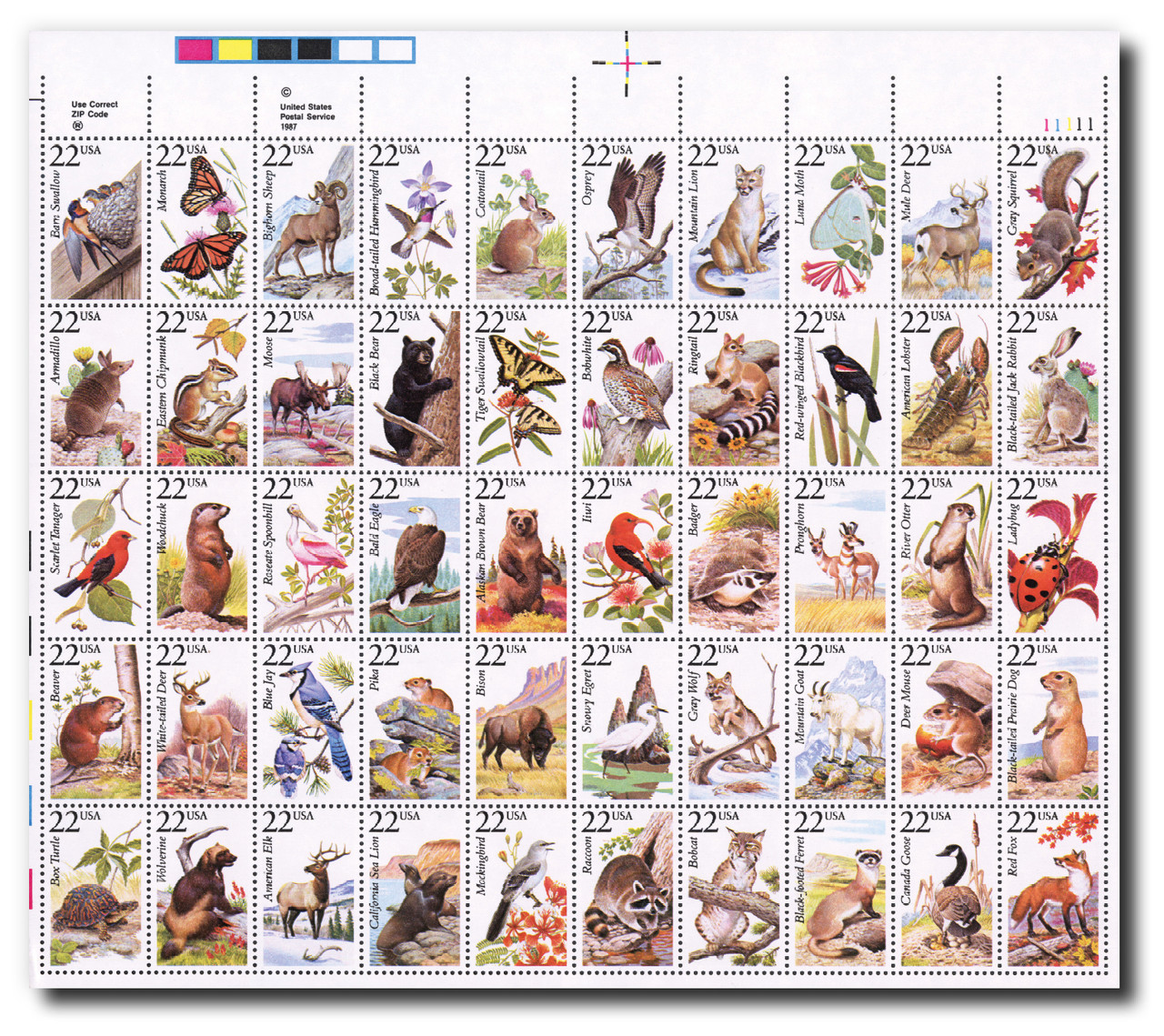
This sheet of 50 different stamps was issued to celebrate the nation’s diverse wildlife, with animals chosen to represent every region, including Alaska and Hawaii. Designed by wildlife artist Chuck Ripper, each pencil-drawn stamp pairs the animal with plants from its natural habitat, emphasizing both environmental awareness and the realism of his art.
1996 Endangered Species
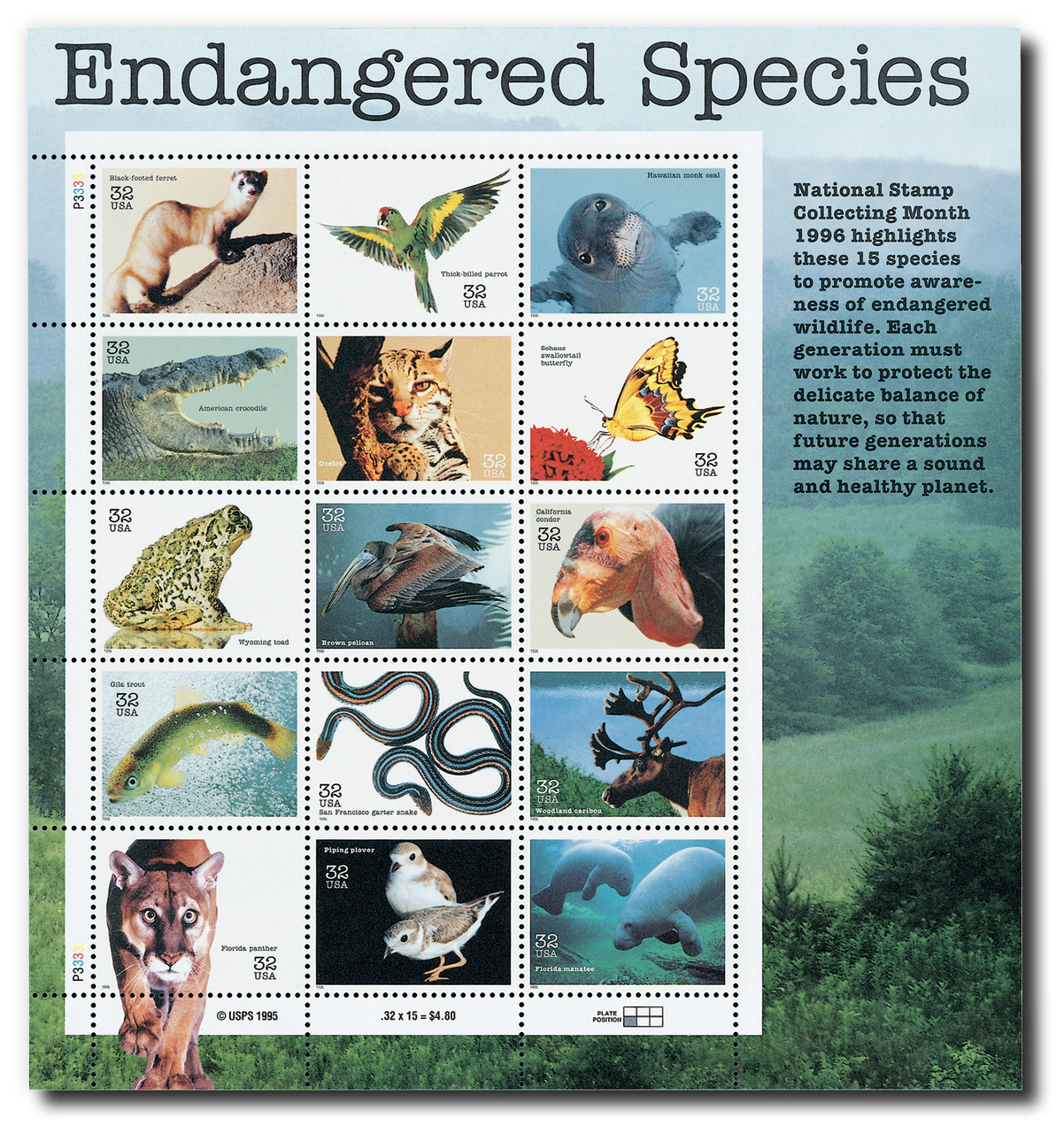
Issued on October 2, 1996, during National Stamp Collecting Month, the 32¢ Endangered Species pane featured 15 photos by James Balog of threatened animals from across the US, including the Florida panther, manatee, condor, and black-footed ferret. Released at the San Diego Zoo’s 80th anniversary with the theme “Collect and Protect,” the stamps aimed to inspire young collectors while promoting conservation, with special details like the panther breaking into the selvage and a revised manatee image after early criticism.
1999 Insects and Spiders
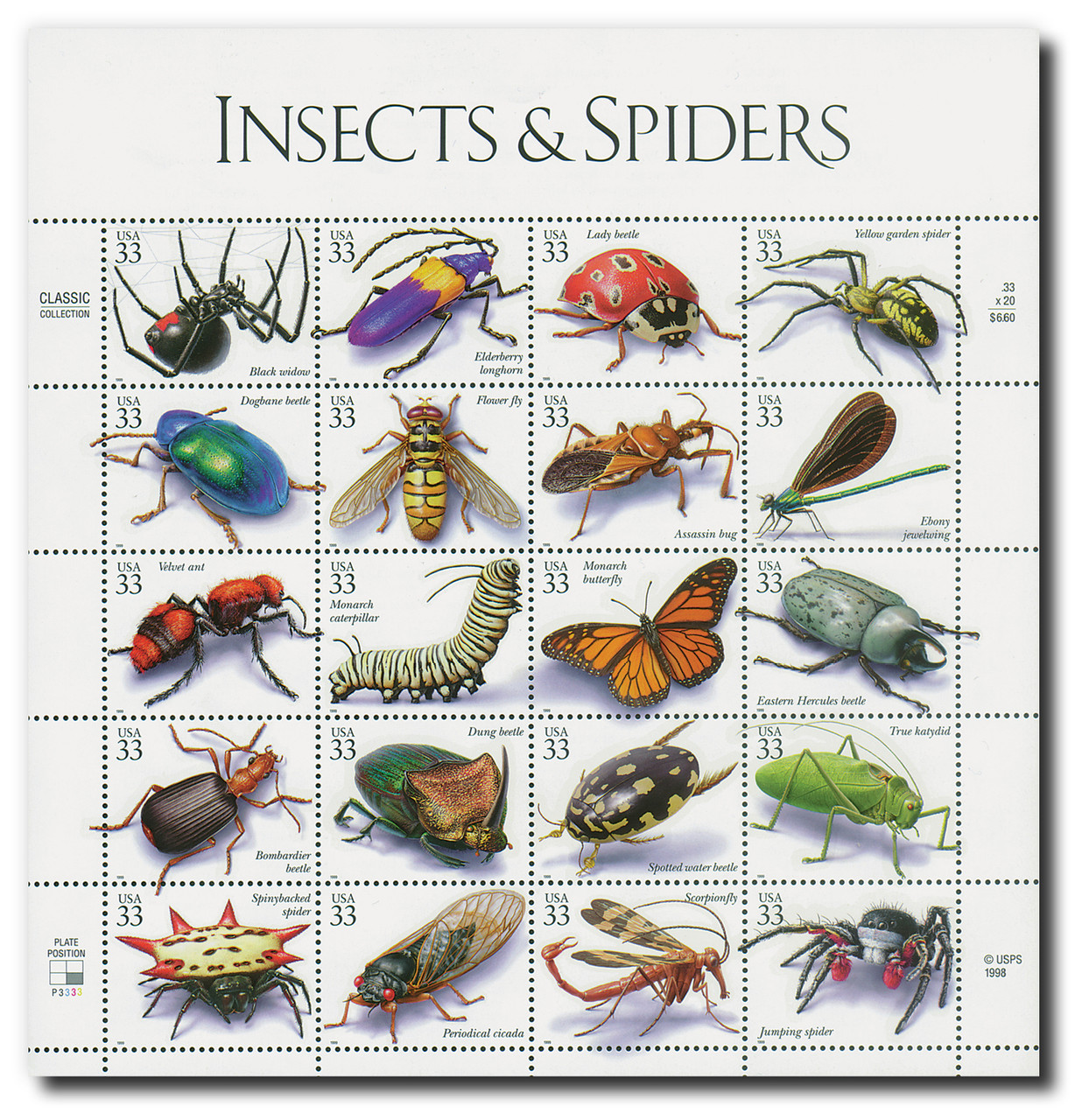
This colorful sheet features 16 insects and four spiders. The species of insects and spiders on the stamps were chosen because of their educational value and interest to children. The species represent the wide range of colors, lifestyles, and behaviors exhibited by these amazing creatures. On the back of each stamp is a description of the bug on the front.
1999-2010 Nature of America Series
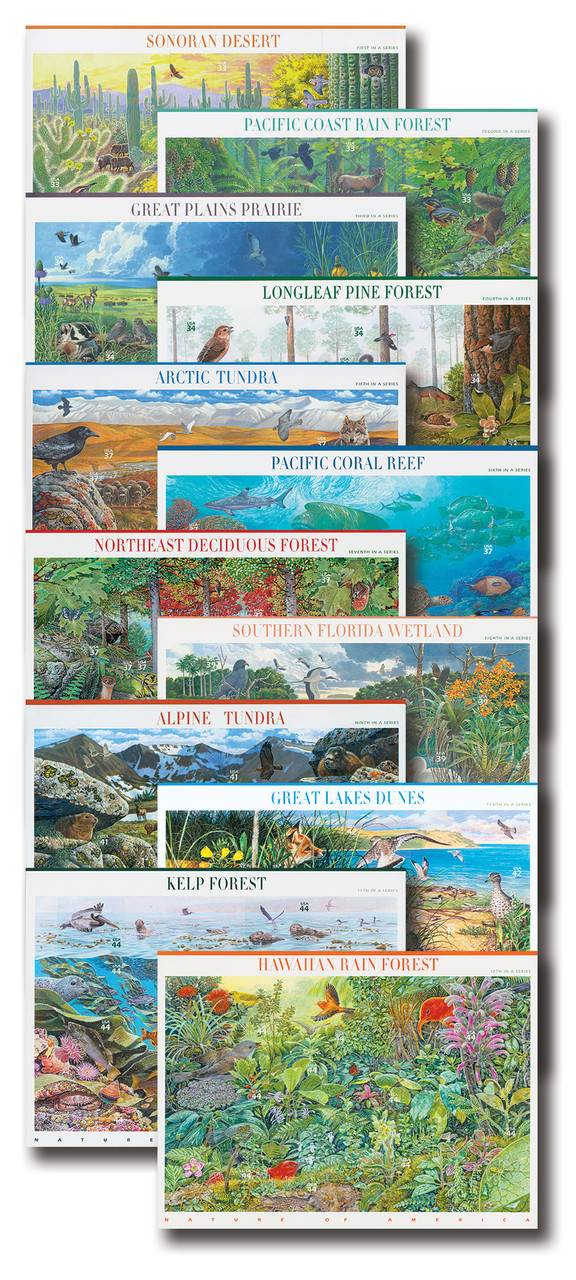
The Nature of America Series, which concluded in 2010, beautifully captures the country’s diverse landscapes and the wildlife that call them home. Every semi-jumbo stamp highlights at least one native plant or animal, arranged in a staggered layout that blends seamlessly with the sheet’s design.
2023 Endangered Species
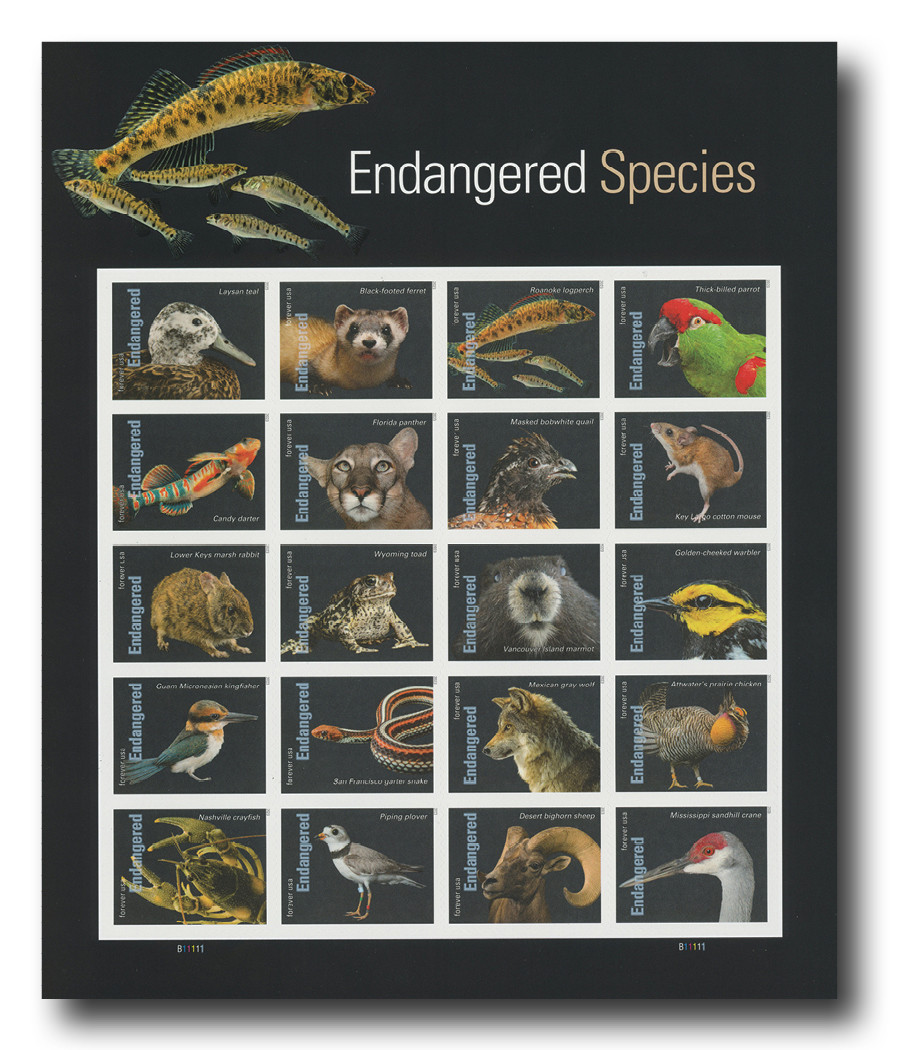
In 2023, the US Postal Service celebrated the 50th anniversary of the Endangered Species Act. The images used for the stamps were part of Joel Sartore’s “Photo Ark.” Partnering with National Geographic, he set out to capture 20,000 species living in zoos and wildlife sanctuaries around the world.