Glacier Bay National Park and Preserve
On December 2, 1980, President Jimmy Carter established Glacier Bay National Park and Preserve in Alaska. Today the park is part of one of the world’s largest international protected areas.
On September 18, 1870, a group of explorers stood on the banks of the Firehole River and watched as a geyser erupted in a towering column of steam and water. Amazed by its power and regularity, they gave it a name that has endured for more than 150 years — Old Faithful.
On September 11, 1935, workers broke ground on the 469-mile Blue Ridge Parkway near Cumberland Knob in North Carolina. Though it would take more than 50 years to complete, it’s been the most visited National Park Service site nearly every year since 1946, earning the nickname, “America’s Favorite Drive.”
On May 16, 1918, President Woodrow Wilson officially created the White Mountain National Forest, which resides mostly in New Hampshire (with about 5% of the forest in Maine). It’s the only national forest located in either state or the most eastern national forest in the country.
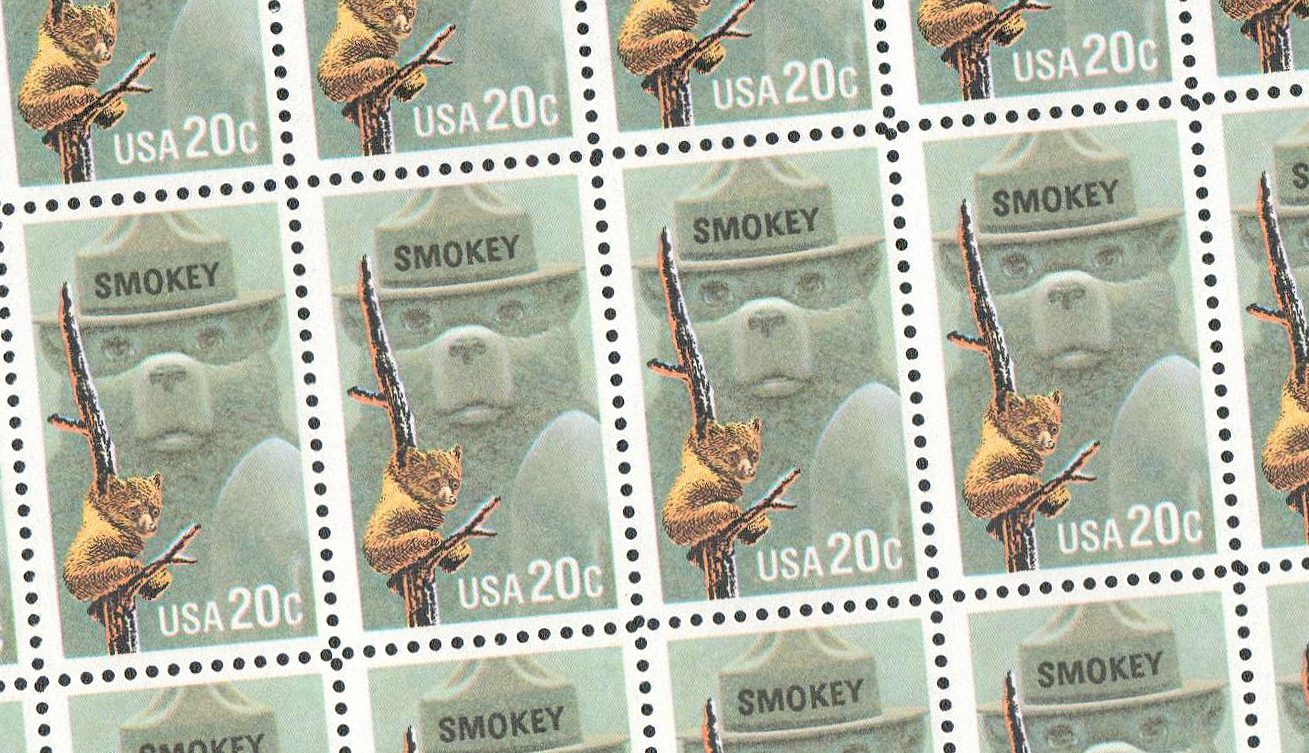
On May 5, 1956, the US Post Office issued the first stamp in a 22-year series calling attention to the importance of wildlife conservation.
On April 29, 1961, the World Wildlife Fund (WWF) was founded. The world’s largest conservation organization, the WWF supports around 3,000 projects in 100 countries.
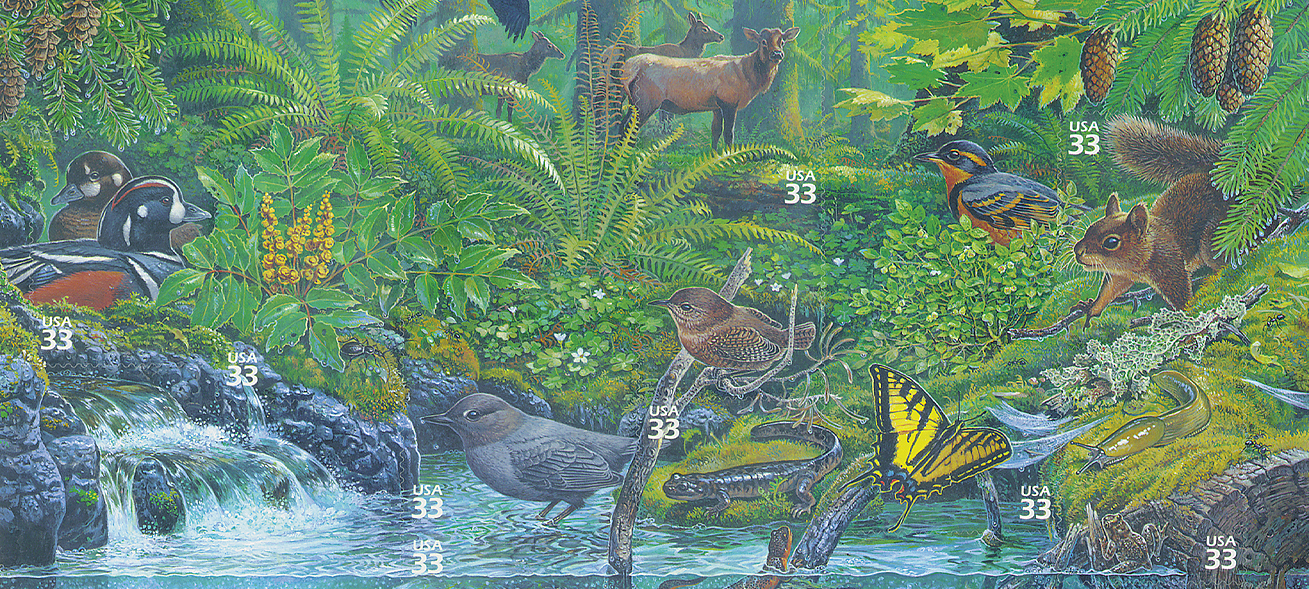
On April 6, 1999, the USPS issued the first stamp sheet in its 12-year Nature of America series. This popular series featured the first US self-adhesive sheets designed as one large scene.
On August 9, 1854, transcendentalist writer Henry David Thoreau published his most famous work – Walden. It was based on the two years he spent contemplating Transcendentalist philosophy at Walden Pond, Massachusetts.
On June 8, 1906, President Theodore Roosevelt signed the Antiquities Act into law, giving him and future presidents the authority to create national monuments from federal lands.