
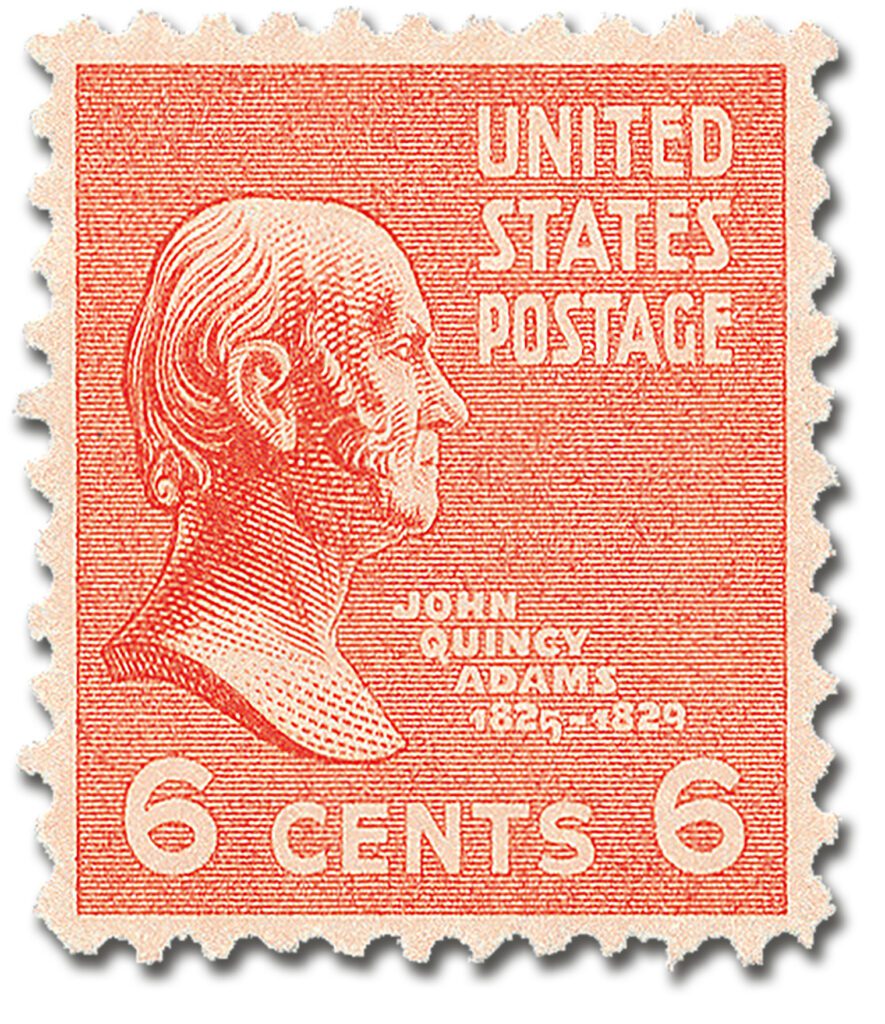
On February 9, 1825, John Quincy Adams was elected president of the United States even though he had not won a majority of the electoral vote. The unusual outcome exposed deep political divisions and set the stage for one of the most contested elections in early American history.

The election of 1824 took place during a period often called the “Era of Good Feelings,” when the Democratic-Republican Party dominated national politics. The Federalist Party had largely collapsed, leaving only one major political party competing for power. President James Monroe, who had served two terms, followed the precedent set by George Washington and chose not to run for a third term. His vice president, Daniel D. Tompkins, struggled with poor health and political unpopularity, which left no clear successor within the party.
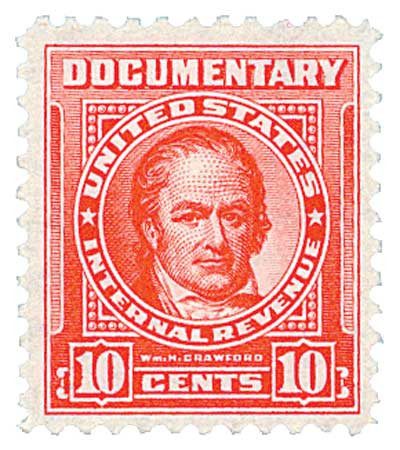
As a result, the race to replace Monroe was crowded and highly competitive. Several prominent figures from Monroe’s own administration entered the contest. These included Secretary of State John Quincy Adams, Secretary of War John C. Calhoun, and Secretary of the Treasury William H. Crawford. Each had national experience and strong political connections. Outside the cabinet, two other powerful figures also ran: Henry Clay, the Speaker of the House of Representatives, and Andrew Jackson, a senator from Tennessee and a celebrated general from the War of 1812.
John C. Calhoun eventually withdrew from the presidential race after realizing he lacked enough support to win. Instead, he ran for vice president, a position that was still chosen separately at the time. Calhoun won that race, ensuring his place in the next administration regardless of who became president.
Support for the remaining candidates was divided along regional lines. Adams drew most of his strength from New England and parts of the Northeast. Jackson was popular in the South, the West, and the mid-Atlantic states. Clay appealed mainly to western voters, while Crawford retained support in parts of the East and among party insiders. With four strong candidates splitting the vote, it became clear that no one was likely to win an outright majority.
Voting took place over several weeks, from October 26 to December 2, 1824. When the electoral votes were counted, Andrew Jackson led with 99 votes. John Quincy Adams followed with 84, William H. Crawford had 41, and Henry Clay finished with 37. At the time, 131 electoral votes were needed to win a majority. Although Jackson had more electoral votes than any other candidate, he fell well short of that mark.
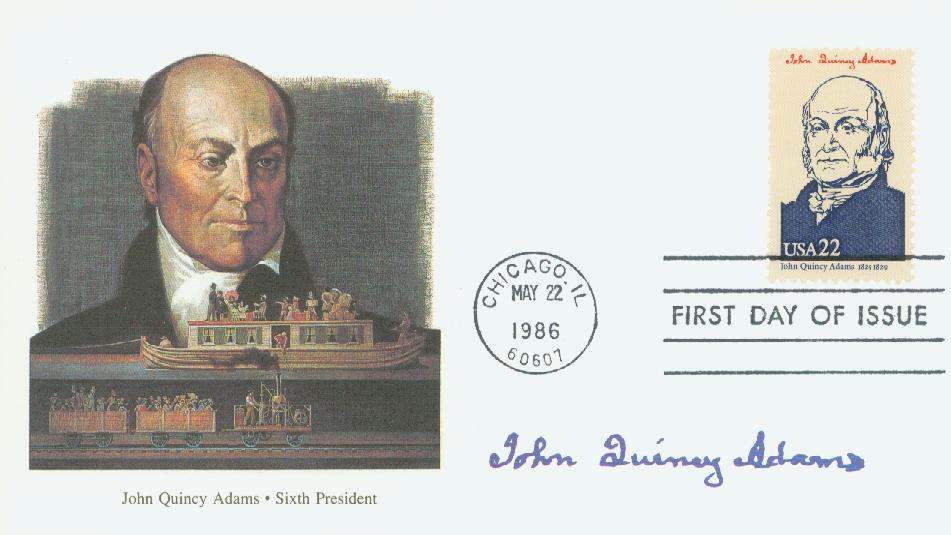
Because no candidate received a majority, the Constitution required the House of Representatives to decide the election. Under the 12th Amendment, the House could choose only from the top three electoral vote recipients: Jackson, Adams, and Crawford. Each state delegation would cast one vote, and a majority of states was needed to win.

Henry Clay, who had finished fourth and was therefore excluded from consideration, still played a crucial role. As Speaker of the House, he had significant influence over the voting process. Clay strongly disliked Andrew Jackson, whom he viewed as unfit for the presidency. He once remarked that he could not believe that “killing 2,500 Englishmen at New Orleans” qualified Jackson for the complex responsibilities of the office. Clay’s political views also aligned more closely with Adams, especially on issues like federal power and economic development.
When the House voted on February 9, 1825, Adams won on the first ballot. He received the votes of 13 state delegations. Jackson received seven, and Crawford received four. Despite Jackson’s strong showing in the popular and electoral vote, Adams was declared the winner.

The decision stunned Jackson and his supporters. Many believed the outcome was unfair. Just before the House results became public, an anonymous letter appeared in a Philadelphia newspaper. It accused Clay of striking a secret deal with Adams, trading his support in the House for a powerful cabinet position. Although no formal investigation ever confirmed the claim, Adams did appoint Clay as secretary of state shortly after taking office.
Jackson and his allies labeled the arrangement a “corrupt bargain.” The accusation followed Adams throughout his presidency and weakened his administration. Jackson used the controversy to rally supporters, presenting himself as a victim of political elites. Four years later, in the election of 1828, Jackson defeated Adams decisively, bringing the turbulent chapter of 1824 to a close.
| FREE printable This Day in History album pages Download a PDF of today’s article. Get a binder or other supplies to create your This Day in History album. |
Discover what else happened on This Day in History.
I’m shocked, shocked, to learn that that two politicians would make a deal? No investigation was made? What would they investigate? If Adams or his supporters made a deal with Clay, there was nothing illegal or unconstitutional about it. It happens all the time. Read Doris Kearns Goodwin’s book, “Team of Rivals,” to see how Lincoln and his supporters made promises and promises to secure the presidential nomination for Lincoln in 1860. Jackson and his supporters came up with the winning phrase, “corrupt bargain,” and rode it to the White House four years later.
Too right Mr Gaunt. The major partners in today’s cabale are more likely to be big corporations and candidates willing to cash in $700000 for three speeches, at the expense of others with no such willingness to collaborate with the 1%. Results in the New Hampshire primary might help expose that. Thank you.
Is “cabale” an English word?
We’re upset with Congress today? History shows that this is nothing new!
Was it really a corrupt bargain? By today’s political standards it seems to happen all the time. “If I do this for you, what will you do for me?” Decisions should be made for the benefit of “We the People.”
Let’s hope that we get a president in 2016 that will bring our nation back to a proud and trustworthy standard.
G. Harper – you’re fooling yourself if you think people were “good” in the past and “bad” today. Then again, who doesn’t enjoy some rose-colored glasses now and then? God Bless!
Thanks, Charles: Reading history of America in the 18th century, one will find stories of political candidates who fought nasty campaigns and disparaged their opponents. Some resorted to duels – gunfights to settled an argument or regain their honor. If politicians fought duels today, the lineup today would be a couple fewer candidates on stage.
Great info in Presidential history . It seems the back and forth with divisiveness rings true today.I would hope folks would see the common sense of the Electoral College and not think about abolishing it. The system is built with checks and balances plus safeguards. Hopefully , common sense can keep the poor losers in check and from destroying democracy .
To the victor go the spoils, nepotism, pork barrel; These are not new terms.
That’s a fantastic story. Didn’t know how that all came about with John Quincy Adams. Can you imagine what would happened with cable TV???? Ha! ha! Would never have been allowed to happen.
There would be public outrage!
Business as usual….no surprise here.
As a fan of presidential history including elections, this story is a well known fact. However, with many of today’s politicians facts are meaningless, only tall tales like those told about the old west are fed to the public. And the media never calls them out on it. Broadcasters and reporters should relentlessly challenge these idiots about what they say. Where-oh-where are the Edward R. Murrows and Walter Cronkites today!!
As it in Ancient Rome and the then world, so it is today.
The more things change, the MORE they remain the SAME.
As frustrating as politicians are, I’d still rather live in the USA than places like China. GOD bless America!
Thank you Mr/Ms. Timm. There never be the likes of Edward R. Murrows and Walter Cronkite: “The Most Trusted Man In America”, as he was known.
There will never be the likes of Benjamin Disraeli, Ferdinand De Lesseps, or Winston L. S. Churchill