

On March 2, 1972, Pioneer 10 lifted off from Cape Canaveral, Florida. It became the first spacecraft to travel beyond the outer planets and eventually the first human-made object to head out of the Solar System.
The idea for Pioneer 10 began in the 1960s. Aerospace engineer Gary Flandro studied a rare alignment of the outer planets. He realized that Jupiter, Saturn, Uranus, and Neptune would line up in a way that would allow a spacecraft to use gravity to gain speed. This concept became known as the “Planetary Grand Tour.” NASA approved a plan in February 1969 for two spacecraft called the Galactic Jupiter Probes. They were later renamed Pioneer 10 and Pioneer 11.
The mission had clear goals. Scientists wanted close-up images of Jupiter. They also wanted to study its atmosphere, magnetic field, radiation belts, and moons. Engineers were not even sure a spacecraft could safely cross the asteroid belt between Mars and Jupiter. Some feared heavy collisions with space debris. Pioneer 10 would test that risk directly.
The spacecraft weighed about 570 pounds at launch. It carried 11 scientific instruments. These included cameras, infrared radiometers, ultraviolet photometers, magnetometers, and detectors for charged particles and cosmic rays. More than 150 experiments were proposed before the final list was chosen. The spacecraft also carried a radioisotope thermoelectric generator powered by plutonium-238. Solar panels would not have worked so far from the Sun.

Pioneer 10 launched aboard an Atlas-Centaur rocket from Cape Canaveral. At the time, it was the fastest object ever built by humans. It passed the Moon in just 11 hours. Within 10 days, all instruments were turned on and sending data. The spacecraft soon began making discoveries. It detected interplanetary helium atoms, which helped scientists better understand the solar wind.
On July 15, 1972, Pioneer 10 entered the asteroid belt. It traveled through the belt for about eight months. The spacecraft was not destroyed, as some had feared. Instead, it found that most particles were tiny, often smaller than a millimeter. This result reduced concerns for later missions.

Pioneer 10 began approaching Jupiter in November 1973. On November 26, NASA received the first close-range images of the planet. The pictures improved each day. By December 2, images were being shared with the public in near real time. The mission eventually sent back more than 500 images. Scientists confirmed that Jupiter’s magnetic field was much stronger than Earth’s and reversed in direction compared to earlier assumptions. Instruments also showed that Jupiter radiated more heat than it received from the Sun. This suggested internal heat sources.
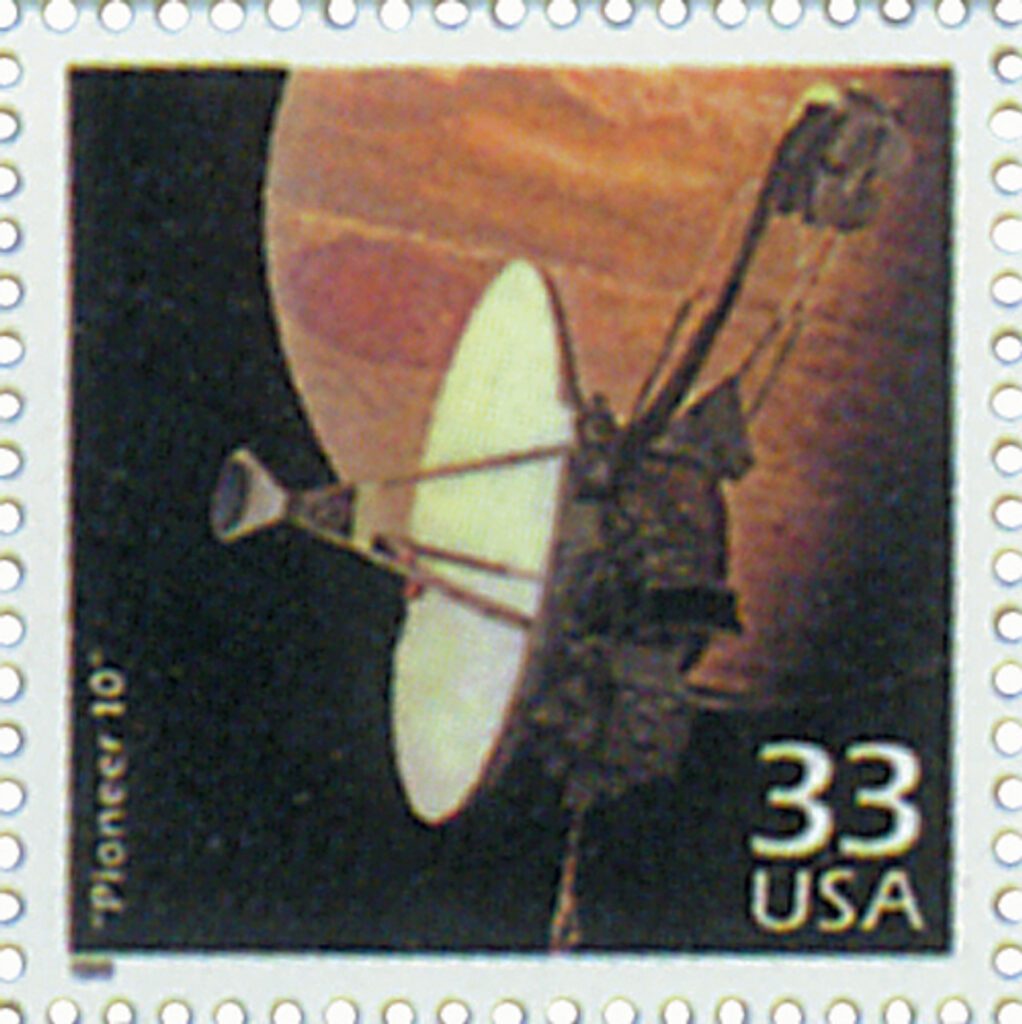
The spacecraft passed within about 81,000 miles of Jupiter’s cloud tops on December 3, 1973. During the closest approach, intense radiation briefly interfered with communications. However, Pioneer 10 survived. It also gathered important data about Jupiter’s moons and radiation belts. The success cleared the way for later missions such as Voyager 1 and Voyager 2.
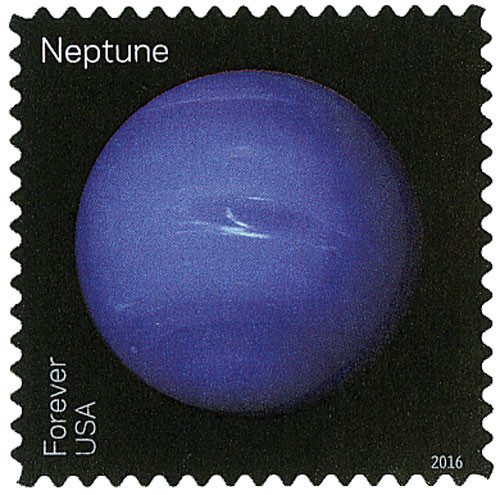
After Jupiter, Pioneer 10 continued outward. It crossed Saturn’s orbit in 1976. It crossed Uranus’ orbit in 1979. In June 1983, it passed beyond Neptune’s orbit, becoming the first spacecraft to travel beyond the major planets. It was now on an escape path from the Sun.
The mission officially ended on March 31, 1997, when NASA stopped routine operations. By then, Pioneer 10 was about 6.2 billion miles from the Sun. The spacecraft continued to send faint signals. The last clear transmission was received on April 27, 2002. Very weak signals continued into early 2003. After that, contact was lost.
Pioneer 10 also carried a message. At the suggestion of astronomer Carl Sagan, the spacecraft included a gold-anodized aluminum plaque. The plaque showed diagrams of a man and woman, the location of Earth relative to pulsars, and a map of the Solar System. It was designed in case the spacecraft was ever found by intelligent life.
Today, Pioneer 10 continues traveling through interstellar space. It is more than eight billion miles from Earth. Though silent, it remains a milestone in space exploration. The mission proved that spacecraft could survive the asteroid belt, endure Jupiter’s radiation, and journey far beyond the known planets, marking the start of humanity’s first step into deep space.
Click here to learn more about the Pioneer plaque.
| FREE printable This Day in History album pages Download a PDF of today’s article. Get a binder or other supplies to create your This Day in History album. |
Discover what else happened on This Day in History.
very interesting information. People that love stamps also, in my opinion, love to study history…..I’m one of them. At university I took many history courses as merely electives so that I could graduate with a degree in pre-medical. I have been collecting stamps since 1955…..springboard off of my mother’s collection. I wish that I had more money to buy the older stamps that I am still missing from my collection. This Day in History idea is great.
I stood in my back yard with parents and neighbors pointing to the passing of Sputnik almost 60 years ago. It was a curious feeling as we were not sure what this meant except that Russia had beaten us to this point and that can’t be good. In the following years with manned flights, which we knew the name of every astronaut to leave a launching pad, we knew the objective of each mission and that the ultimate goal was to go lunar. As time went on past that goal interest seemed to wane due to less familiarity with the goals and people. Pioneer, because of it’s lengthy goal, did little to change, until the years passed and close encounters occurred noting progress and achievement. Considering a 30 year itinerary that left the solar system, a phenomenal accomplishment for all involved.
As a child of the “Space-Age” I always took great interest in any of the new pictures (new at the time) from these probes. I started my collection with all the space related stamps and covers before expanding my interest.
Thanks,.
I was fortunate enough to have been one of the beach spectators the night Pioneer 10 launched. I was on a temporary assignment to Florida and having not really having anything else to do I joined the crowd along the beach the night of March 1st. Well a glitch occurred and the mission was delayed 24 hours and I had to decide did I want to try again the following night. I did try and I’m glad I did. The blast off was spectacular, as the cliche goes, it turnrd the night into day, all along the beach. All through the years I would hear of Pioneer 10 latest exploits and would remember that night, remembering when America could do things.
That disk included Chuck Berry’s version of “Jonny Be Good”.
Great article: was swept up in the science fervor of the 60’s.Education in sciences boomed as we tried to ” beat” the Russions.
I hope the disk also contains music and spoken human language in various musical types, indicating the variety of cultures and languages that exist in our planet. I believe it does! America’s space program is secretly tide to the German technology that was brought to The United States, following the last months of WWII. “Paper Clip 700”.
March 2, 1972 would be 50 yrs ago, not 39. Very good article.
To try and comprehend the vastness of space – 11 Billion miles is less than 0.2% of a light year. The nearest star to our solar system is about 4.2 light years away. It would take Pioneer 10 approximately 112,000 years to reach that star – and that is just one star of the 100’s of Billions in our Milky Way galaxy. We are very, very, very tiny!!