

On December 30, 1963, just weeks after the nation was shaken by the assassination of President John F. Kennedy, Congress passed a bill approving the creation of a new half dollar coin bearing his likeness. This decision came a full ten years before a redesign of the half dollar was legally required, showing how strong the desire was to honor the fallen president as quickly as possible.
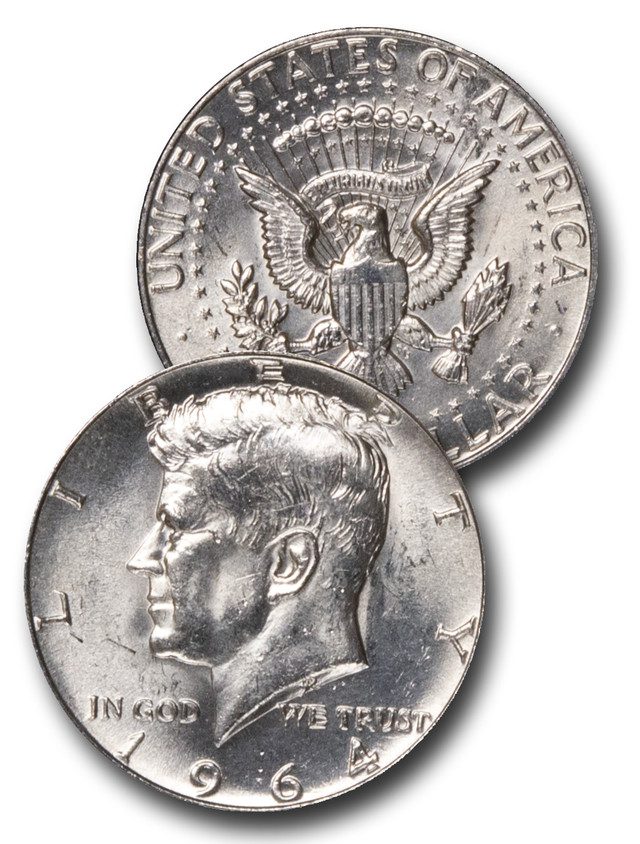
The Kennedy half dollar was issued within months of Kennedy’s death on November 22, 1963. The loss of the 35th president deeply affected Americans and people around the world. Creating a circulating coin was seen as a meaningful way to memorialize Kennedy and keep his image in everyday American life.
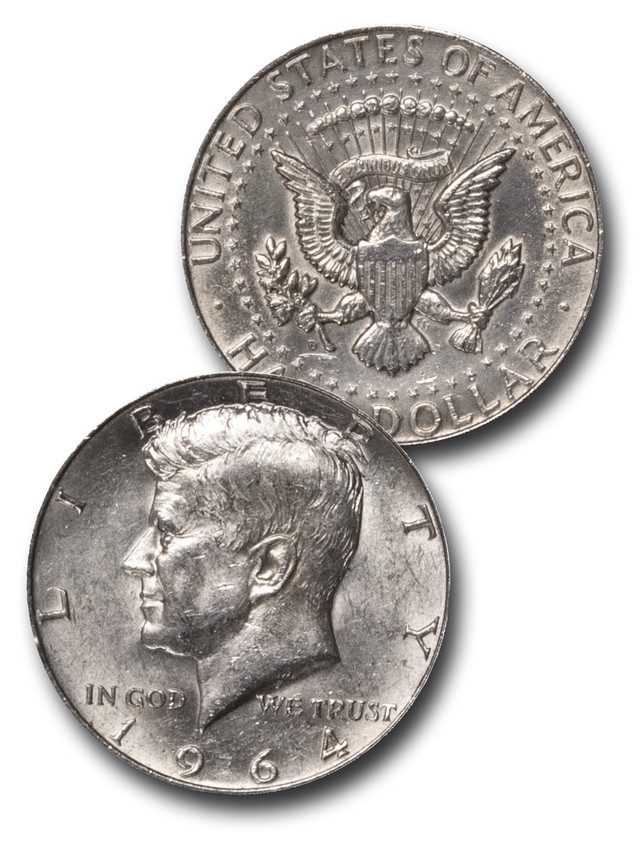
Shortly after news of Kennedy’s death spread, Eva Adams, the director of the United States Mint, contacted the Mint’s chief engraver, Gilroy Roberts, to discuss plans for honoring the president on US coinage. On November 27, 1963, Jacqueline Kennedy was consulted about the proposal. She expressed a preference for placing her husband’s portrait on the half dollar rather than the quarter, explaining that she did not want him to replace George Washington. Another practical reason supported this choice: the US Treasury already held a large stockpile of unused dollar coins. With these considerations in mind, plans for a Kennedy half dollar moved forward immediately.

Roberts, working alongside Assistant Engraver Frank Gasparro, already had experience depicting President Kennedy. Both men had designed a commemorative medal for Kennedy’s presidential inauguration, including a portrait of the president and a version of the presidential seal that would later appear on the reverse of the coin. Importantly, Kennedy himself had approved those medal designs during his lifetime. For the new half dollar, the engravers adapted this earlier artwork. Jacqueline Kennedy reviewed the designs and suggested a few minor changes, which were quickly incorporated. Within a short period of time, the coin dies were prepared and ready for use.

However, one major obstacle remained: the law. Under existing US law, a coin’s design could not be changed until it had been in circulation for at least 25 years, unless Congress granted special approval. The Franklin half dollar, which featured Benjamin Franklin, had been introduced only 15 years earlier, in 1948. To move forward with the Kennedy design, Congress needed to act. With strong public support and the backing of President Lyndon B. Johnson, Congress passed the necessary legislation on December 30, 1963, clearing the way for production.

The first Kennedy half dollars were struck on January 30, 1964, and they went on sale to the public on March 24. Demand was immediate and overwhelming. Banks quickly sold out, and few of the coins entered everyday circulation. Instead, many Americans saved them as keepsakes or mementos of a president they admired. For some, the coin served as a personal reminder of Kennedy’s leadership and the sense of hope associated with his presidency.
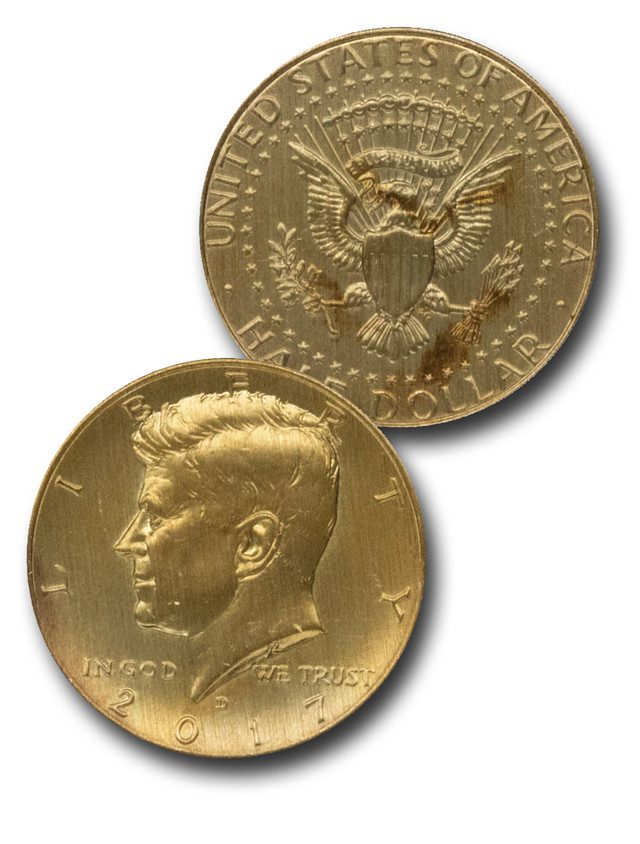
In 1965, the US Treasury made several changes to the half dollar. The date “1964” continued to be used temporarily, and later that year the coin’s composition was reduced to 40 percent silver, known as silver-clad. By 1971, silver was removed entirely from the half dollar’s composition. Although Kennedy half dollars are still minted today, they are rarely seen in circulation. Even so, they remain popular with collectors, standing as lasting symbols of history, remembrance, and national tribute.
Click here for more JFK half dollars in US Mint Year and Proof Sets.
| FREE printable This Day in History album pages Download a PDF of today’s article. Get a binder or other supplies to create your This Day in History album. |
Discover what else happened on This Day in History.
As a young coin collector, I remember waiting for the release of the Kennedy half in the spring of 1964. I still recall the excitement of buying two new silver halves at my local bank. And as an old numismatist, the excitement was repeated when the U S Mint issued a series of fiftieth anniversary Kennedy commemorative half dollars in both silver and gold.