

On April 2, 1872, telegraph inventor Samuel Morse died, closing the life of a man whose work helped make near-instant communication possible. His system turned electricity into language, allowing messages to travel across vast distances in seconds rather than days.
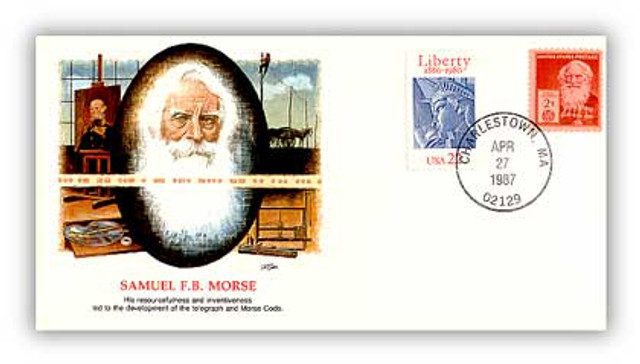
Samuel Finley Breese Morse was born on April 27, 1791, in Charlestown, Massachusetts. His father, Jedidiah Morse, was a well-known geographer and minister. Young Morse received a broad education at Yale College, where he studied religious philosophy, mathematics, and emerging scientific ideas. While at Yale, he attended lectures on electricity, a subject still poorly understood but rapidly developing. To support himself, Morse also painted, revealing an artistic talent that would define his early career.
In 1811, Morse traveled to England to study at the Royal Academy of Arts. There, he trained under established painters and studied classical works by artists such as Michelangelo and Raphael. He focused on large historical scenes, though these proved difficult to sell in the American market. Returning to the United States in 1815, Morse adapted his work to portrait painting, which provided more steady income.

Over the next decade, Morse became a respected portrait artist. He painted prominent figures, including former presidents John Adams and James Monroe. He also played a role in shaping American art institutions. In 1825, he helped found the National Academy of Design in New York City and served as its first president, promoting professional standards for artists in the young nation.
That same year marked a turning point in his life. While in Washington, DC, painting a portrait of the Marquis de Lafayette, Morse received a letter delivered by horse messenger. It informed him that his wife, Lucretia, was seriously ill. A second letter arrived the next day, stating that she had died. By the time Morse reached home in New Haven, Connecticut, she had already been buried. The delay in communication deeply affected him. He began to consider whether information could be transmitted faster than physical delivery allowed.
In 1832, during a return voyage from Europe, Morse encountered Charles Thomas Jackson, a scientist knowledgeable about electromagnetism. Their discussions introduced Morse to recent experiments showing that electrical currents could travel along wires. Morse began to think about how such currents might be used to send signals over distance.
Over the next several years, Morse worked to develop a practical telegraph system. His concept focused on a single wire carrying electrical pulses, which could be translated into coded messages. He partnered with machinist and inventor Alfred Vail, who helped refine the design and contributed to the development of a coding system. Together, they created what became known as Morse code, a method of using dots and dashes to represent letters and numbers.
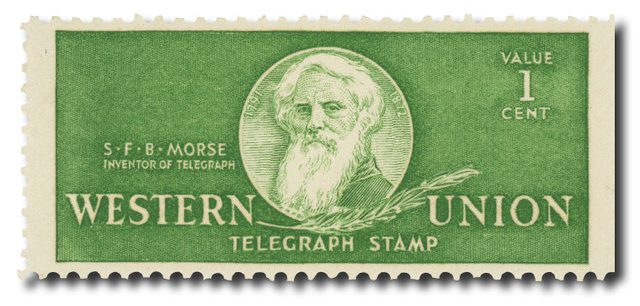
Morse received a patent for his telegraph in 1837, though progress was slow at first. Funding was difficult to secure, and competing systems were being developed in Europe. In 1843, Morse finally received support from the US Congress to build an experimental telegraph line. The line ran approximately 40 miles between Washington, DC, and Baltimore, Maryland.
On May 24, 1844, Morse sent the first official message from the chamber of the US Supreme Court in the Capitol building to a railway station in Baltimore. The message read, “What hath God wrought,” a phrase from the Book of Numbers. The successful transmission demonstrated that long-distance electrical communication was practical.
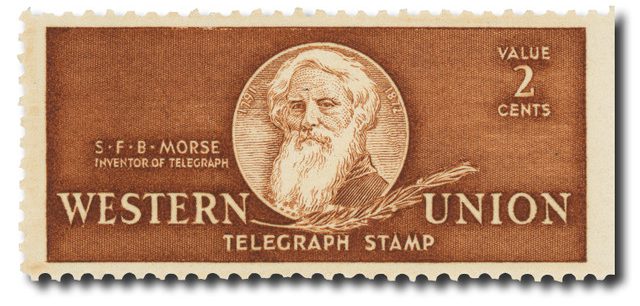
After this demonstration, telegraph lines expanded quickly. Private companies began building networks connecting major cities. By the early 1850s, telegraph systems were spreading across the United States and into Europe. In 1851, Morse’s system became the standard for international telegraphy in much of Europe, replacing several competing designs.
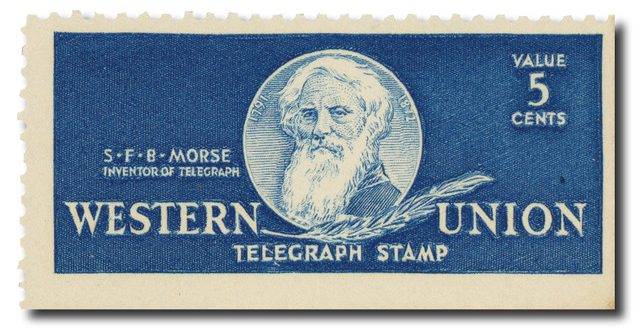
The telegraph proved especially important during the Civil War. Military leaders used it to send orders and receive updates from distant battlefields. Railroads also relied on telegraph lines to manage train schedules and improve safety. For businesses and newspapers, the telegraph allowed faster reporting of prices, news, and events.
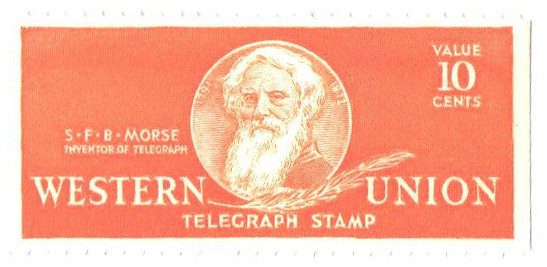
Later in life, Morse continued to pursue technical and artistic interests. He worked on improvements related to undersea telegraph cables, including efforts tied to the transatlantic cable, which would eventually connect North America and Europe. He also developed a marble-cutting machine, though it had less lasting impact than his communication work.
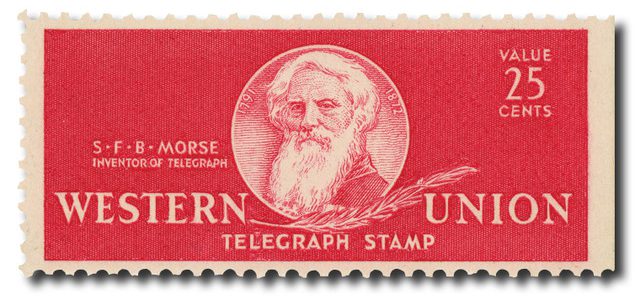
Samuel Morse died in New York City on April 2, 1872, at the age of 80. By that time, telegraph networks spanned continents, and his code remained in widespread use. His system did not eliminate earlier forms of communication, but it added a new layer—one that allowed information to move at the speed of electricity, reshaping how people shared news, conducted business, and coordinated across long distances.
| FREE printable This Day in History album pages Download a PDF of today’s article. Get a binder or other supplies to create your This Day in History album. |
Discover what else happened on This Day in History.
The article about Samuel Morse was beyond incredible particularly after seeing his artwork. Everyone is aware of his invention but I was totally unaware of his artistic brilliance. I was captivated by the quote in the section [Early Life] subtitled: Growing Artist. “Attend to one thing at a time. The steady and undissipated attention to one object is the sure mark of a superior genius” -Jedidiah Morse, father of Samuel F B Morse- I will have to read about Woodrow Wilson tomorrow.
I didn’t realize how old his telegraph using magnetism invention is. Single wire telegraph replaced smoke signals…..a giant leap forward for communications.
WOW ! I wish that these stories would be in all schools..So much more interesting than current history books.
All the ” This Day In History” are grate.
Morse is buried in Greenwood Cemetery Brooklyn New York. His massive tombstone is very impressive.