
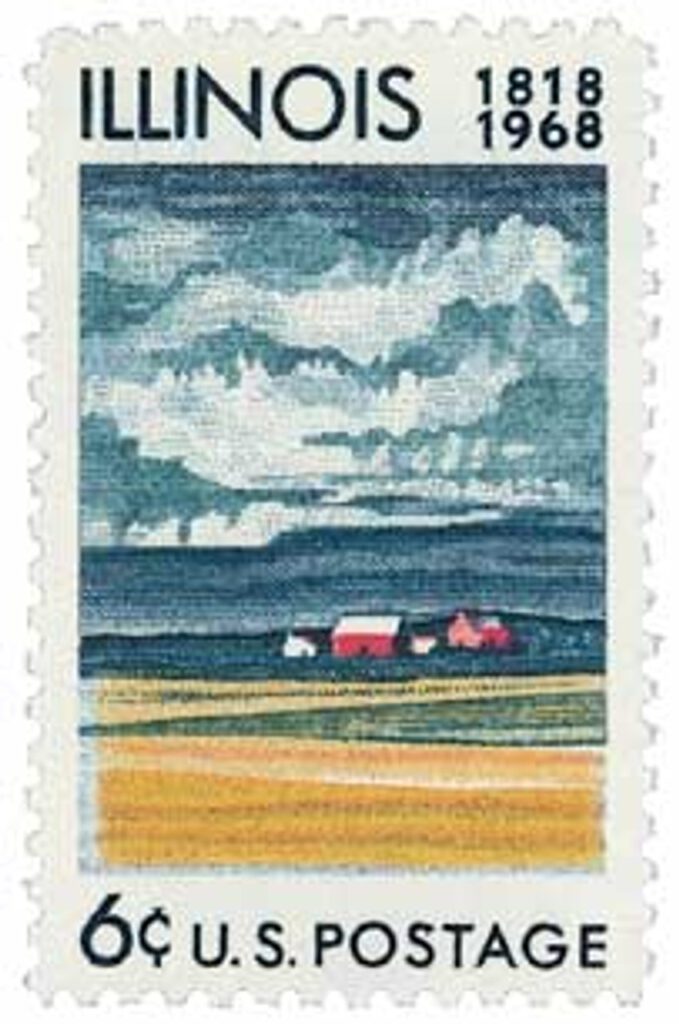
On December 3, 1818, President James Monroe signed the legislation that admitted Illinois as the 21st state in the Union. But the history of Illinois stretches far back before statehood. Long before European explorers arrived, the region was home to complex American Indian cultures whose achievements, alliances, and struggles helped shape the land that would become Illinois.
For several thousand years, Indigenous peoples built large earthworks across the region. Today, the most famous of these is Monk’s Mound at Cahokia, the largest known prehistoric earthwork in the United States. Covering about 16 acres, the mound is wider at its base than the Great Pyramid of Egypt. Cahokia was a major center of the Mississippian culture, sometimes called “Mound Builders,” and was once home to tens of thousands of people.

Many tribes lived in the Illinois area during later centuries. The Illinois Confederacy—an alliance of Algonquian-speaking tribes—was once the dominant group, but it was severely weakened in the late 1600s when the powerful Iroquois Confederacy launched a series of attacks. By 1800, only a small number of Illinois people remained. Other tribes who lived or traveled through the region included the Chippewa, Ottawa, Potawatomi, Sauk, Fox, Kickapoo, Shawnee, and others.
The first Europeans to reach the area were the French explorers Father Jacques Marquette and Louis Jolliet in 1673. Sent by the governor-general of New France to explore the Mississippi River, they traveled down the western edge of present-day Illinois before returning north along the Illinois River. Marquette later founded a mission near the modern town of Ottawa. In 1699, French priests established the first permanent European settlement at Cahokia.
Illinois soon became part of the French colony of Louisiana. The French built Fort de Chartres in 1720, and when it was rebuilt in the 1750s, it became one of the strongest forts in North America. But French control ended after the French and Indian War. In 1763, France ceded its lands in North America to Britain, and Illinois fell under British rule. Many French settlers chose to move west rather than live under British authority.
When the American Revolution began, fewer than 2,000 white settlers lived in Illinois. In 1778, frontiersman George Rogers Clark led Virginia militia—nicknamed the “Big Knives”—into the Illinois country. He captured British-held Kaskaskia and Cahokia, effectively bringing the region under American control. Virginia then claimed Illinois as one of its counties.
That claim did not last long. After the Revolution, Maryland refused to approve the Articles of Confederation unless states with western land claims gave them up. As a result, Virginia ceded Illinois to the federal government in 1784. Three years later, the Northwest Ordinance of 1787 placed the region within the new Northwest Territory, setting up guidelines for how territories could become states. Over time, the region was reorganized—first into the Indiana Territory in 1800, then into the Illinois Territory in 1809.
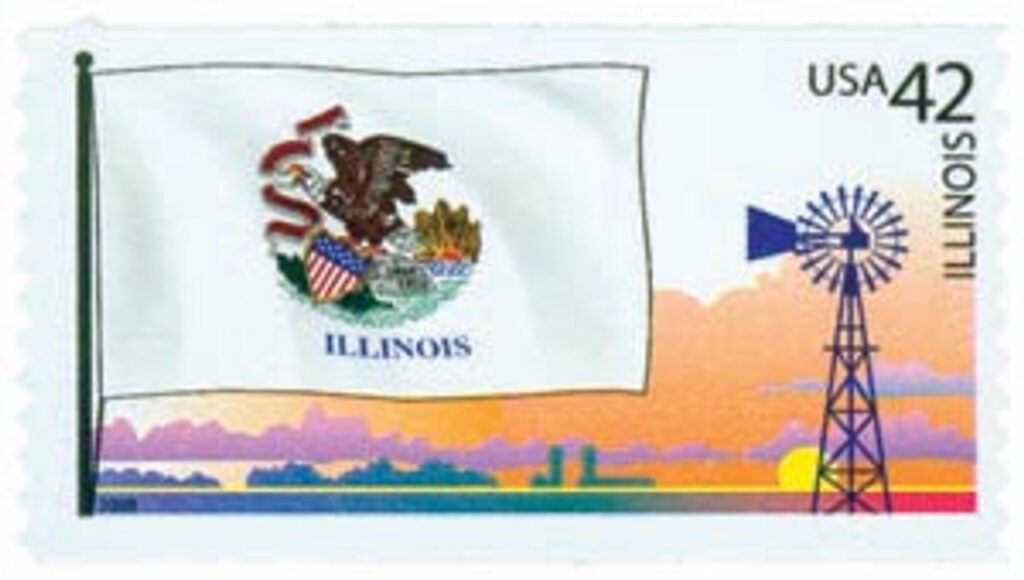

The push toward statehood strengthened as more settlers arrived, especially in the southern third of the territory. On December 3, 1818, Illinois became a state. But a critical decision shaped the state’s future: Delegate Nathaniel Pope convinced Congress to move Illinois’s northern border much farther north than originally planned. This shift gave Illinois access to the future site of Chicago, the lead mines around Galena, and fertile northern farmlands. Today, more than two-thirds of the state’s population lives in this northern region. In 1837, Illinois moved its capital to Springfield, a change strongly supported by Abraham Lincoln.

During the Civil War, Illinoisans had mixed loyalties, especially in the southern part of the state, but most supported the Union. Illinoisans took pride in Lincoln, who led the country through the war, and in Ulysses S. Grant, one of the Union’s top generals. The state contributed more than 260,000 soldiers and became a major supplier of weapons, iron, and food. No battles were fought on Illinois soil, but its industries and manpower were vital to the Northern war effort.
After the war, Illinois grew rapidly. Railroads spread across the state, supporting agriculture and attracting new industries. By 1880, Illinois was the fourth most populous state, and Chicago was becoming a major transportation and manufacturing center. Immigrants from across Europe supplied labor for mines, mills, and factories. Even after the Great Chicago Fire of 1871 destroyed much of the city, Chicago was rebuilt quickly and became a global center for architecture and commerce.
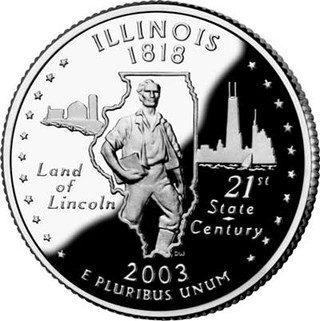
Illinois played an important role in the labor and reform movements. The state passed some of the earliest laws limiting child labor and working hours for women. It was also the first state to provide public aid to help poor parents care for their children. Large numbers of African Americans moved to Illinois during the early 20th century, forming vibrant communities. Racial tensions occasionally led to violence, but these events helped inspire the founding of the NAACP.
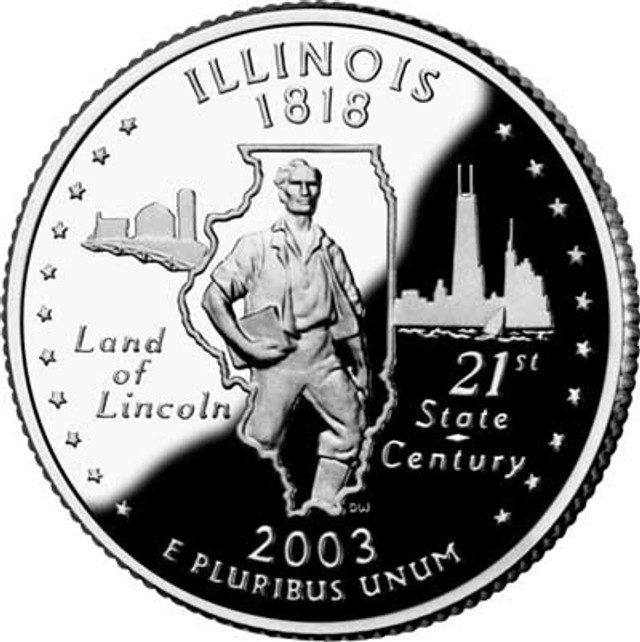
By the mid-1900s, Illinois was a major industrial powerhouse. Like other states with heavy industry, it later faced challenges related to pollution, population growth, and the need for expanded public services. Even so, Illinois continued to adapt, growing in areas like manufacturing, transportation, and technology.
Today, Illinois’s economy is anchored by agriculture, manufacturing, transportation, finance, and growing high-tech industries. Chicago is a global hub for logistics and innovation, while central and southern Illinois continue to lead in farming, energy, and advanced manufacturing. As the state looks forward, it is working to strengthen its economic diversity, invest in infrastructure and education, and expand opportunities across both urban and rural regions.
| FREE printable This Day in History album pages Download a PDF of today’s article. Get a binder or other supplies to create your This Day in History album. |
Discover what else happened on This Day in History.
Very informative article.
Day in History presentations provided by Mystic have been great. They remind me of our history lessons of years past and readily provide historical information in which I use for our grand children, then confirm the lesson by showing the issue of USPS Commemorative stamps (and some coins). At times when some political groups are attempting to rewrite our history, its great to see the facts reissued.
Nice to see Marquette mentioned in this piece. Many of today’s US survey history textbooks fail to mention him and Joliet anymore. One I used recently had there trek depicted on a map of colonial explorers but did not say what they did in the book’s text. He is important to me personally since I went to Marquette University in Milwaukee which of course was named in his honor.
Being from Illinois I enjoyed the info.Thank you.
Happy 197th Anniversary Illinois and everyone who lives there or is from there! Thanks for the great article, Mystic.
As a non-US resident, these snippets of your history are very informative. Thanks, Mystic.
This would be great for history teachers to share with their students.
)n July 7,8,& 9, 1818 an election was held in Perrysville the county seat of Bond, for the election of two delegates to a convention for Illinois statehood. Mr. Kirkpatrict and Mr. Morse were elected to represent Bond County. Perrysville was later in Fayette County when it was formed and Greenville became the county seat of Bond County
A great big KUDDO for the people who research and provide additional information to this column
I was born and raised on the south side of Chicago and very proud of it but I am ashamed that I was not aware of most of what was written here. I did very well in US history in school but the history of our state was not taught that I remember. Thank You for the lesson!
Four American Presidents have been elected while living in Illinois. Abraham Lincoln, Ulysses Grant, Barack Obama . The only U.S. President born and raised in Illinois is Ronald Reagan . Adlai Stevenson (1835-1914) was Vice President of U.S. Adlai Stevenson (1900-1965) was Democratic nominee for 1952 and 1956 Presidential elections which he lost to Dwight Eisenhower. Abraham Lincoln Presidential Library & Museum is located in Springfield. Barack Obama Presidential Center is scheduled to be completed in Chicago by 2020. Thank you MYSTIC for your article.