

Susan B. Anthony was born on February 15, 1820, in Adams, Massachusetts. Born into a Quaker family that believed deeply in equality and moral responsibility, she would grow into one of the most persistent and recognizable leaders of the fight for women’s voting rights in the United States.
Anthony grew up in a household shaped by Quaker values such as simplicity, education, and social justice. Her father, Daniel Anthony, encouraged his children to be disciplined, independent, and well educated. Anthony learned to read and write at a very young age and later attended a series of schools, including a boarding school near Philadelphia. She began teaching as a young adult and worked at a female academy in New York during the 1840s. While teaching, she noticed that women were paid far less than men doing similar work. This inequality helped shape her lifelong commitment to reform movements.
By the mid-1800s, Anthony’s family had settled near Rochester, New York. Their home became a meeting place for reformers and abolitionists. During this time, Anthony met Frederick Douglass and other leading anti-slavery activists. She soon became involved in the abolitionist movement and later worked as an agent for the American Anti-Slavery Society. She also became active in the temperance movement, which aimed to reduce or eliminate alcohol use. However, after she was denied the right to speak at a temperance meeting in 1852, she became more focused on women’s rights, realizing that women needed political power to be treated equally.
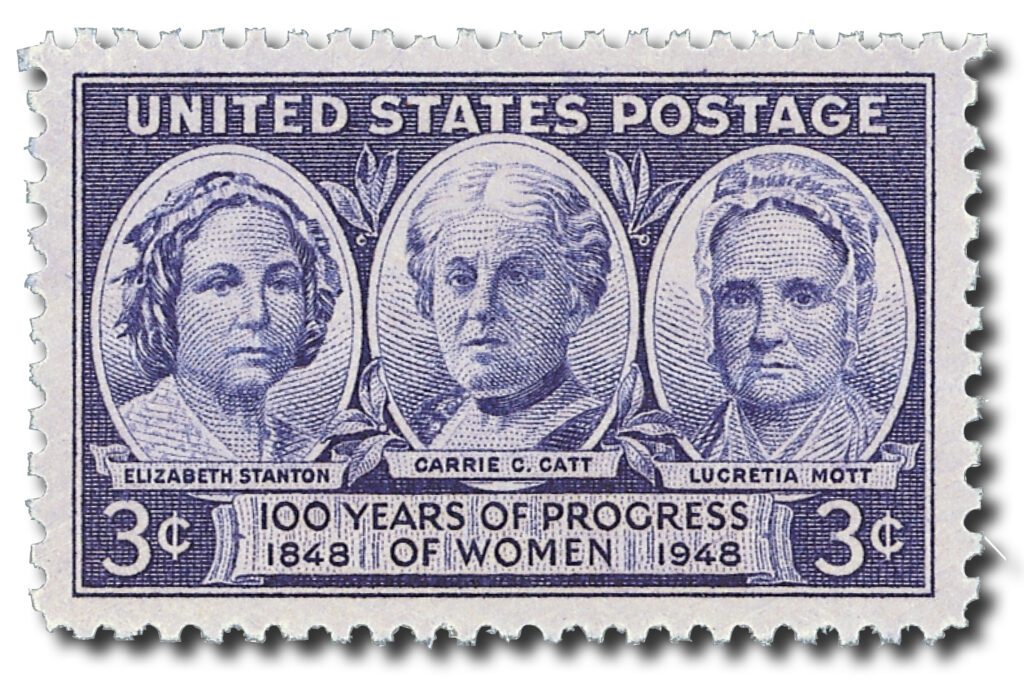
A turning point in Anthony’s life came when she met Elizabeth Cady Stanton. The two formed one of the most important partnerships in American reform history. Stanton often focused on writing and developing ideas, while Anthony traveled widely to give speeches and organize supporters. Together they pushed for equal rights for women in education, employment, property ownership, and especially voting.
After the Civil War, Anthony helped found the American Equal Rights Association in 1866. The group worked to secure equal rights, especially voting rights, regardless of race or sex. When disagreements divided reformers over how to expand voting rights after the war, Anthony and Stanton helped create the National Woman Suffrage Association in 1869. This organization focused mainly on winning a constitutional amendment that would give women the right to vote nationwide.

Anthony became famous nationwide after she voted in the 1872 presidential election in Rochester, New York, even though women were not legally allowed to vote. She argued that the Constitution already gave her that right as a citizen. She was arrested, tried, and fined $100. She refused to pay the fine, and the government never forced payment. The event brought national attention to the women’s suffrage movement and made Anthony one of its most recognized leaders.
Anthony spent decades traveling across the country giving speeches, organizing meetings, and lobbying lawmakers. She sometimes delivered up to 100 speeches per year. She also helped found the International Council of Women and worked with reformers around the world. In 1892, she became president of the National American Woman Suffrage Association, one of the largest suffrage organizations in the United States.
In 1878, Anthony and Stanton supported a proposed constitutional amendment that would guarantee women the right to vote. Although it failed at the time, the idea remained central to the movement for decades. Anthony continued her work well into old age, even meeting with political leaders, including President Theodore Roosevelt, to advocate for women’s suffrage.
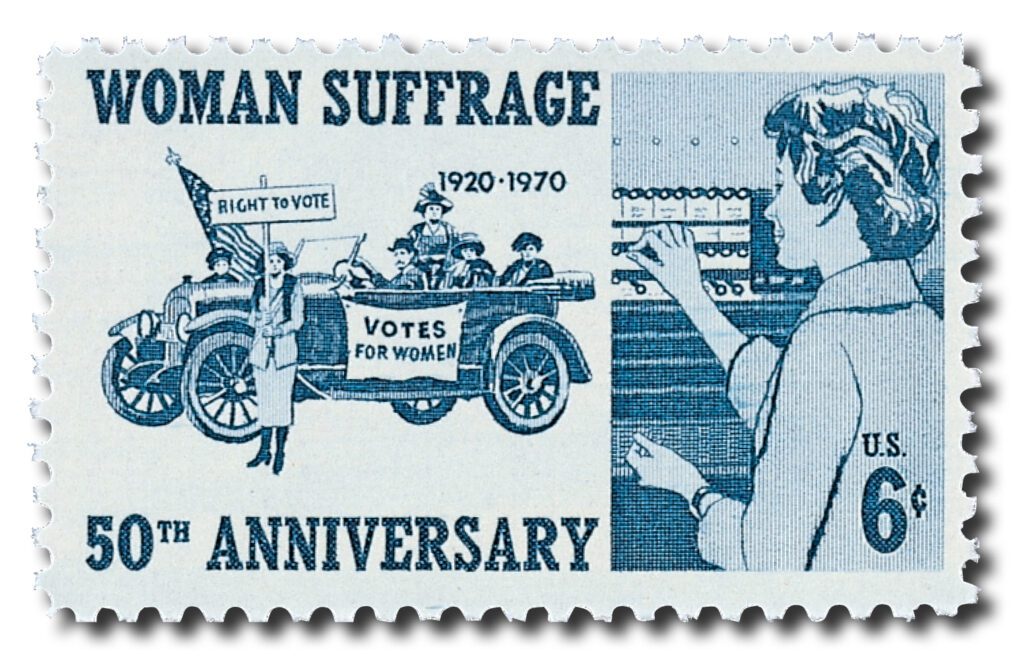
Susan B. Anthony died on March 13, 1906, in Rochester, New York. She did not live to see the ratification of the Nineteenth Amendment in 1920, which gave women the right to vote nationwide. However, her decades of organizing, speaking, and political pressure helped lay the foundation for that achievement. In 1979, she became the first woman honored on a circulating United States coin, reflecting her lasting place in American history.
| FREE printable This Day in History album pages Download a PDF of today’s article. Get a binder or other supplies to create your This Day in History album. |
Discover what else happened on This Day in History.
All these years and women are still fighting to receive equal pay for equal work. I wonder what it is that makes men feel superior to women. Interesting article.
Yeah Martha, I’ve wondered the same thing all these years later after protesting for the ERA in the late 1960’s (which still hasn’t become a reality.). And under the current administration women’s rights are being chipped away. Amazing how many men are cowards these days.
Thank God for wonderful and courageous people like Susan B. Anthony for her lifetime work and lifetime accomplishments associated with ‘equal rights’ and ‘equal pay for equal work’ regardless of race or gender. Susan B. Anthony is a standout hero in my book of heroes. America is a great country because of the work, perseverance, and ideas of great people like Susan B. Anthony.
Best Regards Dr. Doug
Amazing that this right to vote took so long to come. The Republic of Texas allowed women to vote back in 1836. However they failed in giving rights to African Americans who were held as slaves. Texas could have been a leader in that area, but failed.
Did any of you think about what Labor Unions WOULD DO?? GO ON STRIKE!!!!!!!
Great and informative article.
Happy Birthday Susan B. Anthony! After a positive and successful life, may she RIP.
Ms. Armstrong — I just want you to know that I was a registered nurse for 40 years and there were a lot of women — other nurses who were my colleagues, but had more education and more responsibility than I had, nurse anesthetists, pharmacists, administrators, doctors and other health professionals who made a LOT more money than I did. I don’t know if it is the “old boys club,” mentality in some professions that keep some women from earning the same as their peers, but that was never a problem where I worked. If you earned your degrees and put in the effort to advance yourself, the pay was there for you. I hope that in the future everyone, men and women will be equally paid for their efforts, no matter what profession they enter. Thank you.
Right on Ms Armstrong, although these days we get women earning near $700000 from Goldman Sachs for three speeches to the Bank’s top brass, what millions of women in America can only dream of earning in a lifetime or two.
If you want real change in ‘pay and equality’, it’s time for anyone to stop backing those who actively oppose it, as they blatantly threaten women voting for others (think of true women advocates such as Dr Jill Stein, or even B Sanders) with a ‘special place in hell’ if they don’t toe the line. Yuk! GdR
Thank you for remembering her birthday. March 13, 2016 will be the 100th anniversary of her death. I have two questions,; has the post office used any other amendment so often on a stamp as the 19th (1936, 1970, 1995)? And why did the PO issue the second stamp for Anthony in Louisville Ky?