

On February 2, 1914, a little-known British stage performer appeared on screen for the first time, launching one of the most influential careers in film history. That debut film marked the moment Charlie Chaplin stepped into motion pictures and began reshaping comedy, storytelling, and cinema itself.
Charles Spencer Chaplin was born on April 16, 1889, in London, England, to parents who worked as music hall performers. His childhood was unstable. His father struggled with alcoholism and died young. His mother suffered from mental illness, and Chaplin spent time in workhouses as a child. These early hardships later shaped the emotional depth of his comedy.
Chaplin began performing at a young age. At eight, he joined a clog-dancing group called The Eight Lancashire Lads. He learned discipline, timing, and physical control. As a teenager, he acted in stage plays and toured Britain. At seventeen, he joined the Fred Karno Company, a successful comedy troupe known for physical humor and slapstick. In 1910, the troupe toured the United States. American audiences responded strongly to Chaplin’s expressive style.
In 1913, during another US tour, Chaplin caught the attention of Mack Sennett. Sennett ran Keystone Studios, which produced short silent comedies for a growing film audience. Chaplin was hesitant to leave the stage. Film acting was still considered lower status. His opinion changed when Sennett offered him $150 a week, a high salary at the time. Chaplin accepted the contract and moved to Hollywood.

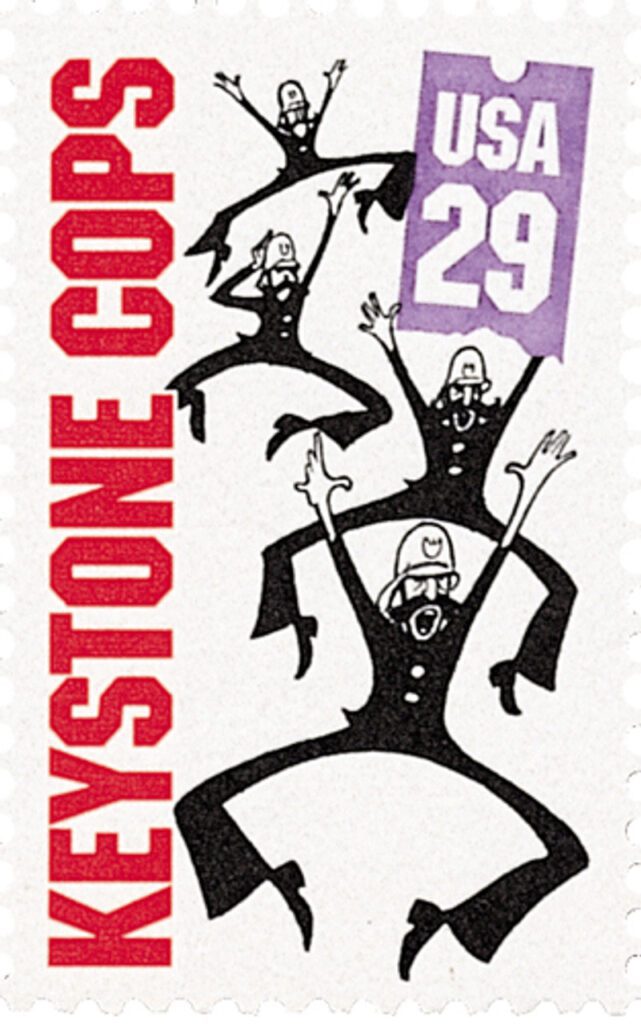
Chaplin’s first film, Making a Living, premiered on February 2, 1914. In the short comedy, he played a sly con artist who competes with a newspaper reporter and ends up chased away by the Keystone Cops. Chaplin wore a mustache, top hat, and frock coat. He did not yet play the character audiences would later adore. Chaplin disliked the final cut of the film. Director Henry Lehrman, who clashed with Chaplin on set, reduced his screen time and cut several of his best moments.
Despite his disappointment, Chaplin worked rapidly. He filmed three movies in one week. One of them, Kid Auto Races at Venice, premiered just five days after Making a Living. For this film, Chaplin created a new look. He wore baggy pants, a tight jacket, a derby hat, and carried a bamboo cane. He added oversized shoes and a small mustache. This character, later known as the “Little Tramp,” was playful, poor, stubborn, and oddly dignified. Audiences loved him immediately.
Chaplin quickly gained creative control. He began directing his own films and refining his style. In 1914 alone, he appeared in 35 short films for Keystone. His popularity soared. By 1916, he signed a contract worth $670,000 per year, making him one of the highest-paid people in the world. He moved to more advanced studios where he controlled scripts, editing, and pacing.
In 1919, Chaplin co-founded United Artists with Douglas Fairbanks, Mary Pickford, and D.W. Griffith. The company allowed filmmakers to distribute their own work without studio interference. Chaplin’s first film under the new company was A Woman of Paris. He did not appear in it, which disappointed fans, but critics praised its mature storytelling. He returned as the Tramp in The Gold Rush in 1925. The film earned about $5 million and became one of the most successful silent movies ever made.
When sound films became popular in the late 1920s, Chaplin resisted. He believed dialogue would weaken visual comedy. Instead, he added music and sound effects while keeping dialogue minimal. Chaplin composed much of the music himself. He finally embraced spoken dialogue in the 1940s, but his popularity declined. His political views and criticism of authority also made him controversial in the United States.
Chaplin’s influence endured. In 1972, he received an honorary Academy Award for his lasting impact on film. In 1975, Queen Elizabeth II knighted him. Six of his films are preserved in the National Film Registry.
| FREE printable This Day in History album pages Download a PDF of today’s article. Get a binder or other supplies to create your This Day in History album. |
Discover what else happened on This Day in History.
Very Underrated Performer Producer Director and Cinema Genius. The Movie with M. Downey Jr is a brilliant chronologic example of his journey through life and especially Hollywood during the war.
I enjoy reading the comments of the readers as much as the articles themselves. Odd that there was only one reply to someone as well known, loved, and accomplished as Charlie Chaplin. Now that I think about it, I can’t think of anything he ever said either.
He also was a composer and wrote the song “Smile”