

On January 7, 1785, the sky briefly became part of the postal system. In a daring balloon flight watched by astonished crowds, mail was carried through the air for the first time, marking a bold experiment in communication and transportation that captured the imagination of the world.
The honor of piloting this first airmail delivery belongs to Jean-Pierre Blanchard, a French inventor and one of the earliest pioneers of balloon flight. At a time when human flight was still a radical and risky idea, Blanchard was willing to trust silk, rope, and hot air to lift him above the earth. His work placed him at the center of a growing fascination with ballooning that spread rapidly across Europe.

Blanchard made his first successful balloon ascent on March 2, 1784, just four months after the world’s first recorded balloon flight by the Montgolfier brothers in France. His timing could not have been better. Europe was gripped by what became known as “balloonomania.” Balloons were more than a scientific curiosity—they became a cultural sensation. People decorated household items with balloon images, wore balloon-themed jewelry, and adopted fashion styles inspired by their shape. Clothing “au ballon” featured puffy sleeves and rounded skirts, and some admirers even styled their hair à la Blanchard to honor the famous aeronaut.

Despite his growing fame, ballooning was expensive, and Blanchard needed financial backers. In August 1784, he moved to England, hoping to attract wealthy supporters who could help fund his experiments. There, he met Dr. John Jeffries, a wealthy physician from Boston who had come to England during the American Revolutionary War. Jeffries was immediately captivated by ballooning and soon became Blanchard’s partner. Together, they staged a highly publicized balloon demonstration for the Prince of Wales, gaining attention, credibility, and further support.

Blanchard soon set his sights on an even greater achievement: becoming the first person to fly across the English Channel. Jeffries agreed to pay for the attempt but insisted on joining the flight. Blanchard was reluctant to share the glory, but after much debate, the two men agreed to fly together. The ambitious journey would test not only their balloon but also their courage.
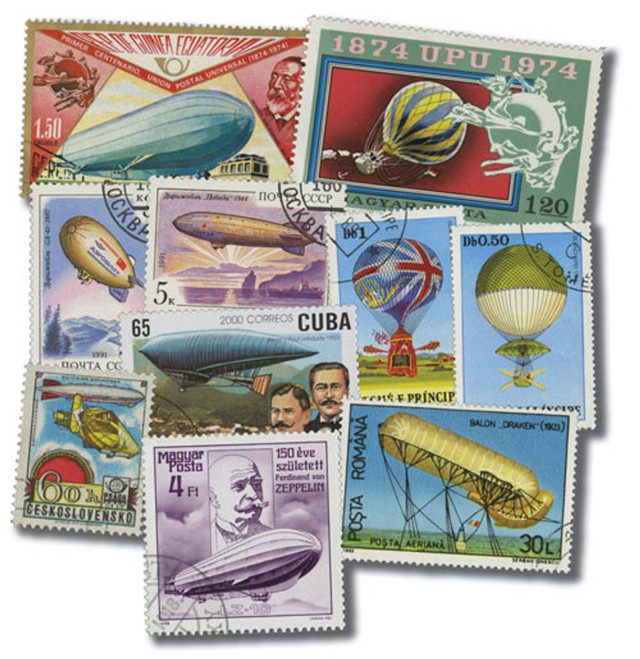
On January 7, 1785, Blanchard and Jeffries lifted off from Dover, England, bound for Calais, France. Before the flight, Blanchard printed pamphlets praising his own achievements and dropped them over the English countryside as the balloon drifted inland—an early example of airborne advertising. Tucked aboard the balloon was also a small bag of mail, making this historic crossing the world’s first attempt at airmail delivery.
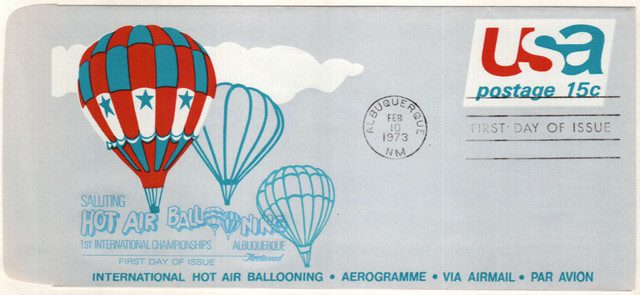

At first, the journey was calm. But once the balloon reached open water, trouble began. The balloon steadily lost altitude and sank closer to the cold waters of the Channel. Desperate to stay aloft, Blanchard and Jeffries threw nearly everything they had overboard—ballast, equipment, the mailbag, and even most of their clothing. At one point, they were reportedly left wearing only their undergarments. The situation was dangerous and frightening, but the lighter balloon finally began to rise.
After about two and a half hours, the balloon reached France and landed safely near Calais. Though most of the letters had been sacrificed to the sea, one letter survived the journey. It was sent by William Franklin, an American Loyalist and the son of Benjamin Franklin, to his own son, William Temple Franklin, who was serving as a diplomat in France alongside his famous grandfather. That single surviving letter secured the flight’s place in postal and aviation history.
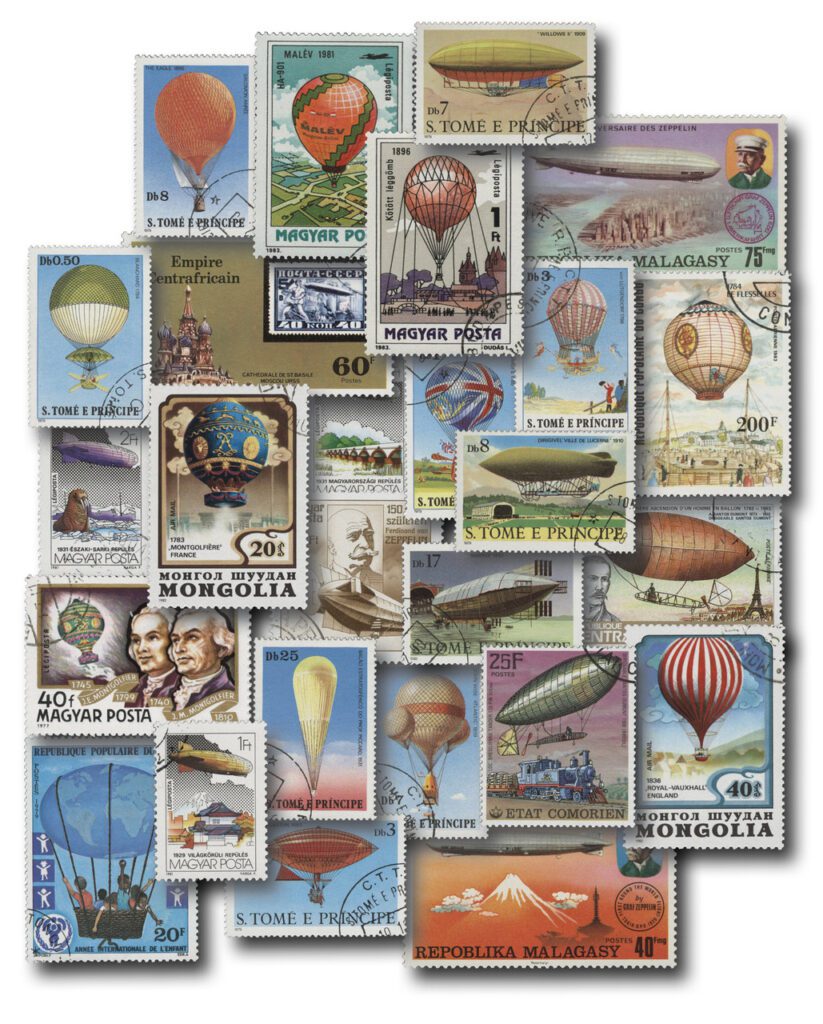
Blanchard was celebrated as a hero. For his achievement, King Louis XVI of France awarded him a pension, recognizing the importance of his accomplishment. Blanchard went on to make the first balloon flights in several countries, including the United States, Belgium, Germany, the Netherlands, and Poland. His daring experiments helped prove that the skies could be used not just for spectacle, but for practical purposes—laying early groundwork for the global airmail systems that would follow more than a century later.
| FREE printable This Day in History album pages Download a PDF of today’s article. Get a binder or other supplies to create your This Day in History album. |
Discover what else happened on This Day in History.