

On January 9, 1788, Connecticut ratified the United States Constitution, officially becoming the fifth state to join the young nation. Long before that moment, however, Connecticut had already built a strong tradition of self-government, compromise, and innovation.
Long before European settlement, the land that is now Connecticut was home to an estimated 6,000 to 7,000 Native Americans. These peoples belonged to several tribes within the Algonquian language family, including the Pequot, Mohegan, Narragansett, and others. Among them, the Pequot were the dominant power in the region during the early 1600s, controlling trade routes and relationships with neighboring tribes. One well-known Native leader from the region was Uncas, chief of the Mohegans, who later became famous through his portrayal in James Fenimore Cooper’s novel The Last of the Mohicans.
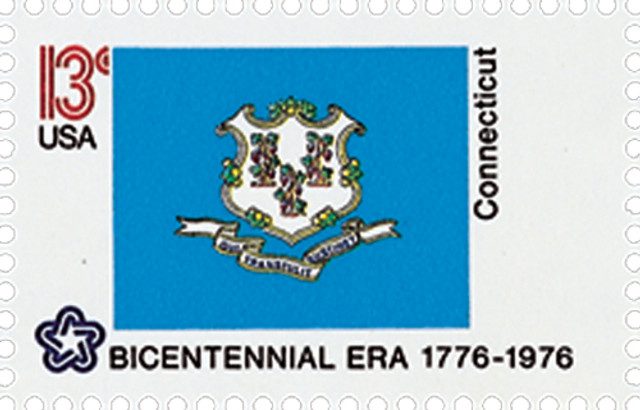
European interest in Connecticut began in 1614, when Dutch explorer Adriaen Block sailed up the Connecticut River. He claimed the region for the Dutch colony of New Netherland. Despite this early claim, the Dutch made little effort to settle the area. It was not until 1633 that they built a small trading post called the House of Hope, located at the site of present-day Hartford. Even then, the Dutch presence remained limited, and by 1674 they were driven out by the English, who had already established a much stronger foothold.

The first permanent English settlement in Connecticut was founded in Windsor in 1633 by colonists from Massachusetts. Many of these settlers were seeking greater political freedom and relief from strict religious controls. Additional settlements soon followed, including Hartford, Wethersfield, Saybrook, and New London. In 1636, Hartford, Windsor, and Wethersfield united to form the Connecticut Colony, often called the River Colony. One year later, the colony adopted the Fundamental Orders of Connecticut, a document widely regarded as one of the first written constitutions in history. This early commitment to self-rule would play a major role in Connecticut’s eventual path to statehood.

As English settlements expanded, tensions with Native tribes increased. The Pequot, fearing the loss of their land and influence, grew hostile toward the colonists. After a series of attacks, Captain John Mason led a colonial force, supported by Mohegan and Narragansett allies, against the Pequot in 1637. The conflict, known as the Pequot War, ended in a decisive defeat for the Pequot and reshaped power in the region, allowing English settlement to spread more rapidly.
In 1638, a separate colony was founded at New Haven. Unlike the Connecticut Colony, New Haven was established as a Puritan theocracy, governed strictly by church leaders. Several nearby towns—including Branford, Guilford, Milford, Stamford, and Southold on Long Island—joined the New Haven Colony. Over time, however, political and economic pressures pushed the two colonies closer together. In 1662, John Winthrop Jr., governor of the Connecticut Colony, secured a royal charter from King Charles II of England. This charter granted Connecticut an unusually high degree of self-government and control over a vast strip of land stretching westward, including the territory claimed by New Haven. Despite objections, the two colonies were officially united in 1665, creating a single, stronger colony with a tradition of local control.
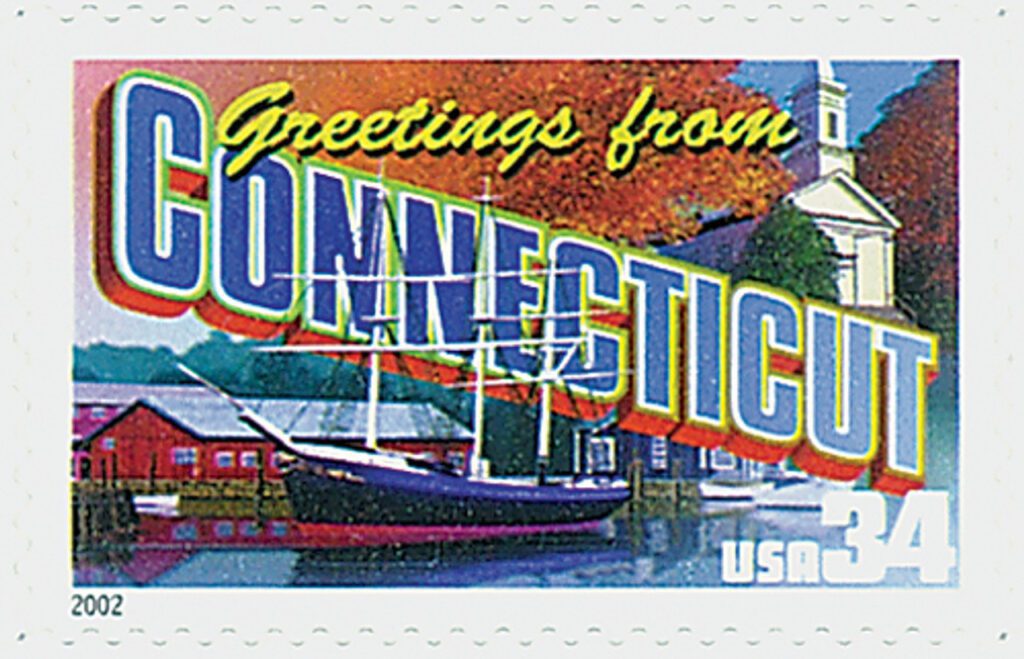
That tradition helped guide Connecticut through the growing tensions with Britain in the 1700s. As resistance to British rule increased, most Connecticut colonists favored independence. On June 14, 1776, the colony passed a resolution supporting separation from Britain, and on July 4 it adopted the Declaration of Independence. Two years later, on July 8, 1778, Connecticut approved the Articles of Confederation, the nation’s first governing framework.
Connecticut played an active role in the American Revolution. When fighting broke out in Massachusetts in 1775, hundreds of Connecticut men joined the Patriot cause. Governor Jonathan Trumbull remained in office throughout the war—the only colonial governor to do so—and became a close advisor to George Washington, who affectionately called him “Brother Jonathan.” Another famous Connecticut patriot was Nathan Hale, whose final words before being executed as a British spy made him a lasting symbol of sacrifice and patriotism.
After independence, the weaknesses of the Articles of Confederation became clear. Connecticut again played a key role at the Constitutional Convention of 1787. Its delegates proposed the Great Compromise, also known as the Connecticut Compromise, which resolved a major disagreement between large and small states. The plan created a two-house Congress, with representation based on population in the House of Representatives and equal representation in the Senate. This balanced approach helped ensure support for the new Constitution and reinforced Connecticut’s reputation for practical problem-solving.
On January 9, 1788, Connecticut ratified the US Constitution, officially becoming the fifth state. Its early experience with self-government, written constitutions, and compromise made it well prepared for statehood and earned it the enduring nickname “The Constitution State.”

During the early 1800s, Connecticut’s economy began to shift. While farming remained common, industry grew rapidly. Inventors and entrepreneurs helped transform the state into a center of manufacturing and innovation. Eli Whitney, working in Hamden, helped develop interchangeable parts, laying the foundation for modern mass production. Eli Terry pioneered mass-produced clocks, while Samuel Colt patented the first successful repeating revolver in Hartford. Charles Goodyear perfected the vulcanization of rubber, and other industries produced silk, tools, firearms, and machinery.
Connecticut’s industrial strength supported the nation during times of war, from the Civil War through both World Wars. The state became a center for shipbuilding, weapons production, and later advanced technologies, including nuclear submarines and aerospace components.
Today, Connecticut’s economy reflects both its industrial past and its modern evolution. Advanced manufacturing remains important, especially in aerospace, defense, and precision instruments. Financial services, insurance, and investment management play a major role, particularly in cities like Hartford and Stamford. The state is also known for its contributions to healthcare, biotechnology, education, and research. While Connecticut faces challenges such as urban congestion and environmental concerns, its long history of innovation, adaptability, and civic leadership continues to shape its place in the nation—just as it did on January 9, 1788.
| FREE printable This Day in History album pages Download a PDF of today’s article. Get a binder or other supplies to create your This Day in History album. |
Discover what else happened on This Day in History.
Great article, very interesting !
Keep ’em comin’ !