
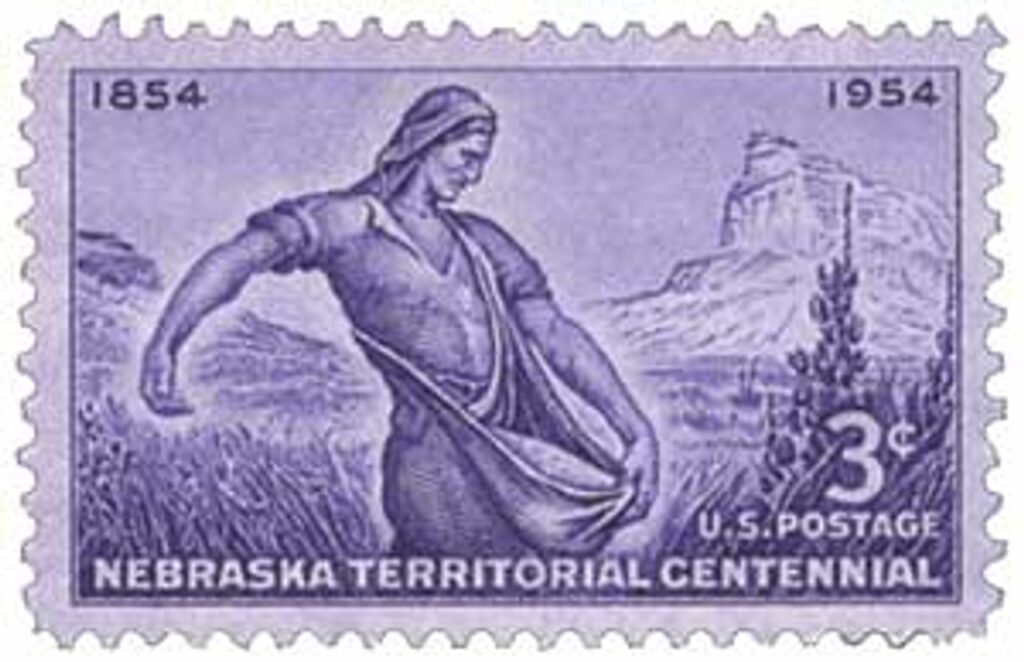
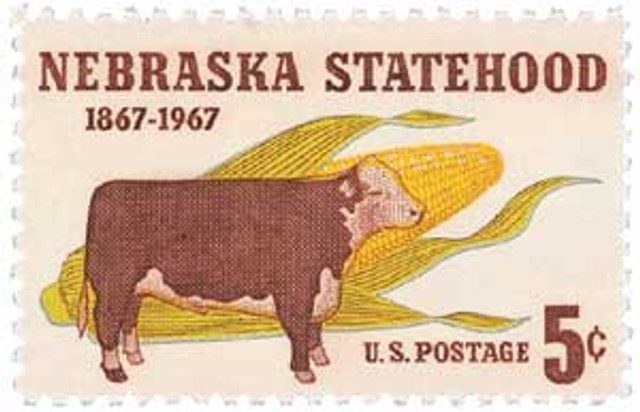
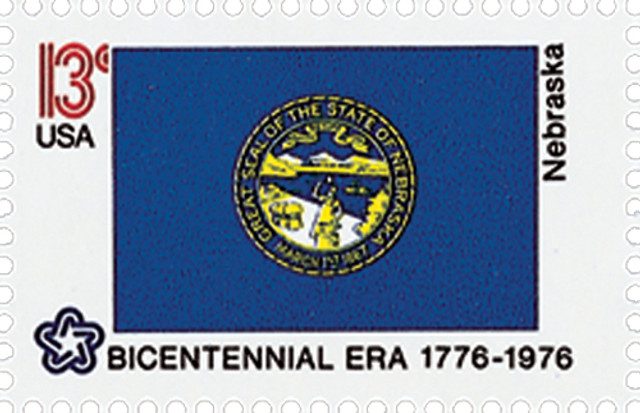
On March 1, 1867, Congress admitted Nebraska to the Union. The decision came after months of political conflict and even a presidential veto, placing the prairie state at the center of national debate during Reconstruction.
Long before statehood, the land that became Nebraska had a deep human history. Archaeologists believe people may have lived in the region as far back as 25,000 years ago. By the early 1700s, several Native American tribes lived across the plains and river valleys. These included the Missouri, Omaha, Otoe, Ponca, Pawnee, Sioux, Arapaho, and Cheyenne. They hunted bison, farmed corn and beans, and built trade networks across the Great Plains.
European claims came early but settlement came late. Both France and Spain claimed the region beginning in the 1500s. However, the first recorded Europeans to travel through present-day Nebraska likely arrived in 1739. French brothers Pierre and Paul Mallet crossed the plains while traveling between Illinois and Santa Fe. Their journey showed that overland trade routes were possible.
In 1803, the United States acquired Nebraska as part of the Louisiana Purchase from France. President Thomas Jefferson soon sent an expedition west. In 1804 and 1805, Meriwether Lewis and William Clark traveled along the Missouri River, exploring eastern Nebraska. They mapped the land and met with Native tribes. In 1806, explorer Zebulon Pike reached parts of south-central Nebraska.
The fur trade soon followed. Between 1807 and 1820, Spanish-American trader Manuel Lisa established posts along the Missouri River. One of them, Fort Lisa, stood near present-day Omaha. In 1819, the US Army built Fort Atkinson on the Missouri River. It became the first major US military post west of the Missouri. The fort included Nebraska’s first school, library, sawmill, gristmill, and brickyard. Major Stephen H. Long later explored the Platte River Valley. In 1820, he described the plains as the “Great American Desert,” claiming the land was unfit for farming.
For decades, Nebraska remained largely Native American land. That changed with the passage of the Kansas-Nebraska Act in 1854. The law created the territories of Kansas and Nebraska. It allowed settlers to move in and decide the issue of slavery by popular vote. The debate over slavery had delayed territorial organization for years. Most Nebraska settlers opposed slavery, and the territory entered the Union as a free state.
At first, Nebraska Territory was vast. It included present-day Nebraska as well as parts of Montana, North Dakota, South Dakota, Wyoming, and Colorado. In 1862, Congress passed the Homestead Act. The law granted 160 acres of land to settlers willing to farm it for five years. Thousands of families moved west. Railroads accelerated settlement. The Union Pacific Railroad built westward from Omaha, linking with the Central Pacific in 1869 to complete the first transcontinental railroad. The Burlington Railroad also promoted Nebraska farmland in eastern states and Europe. By 1870, the population had reached 122,993.
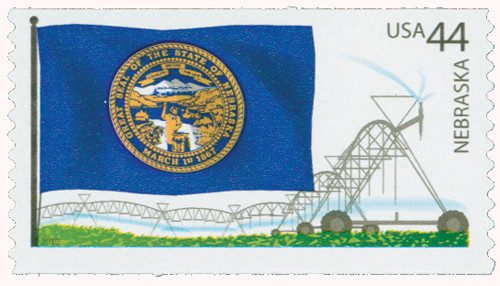
Statehood came during the presidency of Andrew Johnson. Congress passed a bill admitting Nebraska in 1867. Johnson vetoed it. He objected to a requirement that Nebraska remove voting restrictions affecting Black citizens. Congress overrode his veto on March 1, 1867. Nebraska became the 37th state. Republican David Butler became its first governor.
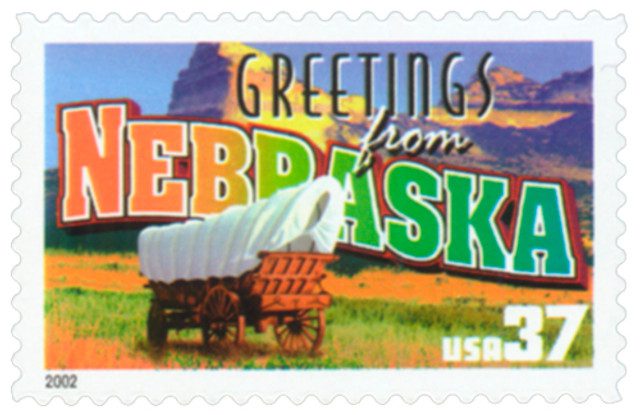
Nebraska grew rapidly as railroads and homesteading expanded across the plains. The completion of the first transcontinental railroad in 1869, linking at Promontory Summit, connected Omaha to national markets and strengthened its role as a transportation hub. New towns appeared along rail lines. Immigrants from Germany, Scandinavia, Bohemia, and Ireland settled across the state. They built farms, churches, and schools. By 1890, Nebraska’s population had climbed to more than one million. Agriculture dominated the economy. Wheat and corn production increased, and cattle ranching spread across the Sandhills region.
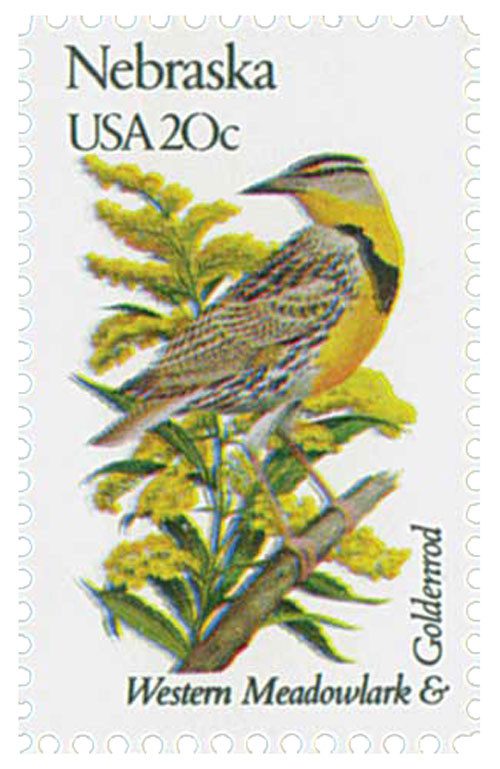
The late nineteenth century also brought hardship and political change. Drought, falling crop prices, and high railroad shipping rates hurt farmers in the 1880s and 1890s. These pressures helped fuel the rise of the Populist movement, which called for railroad regulation and monetary reform. During the early twentieth century, Nebraska farmers benefited from high crop prices during World War I. However, the 1920s brought falling prices and debt, followed by the Great Depression and severe drought in the 1930s. Parts of southwestern Nebraska were affected by Dust Bowl conditions. Federal New Deal programs funded soil conservation, dams, and rural electrification projects. After World War II, improved irrigation, mechanization, and highway construction reshaped both farming and daily life across the state.
Today, Nebraska covers about 77,000 square miles and has a population of just over two million people. Its capital is Lincoln. Its largest city is Omaha. Agriculture remains central to the state’s economy. Nebraska consistently ranks among the top states in beef production. It is also a leading producer of corn and soybeans. Irrigation from the Ogallala Aquifer supports large-scale farming in western areas.
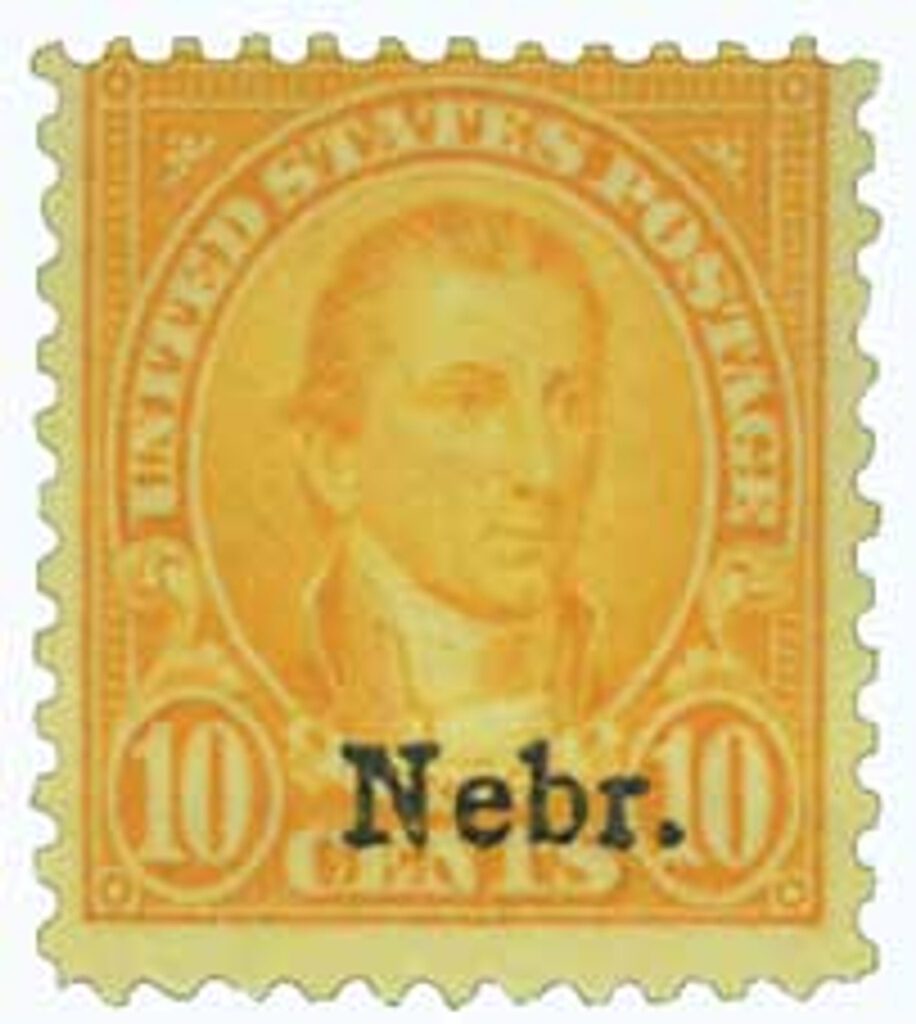
Food processing and meatpacking are major industries. Companies process beef, pork, and poultry for national and global markets. Manufacturing also plays a role. The state produces farm equipment, machinery, and transportation equipment. Nebraska has developed a strong financial services sector as well. Omaha is home to major insurance and investment firms.
Energy production is another key area. Nebraska generates electricity from coal, natural gas, wind, and nuclear power. The state has expanded wind energy projects in recent years due to its strong plains winds. Transportation remains important. Interstate highways and rail lines continue to connect the state to national markets, just as the railroads did in the 1800s.
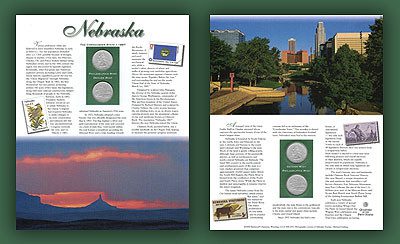
Education and research contribute to the modern economy. The University of Nebraska system supports agricultural research, engineering, and medical programs. Rural communities still shape much of the state’s culture. At the same time, urban centers like Omaha and Lincoln have grown in technology, healthcare, and finance.
| FREE printable This Day in History album pages Download a PDF of today’s article. Get a binder or other supplies to create your This Day in History album. |
Discover what else happened on This Day in History.