

On October 12, 1870, Confederate General Robert E. Lee died in Lexington, Virginia.
Descended from one of Virginia’s first families, Robert E. Lee was born on January 19, 1807, in Stratford Hall, Virginia. He was the son of Revolutionary War hero Henry “Light Horse Harry” Lee.
Lee’s father’s unfortunate financial choices and early death left his widow with several children and little money. However, a relative helped secure Robert’s appointment to West Point, where he graduated second in his class without incurring any demerits during his four years of study.

In June 1829, Lee was commissioned a brevet second lieutenant in the Corps of Engineers and sent to build a fort in the Savannah River. This assignment was followed by a stint at Fort Monroe, Virginia. During the summer of 1829, Lee began courting Martha Washington’s great-granddaughter, Mary Custis, who had also captured the attention of Sam Houston (who would eventually become a southern governor opposed to secession). Robert and Mary were wed on June 30, 1831, at Custis’s home at Arlington House.
Lee continued his military career and was often stationed at remote outposts. Although she had been raised in an affluent household with servants, Mary chose to accompany her husband much of the time. Eventually, she was forced to remain at Arlington due to the birth of seven children and her declining health.
Lee distinguished himself during the Mexican-American War, where he was one of Winfield Scott’s chief aides and met Ulysses S. Grant. After the war, Lee was stationed closer to home and was appointed superintendent of West Point in 1852.
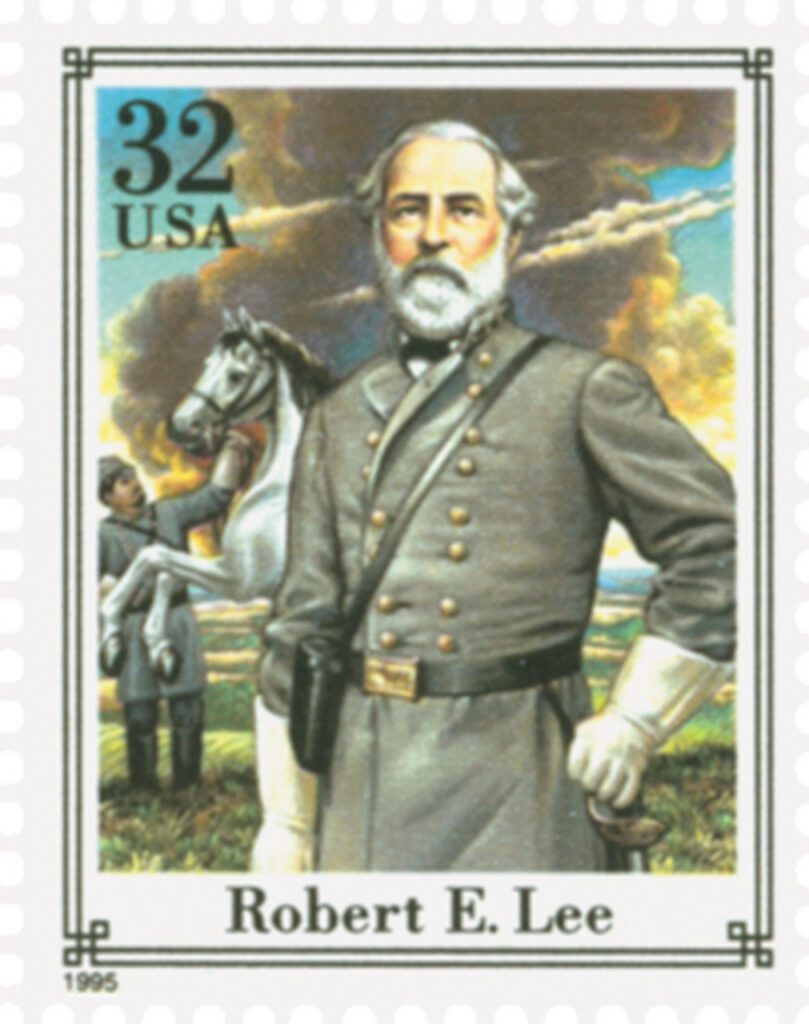
As the slavery debate heated up, President James Buchanan gave Lee command of a detachment to suppress abolitionist John Brown and retake the federal arsenal at Harper’s Ferry. When Texas seceded in February 1861, General David E. Twiggs surrendered all American forces under his command, which included Lee, to the Texans. Lee returned to the capital and was appointed colonel of the First Regiment of Cavalry, an order that was signed by Lincoln. He was promoted on March 28, turning down an offer to command the Confederate Army. However, Lincoln’s call for troops to put down the rebellion was the catalyst for Virginia’s secession, and Lee desired to fight for his home state.
As dawn approached on April 20, 1861, Robert E. Lee penned a letter to a relative. “I have been unable to make up my mind to raise my hand against my native state, my relations, my children, and my home.” Moments earlier, Lee had sent a letter to the War Department announcing his resignation and ending a distinguished 32-year US military career.
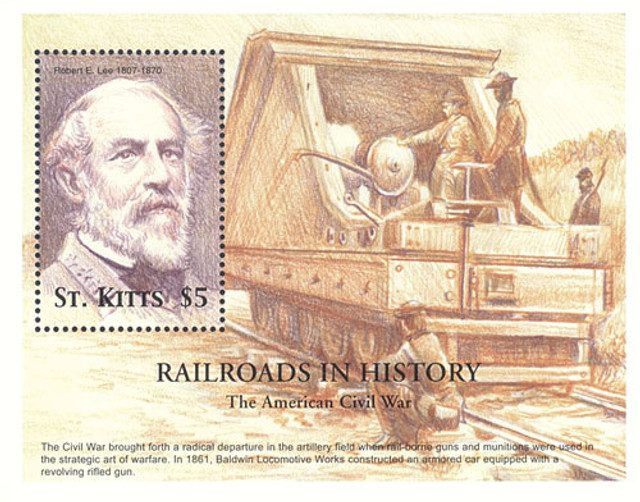
Lee’s decision was astounding. His ancestors included some of the nation’s greatest patriots. A day earlier, as events unfolded following the attack on Fort Sumter, Lee had been offered command of the volunteers defending the nation’s capital.
As war became certain, the Lee clan was forced to take sides. Lee’s wife and sister were devout Unionists, while his daughter believed firmly in secession. The general’s brothers remained faithful to their military oaths, as did his cousins.
After resigning from the US Army on April 20, Lee took command of the Virginia state forces three days later. Fearing for his wife’s safety – Arlington House was directly across the Potomac River from the nation’s capital – Lee convinced Mary to vacate their home. Federal troops quickly seized the mansion. Mary would return for a brief visit several years later, but Robert E. Lee never saw his home again.

Lee was named one of the Confederate Army’s first five full generals. Soon after, he was defeated at the Battle of Cheat Mountain and widely credited with causing the loss. After General Joseph E. Johnston’s wounding at the Battle of Seven Pines, Lee took command of the Army of Northern Virginia. His aggressive tactics unnerved Union General George McClellan, leading to a string of decisive Union defeats and a turnaround in public opinion.
A series of Confederate victories followed – Chancellorsville, Cold Harbor, Fredericksburg, Spotsylvania, The Wilderness, Seven Days Battles, and Second Manassas. Lee fought McClellan to a draw at Antietam, but by 1863, the Confederate fronts were crumbling in the West. His invasion of Pennsylvania, which was partly to seize urgently needed supplies for his desperate troops, ended with a crushing defeat at Gettysburg.
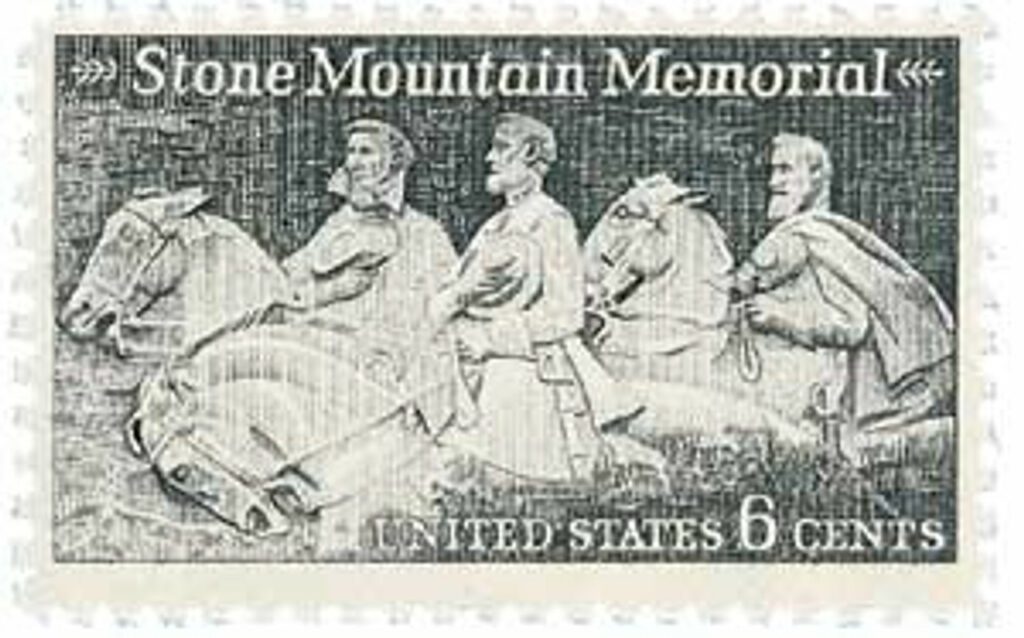
Although Lee was a brilliant tactician and a daring battlefield commander, the tide had turned on the Confederacy and its disadvantages were too large to overcome. With his forces plagued by disease, desertion, and casualties, Lee abandoned Richmond on April 2, 1865. He hoped to move southwest and join Johnston’s troops in North Carolina, but his forces were soon surrounded by Ulysses S. Grant’s at Appomattox Court House, Virginia. On April 9, 1865, Lee surrendered.
Following the war, Lee wasn’t arrested or even punished, though he did lose some property and the right to vote. He supported Reconstruction but opposed some of the measures taken against the South. Though they’d lost the war, Lee was still a popular figure in the South. Lee hoped to retire to a farm and live a quiet a life, but he was too famous.
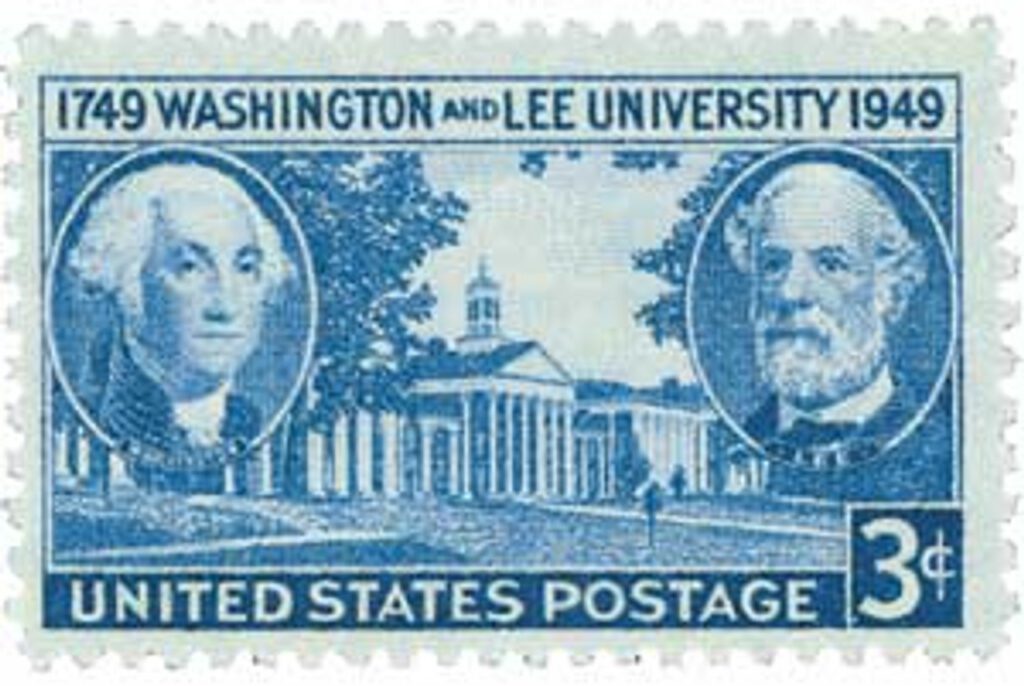
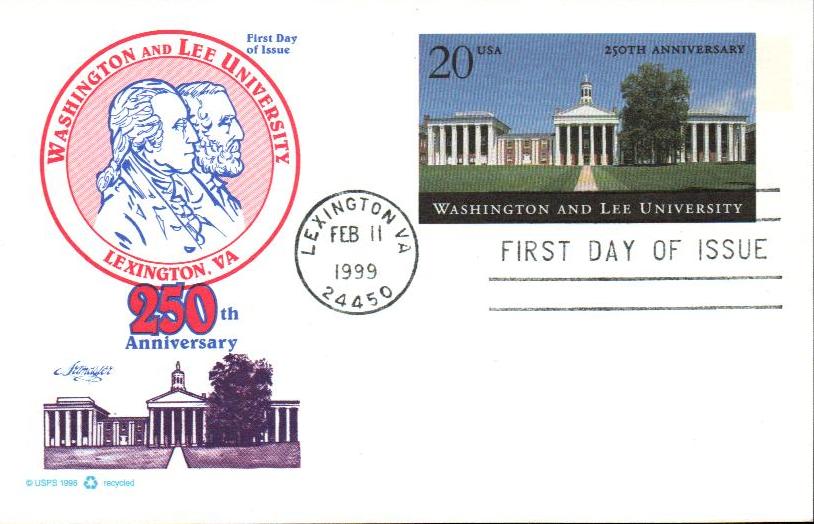
In 1865, Lee was made president of Washington College, and remained in that role until his death. Under Lee’s direction, the university offered the first college courses in business and journalism in the United States. He invited students from the North to aid in reconciliation and was well liked by staff and students alike. The school was later renamed Washington and Lee University to honor him as well as America’s first president.
In September 1870, Lee suffered a stroke. Two weeks later, he died on October 12, 1870 in Lexington, Virginia. He was buried underneath Lee Chapel at Washington and Lee University.
| FREE printable This Day in History album pages Download a PDF of today’s article. Get a binder or other supplies to create your This Day in History album. |
Discover what else happened on This Day in History.
Reading that “his brothers remained faithful to their military oaths” reminds us that the Civil War in many cases pitted brothers against brothers.
When you’re a traitor to your country you deserve no monument.
There is no shame in renaming military bases, parks, schools, etc. that were originally named for Confederates. Many of them had taken an oath of office as U.S. Army officers, members of Congress, cabinet officers, etc. to protect and defend the Constitution of the United States. They violated that oath and do not deserve to be memorialized.
As Army officers in the Corps of Engineers, Robert E. Lee and Thomas “Stonewall” Jackson were stationed at Fort Hamilton Army Base Brooklyn New York from 1841 to 1846. They attended St. John’s Episcopal Church outside the base and it became known as “The Church of the Generals”. Lee’s house was by the main entrance and the main street passed the house was called Lee Avenue. Based on the new politically correct situation, his name was taken off the front of the house and the street was renamed in 2022 after a black Vietnam Medal of Honor recipient from Brooklyn John Warren.
Yes
Renaming memorials to those of the Confederacy is trying to erase a history that affected many on both sides. Need I remind everyone that the Civil War was called the War of Northern Agression in the South.
Agreed! Trying to erase history serves no good purpose in a free country. Hitler, Stalin and their ilk wanted history erased. History forgotten is doomed to be repeated.
Speaking as:
1) an Honorably Discharged U.S. Army sergeant (1985-1993)
2) a North Carolinian descended from English/British colonial pioneers, hence Revolutionary War veterans and patriots, thus a descendant and collateral relative of seemingly innumerable Confederate veterans (none of whom owned so much as a single slave, personally or indirectly through a close relative)
3) a genetically-confirmed descendant of an indeterminable number of 1700s-era African immigrants who no doubt made the Middle Passage on trans-Atlantic cargo ships — as cargo
We can have a discussion regarding the proper public remembrance of the more than one million American men who fought for the Confederacy in the American Civil War, and especially the 260,000 sons and brothers, fathers and uncles, cousins and friends who died; and that is worth remembering, even if their fight isn’t our fight.
We can have a discussion regarding the proper public remembrance of ordinary men, mostly farmers, and mostly terribly young because soldiers are always terribly young, most especially those who die, who though always ill-fed and ill-equipped and always outnumbered at least two-to-one, nevertheless won many battles if only on pure fighting spirit, and endured four years fighting for a cause in which they clearly believed, and most fervently; and that is worth remembering, even if their cause isn’t our cause.
But all attempts to erase history do nothing to further that discussion.
Why should we remember our Confederate veteran ancestors?
Because the history of the Confederate States of America is the history of the United States of America, thus obliterating one only denies the other, and that merely does violence to what good came out of the worst four years in the history of the Republic.
Because 75% of Southern white men, ages 16 to 50 using the final draft age range established by the Third Conscription Act of 1864, served as Confederate soldiers.
Because at least 20%, and perhaps as much as 30%, of all Southern white men of military age between 1861 and 1865 died in a devastating, utterly catastrophic war as Confederate soldiers.
Because the vast majority of Confederate soldiers neither owned slaves nor came from slaveholding families — but paid a horrible price for those that did.
And we forget that at our peril . . . .
This We’ll Defend!