
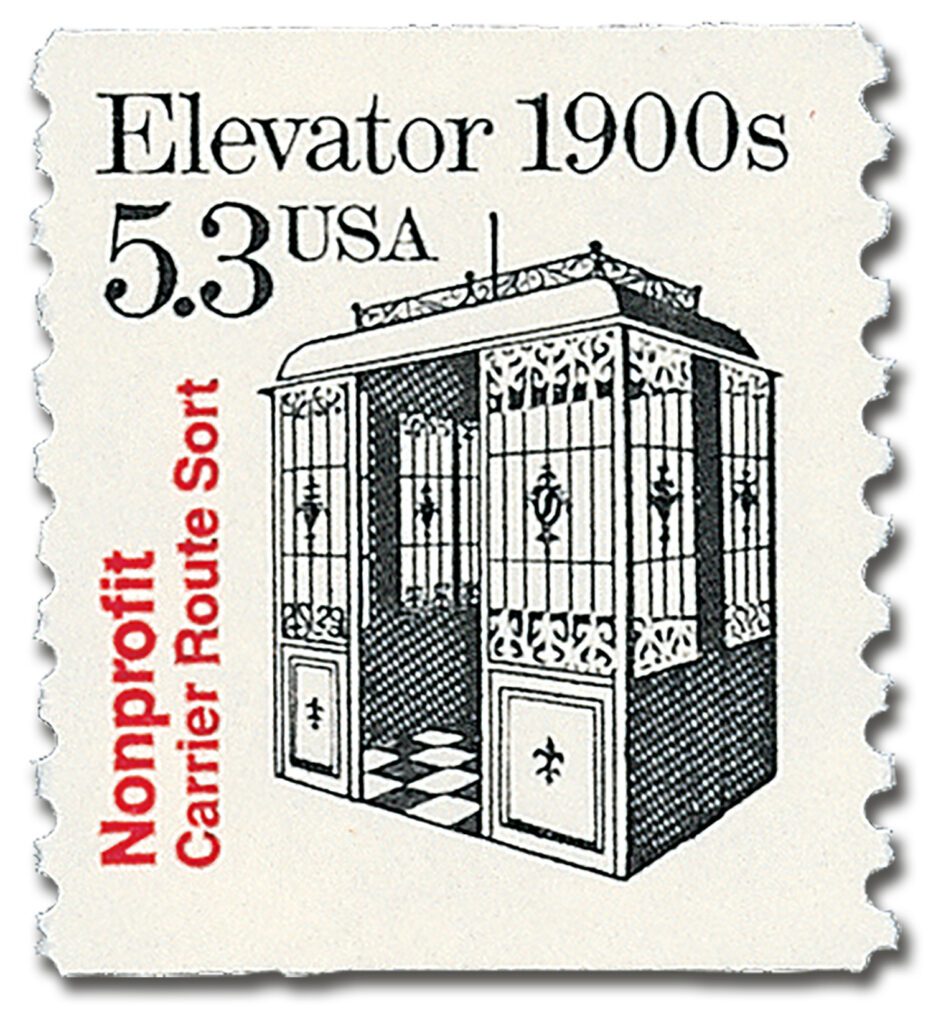
On March 23, 1857, the first commercial safety elevator was installed in New York City by the Otis Company. This new design solved a long-standing danger and made it practical for people—not just cargo—to move safely between floors in tall buildings.
Before this breakthrough, elevators already existed, but they were limited and often risky. Simple hoisting platforms had been used for centuries in mines, warehouses, and construction. These early systems relied on ropes, pulleys, and animal or steam power. If a rope snapped, the platform could fall without warning. Because of that danger, most elevators were used only for freight. Passengers generally avoided them.
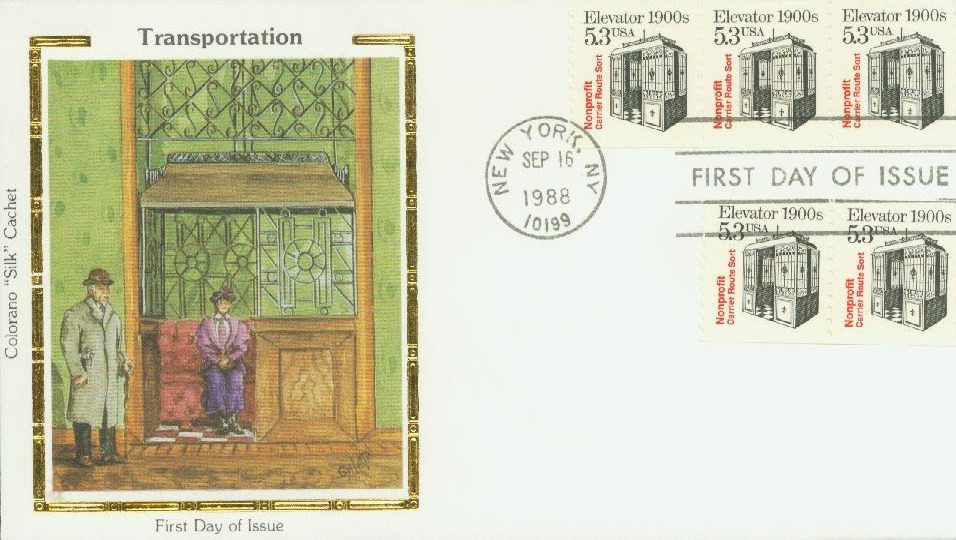
That changed with Elisha Graves Otis, a mechanic and inventor from Vermont. In 1852, while working in a factory in Yonkers, New York, Otis developed a safety device that prevented an elevator from falling if the hoisting rope failed. His design used a spring-loaded mechanism connected to the elevator platform. If tension on the rope was lost, the springs would push outward and lock into notches along the guide rails, stopping the platform almost immediately.
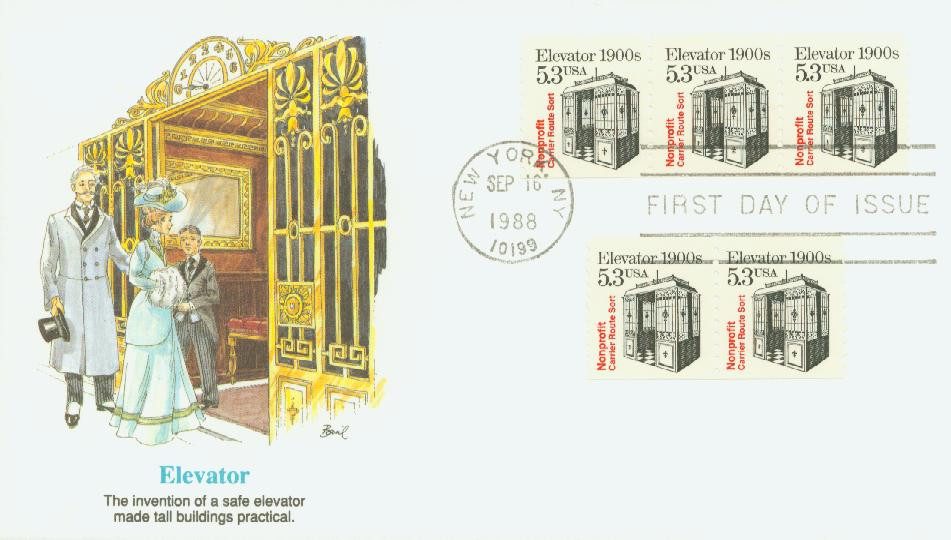
Otis demonstrated this invention in a widely publicized event at the 1854 Exhibition of the Industry of All Nations in New York’s Crystal Palace. Standing on a raised platform, he ordered the rope holding it to be cut. The crowd watched as the platform dropped slightly and then stopped. Otis reportedly called out, “All safe, gentlemen!” The demonstration helped prove that elevators could be made safe for passengers.
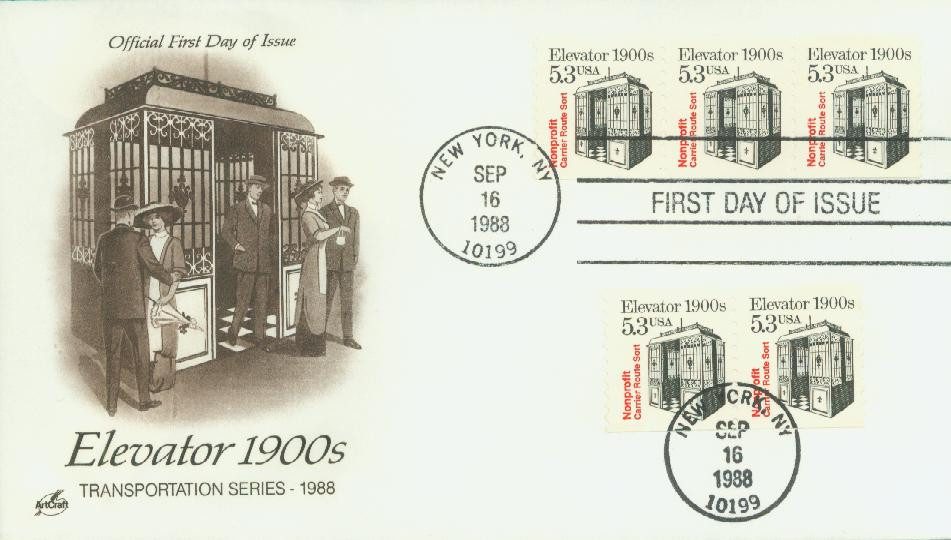
Three years later, that idea became a practical installation. On March 23, 1857, the Otis Elevator Company installed its first passenger safety elevator in the E.V. Haughwout Building at 488 Broadway in Manhattan. The building was a five-story department store that sold fine china and glassware. The elevator was powered by a steam engine located in the building. It moved at a speed of about 40 feet per minute, which was slow by modern standards but steady and reliable.
The elevator was considered a novelty at first. Many customers were hesitant to use it. Store employees sometimes had to encourage visitors to try it. Over time, however, people grew more comfortable with the idea. The ability to move easily between floors changed how buildings were used. Upper floors, which had once been less desirable, became more valuable.
The success of the Haughwout installation helped establish the Otis Elevator Company as a leader in the field. The company continued to refine its designs. In the decades that followed, elevators became faster, smoother, and more widely used. By the late 1800s, hydraulic elevators were introduced, using pressurized fluid to raise and lower the cab. These systems were powerful but required deep underground pistons, which limited their use in very tall buildings.

A major shift came with the development of electric elevators in the 1880s. These systems used electric motors instead of steam or hydraulic power. Electric elevators could travel higher and more efficiently. This advancement made the modern skyscraper possible. Buildings could now rise far above previous limits because people could reach upper floors quickly and safely.

As elevator technology improved, so did safety features. Otis and other companies added automatic brakes, improved cables, and more precise control systems. In the 20th century, innovations such as push-button controls, automatic doors, and computerized dispatch systems made elevators easier to use and more efficient. Modern elevators can travel at speeds exceeding 2,000 feet per minute in the world’s tallest buildings.
Today, elevators are a standard part of urban life. They are used in office towers, apartment buildings, hospitals, and transportation hubs. Safety systems remain a central focus. Modern elevators include multiple redundant cables, electronic monitoring, and emergency braking systems that build on Otis’s original concept.

The Otis Elevator Company still operates today as a global manufacturer of elevators, escalators, and moving walkways. It has installed systems in many of the world’s most recognizable buildings. Its continued presence reflects the lasting impact of that first installation in 1857.
The safety elevator changed how buildings were designed and how cities grew. By making vertical travel reliable, it helped reshape architecture and daily life in ways that are still visible today.
Click here for more neat history about the Otis Elevator Company.
| FREE printable This Day in History album pages Download a PDF of today’s article. Get a binder or other supplies to create your This Day in History album. |
Discover what else happened on This Day in History.
An uplifting article!