
On March 28, 1876, a Boston inventor received a patent that would transform the way America handled its mail. The Leavitt canceling machine didn’t just speed up a mundane postal task — it helped launch the modern era of mail processing. And it arrived at exactly the right moment.
When the United States issued its first adhesive postage stamps in 1847, post office clerks had to cancel every stamp by hand. The job was simple in theory: mark each stamp with indelible ink so it couldn’t be reused. In practice, it was exhausting and increasingly impractical.
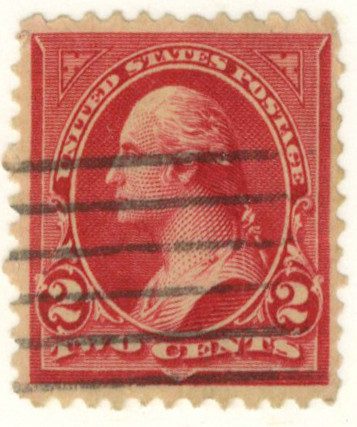
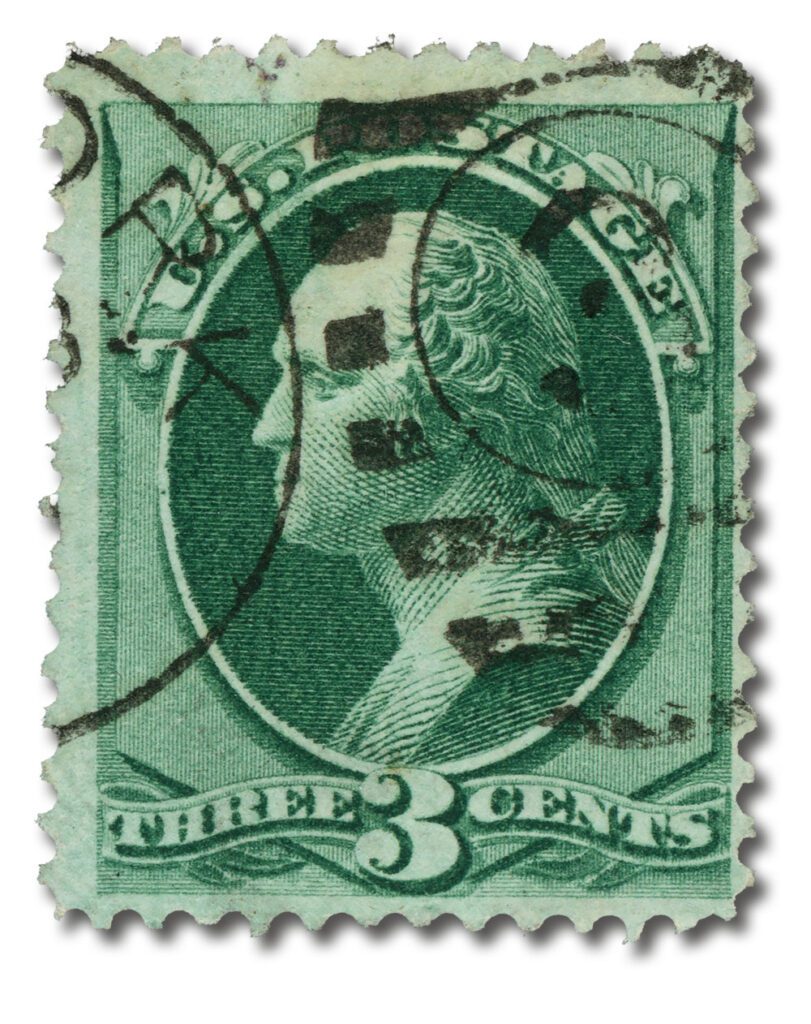
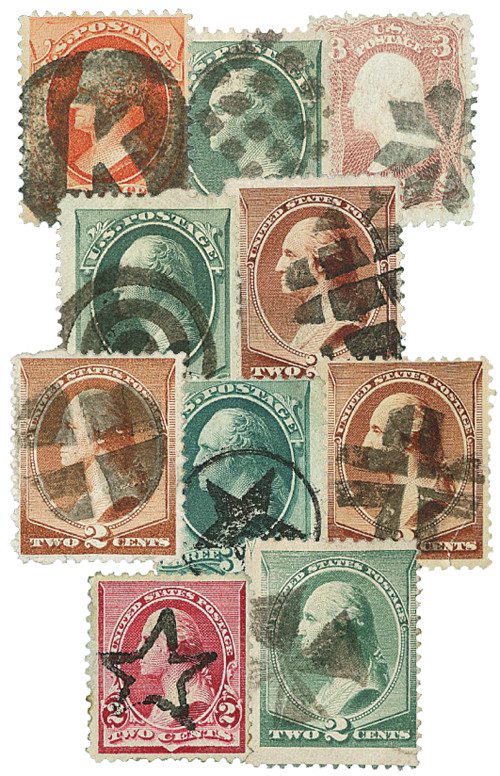
Clerks used handheld devices called “killers” — wood or metal tools that applied inked markings directly over the stamp. Patterns varied: grids, cork designs, simple bars, or crossed lines. Many post offices applied the killer and a separate circular date stamp in two distinct steps, doubling the handling time. In smaller offices without proper equipment, clerks simply drew lines across stamps with a pen. An experienced clerk could cancel between 1,500 and 2,000 pieces per hour. By the 1870s, that wasn’t nearly enough. The rapid growth of cities, railroads, and commerce after the Civil War had sent mail volumes soaring. Hand canceling had become a serious bottleneck.
Inventors had been working on the problem since the 1850s and 1860s. Most early attempts failed. Some machines were too complex. Others damaged envelopes or struck stamps inconsistently. Many required so much manual adjustment that they were impractical in a busy post office. None gained widespread adoption.
Thomas and Martin Leavitt of Malden, Massachusetts received their first patent — number 175,290 — in 1875. They tested a hand-cranked prototype at the Boston Post Office that November, with the first regular machine entering service on January 6, 1876. But that early design had serious flaws. The brothers went back to work.
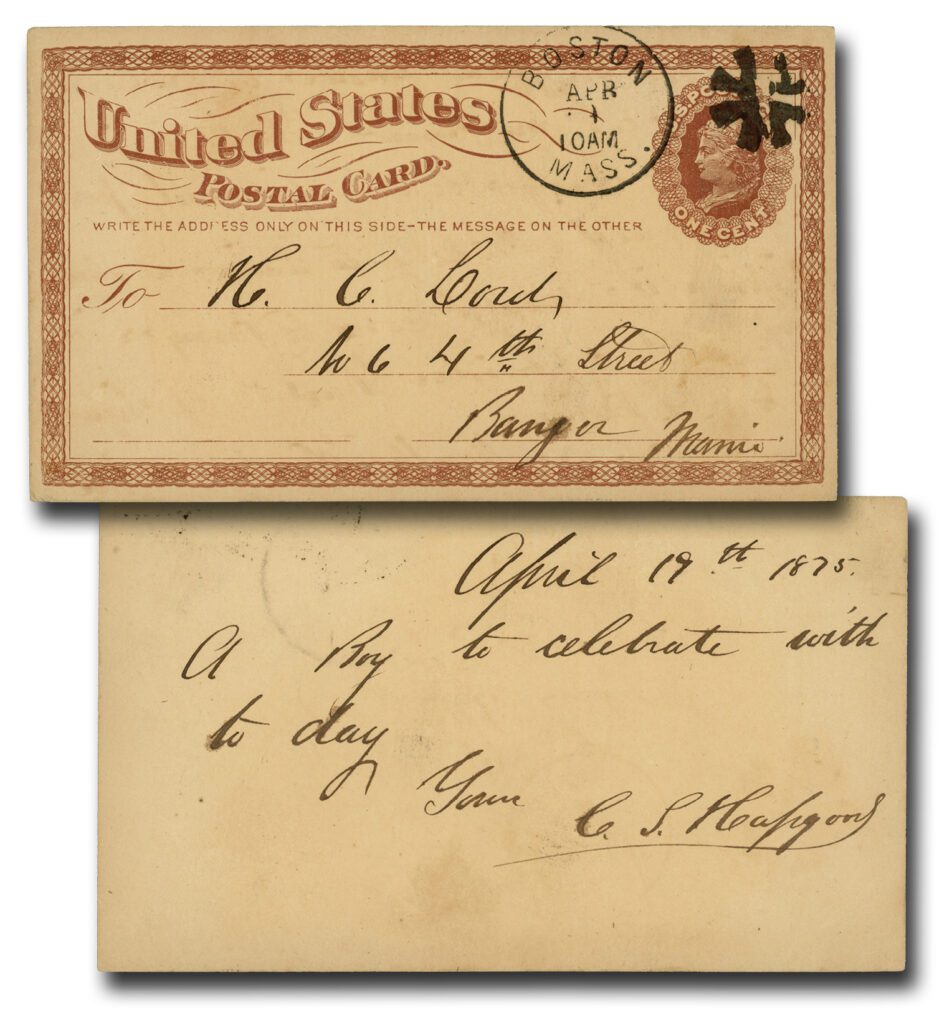
On March 28, 1876, the Leavitts received patent 192,519 — their second and more significant patent. The Smithsonian’s National Postal Museum credits this design as the first practical device for mechanized stamp canceling. It solved what earlier machines couldn’t: reliably feeding envelopes of different sizes and thicknesses through the device, ensuring each piece passed under the canceling die at the correct position.
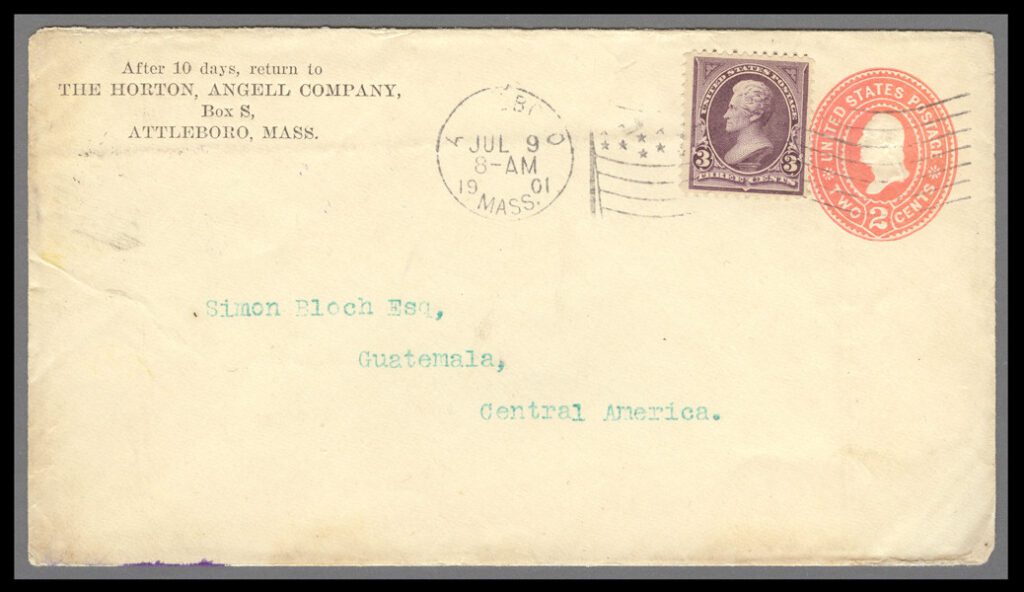
The machine used a system of rollers and guides to move mail through at a controlled speed. As each piece passed through, an inked die struck the stamp area with a canceling pattern — applying both the cancel and the postmark in a single motion. Missed and partial strikes, common with hand canceling, dropped sharply.
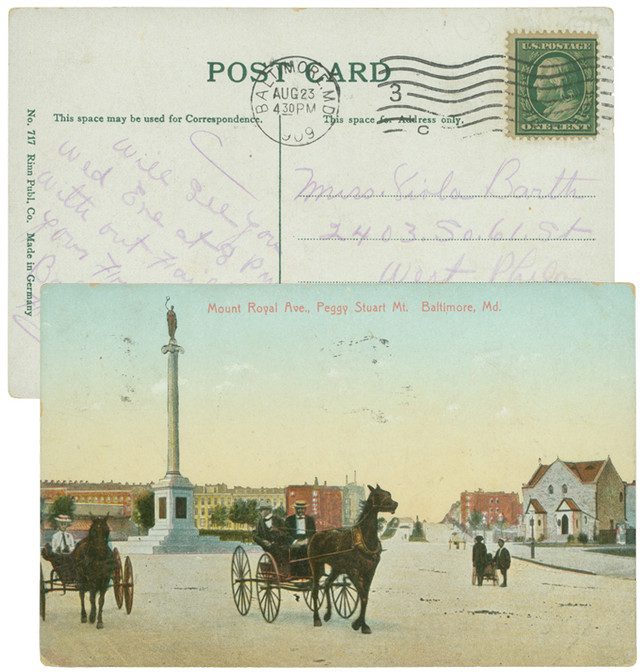
The results were dramatic. In a formal speed trial, the Leavitt machine canceled 25,000 postal cards in a single hour. A skilled human clerk topped out at 2,000. The Post Office Department placed an order for 100 machines in 1877.
The timing was notable. That same year, the Centennial Exposition in Philadelphia showcased the era’s most exciting new technologies. Alexander Graham Bell demonstrated the telephone there. Leavitt’s machine was less celebrated, but it solved a problem the Post Office faced every single day.
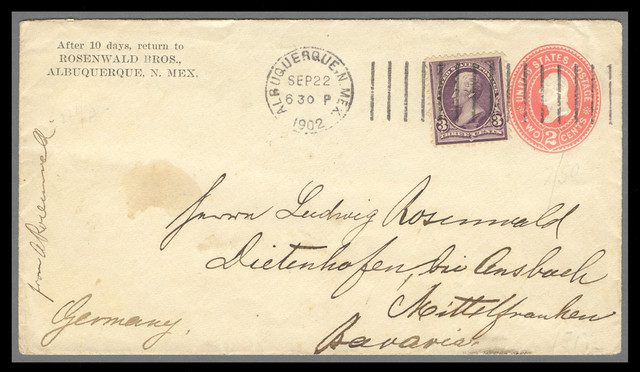
Thomas Leavitt kept refining his invention after Martin died in 1877. In 1881, the Massachusetts Charitable Mechanic Association awarded the improved machine a gold medal, noting it could now handle “letters of large or small size, either thick or thin.” Leavitt machines spread from Boston to New York and eventually to 27 cities.
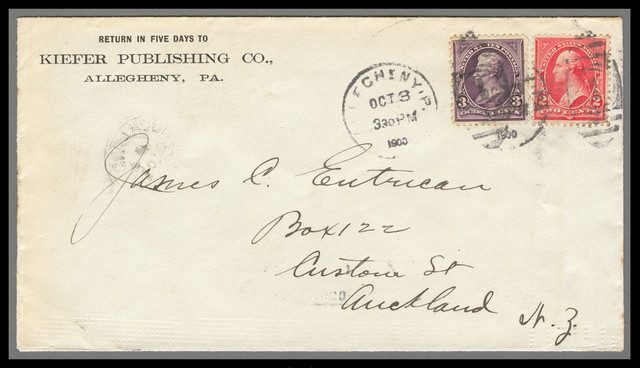
Competition followed. By 1884, improved machines could cancel 300 letters per minute. In 1894, the iconic “flag cancel” appeared in Boston, Chicago, and Washington — a waving American flag design with horizontal bars extending to kill the stamp. It became one of the most recognizable postal markings in American history, eventually used in more than 3,000 cities.
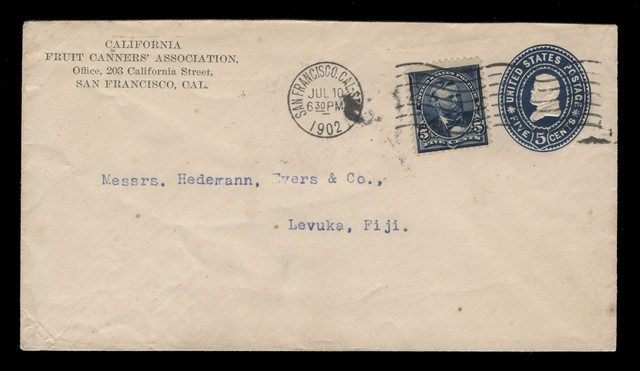
Machine cancels also began incorporating advertising slogans alongside the cancellation bars — an early form of mass-market messaging delivered with every piece of mail.
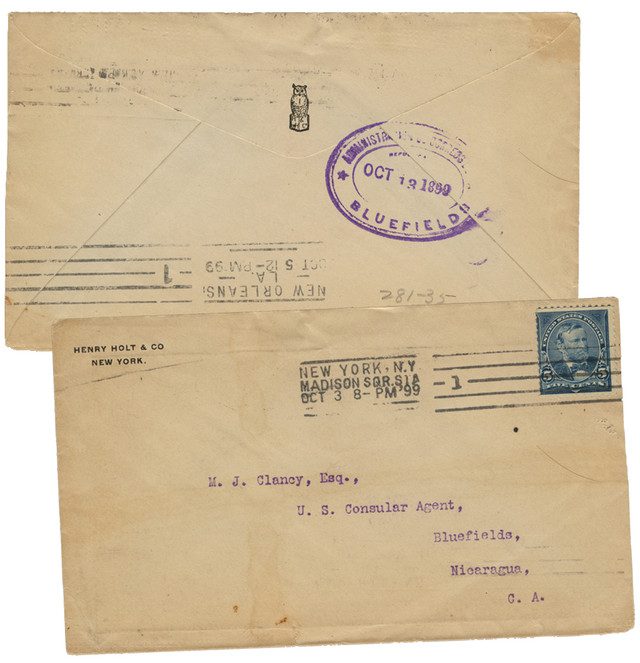
By the early 20th century, companies like the American Postal Machines Company and International Postal Supply Company were producing faster, more reliable models. Electric motors replaced hand cranks. Automatic feeders reduced jams. Wavy-line cancels became standard. Walter Bowes — later of Pitney-Bowes — entered the market around 1910 and his Universal machines became post office workhorses for decades.
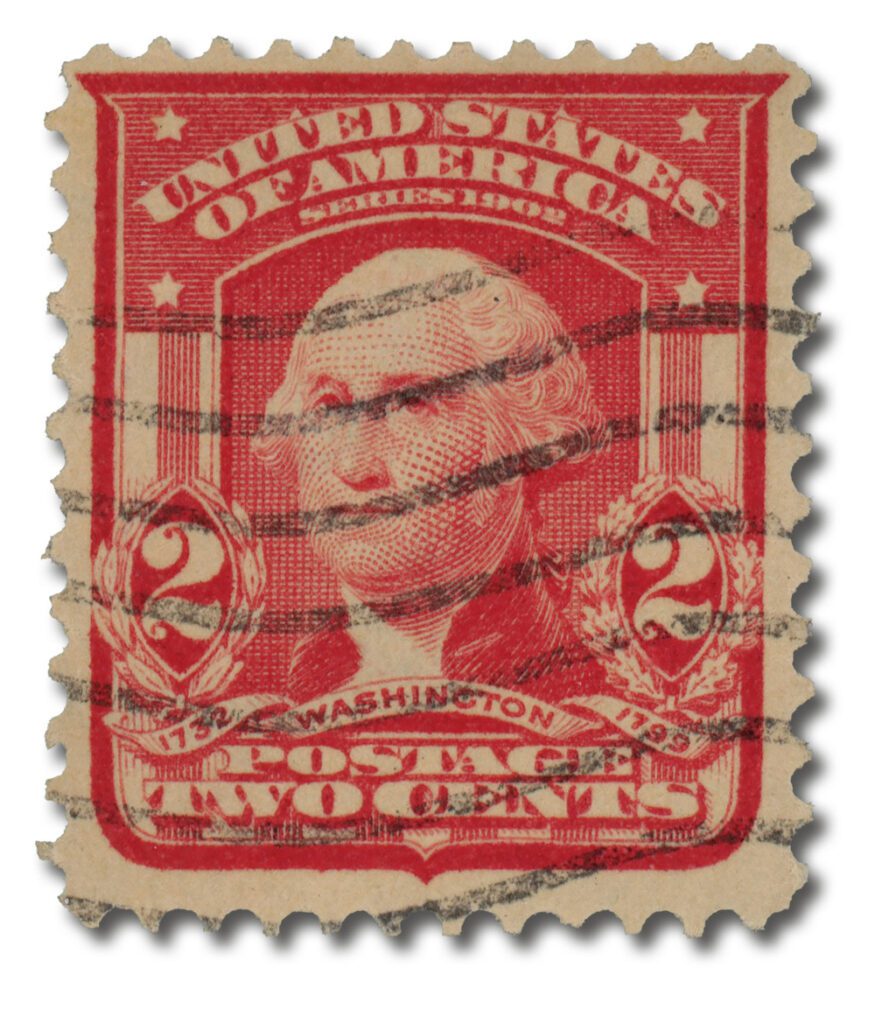
Today, nearly all mail in the United States is machine-canceled using optical sensors, automated feeders, and inkjet technology that processes thousands of pieces per minute. The principle traces directly back to what Thomas Leavitt built in Boston 150 years ago: detect the stamp, apply the cancel, move on.
| FREE printable This Day in History album pages Download a PDF of today’s article. Get a binder or other supplies to create your This Day in History album. |
Discover what else happened on This Day in History.