

On April 12, 1862, a group of Union sympathizers stole a Confederate train, setting off a high-speed pursuit that lasted nearly eight hours. The event, later known as the Great Locomotive Chase, unfolded along a single rail line but revealed just how critical transportation had become in the Civil War.
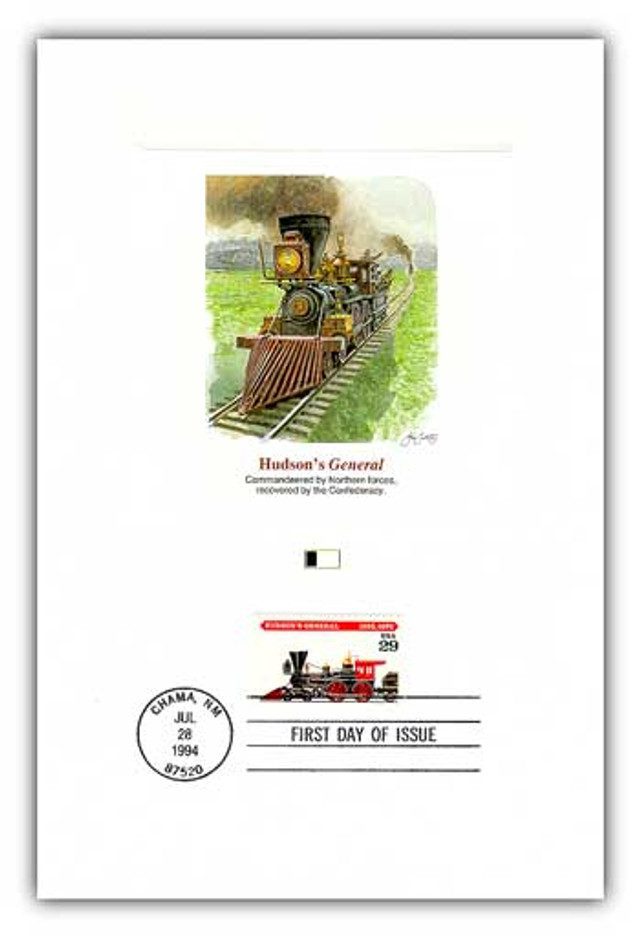
Railroads were vital to both sides. They moved troops, weapons, and supplies quickly across long distances. The Confederacy, however, had fewer tracks and locomotives than the North. This made certain routes especially important. One of the most critical was the Western & Atlantic Railroad, which ran between Atlanta, Georgia, and Chattanooga, Tennessee. Supplies traveled north along this line to support Confederate forces.
Union planners saw an opportunity. Civilian scout James J. Andrews proposed a mission to disrupt the railroad. His plan was to seize a train, destroy sections of track, burn bridges, and cut telegraph lines. If successful, Chattanooga could be isolated and Confederate supply routes weakened. Andrews recruited 24 Union volunteers. They wore civilian clothes and traveled south in small groups to avoid suspicion.
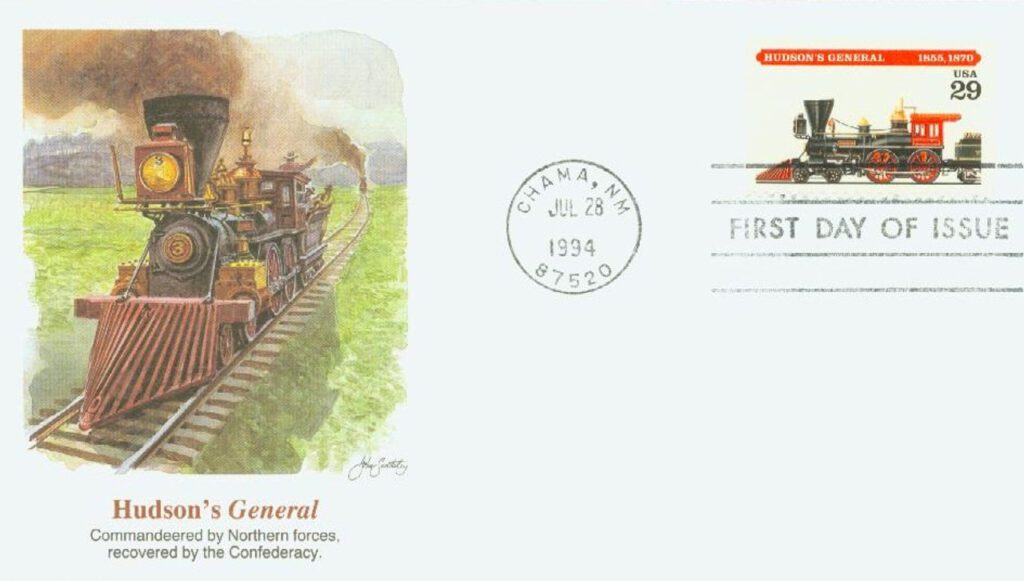
Their target was The General, a locomotive built in 1855 by William Hudson. On April 12, 1862—one year after the attack on Fort Sumter—the train left Atlanta at 4:00 a.m. Andrews and his men boarded at different stops along the route.
The plan came together at Big Shanty, Georgia. The train stopped for breakfast, and there was no telegraph office nearby. This meant no quick warning could be sent. While conductor William Fuller and his crew stepped away, Andrews and his raiders uncoupled the locomotive and three boxcars. In broad daylight, they stole the train and headed north.

As they moved up the line, the raiders cut telegraph wires and tried to damage the track. Their goal was to slow any pursuit and prevent communication ahead. But Fuller reacted immediately. He and two others began chasing the train on foot, running nearly two miles before finding a handcar.
Fuller continued the pursuit by taking control of available locomotives along the route. The chase became more intense when he took command of The Texas at Adairsville. Because of how the engines were positioned, The Texas ran in reverse for much of the chase. Even so, Fuller pushed forward at high speed.

Andrews attempted to stop him. His men dropped railroad ties onto the tracks and released boxcars behind them. One was set on fire in an effort to damage a bridge. Each time, Fuller’s crew cleared the obstacles and continued.
Communication proved just as important as speed. South of Calhoun, Fuller encountered a young telegraph operator. He pulled him aboard and wrote a warning message. At the next stop, the operator jumped off and sent the alert ahead to Chattanooga. Confederate forces were now prepared.
After traveling about 87 miles, The General began to lose steam. The raiders had used too much fuel and could not keep their speed. Near Ringgold, Georgia, the locomotive came to a stop. Andrews and his men fled on foot but were captured within days.
The consequences were serious. James Andrews was tried as a spy and executed. Several of his men were also executed, while others were imprisoned. In 1863, some of the surviving raiders became the first recipients of the Medal of Honor, recognizing their brave actions during the heroic mission.
Although the raid failed to destroy the railroad, it showed how vulnerable supply lines could be. It also demonstrated the growing importance of railroads and telegraph systems in modern warfare.
After the war, The General was repaired and returned to service. It operated until 1891 before being preserved. Photographer E. Warren Clark helped save the locomotive for display at the 1893 World’s Columbian Exposition in Chicago.
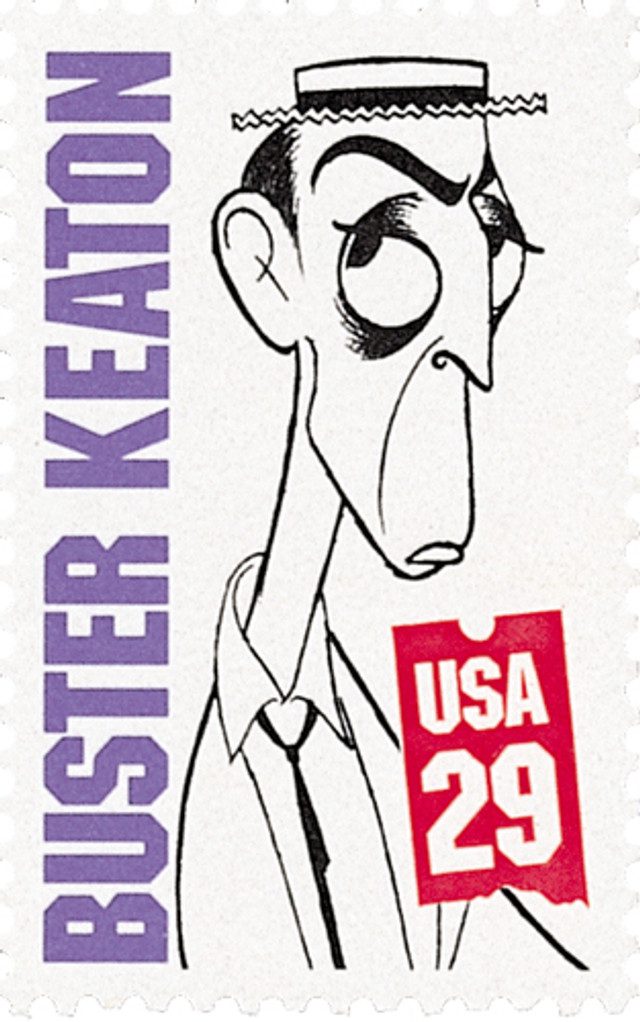
Over time, The General became a well-known historical artifact. It appeared at exhibitions and fairs before finding a permanent home in Chattanooga, Tennessee. Its story later reached a wider audience through the 1926 silent film The General, starring Buster Keaton, which recreated the dramatic chase.
Click here to watch Keaton’s film, The General.
| FREE printable This Day in History album pages Download a PDF of today’s article. Get a binder or other supplies to create your This Day in History album. |
Discover what else happened on This Day in History.
There is a recent movie on this chase. Don’t recall the name but good movie and seems to follow the story line:)
The video of buster keaton is not playing. Bad permissions.
Thank you. The link has been fixed.
Wow! Little known facts about the war between the states. Thanks Mystic.
The article fails to bring out that Andrews and his men were all Union soldiers who were not in uniform and thus were treated as spies rather than as enemy combatants. The General was not the only locomotive from this episode that was ultimately preserved; The Texas was recently restored at Spencer Shops in North Carolina, one of the few shops equipped to do so with personnel trained and qualified for such work.
Walt Disney also made a film about it in the 50s starring Fess Parker as Andrews and Jeff Chandler as Fuller. That is when I first learned about the Great Locomotive Chase as it was called. BTW, except for Andrews, all the other men with him were Union soldiers in civilian clothes. They were not just Union sympathizers.
A scale model of the General sits atop the Ohio monument dedicated to Andrew’s Raiders and is located in the Chattanooga National Cemetery. The train, “The General” is located at the Southern Museum of Civil War and Locomotive History in Kennesaw, GA. I know, I’ve seen it. The Texas is located in Atlanta. And all those stamps are in my collection. Thanks Mystic!
April 12 1945 Franklin Roosevelt died
Great story .
I remember the movie; and thanks to TDIH I now know the story behind it, and how it relates to the Civil War – and my stamp collection. Thanks for the link as well to the movie, really adds value to the post.
In the film version I saw of this incident, it was not just Andrews who was hanged, but “every last one of them” as ordered by the judge in the case. The 23 men were supposedly marched through Atlanta so everyone could see them on their way to the gallows.
Incidentally, the proper legal term for death on the gallows is hanged, not hung. Hung is used when, say, you hung up your coat, a ballplayer hung up his spikes, or we hung around long after closing. To say a man was hung is to say he was well-endowed.
Nice report, but the city of Kennesaw GA “stole” the General in the 60’s from Chattanooga. It’s in a museum in the Georgia city.
Kennesaw, GA was formerly the Big Shanty mentioned in the article, where Andrews’ Raiders stole the train from while the crew was eating breakfast. I was at one of the APS winter shows in Atlanta awhile back, and one of the show covers pictured The General in its cachet and was franked with The General stamp pictured at the head of this article. I decided I wanted it cancelled at Kennesaw, and asked the post office lady how to get there, and was their post office open on Saturday. She said Kennesaw was 15 or 20 miles north, and their p/o was open till noon. It wasn’t even that far, and I got there just before closing, so I got my cancel. I showed it to the lady when I got back to the show, and she couldn’t believe I had driven “all the way up there just to get a cover cancelled!” Here I had flown clear from California to attend the show, and she couldn’t understand why I had driven a relatively short distance for a cancel. Some people just can’t appreciate the dedication of stamp collectors.
Yep; was at the reenactment of the Battle of Yorktown, ( Revolutionary War) as an American colonial wife with children. HAD TO go to the stamp center and wait for hours to have , meal ticket, admissions tickets, FDC’s sheets and etc, cancelled. What a moving reenactment with French & British people portraying all sides and positions , including Americans, ships, cannons and gun patrols. Very impressive.
Still look thru all of my stamp memorabilia and remember the times.