

Nearly two years after President Abraham Lincoln first declared enslaved people in the Confederacy free, the United States finally took the decisive step that ended slavery everywhere in the country. With the ratification of the 13th Amendment on December 6, 1865, the country closed the door on a system that had shaped—and scarred—America since its earliest days. Getting there, however, required a long, bitter, and politically complicated struggle that stretched across the final years of the Civil War.
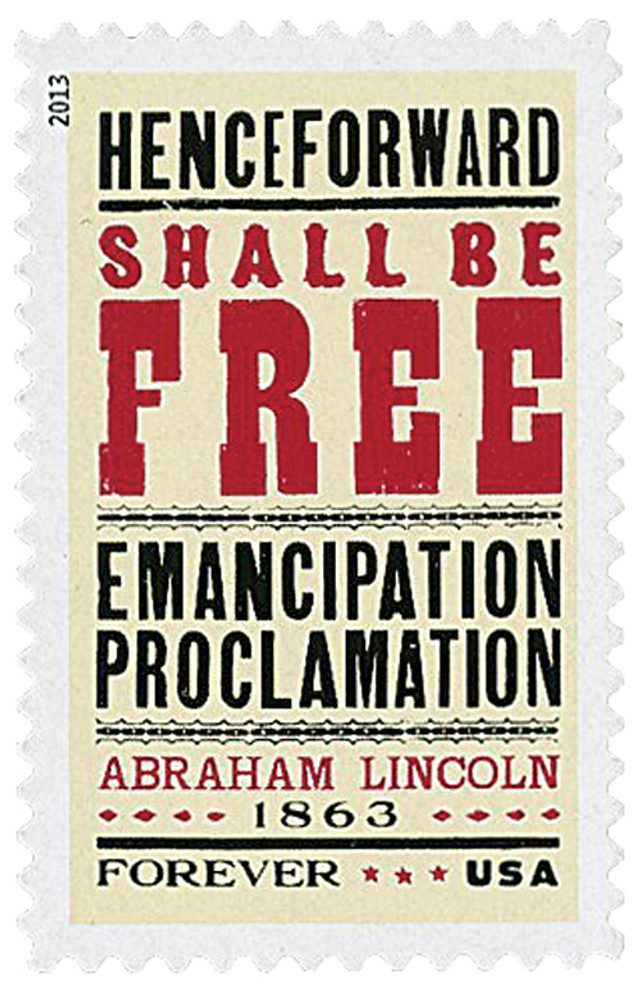
When the war began in 1861, the Union’s main goal was not to end slavery but to prevent the country from breaking apart. Lincoln himself personally opposed slavery, yet he entered office without any clear plan to abolish it nationwide. While many abolitionists urged immediate action, Lincoln worried that pushing too hard might drive border states—slaveholding states that stayed loyal to the Union—into joining the Confederacy.
But as the conflict dragged into its second year, a shift occurred. The fighting became more destructive, and it became clear that slavery was fueling the Southern war effort. Ending slavery, Lincoln realized, was not only a moral necessity but also a military strategy. In September 1862, he announced the Emancipation Proclamation, warning the Confederacy that all enslaved people in rebel-held territory would be declared free on January 1, 1863.
The proclamation was momentous, but it had limits. The Confederate states did not recognize Lincoln’s authority and ignored the order. It also did not apply to enslaved people in the loyal border states or areas already under Union control. Still, it changed the nature of the war and signaled that the United States was moving toward permanent abolition.
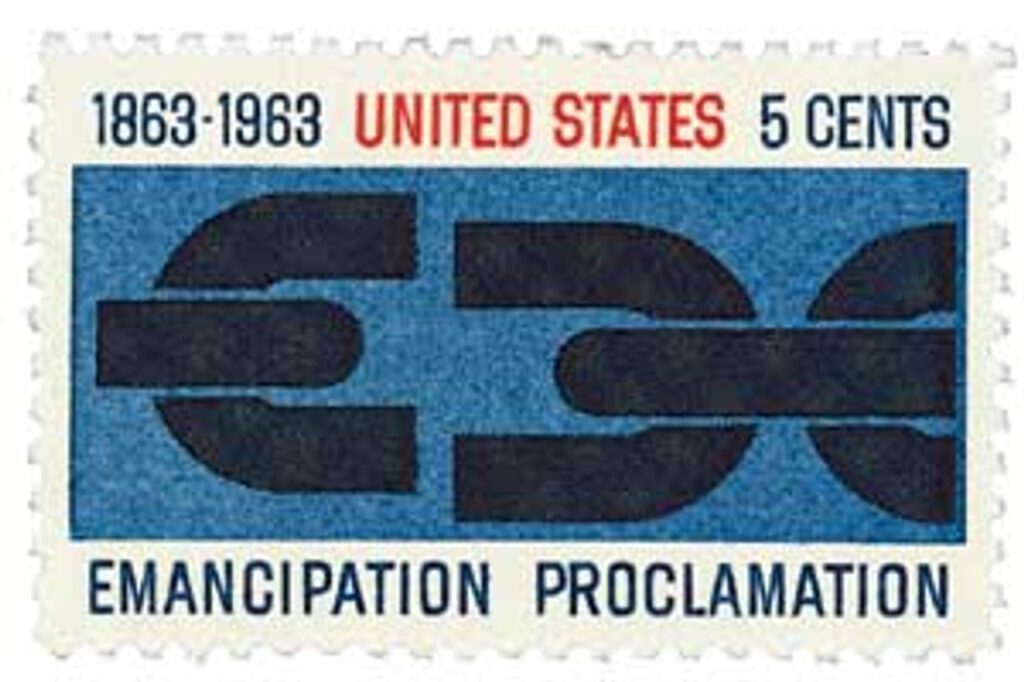
By late 1863, Lincoln pushed further. That December, he issued the “Proclamation for Amnesty and Reconstruction,” offering Southern states a path back into the Union if they agreed to abolish slavery. The Confederate government rejected the offer outright. Meanwhile, momentum was growing in Congress. Representative James Mitchell Ashley introduced the first proposal for a constitutional amendment that would outlaw slavery entirely. Other versions followed, and eventually the ideas merged into one joint resolution. On April 8, 1864, the Senate approved the measure by a vote of 38 to 6.

The issue became even hotter during the 1864 presidential election. Many Americans supported abolition, but others fiercely opposed it, and some insisted the amendment was unconstitutional. When Lincoln accepted the Republican nomination, he publicly endorsed the amendment, though he spoke cautiously about it on the campaign trail. His reelection in November, however, gave him a clear mandate—and he moved quickly.
In his December 6 State of the Union address, Lincoln urged Congress to finish the work, stating that if the amendment was eventually going to reach the states, “may we not agree that the sooner the better?” Behind the scenes, he assigned Secretary of State William Seward to secure the necessary votes. Seward used every political tool available, including patronage offers, to convince wavering representatives. As Radical Republican Thaddeus Stevens later remarked, the amendment passed through a mixture of “corruption” and the leadership of “the purest man in America.”

On January 31, 1865, the House finally voted. The resolution passed 119 to 56. The chamber erupted—cheers, tears, and celebrations filled the air, and African American spectators in the gallery rejoiced openly. The amendment was sent to the states the next day. Illinois became the first to ratify it, followed by 17 more states before the end of the month, including Virginia and Louisiana, both recently reclaimed from Confederate control.

After Lincoln’s assassination in April 1865, his successor, Andrew Johnson, continued pressing Southern states to ratify. By December 6, Georgia became the 27th state to approve the amendment, reaching the required three-fourths majority. On December 18, Seward officially certified the 13th Amendment as part of the US Constitution.
Though the amendment legally abolished slavery, many Southern states immediately created “Black Codes”—laws designed to restrict the freedom of formerly enslaved people. In response, Johnson signed the country’s first Civil Rights Act in 1866, meant to guarantee citizenship and equal protection to African Americans. True equality, however, would remain a struggle for generations to come.
| FREE printable This Day in History album pages Download a PDF of today’s article. Get a binder or other supplies to create your This Day in History album. |
Discover what else happened on This Day in History.
I believe that Congress passed the Civil Rights Act of 1866 without Johnson’s support. He was not a big fan of giving blacks, especially former slaves, equal status with whites. Congress overrode his veto of that law.
correct – President Johnson was in opposition to emancipation and supported segregation policies.
If you read Johnson’s rationale for vetting the bill, some sensible reasoning, not necessarily a dislike of blacks, was cited. Yes, he did veto the bill of 1866, but it was not necessarily for the sentiments mentioned.
The first sentence of the second paragraph is incorrect. Many apologists of the southern states want us to believe that secession was about states rights, but the reality is it was all about slavery. Read the secession documents of the seceding states and the Confederate constitution and you will see repeated references to slavery. The Confederate constitution forbid any state to abolish slavery or to secede from the Confederacy. So much for states rights.
Freeing the slaves WAS NOT the reason for the war. The South feared the growing
Government and its growing power. The North (and Lincoln) determined that secession
was illegal and would fight to keep the Union together. The South’s position was that
they joined voluntarily and they could leave the same way. The South did not fear that
Slavery would be abolished because it would take a Constitutional Amendment to do
so and there were more than enough slave holding states to defeat any attempt at
such an Amendment. Lincoln made it partially about Slavery when he signed the
Emancipation Proclamation.
Slavery was the issue, not the reason, much like the revolution was not about tea taxes, though it was re issue that called them to action.
I detest it when people attempt to rewrite history. The Southern states seceded because of the issue of states’ rights. The federal government had passed laws that placed high tariffs on the cotton goods southern farmers sold in Europe. Those laws steered them toward selling those goods only to the northern states. The doctrine of states’ rights proclaimed that the southern states had the right to self determination and were not subject to punishing laws passed by the federal government. The Civil War was primarily about states’ rights, not slavery.
Read Alexander Stephens ,”Cornerstone Speech” .
While I do not agree with the slavery in the south, I find your argument to conflate the definition of states rights. The southern states did secede for states rights issues, which included slavery, and unfair taxation by the north. That the Confederacy may have forbid the states to abolish slavery, that was a common issue among those states. Thus, states rights was the rationale for seceding.
“In September 1862, he warned the South of his Emancipation Proclamation, declaring all slaves in the Confederacy to be free on January 1, 1863.” TRUE, but what about the 4 slave states not in the Confederacy, or those parts of of the Confederacy occupied by Federal troops? Why the “Map”? I have my opinion, and I’m asking these questions to see what others may think. I enjoy History, but only when is true and factual.
If he had freed ALL Slaves the Border States would have joined the Confederacy
and it would have tied down troops in those states and would have weakened
the Union forces elsewhere.
Didn’t Lincoln send troops into Maryland and Delaware before they could join the Confederacy? Look at the map and see Virgina and Maryland position. Do you see the position of Washington D. C. ? The Emancipation Proclamation only freed slaves within the territory controlled by the Confederacy. Not one slave was freed in Federal controlled territory. In short, Lincoln freed those he had no control over, and did not free those he did have control over! The Emancipation Proclamation was just a piece of paper to warn England not to support the Confederacy.
I look forward daily to “THIS DAY IN HISTORY”, not that I am History buff, but to learn and see how much our school ssystem lacked in my education.
I served two (2) tours in Vietnam. Very little even today is taught about it let alone, World War II, or Korean War. Our current school system truely lacks our nation’s history in the classroom.
Please continue to ssend these “THIS DAY IN HISTORY”, as I even print, and send them to my grandchildren. GOD bless everyone associated the Mystic Stamp Company.
MERRY CHRISTMAS, and your Company and Employees have the BEST OF “NEW YEAR”
Carlyle – thank you for your service! While I am a generation younger than you are, I too enjoy the series and eagerly read the daily email when I get home from work each night. I enjoy learning something “new” every day and most days Mystic teaches me something “new” and meaningful.
Kind regards,
Tim
I agree completely and hope we’re not doomed to repeat.
Lincoln could not afford politically for the war effort to alienate the four border slave holding states who were remaining loyal to the union. He knew that to end all slavery would require congressional action would be necessary.
The Civil War was not an issue of slavery. It was an economic issue and one of states’ rights.
Unfortunately that issue of economics and states rights was tied in very closely with slavery. Slaves were the economic issue. The south could not have economic success without that vast unpaid labor force that they had come to depend on. The states right aspect was their right to have slaves. It is correct that Lincoln used the Emancipation Proclamation to keep England from supporting the South. They had outlawed slavery and could not be seen defending it in the United States.
Regarding Duncan Teague’s comment above, if you read about the debates in the southern states, succession conventions and the editorial comments in southern newspapers, they repeatedly stress the danger to southern slavery. If states rights was their primary concern, why did the Confederate constitution expressly forbid and Confederate state from abolishing slavery? The North’s primary motive at the beginning of the war was to preserve the Union. The South’s primary motive was to preserve slavery. The idea that the South fought to protect states rights really began in the late nineteenth century when the prevailing mood was to heal old wounds and not fight old battles.
Slavery was one issue that encompassed the states rights claim. Unfair taxation policies by the north had a great impact on southern economics.
As I said back in 2015, the southern economy and its success was based on
slave labor. States rights sounds more noble than saying to sustain slave labor but it was the right to own slaves and what they meant to the southern economy that was the reason for session and protecting their “peculiar institution” as the south expressed it.
I agree with Carolyn’s comments. And interestingly at this time illegal immigrants have been used to support many sectors of our economy: construction, harvests, food industry. Seems these days people still want to be in the USA. A Peruvian woman said just today ” everybody in South America wants to be in America”