
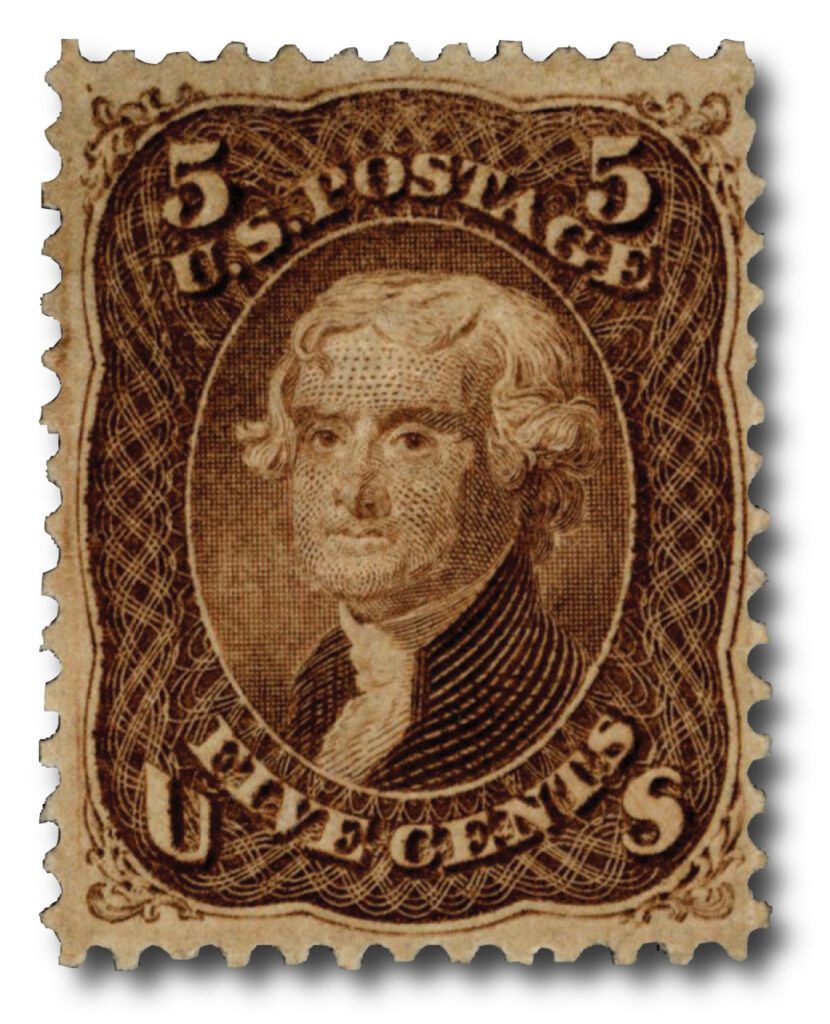
On February 17, 1801, the young United States faced a constitutional crisis that tested whether its new government could transfer power peacefully. That day, after weeks of deadlock, the House of Representatives finally chose a president, proving that the nation’s system—though imperfect—could still function under pressure.
By 1801, Thomas Jefferson was already one of the most experienced political leaders in the new nation. He had helped guide American independence while serving in the Second Continental Congress. He later served in the Virginia House of Delegates and became governor of Virginia during the Revolutionary War. Jefferson also served overseas as minister to France. When he returned home, he became the nation’s first secretary of State under President George Washington.

While serving in Washington’s cabinet, Jefferson clashed often with Treasury Secretary Alexander Hamilton. Their main disagreement involved how to handle debt from the Revolutionary War. Hamilton wanted the federal government to assume and share the debt among all states. He believed this would strengthen the national government and build trust with foreign lenders. Jefferson disagreed. He believed each state should pay only its own war debt. Virginia, his home state, had already paid much of its share. This dispute helped create two early political groups. Hamilton led the Federalist Party, which supported a strong central government. Jefferson helped lead the Democratic-Republican Party, which favored stronger state power.

As secretary of State, Jefferson supported France during its conflict with England. However, disagreements within the cabinet and growing party conflict pushed him to leave government in 1793. He returned to his home at Monticello. There, he worked closely with James Madison to organize political opposition to Federalist policies.
Jefferson ran for president in 1796 but lost to John Adams. At that time, the candidate with the second-highest number of electoral votes became vice president. This meant Jefferson served as vice president under a political rival. The arrangement created tension and showed problems in the election system.

The election of 1800 exposed those problems even more clearly. Jefferson and Aaron Burr each received the same number of electoral votes. Under the Constitution, the decision then moved to the United States House of Representatives. At the time, Federalists still controlled the House. Many Federalists distrusted Jefferson. Some even considered supporting Burr instead.
The House vote dragged on for days. Representatives cast ballot after ballot without a winner. For 35 ballots, neither candidate could gain enough support. During this time, Hamilton—though Jefferson’s political enemy—worked behind the scenes. He argued that Jefferson was more predictable and less dangerous than Burr. Finally, on the 36th ballot, the House broke the deadlock. Jefferson won the presidency by a vote of ten states to four, with two states divided. The decision was finalized on February 17, 1801.
The crisis revealed weaknesses in the original election system. In response, Congress later passed the 12th Amendment. It required electors to cast separate votes for president and vice president. This change helped prevent future ties like the one in 1800.
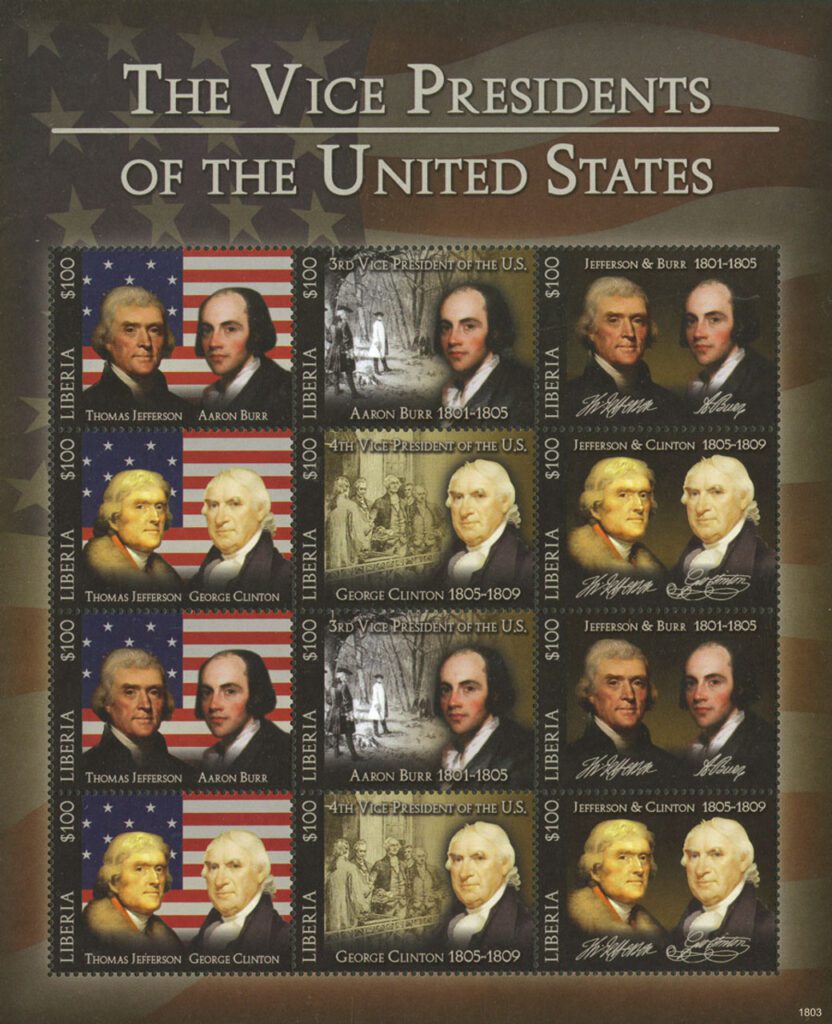
Although Jefferson and Burr had run together, their relationship was strained. Jefferson did not trust Burr’s political ambitions. In the 1804 election, Jefferson chose a new running mate. Burr’s political career soon collapsed. That same year, Burr killed Hamilton in a duel, ending one of the most famous rivalries in early American politics.
The peaceful transfer of power in 1801 became known as the “Revolution of 1800.” It showed that political opponents could replace each other without violence. While the process was messy and stressful, it proved the new Constitution could survive serious challenges. For a young nation still defining itself, that was an important test passed.
| FREE printable This Day in History album pages Download a PDF of today’s article. Get a binder or other supplies to create your This Day in History album. |
Discover what else happened on This Day in History.
While I do understand the logic for the smaller states to have a say in the presidential elections, I do not understand why there can’t be a national primary day for all states. The current crazy primary system gives certain states the power to determine the nominee. By the time the early states have had their primaries, the later states just go through the motions. And then there are the “super” delegates. It’s crazy! A vice presidential issue???? Spiro Agnew later???? Liberia????
We have the Electoral College for the same reason that we have a bi-cameral legislature. Look where we would be if we only had a unicameral legislature. The party in control of the House of Representatives would be able to enact ANYTHING they wanted; with no checks or balances of any kind. The Founders were very smart, in my opinion. (Plus, we would never have had a country at all, if not for the compromises which led to a Senate – based on equal representation, no matter how large or how small the State – and a House of Representatives – based on population. Likewise, we would never have had a country without the Electoral College. It was a compromise, based on the exact same reasoning as the Bicameral legislature. Not enough States would have ratified the Constitution without it. Besides, personally I am glad we don’t decide our Presidential election on the basis of the “popular vote” alone. In my estimation, there are too many voters who are ignorant, uninformed, or only vote one way or another for the most foolish of reasons.
“Besides, personally I am glad we don’t decide our Presidential election on the basis of the “popular vote†alone. In my estimation, there are too many voters who are ignorant, uninformed, or only vote one way or another for the most foolish of reasons.”
AMEN! Agreed that the large states would determine everything in the country, and there are so many voters who do not make their own decisions, but let others make it for them.
As Voltaire so famously said, “Common sense is not so common”!
Fantastic article Mystic, keep up the good work!
Interesting, when you say “large states,” you are referring to the states with the most people. The people in these states pay most of the taxes, supply most of the people who serve in the military, and have the most to lose when a minority government is in power. Why shouldn’t most of the people have most of the say? A voter in a small state like North Dakota or Alaska has about 50 times the say as a voter in New York, Texas, or California. That’s not right! The principle of “one man (or woman), one vote” should apply.
Most of the state taxes you mean. Most of the federal taxes is arguable. The majority, as I said before is ripe for fraud. Read the Federalist Papers regarding why we have an Electoral College versus majority vote. And there is fraud (or so it seems) within the states to vie for the electoral. Thus we see the problem with majority rule.
Except that electors are pledged to vote for the nominees of their conscience, and only in a few states can electors of a particular party vote for someone other than their party’s nominee. We should go to a popular election of the President, and if no candidate gets majority, we should have a runoff between the top two vote getters. We should also shorten the primary/caucus calendar of have a national primary, because the parties’ state-by-state delegate selection is little more than a pair of traveling medicine shows.
There are many suggestions as to how to reform the Electoral College. To mention one: assign a state’s electoral vote proportionally. If 50% of the popular votes go to candidate A, 40% to candidate B, and 10% to candidate C, assign the electoral votes accordingly. But forget about it. Since any Constitutional reform has to be ratified by three fourths of the states, the small states would never approve of any change.
That’s the wonderful part of our Constitution. The big states cannot necessarily impose their will on the smaller states.
Well, we are in the early stages of another classic drought.
Calif. produces lots of food with the help of immigrants.
Yes. James Buchanan’s bottom listing is in jeopardy but not a foregone conclusion. And, with “apologies” to Andrew Johnson.
Nice to see we stamp collectors have some differing opinions.