
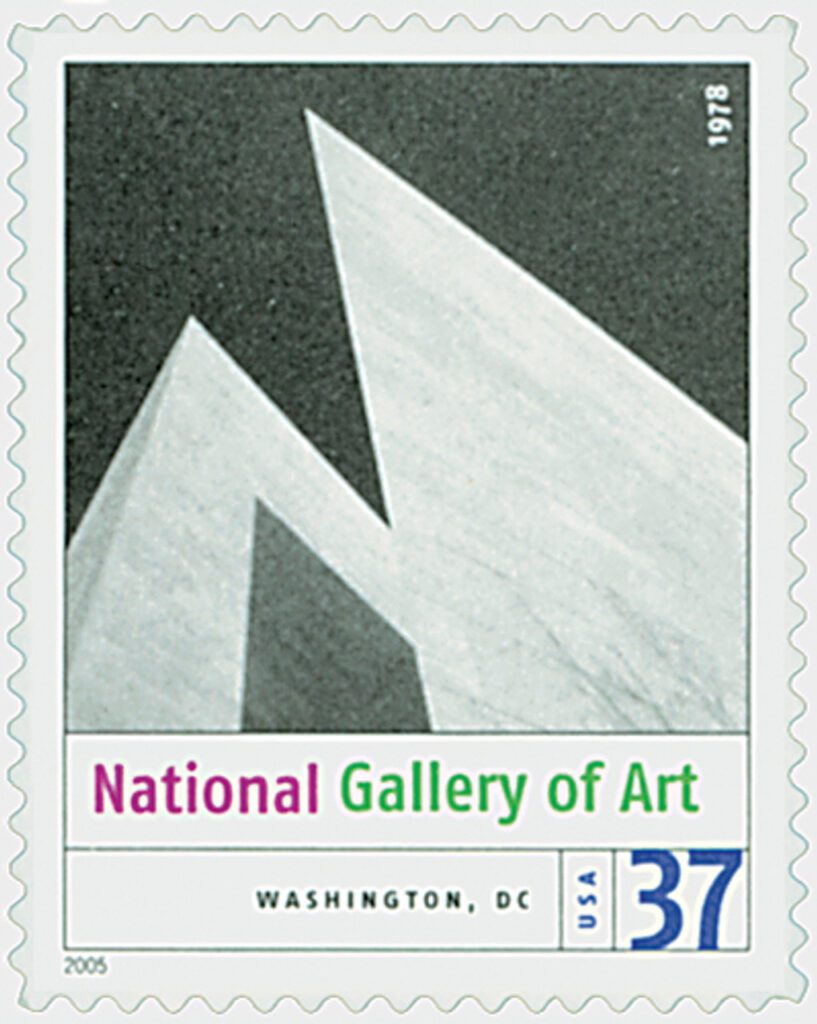
On March 17, 1941, Franklin D. Roosevelt presided over the opening of the National Gallery of Art in Washington, DC. The museum, created from the art collection and generosity of financier Andrew Mellon, gave the United States a national gallery comparable to those long established in Europe.
Andrew Mellon built his fortune in banking, oil, steel, shipbuilding, and construction, becoming one of the wealthiest Americans of his time. During the early 20th century—especially during World War I—Mellon used part of that wealth to assemble an impressive private collection of paintings and sculptures by European masters.

In 1921 Mellon was appointed Secretary of the Treasury and moved to Washington, DC. While living there, he became convinced that the United States should have a national art museum similar to the great galleries of Europe. Nations such as Britain and France already maintained large public collections that displayed artistic achievements for their citizens. Mellon believed the United States should do the same.
After years of collecting art and considering how to present it, Mellon wrote to President Franklin D. Roosevelt in 1936. In the letter he formally offered to donate his art collection along with funds to construct a museum building. Roosevelt supported the proposal and encouraged Congress to accept it. On Mellon’s birthday, March 24, 1937, Congress approved the plan and officially created the National Gallery of Art.

Mellon selected architect John Russell Pope to design the museum. Pope chose a grand neoclassical style inspired by ancient Greek and Roman architecture. The building was placed on the site of the former Baltimore and Potomac Railroad Station in Washington. The location carried historical significance. In 1881 the station had been the site where Charles Guiteau shot James A. Garfield, the 20th president of the United States.
Mellon insisted that the museum should not bear his name. He hoped this decision would encourage other collectors to donate their own works of art. His idea worked. Several donors contributed important collections even before the museum opened, and many more followed in later years.

Sadly, Mellon and Pope would not live to see the completed building. Both men died within a day of each other in August 1937, only two months after excavation began for construction.
Work continued, and the building was completed in December 1940. Built of pink Tennessee marble, it was one of the largest marble structures in the United States at the time. Three months later, on March 17, 1941, the National Gallery of Art opened to the public. More than 8,000 visitors attended the dedication ceremony. Mellon’s son, Paul Mellon, presented the museum to the nation on behalf of his father. President Roosevelt formally accepted the gift for the American people.
During the ceremony Roosevelt emphasized the importance of public access to art. He noted that the museum symbolized a connection between Americans and the artistic traditions of Europe while also representing a growing cultural life in the United States.
From the beginning, Mellon expected the gallery would eventually outgrow its original building. He therefore asked Congress to reserve nearby land for future expansion. By the 1960s the museum’s growing collections had indeed filled the original structure.
Paul Mellon and his sister, Ailsa Mellon Bruce, helped fund the construction of a second building. The project was designed by renowned architect I. M. Pei, who created the striking modern East Building using triangular shapes and sharp angles. Construction began in 1971 and required complex engineering to complete the unusual design. The building was finally dedicated on June 1, 1978, by President Jimmy Carter.
In 1999 the National Gallery opened another major addition, the National Gallery of Art Sculpture Garden. Located across the street from the main complex, the garden displays large sculptures and includes a fountain that becomes an ice-skating rink in winter.

Today the National Gallery of Art contains one of the most important art collections in the United States. Its holdings include thousands of paintings and sculptures, as well as prints, drawings, photographs, and decorative arts. Among its most famous works is Ginevra de’ Benci by Leonardo da Vinci, the only painting by the Renaissance master currently displayed in the Americas.
Several US Christmas stamps feature art that hangs in the National Gallery. You can view them here.
| FREE printable This Day in History album pages Download a PDF of today’s article. Get a binder or other supplies to create your This Day in History album. |
Discover what else happened on This Day in History.
Those 1%ers, always wasting money on stuff like this.
Why no way to share on Twitter?
it was Mellon and his family’s money to with as they please. I and most other Americans appreciate his gifts. You need to get out of your double-wide and get some culture, But that is asking a lot from a red neck
“Big Al,” have you ever visited a museum of any kind?
What do you waste your money on?
Just checking.
His comment was obviously said in jest…….wasn’t it?
It’s obvious he has no concept of waste. A gift of an entire art gallery and a substantial fortune in art, is hardly a waste. Only an unsofisticated huffoon would make such a comment. His idea of art is probably the inside of a toilet stall at a boxing match. Also, since stamps are all about the art as well as history he’s clearly on the wrong website since he’s too stupid to be a collector.
I guess we must share the wealth of history and art but to me March 17th will always be St. Patrick’s Day except if your are from Boston where they also celebrate Evacuation Day, when Washington’s ragtag Army chased the British out of Boston Harbor. Enjoy your artsy day!
Mr Adkins you wouldn’t be reading this if there were people like u who cared nothing about history. I am proud to live in a country where as u say the 1 percenters will use their fortunes for the common good
To Al Atkins;
So vote for Bernie!!
What an interesting article, I was not aware of Mellon’s contributions to the establishment of the National Gallery of Art in Washington. I am appreciative of Mellon’s efforts to build and house a national museum which symbolizes the rich cultural and artistic heritage of the country. The National Gallery, like all Smithsonian museums are important national landmarks that offer everyone free of charge to experience great artistic, historical, and cultural treasures. No amount of money could ever be wasted on enriching a child’s life through the humanities and education.
And I love the art work and history in every one of those tiny stamps. That is something even the 99% gets to enjoy. I love the museums but there is beauty in our everyday life. Don’t look at the big picture…look at the parts and pieces.