
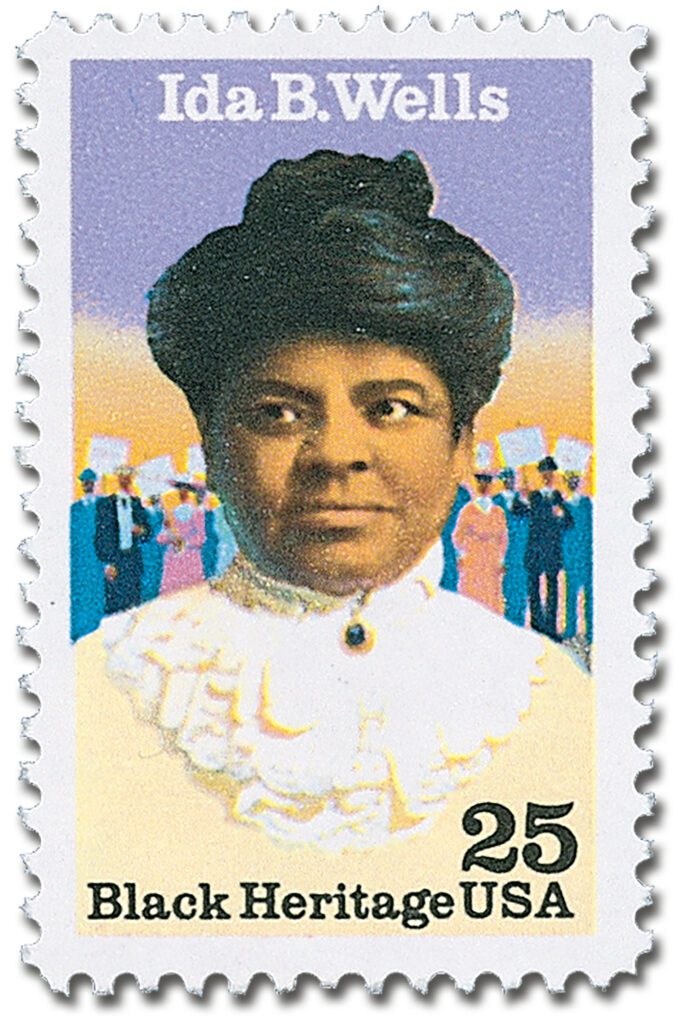
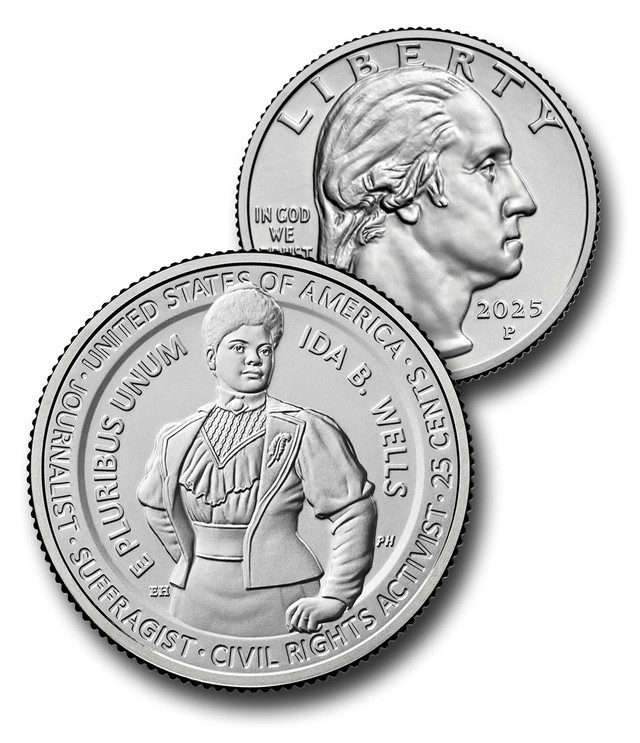
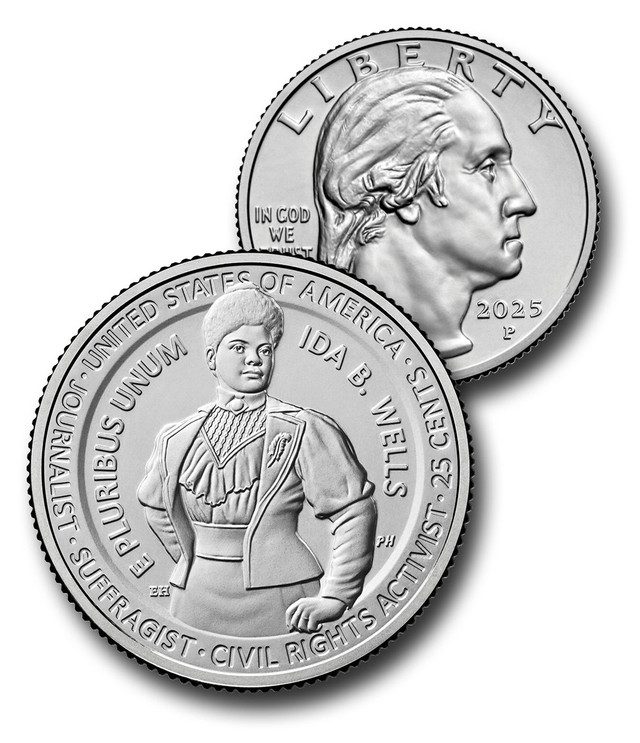
On March 25, 1931, civil rights leader, journalist, and suffragette Ida B. Wells died at the age of 68. Her life’s work—documenting injustice with facts and confronting violence with fearless reporting—left a detailed record of a nation struggling with race and equality.
Ida Bell Wells was born on July 16, 1862, in Holly Springs, Mississippi, just months before President Abraham Lincoln issued the Emancipation Proclamation. Her parents, James and Elizabeth Wells, had been enslaved. After the Civil War, they became active in Reconstruction-era efforts and ensured their daughter received an education at Shaw University, a school for freed people.
Wells’ early life changed suddenly in 1878. A yellow fever epidemic swept through her town, killing both her parents and her infant brother. At just 16, Wells made a decision that shaped the rest of her life. She refused to let her family be separated. She left school, found work as a teacher, and supported her five surviving siblings. Teaching paid little. She earned about $30 a month, while white teachers in similar positions earned closer to $80. This gap sharpened her awareness of racial inequality.
In 1884, Wells challenged segregation directly. While riding a train in Tennessee, she purchased a first-class ticket and took a seat in the ladies’ car. A conductor ordered her to move to the segregated “Jim Crow” car. When she refused, he and two other men forcibly removed her. Wells sued the railroad. A local court awarded her $500 in damages. However, in 1887, the Tennessee Supreme Court reversed the ruling and ordered her to pay court costs. The case drew public attention and pushed Wells toward journalism.

She began writing under the pen name “Iola” for Black newspapers such as The Living Way and the Evening Star. Her articles focused on education, voting rights, and racial discrimination. In 1889, she became co-owner and editor of the Memphis Free Speech and Headlight, a newspaper that challenged segregation and violence in the South.
A turning point came in 1892. Three Black businessmen in Memphis, including Wells’ close friend Thomas Moss, were arrested after defending their grocery store from a white mob. While in jail, they were taken by a mob and lynched. Wells investigated the case and published editorials condemning the killings. She urged Black residents to leave Memphis if they could not receive protection under the law. More than 6,000 people left the city, and others organized boycotts of white-owned businesses.
As Wells continued her reporting, she began collecting data on lynchings. She documented cases, examined accusations, and compared them to evidence. Her findings challenged a common claim of the time—that lynchings were primarily punishment for crimes. Wells showed that many victims had not been charged with serious offenses. She argued that economic competition and racial control were often the real motives.
Her work brought threats. In 1892, while she was traveling, a mob destroyed her newspaper office in Memphis. She did not return. Instead, she moved to Chicago, where she continued writing and speaking. In 1895, she published The Red Record, one of the first statistical studies of lynching in the United States.
Wells also took her message abroad. In 1893 and again in 1894, she traveled to England and Scotland. There, she gave lectures and wrote articles describing lynching in the United States. She became a correspondent for the Chicago Inter Ocean, making her one of the first Black women paid by a major white newspaper. Her international efforts helped form anti-lynching groups in Britain that pressured American officials.
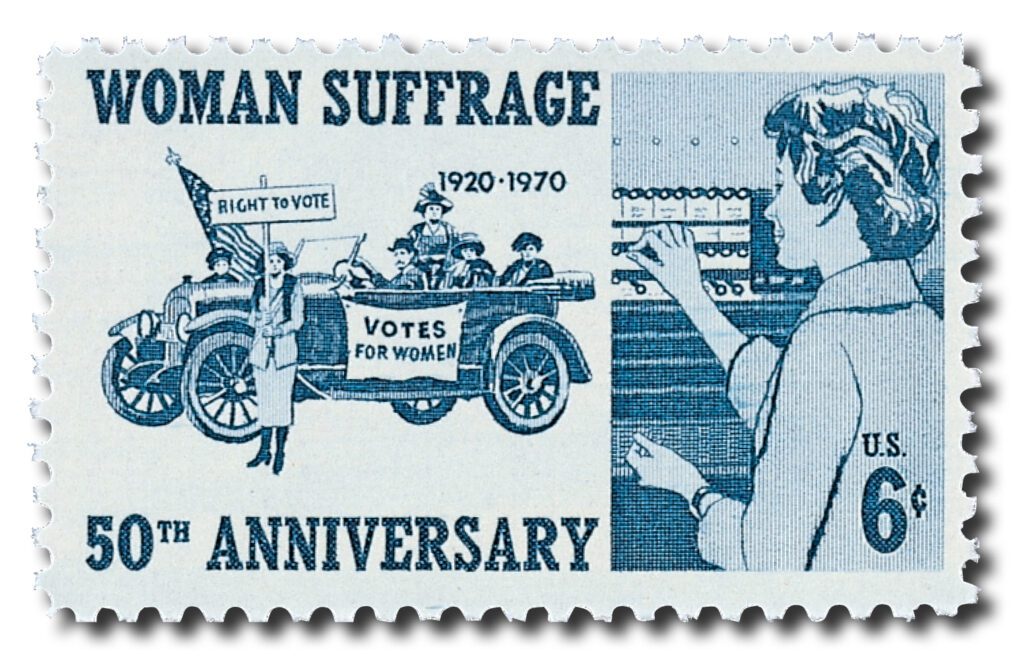
In Chicago, Wells expanded her work into community organizing. She helped establish institutions that supported Black residents, including kindergartens and social centers. She also became active in the women’s suffrage movement. In 1913, she founded the Alpha Suffrage Club, one of the first Black women’s suffrage organizations in the United States. The group worked to register Black women voters and support political reform.
Wells was also involved in early civil rights organizations. She was one of the signers of “The Call,” the 1909 document that led to the creation of the NAACP. Though she later distanced herself from some of its leadership, she remained committed to civil rights advocacy.
In her later years, Wells focused on local reform efforts in Chicago, including housing and education. She also raised her family while continuing to write. Near the end of her life, she began working on an autobiography to document her experiences in her own words.
Ida B. Wells died on March 25, 1931, before completing that manuscript. Her autobiography, Crusade for Justice, was later published from her unfinished work. Today, her writings remain a detailed and firsthand record of her investigations, her activism, and the conditions she fought to change.
| FREE printable This Day in History album pages Download a PDF of today’s article. Get a binder or other supplies to create your This Day in History album. |
Discover what else happened on This Day in History.
i did not know Ida Wells story from an earlier generation. Thank you for it. She would be pleased with the progress we have made in civil rights, even though racial bigotry is still too pervasive in so many peoples’ thinking and actions.
only in your mind is it pervasive
You think it is :”only in your mind”? You think only Loren thinks that way?
He made the comment and ran away like most cowards. Not only was it pervasive in 2016, in 2019 we have a president that empowers people to bigotry. May I remind people that this is a stamp history comment page and to keep their unwanted dialogue in the sewer where it belongs. Thank you for your support.
I have read a lot of black history and never heard of Ida either. Thanks for this information, This daily page of history is wonderful. Thanks
So good to hear this part of African American history, and we should hear more about that history! African Americans have contributed a lot to his nation’s development, and thank you for high lighting the story of Ms. Ida Wells. In spite of progress made in the past in race relations, there is still more room for improvement.
A great historical example of ‘black (all) lives matter’; thanks to brave Ms Wells as she took on vested powers to improve our developing society. And no! this is not a ‘political’ rant (sorry if it comes across as such to some), just a ‘social’ comment on the way our culture has evolved; and thanks Mystic for bringing back to life, stamps that chronicled this progress over the years. May you rest in peace Ida Wells. GdR
Great historical information. Thanks.
What I found the most interesting from this little vignette was the part where “Europe pressed the United States to guarantee better treatment of… African-American citizens” as a result of Ms. Wells’ travel and writing. Quite a turn around from how the United States is usually viewed as a beacon of freedom, liberty, and civil rights among the countries of the world. Just goes to show how important it is to know, study, and learn from history.
Another great update for me in American history ! Thanks, again !