
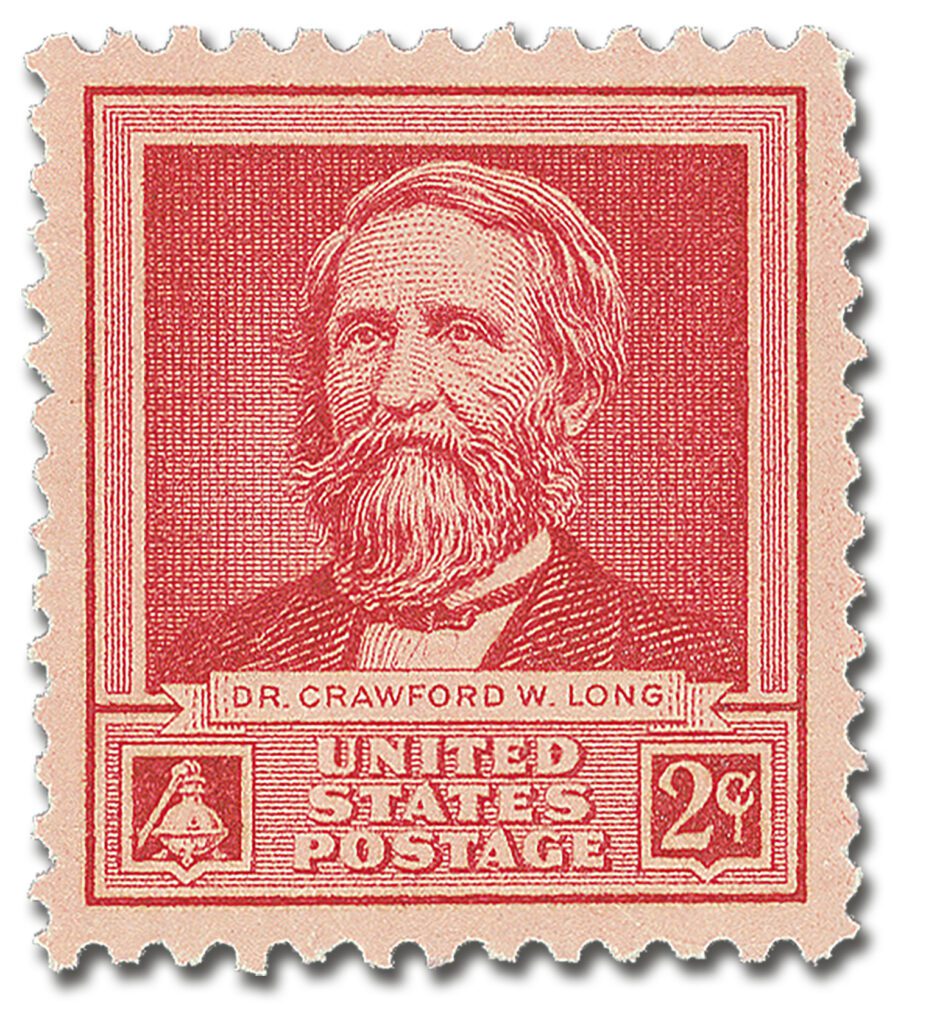
On March 30, 1842, Dr. Crawford W. Long used ether during surgery for the first time, allowing a patient to undergo a procedure without pain. That moment is now honored each year as National Doctors’ Day, recognizing both the event and the physicians who continue to apply medical science in practice.
Crawford Williamson Long was born on November 1, 1815, in Danielsville, Georgia. He grew up in a well-known local family. His father was a physician, merchant, and state legislator. Long was named after William H. Crawford, a prominent Georgia politician and former US Treasury secretary. From an early age, Long showed strong academic ability. By age 14, he had completed his early schooling and entered the University of Georgia in Athens.
He earned his degree in 1835 and continued his medical education at Transylvania College in Lexington, Kentucky, one of the leading medical schools in the country at the time. There, he studied under Dr. Benjamin Dudley, a respected surgeon. Long observed many operations, most of which were performed without anesthesia. Patients were often restrained during procedures and endured severe pain. These experiences left a lasting impression on him.
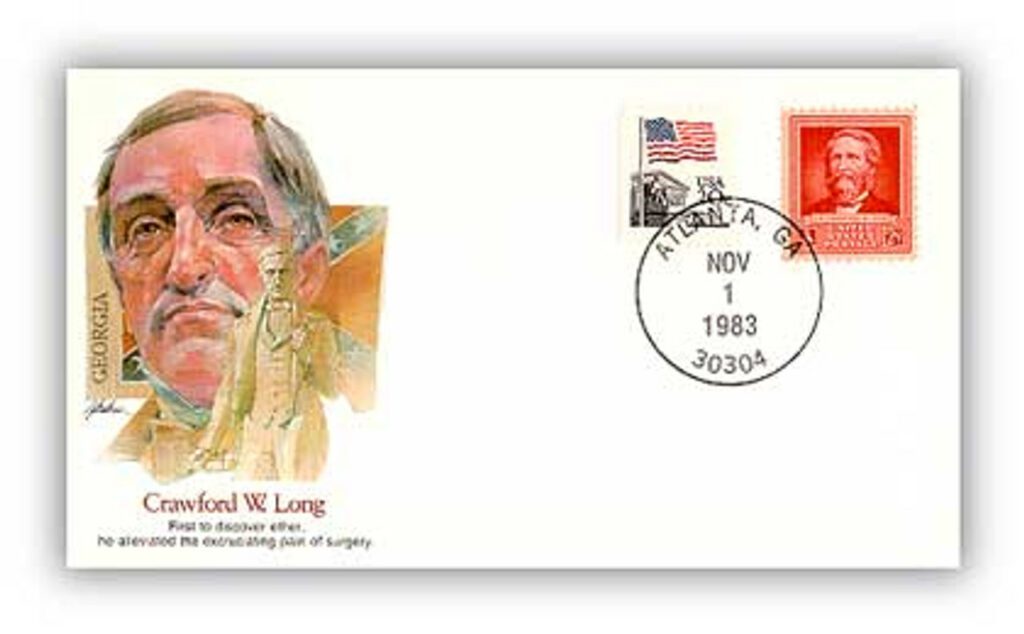
After one year, Long transferred to the University of Pennsylvania, where he earned his medical degree in 1839. Philadelphia was a center of medical learning, and Long gained exposure to newer instruments and clinical methods. He then spent about 18 months in New York City completing his internship, further refining his skills before returning to Georgia to begin practice.
Long settled in Jefferson, Georgia, where he opened a medical practice. At the time, a social trend known as “ether frolics” was common in some areas. People would inhale ether for its intoxicating effects. Long noticed that participants who were injured while under the influence often did not feel pain. This observation led him to consider whether ether could be used during surgery.
On March 30, 1842, Long applied this idea in practice. His patient, James M. Venable, needed a tumor removed from his neck. Before beginning the operation, Long placed ether on a cloth and had Venable inhale it. Once the patient was unconscious, Long performed the procedure. Venable later reported that he did not feel pain during the surgery. Long repeated this method in later operations, including amputations and childbirth cases, with similar results.
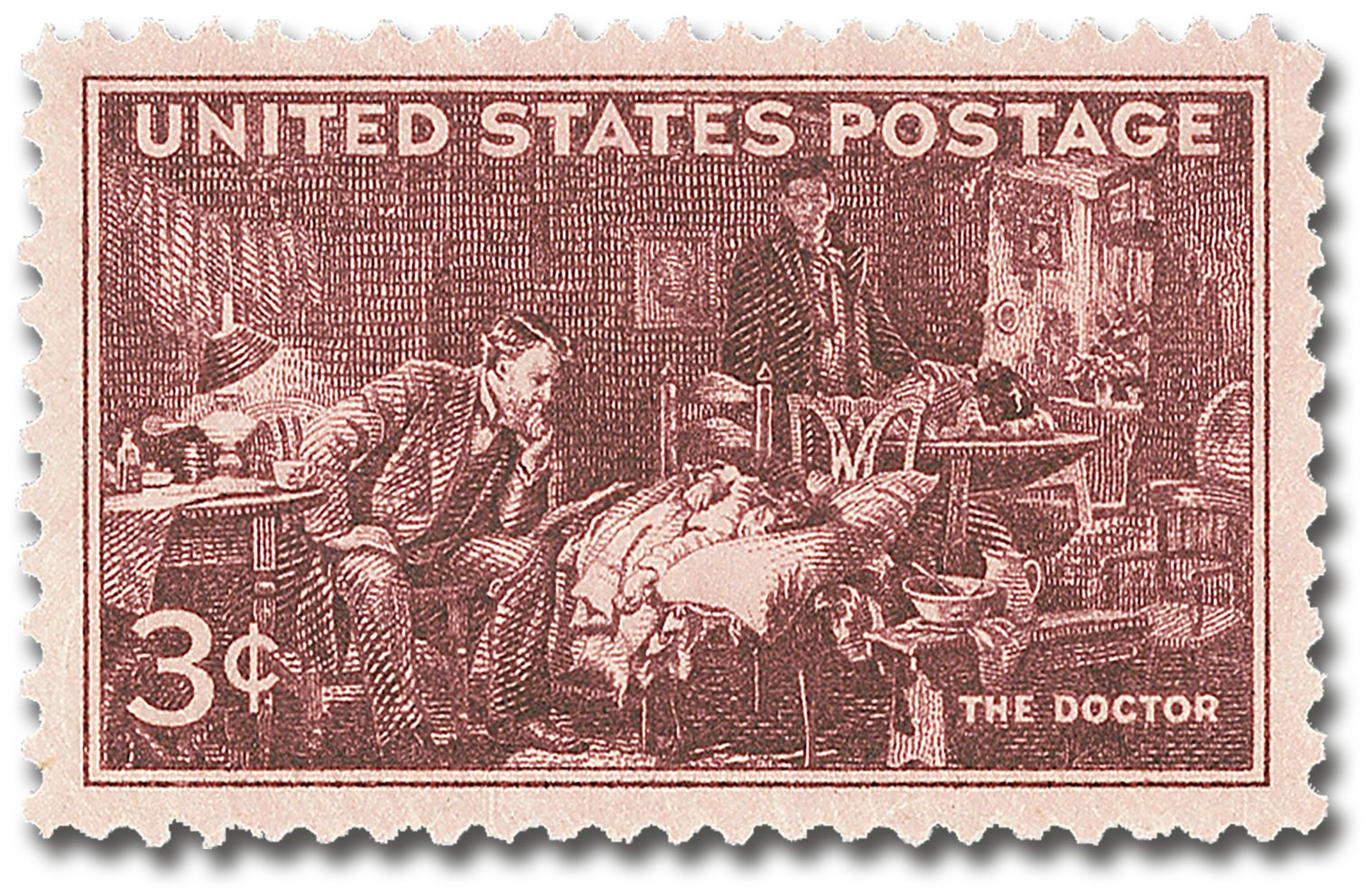
Despite these successful outcomes, Long did not immediately publish his findings. He discussed his work with colleagues, but he focused on documenting additional cases before seeking wider recognition. In the meantime, other physicians began experimenting with anesthesia. In 1846, dentist William T. G. Morton publicly demonstrated the use of ether in Boston, gaining national attention. As a result, Morton was often credited at the time as the pioneer of surgical anesthesia.
Long later gathered records from his earlier cases and published his findings in 1849, establishing that his use of ether in 1842 predated Morton’s demonstration. He sought formal recognition and even petitioned Congress to acknowledge his priority. While he did receive some credit during his lifetime, full recognition came more gradually after his death.
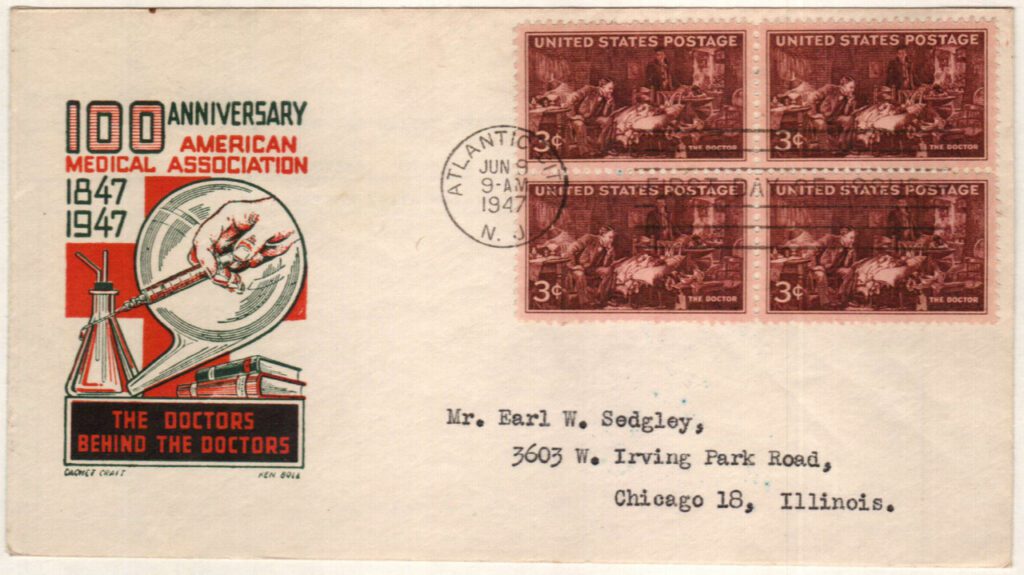
In addition to his medical work, Long led a full personal and professional life. He married Caroline Swain and had 12 children. He operated a medical practice and pharmacy with his brother. During the Civil War, he served as a surgeon, treating both Confederate and Union soldiers when needed. His work continued until his death on June 16, 1878, which occurred shortly after he had delivered a baby.
The use of anesthesia transformed surgery. Before its introduction, operations were often rushed due to the patient’s pain and risk of shock. Ether allowed surgeons to work more carefully and perform more complex procedures. Over time, safer anesthetic agents and improved techniques were developed, but Long’s early work demonstrated that pain could be controlled during surgery.
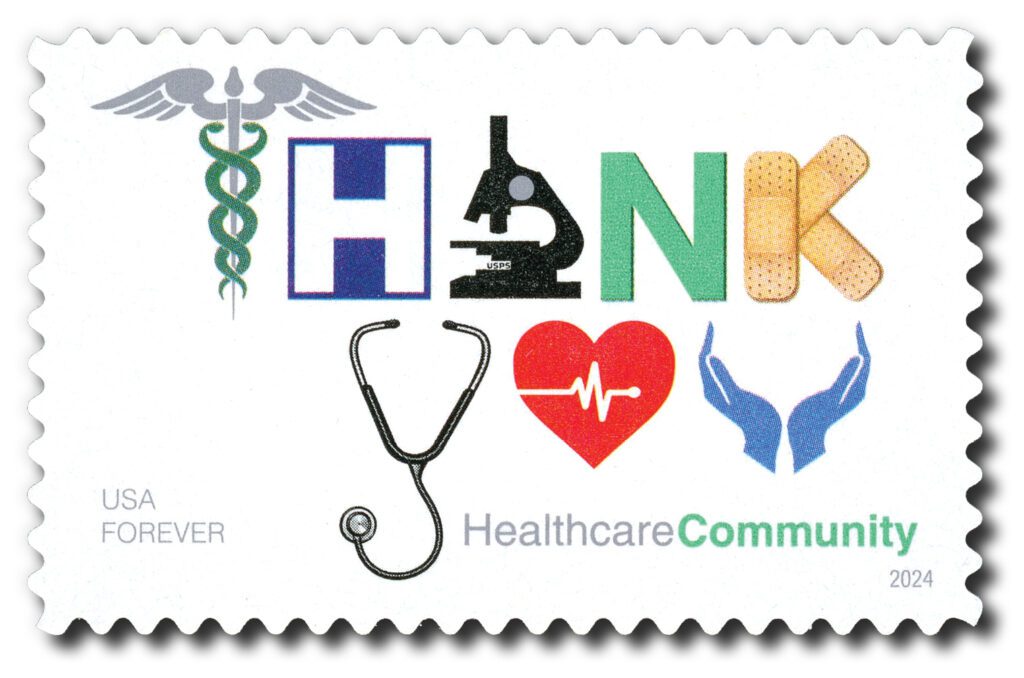
National Doctors’ Day traces its origins to March 30, 1933, in Winder, Georgia, not far from where Long had practiced. The observance was organized by Eudora Brown Almond, the wife of a local physician. On that first Doctors’ Day, people sent greeting cards to physicians and placed flowers on the graves of doctors who had died, including Dr. Long. Red carnations became a common symbol of the day.
The idea spread slowly at first, mainly through the southern United States. Over time, more states began to recognize the observance. In 1990, the US Congress officially designated March 30 as National Doctors’ Day, and it was signed into law by President George H. W. Bush. Today, National Doctors’ Day is observed in hospitals, clinics, and communities across the country. Patients and organizations often recognize physicians with notes of thanks, small ceremonies, or professional acknowledgments. Other countries also observe Doctors’ Day, though on different dates tied to their own medical milestones or notable physicians.
Click here for more stamps honoring the medical field.
Click here for more about National Doctor’s Day.
| FREE printable This Day in History album pages Download a PDF of today’s article. Get a binder or other supplies to create your This Day in History album. |
Discover what else happened on This Day in History.
Thanks Mystic for today’s article. Very timely as Doctor’s and staff treat patients with covid 19 and they themselves are at risk. Everyone be safe and observe precautions from reliable sources.
I agree! If ever there was a time to appreciate the dedication and self-sacrifice of doctors and all others in the medical profession, this is surely it. Thanks for the timely reminder.
As a retired physician with a brother ER physician in Canada,I appreciate this article. I think people do care.
God’s protection on all but especially on our doctors, nurses and 1st responders
Again good job Mystic a piece of History I had never heard of