

On May 5, 1961, Alan Shepard became the first American to travel into space when he launched aboard Freedom 7. The brief suborbital flight lasted just over 15 minutes, but it marked a turning point in the United States’ early space efforts.
The mission was part of Project Mercury, which began in 1958 after the Soviet Union stunned the world with the Sputnik launch. American leaders saw space as both a scientific frontier and a test of national strength. Mercury had three clear goals: orbit a human around Earth, study how the human body reacts to spaceflight, and return both astronaut and spacecraft safely.
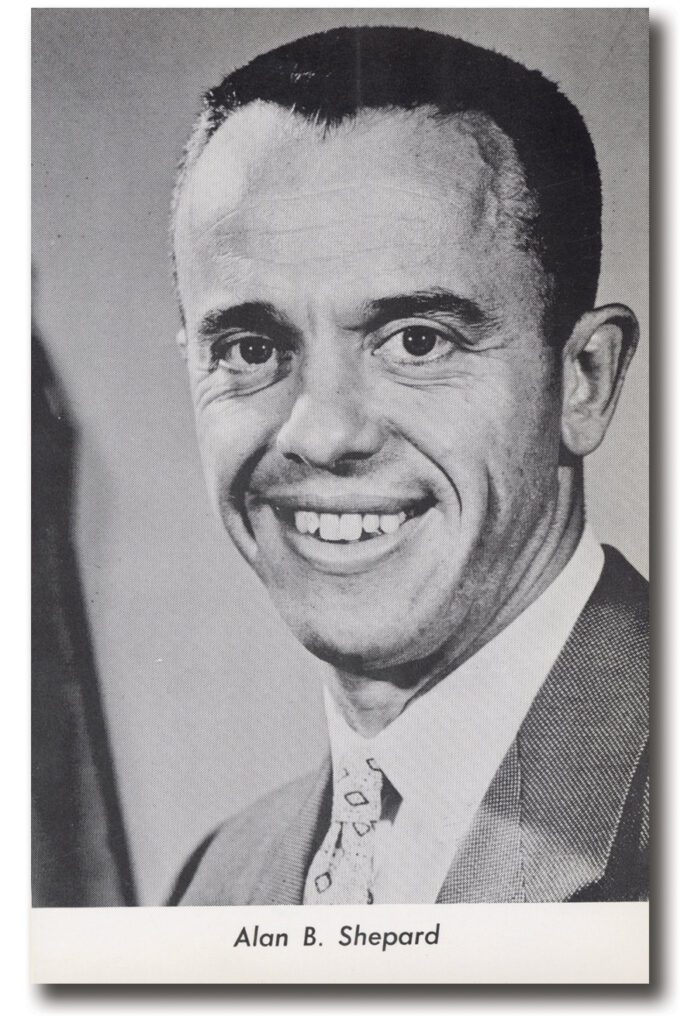
Shepard’s flight, known as Mercury-Redstone 3, was a key early step. NASA selected the capsule, named Freedom 7 by Shepard himself, in late 1960. The original launch date slipped due to technical checks and weather delays. In January 1961, NASA introduced its first group of astronauts to the public, including Shepard, Gus Grissom, and John Glenn. Shepard was chosen for the first flight, though his selection was not publicly confirmed until just days before launch.
On the morning of May 5, millions of Americans watched live television coverage from Cape Canaveral, Florida. At 9:34 a.m. Eastern Time, the Redstone rocket ignited and lifted Freedom 7 into the sky. The rocket burned for about two and a half minutes before separating, sending the capsule on a ballistic arc into space.
Within minutes, Shepard passed the accepted boundary of space, about 62 miles above Earth. His capsule eventually reached an altitude of 116.5 miles. During the flight, Shepard experienced both intense acceleration during launch and brief weightlessness at the top of the trajectory. Unlike earlier test flights with animals and instruments, Shepard actively controlled parts of the mission. He used manual controls to adjust the capsule’s orientation, testing whether astronauts could function under real space conditions.

The entire flight lasted 15 minutes and 28 seconds. Freedom 7 traveled about 302 miles downrange and reached a top speed of roughly 5,134 miles per hour. As the capsule reentered the atmosphere, it endured high heat and deceleration forces before deploying parachutes for a controlled splashdown in the Atlantic Ocean. Recovery teams quickly located Shepard and the capsule. Both were in good condition when they were brought aboard the aircraft carrier Lake Champlain.
Shepard’s flight followed the earlier mission of Soviet cosmonaut Yuri Gagarin, who had orbited Earth on April 12, 1961. Gagarin’s spacecraft was largely automated, and he ejected and parachuted separately during landing. By contrast, Shepard remained inside Freedom 7 throughout the flight and demonstrated limited manual control of the spacecraft. While the mission was suborbital rather than a full orbit, it showed that American astronauts could operate their vehicles in space.
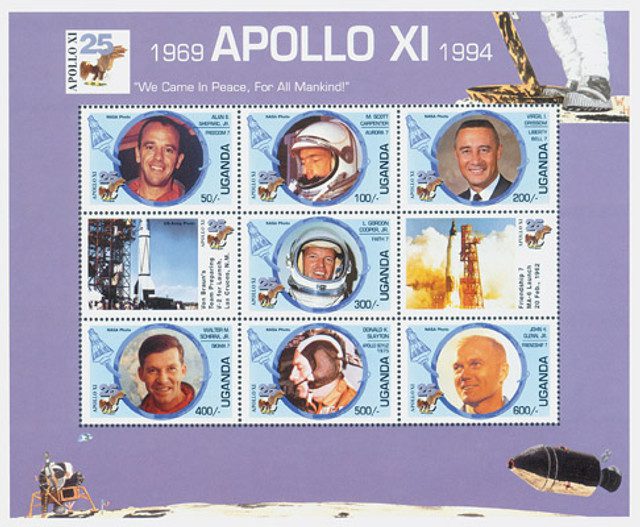
The success of Mercury-Redstone 3 gave the United States confidence in its space program. Shepard became a national figure almost immediately. Shortly after recovery, he received a congratulatory call from John F. Kennedy. The achievement also helped shape national policy. On May 25, 1961, just 20 days after Shepard’s flight, Kennedy addressed Congress and set a new goal: landing a man on the Moon before the end of the decade.
Project Mercury continued with five more crewed missions between 1961 and 1963. In February 1962, John Glenn became the first American to orbit Earth aboard Friendship 7. Later missions extended flight times and tested more complex operations. In 1963, Gordon Cooper completed a 34-hour mission, showing that humans could function in space for extended periods.

Shepard himself would not fly again until 1971, when he commanded the Apollo 14 mission to the Moon. However, his 1961 flight remained a foundational moment. It provided data on human performance, spacecraft control, and recovery procedures. These lessons directly supported later programs, including Gemini and Apollo.
Click here to see a video chronicling Shepard’s historic flight.
| FREE printable This Day in History album pages Download a PDF of today’s article. Get a binder or other supplies to create your This Day in History album. |
Discover what else happened on This Day in History.
Great person,met him at our local high school dedication in his name.
If this is the Alan B Shepard High School in Illinois, I know it well. I went to Richards and was a little jealous that your school was named for a Great man when mine was just some former school administrator. I was on the swim team and Shepard had one of the best pools that I swam in.
Remembered both May 2 and 5th. My grade school class went to the gym and watched it on TV. May 2nd was weather related. Some clouds in the sky or something. Watched the whole thing on May 5th including the landing and picking up Shepard with a helicopter. They scrubbed down the Freedom 7 because they thought it might bring back space germs. Watched Grissom and Glenn later. This would not happen now because it would not raise test scores.
So true Rich. We forgot how great this country was at one time. Not anymore.
I agree with you, Rich. There’s too much testing and not enough learning nowadays. I was in the sixth grade when we watched the event in the school library, truly a great achievement in America’s space exploration!
I recalled the events of today 55 years ago before seeing this latest This Day in History posted because we listened to the launch on the intercom in our classroom in high school (we were not as lucky as Rich Davis who witnessed it on TV), and as a space cover collector, I have launch, tracking, and recovery ship covers in my collection posted May 5, 1961.
Ricky: This country is as great as ever. The media just is involved in other propaganda agendas.
our space program and satellite systems are beyond anything we imagined in 61. this was 9 days before my 18th birthday. The education in science push was on.
What’s not great is people pushing religion into government and making discovery a minor priority.
Rod – I completely disagree – we are a country going backwards with the current idiotic administration. If no cost healthcare, Equal Rights for all minorities and Voting Rights are all “socialism” – then count me in. Otherwise, if freedom to think and move forward scares you, then stay inside your house, lock the doors and don’t come out for anything!
Great man . I have included his brief write up in my Research paper titled: Men who left their stamp on history 100 Great Astronauts . Thank you Mystic Stamp for reminding us of this great day in space exploration.
‘… and a giant leap for mankind …’ Ensign/Commander Neil Armstrong once said (1969). I guess it still made sense, then, to see oneself (and achievements) as part of mankind’s general evolution. In that spirit I note the brief mention of Russia’s contribution to space exploration, also, as Colonel Yury Gagarin believed, in the name of universal development and civilisation.
In cosmological terms, it makes no sense to date the exploits of 1961 as separate, but more perhaps as two sides of the same historical coin. Of course as the article points out, differences become more apparent looking at technical details, and this is not surprising given the sheer vertiginous pace of progress in this industry in the US; thanks in no small part to the ‘electrifying’ advance in computerised science/technology, and applications for space exploration — it has been a fashion for some time now to believe that the ‘first man on the moon’ mission could have been entirely controlled from one’s office, using a current MacPro (Intel generation) …
It is perhaps worth noting, in this day and age, that we (human kind) can still achieve much in space exploration (e.g., international space station, etc) through cooperative endeavour between the pioneering ‘space’ nations; and this can only make the rest of the world feel part it. A small step for Sheppard/Gagarin/Armstrong, and a significant cosmological ‘hyperjump’ in our collective march to the stars. GdR
I remember this incident as if it happend yesterday since I was one of the frogman who dropped into the ocean to open the hatch on the recovery.What a great feeling to part of a historical event.
That has to be the best first hand experience I’ve read about on this blog and what a memory that must be. Too much credit is given to Glenn for his single orbital flight since Shepard went first after many failed launch attempts. I’m sure Grissom and Glenn wouldn’t have hesitated to go. It took a lot of guts to be #1. Shepard also went on to command Apollo 14 and was one of 12 men to walk on the moon. Thanks for sharing your story and thank you for your service.
I have been watching “Race to the Moon” on PBS’s American Experience. Highly recommend it. I get it via an Amazon Prime subscription. Production as only PBS can do. Ed White’s wife committed suicide in 1983 after suffering years of depression after Ed’s tragic death in the 1967 launch pad fire. For pure entertainment I liked “For All Mankind”. The early beginnings of our country’s space efforts have so many facets. It was all new, it was like re-inventing the wheel. Politicians were the group that had to move their perspective the farthest into the future.