
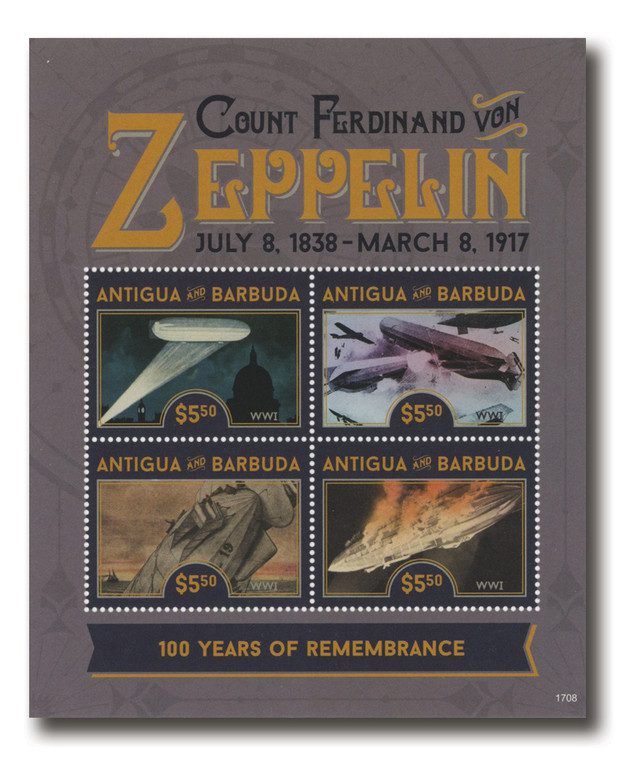
On May 6, 1937, the Hindenburg caught fire while preparing to land in Lakehurst, New Jersey, and was destroyed in less than a minute. The disaster killed 35 people aboard the airship and one worker on the ground, ending a famous chapter in passenger airship travel.
Long before jet travel, airships offered one of the most dramatic ways to cross long distances. One early step came from French engineer Henri Giffard, who built a steerable, hydrogen-filled airship powered by a small steam engine. On September 24, 1852, he flew about 17 miles from Paris to Trappes, France. A rudder helped him steer, though strong wind kept him from returning to his starting point.
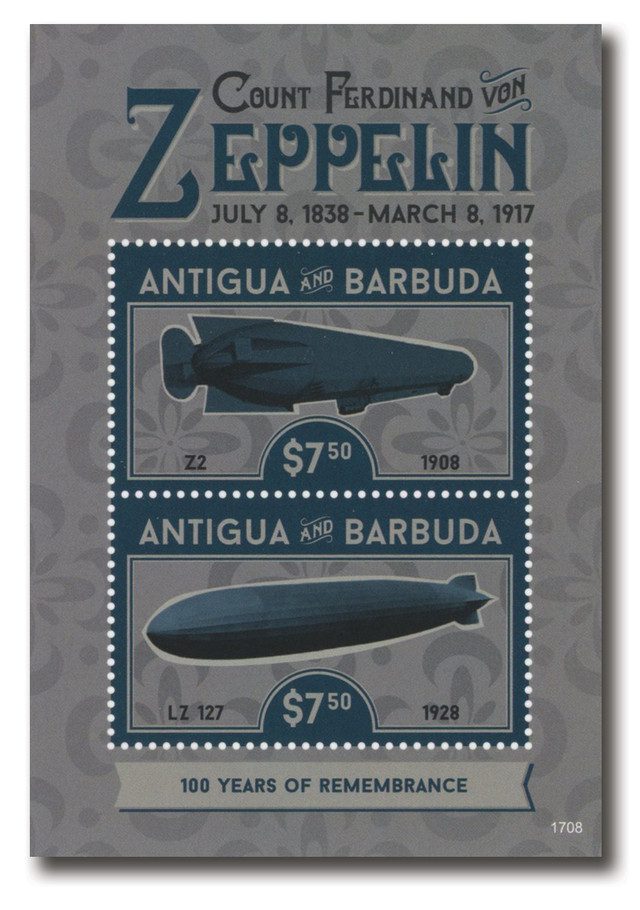
The most famous airships were later built in Germany by Count Ferdinand von Zeppelin and the company that carried his name. Zeppelin’s rigid design used a light metal framework covered by fabric. That frame let builders create much larger craft than earlier balloons. It also gave the ships more room for engines, passengers, cargo, and fuel.
In 1909, the German company DELAG was founded to carry passengers by Zeppelin airship. It became the world’s first airline to use aircraft in paid passenger service. Before World War I, DELAG’s airships made more than 1,500 commercial flights and carried over 34,000 passengers.
World War I changed the role of the Zeppelin. Germany used airships for scouting, naval patrols, and bombing raids. Their long range made them useful over the North Sea, where they watched for British ships. Beginning in 1915, German airships also attacked targets in Britain. They dropped thousands of bombs during the war, though they were slow, vulnerable to weather, and increasingly at risk from improved aircraft and anti-aircraft fire.
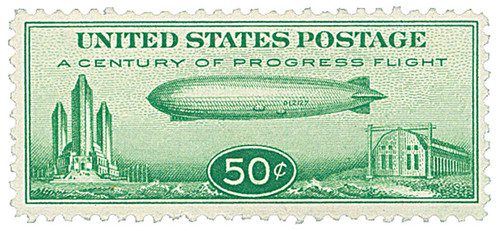
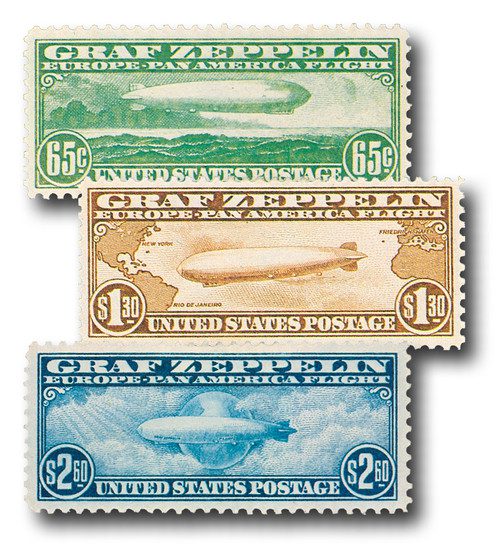
After the war, Dr. Hugo Eckener helped rebuild public interest in passenger airships. The most successful was the LZ 127 Graf Zeppelin, which first flew in 1928. In 1929, it flew around the world with a group of passengers and crew. Among them was journalist Grace Marguerite Hay Drummond-Hay, who became the first woman to travel around the world by air.
The Graf Zeppelin later carried passengers and mail across the Atlantic. It flew between Germany, the United States, and South America. Its record helped make airship travel seem safe, elegant, and modern. Passengers had cabins, dining areas, and wide views from the windows. The trip was slower than later airplane travel, but it was far more comfortable than early long-distance aircraft.
The LZ 129 Hindenburg was built for this same world of luxury travel. Construction began in the early 1930s, and the ship made its first test flight from Friedrichshafen, Germany, on March 4, 1936, with 87 people aboard. It was named for Paul von Hindenburg, the former German president who had died in 1934.
The Hindenburg was enormous. It stretched more than 800 feet and was filled with hydrogen, a gas that gave strong lift but burned easily. Germany had hoped to use helium, which was safer, but the United States controlled most of the world’s helium supply and restricted exports.
The ship’s public debut also carried political meaning. In March 1936, the Hindenburg and Graf Zeppelin flew over Germany during a Nazi propaganda tour connected to the remilitarization of the Rhineland and national elections. After that, the Hindenburg began passenger service. In 1936, it made regular Atlantic crossings, including flights to the United States, and appeared over the Berlin Olympics.
The Hindenburg opened its 1937 season with a trip to South America. On May 3, it left Frankfurt for Lakehurst, New Jersey, with 97 people aboard. Bad weather slowed the crossing. Thunderstorms also delayed its landing.
On the evening of May 6, spectators and news crews watched as the ship approached the mooring mast at Lakehurst. Suddenly, fire appeared near the rear of the airship. Flames raced through the hydrogen-filled structure, and the Hindenburg collapsed to the ground.
Of the 97 passengers and crew, 62 survived. Radio reporter Herbert Morrison’s emotional recording, including the words “Oh, the humanity!” became one of the best-known eyewitness accounts of a disaster. Investigators debated several possible causes, including a static spark, leaking hydrogen, and flammable outer covering. The exact chain of events is still debated, but the result was clear. Public trust in passenger airships collapsed, and airplanes soon took their place on transatlantic routes.
Click here to view a video of the final Hindenburg trip and click here to view a piece of mail that survived the disaster.
| FREE printable This Day in History album pages Download a PDF of today’s article. Get a binder or other supplies to create your This Day in History album. |
Discover what else happened on This Day in History.
The correct spelling of the town where the Hindenburg left on May 3 is not Frankfort (towns in IL, IN, & KY), but Frankfurt. Actually, to be completely accurate, it should be Frankfurt/M. (on the Main River) to differentiate it from Frankfurt/O. (on the Oder River).
I enjoy the start of each day reading This Day in History. As a long time collector, I’m often ashamed at what I didn’t know about the subjects portrayed on stamps in my collection until reading your reports. Thanks, & keep up the good work. I forward the issues on to friends, so there are many additional readers to the count indicated.
Very interesting article. I was stationed at N.A.S. Lakehurst for 6 months in 1961-1962.
My mother, as a little girl visiting her Grandmother’s cemetery near Newark, New Jersey, saw the Hindenburg fly directly over them enroute to Lakehurst. Later that day, they heard of the disaster on the radio.
The main reason the era of Zeppelin flights ceased was the type of gas used. Hydrogen, which is very volatile, was used as the lighter than air gas. Another gas, that is safer, is helium. However, due the political climate at the time, helium could not be exported to Germany by the US. This is because of the Hitler and his Nazi regime. If helium was employed, there possibly would not have been a high lost of lives. If bomb was aboard, it could have been an act by an anti-Nazi group.
very sad to read about the disaster. Expression OH, THE HUMANITY said it all.
The zeppelins make a beautiful set of stamps. I find it interesting to learn more about the history behind the creation of the stamps. Mystic ensures that this is possible through this app and their description of the history of each stamp in the American Heirloom Collection. Keep up the good work!
Very informative and enlightening.This treasurechest of information should be available to schools,universirities and public libraries.
A year has passed, but the erroneous spelling earlier has still not been corrected. Why not?
And now another year has passed?
The spelling error has not been corrected now after 5 years!
WGP, it looks like we are SOL.
The spelling has been corrected!