
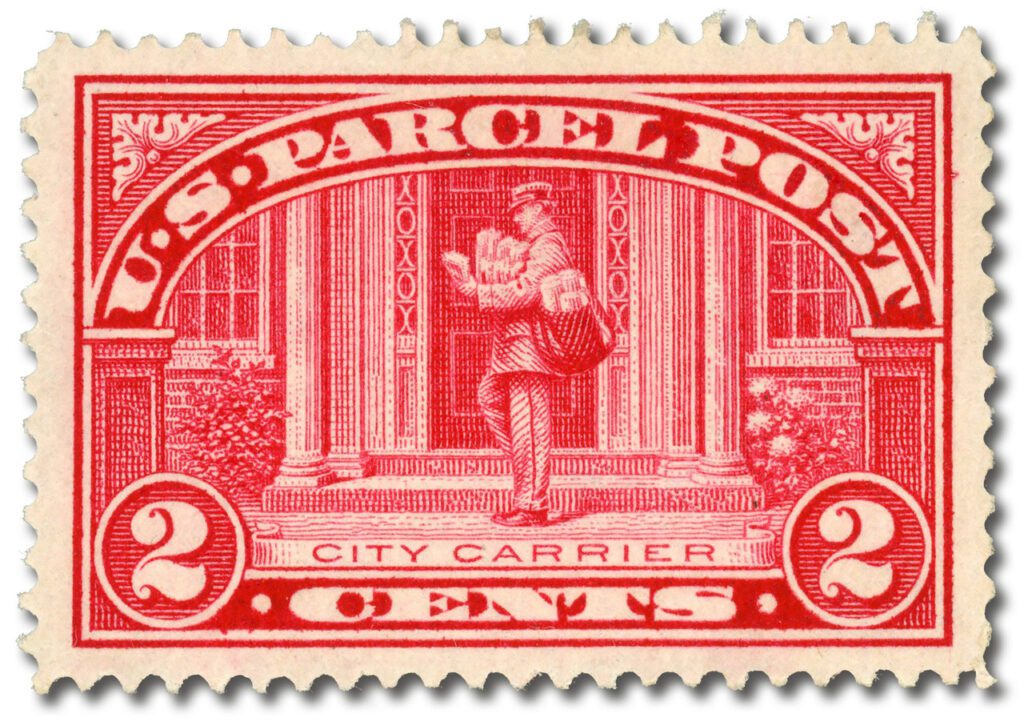
In the midst of World War I, a major change quietly began in the United States Postal Service: for the first time, women were seriously tested as city letter carriers. On November 23, 1917, First Assistant Postmaster General John C. Koons issued a call to the postmasters of eight of the largest US post offices to run 15-day trials of women serving as letter carriers in the city. This experiment was described as a potential wartime necessity, because many men were off fighting, and extra postal workers were already needed to handle the heavy Christmas mail in December.

Women had carried mail in the United States long before 1917; in fact, the first known appointment of a woman mail messenger occurred in 1845, when Sarah Black was named to carry mail between a post office and railroad depot in Maryland. In the late 1800s, women also worked contract “star” mail routes — for example, Mrs. Polly Martin drove a mail wagon in Massachusetts from about 1860 to 1876. There were even daring women like “Stagecoach Mary” Fields, who drove rugged routes in Montana over rough terrain. But these were mostly rural or contract routes; city mail delivery remained a male domain.
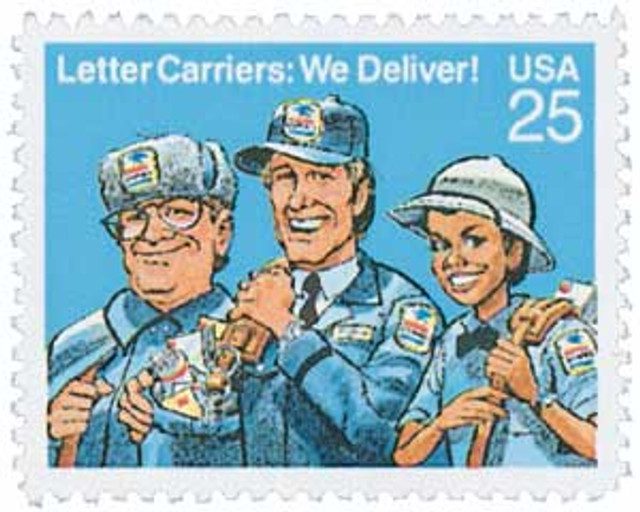
That changed in November 1917. Just days before Koons’s call, on November 6, two women — Mrs. Permelia S. Campbell and Mrs. Nellie M. McGrath — began delivering mail as temporary substitute letter carriers in Washington, DC. Campbell was a widow whose husband had been a carrier; McGrath’s husband was serving in the military. Their service was described as “highly satisfactory,” but after roughly two weeks, they were removed from the routes and offered indoor postal jobs instead.

Then came November 23, when Koons formally asked for tests in other big cities. The trials were timed for December, since the postal service typically hired many extra carriers for the Christmas rush. According to USPS records, dozens of women participated in these tests in Chicago, New York, and St. Louis that December. In New York, experimental women carriers included Eleanora Regan, Josephine Norton, and Viva R. Hawley.
So how did these experimental runs work out? Pretty well, in fact. The initial Washington experiment had already earned high marks. More broadly, the December city trials showed that women could handle the work. But these early women carriers were temporary substitutes; they did not yet hold permanent civil service status.
It wasn’t until August 1918 that 25 women took the Civil Service carrier exam in Washington, DC, under the understanding that they would get permanent jobs only if there were no available men. Then on September 5, 1918, Miss Irma G. Craig — who scored highest on that exam — became the first regularly appointed female city letter carrier in Washington.
During 1918, women also began delivering mail in other cities, like Detroit and Portland, Oregon. Despite the success, most of the women who had been hired during the war gave up their routes when male veterans returned. This was a common story: the opportunity opened because of the war, but it closed again afterward. Still, not all of them left. For example, in Anaconda, Montana, Miss Anna McDonald continued delivering mail until about 1938 — about 20 years.

Later, during World War II, women again filled city carrier roles in places like New York, Chicago, and Los Angeles as men went off to war. But when that war ended, many women once more left or were forced out, returning the postal workforce to mostly men.

It would take more time for women to gain a stable foothold. In fact, by the late 1950s, only a handful of women remained city carriers: in 1955, there were just 95 women city carriers and 332 rural carriers — less than 1 percent of the force. A turning point came in the 1960s: after President John F. Kennedy ordered in 1962 that federal appointments be made “without regard to sex,” the number of women city carriers grew rapidly, from just over a hundred to thousands in less than a decade.
Today, the National Association of Letter Carriers estimates that about 35% of their letter carrier workforce is female.
| FREE printable This Day in History album pages Download a PDF of today’s article. Get a binder or other supplies to create your This Day in History album. |
Discover what else happened on This Day in History.
Thinking about that old cigarette for women tv commercial “you’ve come a long way baby”. In my opinion women have been shortchanged for a long time baby (and still are). POWER TO THE WOMEN!
A great way of using other stamps to tell the story.
Mystic does a great job of this. I will add some these stamps to my women on stamp collection.