
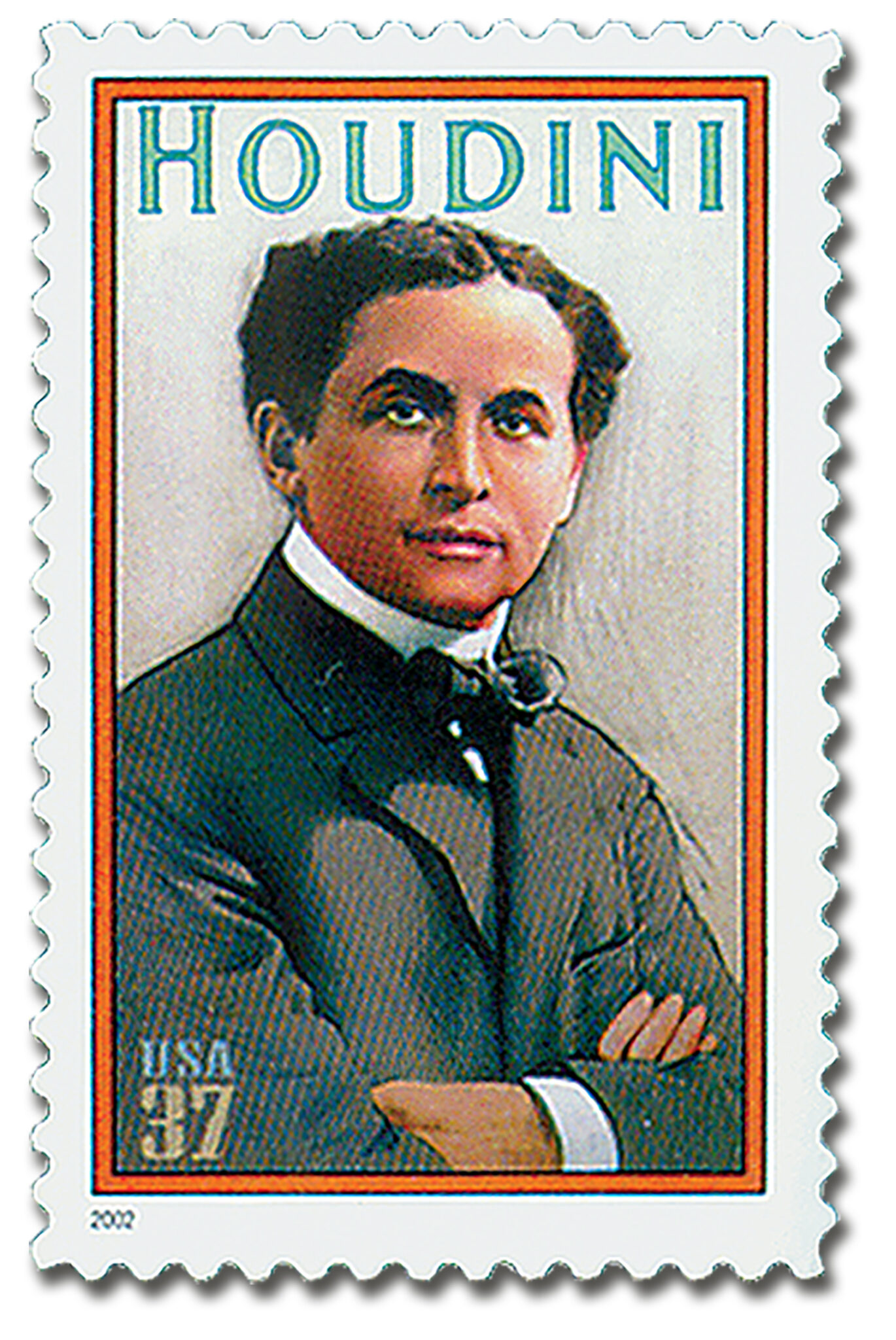
On August 5, 1926, master illusionist and escape artist Harry Houdini spent more than 91 minutes sealed inside a coffin submerged in a New York City swimming pool. The feat tested his ability to remain calm as the air around him grew hotter and harder to breathe.
Houdini had built his reputation by turning confinement into public drama. Born Ehrich Weiss in Budapest in 1874, he came to the United States as a child. At age nine, he performed as a trapeze artist called “Ehrich, the Prince of the Air.” In 1891, he and a friend formed the Brothers Houdini. After years in small theaters and dime museums, he received his major break in 1899. Vaudeville manager Martin Beck saw his handcuff routine and urged him to concentrate on escapes.

Houdini soon became known as the “King of Handcuffs.” He challenged police departments to lock him in their strongest restraints and jail cells. His skill, strength, and talent for publicity made him an international star. When imitators copied his handcuff routines, Houdini developed more dramatic acts. These included escapes from a water-filled milk can, a nailed packing crate lowered into a river, and the Chinese Water Torture Cell, in which he hung upside down above a tank of water.
The 1926 coffin test was different. Houdini was not supposed to break out underwater. He intended to remain inside until the air became difficult to breathe. The stunt grew from his rivalry with Rahman Bey, an Egyptian performer who claimed supernatural powers helped him survive in a sealed metal box. In July 1926, Bey remained submerged in a New York hotel pool for about an hour. Houdini wanted to prove that no mystical force was required. He said survival depended on preparation, controlled breathing, and remaining still.
Before the public test, Houdini completed two practice trials. Dr. W. J. McConnell, a physiologist with the US Bureau of Mines, helped supervise one. McConnell studied workplace health and the dangers faced by miners in poorly ventilated spaces. Houdini wondered whether his experience could offer useful information about conserving air underground.

Reporters and witnesses gathered at the Hotel Shelton in Manhattan. Houdini entered a specially built airtight metal coffin said to weigh about 700 pounds. A telephone allowed him to communicate with assistants. The lid was fastened, and the coffin was lowered into the hotel’s swimming pool.
Inside, Houdini breathed slowly and avoided unnecessary movement. Heat and moisture increased as the minutes passed. He later reported feeling irritated when the coffin moved and seeing yellow lights after about 88 minutes. He also had to resist drowsiness. At last, he telephoned his assistants and ordered them to raise the container.
Houdini emerged pale and sweating but conscious after roughly 91 minutes. Newspaper accounts reported no serious immediate effects. He insisted that there had been no hidden air supply or mechanical trick. The performance, he explained, depended on lying quietly and controlling fear.
Later that day, Houdini wrote a detailed letter to McConnell while the sensations were still fresh. He advised people trapped with limited air not to breathe deeply or waste energy through unnecessary movement. Mining officials preserved the letter as an unusual early attempt to show how calm behavior might extend survival in an enclosed space.
The Hotel Shelton test became one of Houdini’s last major demonstrations. He died less than three months later, on October 31, 1926, from peritonitis caused by a ruptured appendix. The coffin test remains a striking example of the discipline behind his carefully staged feats and his determination to replace supernatural claims with physical training and practical explanation.
| FREE printable This Day in History album pages Download a PDF of today’s article. Get a binder or other supplies to create your This Day in History album. |
Discover what else happened on This Day in History.
Great information, Don. Thanks to you and your staff.
My Great-Uncle, William Pike, was Houdini’s antagonist in the 1919 states-right motion picture “The Master Mystery”. He recalled that, between takes, Houdini played gin rummy always beating the hell out of cast and crew. W.Pike 1887-¹937. 22 silent films. All lost except his first, “Salomy Jane” 19¹4 with Beatriz Michalena.
Neil Armstrong’s contribution to space exploration cannot be overstated. And yet he never sought to exploit those deeds with a book or movie contract. A true American hero.
Houdini is buried in Machpelah Cemetery in Glendale, Queens, NY
I remember seeing a film of him when I was a child. Always amazing.