
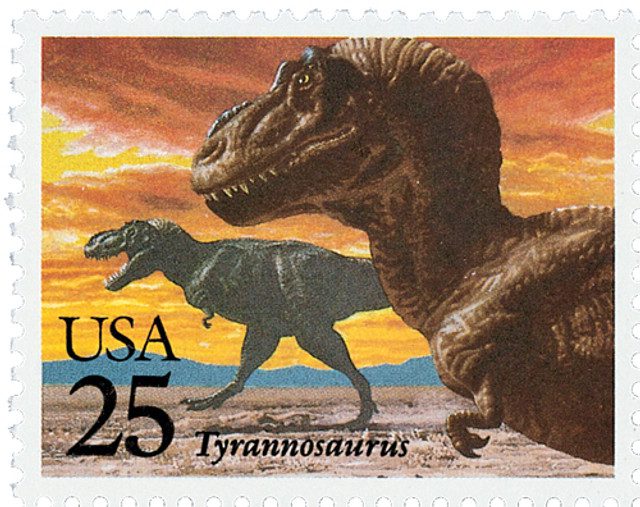
While searching for fossils in South Dakota, fossil hunter Sue Hendrickson made a colossal discovery on August 12, 1990. Bones protruding from an eroded bluff proved to be part of an exceptionally complete Tyrannosaurus rex, soon known simply as Sue.
Hendrickson was working with a crew from the Black Hills Institute of Geological Research near Faith, South Dakota, on land within the Cheyenne River Sioux Reservation. The team had spent much of the summer collecting fossils, including Edmontosaurus remains, and was preparing to leave. A flat tire delayed their departure. While other crew members went to have it repaired, Hendrickson used the extra time to examine cliffs the group had not yet searched.

Near the base of one bluff, she noticed fragments of bone on the ground. Looking upward, she saw several large vertebrae exposed in the rock. Hendrickson returned to camp and alerted Black Hills Institute president Peter Larson. The bones were identified as belonging to a T. rex. Two days later, excavation began. Six people ultimately spent 17 days removing the fossil from the hillside.
The more they uncovered, the more unusual the find became. Sue is about 90 percent complete by bone mass, with roughly 250 of the approximately 380 bones known in a T. rex skeleton represented. The dinosaur lived about 67 million years ago and reached more than 40 feet in length and about 13 feet high at the hips. Studies of growth rings in the bones indicate Sue died at about 28 years old and had reached full size around age 19. Sue’s sex remains unknown.
The fossil soon became the subject of a complicated ownership dispute. Rancher Maurice Williams was the beneficial owner of the land, but the United States held legal title to it in trust for him. The Black Hills Institute maintained that it had purchased Sue from Williams for $5,000. On May 14, 1992, federal agents seized the fossil, and the bones were eventually placed at the South Dakota School of Mines and Technology while the courts considered the case.
A federal court ruled that because the fossil had been embedded in Indian trust land, it was legally part of that land. Williams’s attempted sale to the Black Hills Institute had not received the required approval from the secretary of the Interior and was therefore invalid. The United States continued to hold title to Sue in trust for Williams, leaving Williams as its beneficial owner.
Williams later put Sue up for sale through Sotheby’s in New York. At the October 4, 1997, auction, bidding lasted only about eight minutes before reaching $7.6 million. With Sotheby’s buyer’s premium, the Field Museum in Chicago paid $8,362,500, then a record price for a fossil. McDonald’s and Walt Disney World helped finance the purchase, while the California State University system contributed in exchange for research access.
Preparing Sue for display became another enormous project. Twelve Field Museum preparators spent more than 30,000 hours cleaning, repairing, and studying the bones, while another 20,000 hours went into building the exhibit. Work was carried out in public-view laboratories at the Field Museum and Disney’s Animal Kingdom, allowing visitors to watch specialists carefully remove rock from the fossils.
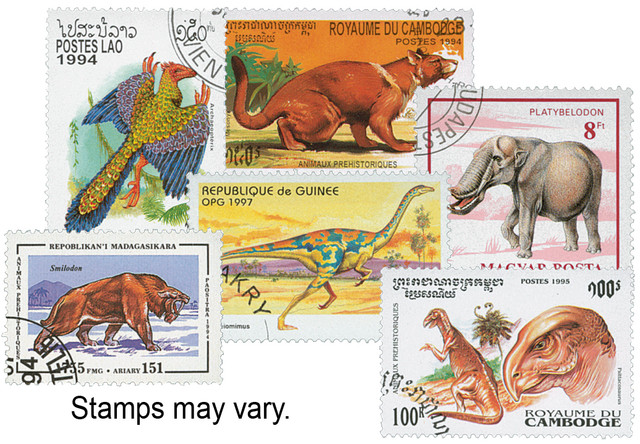
Sue made a public debut at Chicago’s Field Museum on May 17, 2000. The real skull, weighing about 600 pounds, is displayed separately, making it easier for scientists to study. Sue’s bones show evidence of injuries and disease and have helped researchers investigate T. rex growth, movement, anatomy, and behavior. Later studies estimated that Sue may have weighed about nine tons when alive. Today, this remarkably complete skeleton continues to provide scientists with new information.
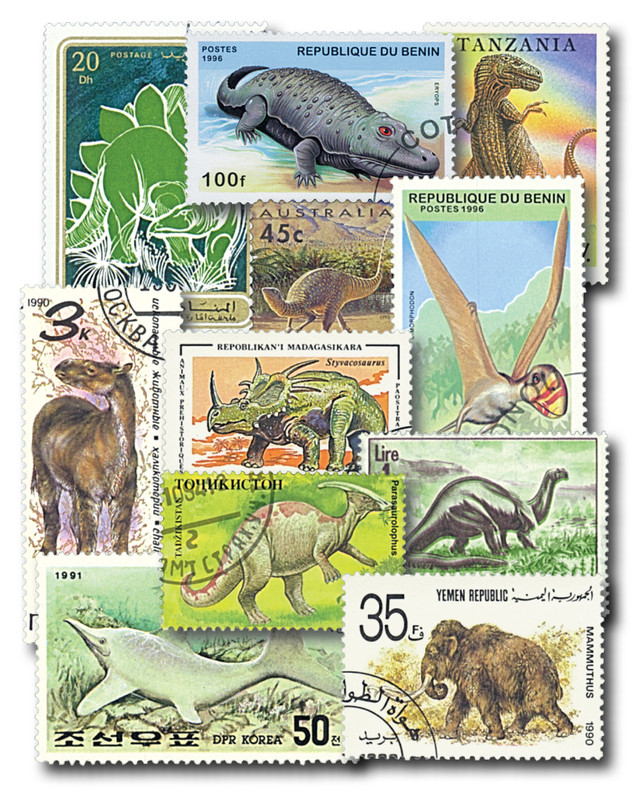
Sue was the largest T. rex known when discovered, though later finds have challenged that title. Scotty, discovered in Saskatchewan in 1991, was eventually estimated to be about 400 kilograms heavier and more than half a meter longer than Sue, although size estimates for incomplete dinosaur skeletons can vary. Sue is still considered the most complete T. rex discovered to date.
Click here for photos and more about Sue.
| FREE printable This Day in History album pages Download a PDF of today’s article. Get a binder or other supplies to create your This Day in History album. |
Discover what else happened on This Day in History.
An excellent story, thank you.
I truly enjoy “This Day in History.” The articles are well written and concise. Pairing these with stamp images allows a great pictorial of history. Keep up the good work!
Really enjoy reading “Day in History” and seeing the appropriate commemoration with a stamp.
Thanks Don and Mystic for all the great information at TDH.
Great story. But where is Sue now? In the Field Museum or in South Dakota?
I have only been reading ‘This Day in History’ for less than a week, but am already hooked! Knowing the history behind stamps makes them more interesting, and it is a great way to start a conversation. Keep up the good work. Ronald Kunst