
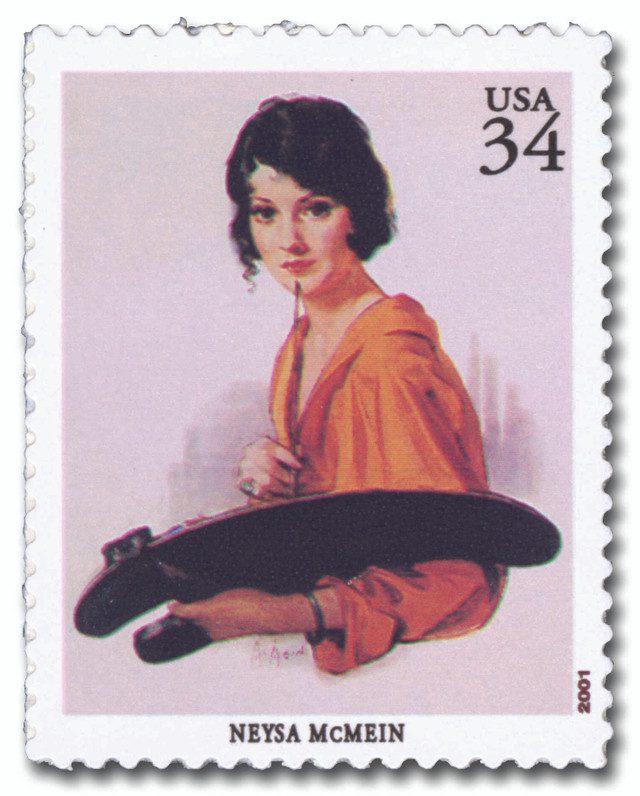
Neysa McMein, born on January 24, 1888, helped shape how America saw itself during the early 20th century through powerful images that appeared everywhere from magazines to movie studios. Her art captured modern beauty, wartime patriotism, and celebrity culture at a moment when illustration defined public life.
Born Marjorie McMein in Sterling, Illinois, Neysa McMein showed early artistic talent and studied at the Art Institute of Chicago. She later moved east to pursue a professional career and adopted the name “Neysa,” quickly gaining recognition for her bold, confident style. Her illustrations stood out for their strong lines and modern sensibility, helping her rise in a competitive and male-dominated field.
McMein became a major figure in magazine illustration. From 1923 through 1937, she created all of the covers for McCall’s, a remarkable achievement that placed her artwork in millions of American homes. Her women were stylish, capable, and modern, reflecting changing roles for women in society. In addition to McCall’s, her illustrations appeared in The Saturday Evening Post, Puck, National Geographic, Woman’s Home Companion, Collier’s, and Photoplay, making her one of the most widely published illustrators of her time.
During World War I, McMein used her talent in service of the war effort. She created posters for both the French and United States governments, and her artwork was also used by the American Red Cross in national fundraising campaigns. In 1918, she traveled across France to entertain American troops, where she drew cartoons, created portraits of soldiers, and helped boost morale at the front.
While overseas, McMein contributed to military symbolism as well. She colored the design of the Indian head insignia later used by the 93rd Bomb Squadron. Pilots marked their victories by drawing a German black cross over one of the bear teeth on the necklace worn by the Indian figure—an early and meaningful form of aerial victory marking. For her wartime service, McMein was appointed an honorary non-commissioned officer in the United States Marine Corps, one of only three women to receive that honor.
After the war, McMein’s career expanded into advertising and portraiture. She created advertising graphics for major companies such as Cadillac, Lucky Strike cigarettes, Palmolive soap, Coca-Cola, and General Motors. Her work helped give these brands a sense of elegance and trust at a time when illustrated advertising dominated American consumer culture.
One of McMein’s most lasting contributions came through advertising, particularly her work with General Mills. She was instrumental in shaping the early image of Betty Crocker, creating illustrations that helped turn the fictional character into a trusted household name. McMein’s Betty Crocker was warm, capable, and approachable—someone Americans felt they could rely on in their kitchens. This visual identity played a major role in making Betty Crocker one of the most recognizable brands in American history.

McMein also became a sought-after portrait artist. She began using pastels to depict notable cultural figures including Dorothy Parker, Edna St. Vincent Millay, and Helen Hayes. Over time, her subjects included presidents Herbert Hoover and Warren G. Harding, author Anne Morrow Lindbergh, and performers such as Charlie Chaplin, Beatrice Lillie, Katharine Cornell, and Kay Francis. She also painted writers and public figures like Janet Flanner, Dorothy Thompson, Anatole France, Charles Evans Hughes, and Count Ferdinand von Zeppelin, reflecting her wide influence across politics, literature, and the arts.
McMein’s work also intersected with Hollywood, particularly during the silent film era. She designed costumes for Gloria Swanson in Male and Female (1919) and created portraits and promotional artwork for actresses such as Colleen Moore, Pola Negri, Mae Murray, and Mary Pickford. These illustrations appeared in fan magazines and studio publicity, helping define early Hollywood glamour.
Neysa McMein died on May 12, 1949, leaving behind a body of work that helped define American visual culture during a transformative era.
Click here to view some of McMein’s illustrations.
| FREE printable This Day in History album pages Download a PDF of today’s article. Get a binder or other supplies to create your This Day in History album. |
Discover what else happened on This Day in History.
A incredible woman in an era where it was difficult for women to have meaningful professions. Power to WOMEN!