

On February 24, 1960, the US Navy submarine USS Triton slipped beneath the surface to begin the first fully submerged circumnavigation of the globe. The daring departure marked the start of a 60-day underwater journey that would prove just how far nuclear submarine technology had advanced during the tense years of the Cold War.
The voyage that became known as Operation Sandblast officially began when Triton reached the starting point near the Equator at the St. Peter and Paul Rocks in the mid-Atlantic Ocean. From there, the submarine set out to circle the world while remaining underwater the entire time. The mission lasted 60 days and 21 hours, ending on April 25, 1960, after traveling 26,723 nautical miles (about 30,700 miles).
USS Triton was a remarkable vessel for its time. Launched in 1958, it was the largest and most powerful submarine in the world. It measured about 447 feet long and displaced nearly 5,900 tons. Unlike most submarines, it used two nuclear reactors, which gave it high speed and an extremely long range without refueling. This allowed it to travel vast distances while staying submerged, something diesel submarines could not do.
The submarine was commanded by Captain Edward L. Beach Jr., a decorated World War II veteran and author. He led a crew of roughly 200 sailors. During the voyage, the crew collected valuable oceanographic and geophysical data while also studying how sailors handled long periods underwater. The mission was partly scientific, but it was also political and military. It showed that US nuclear submarines could operate around the world without needing surface support, a key advantage during the Cold War.
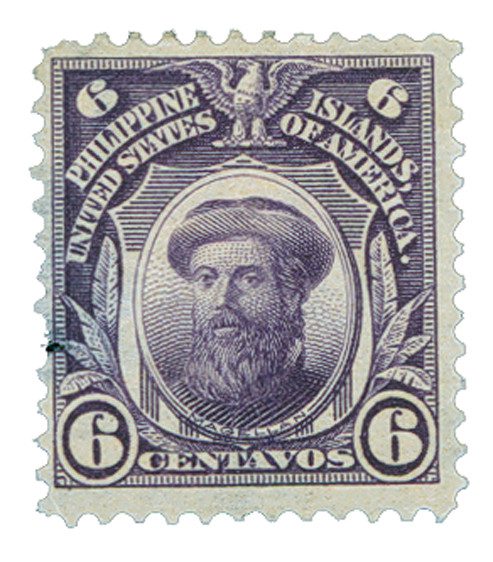
The route generally followed the historic path of Ferdinand Magellan’s 16th-century expedition, the first to sail around the world. Triton traveled south around Cape Horn, crossed the Pacific Ocean, moved through the Indian Ocean, rounded the Cape of Good Hope, and returned to the Atlantic. During the trip, the submarine crossed the Equator four separate times.

Operation Sandblast was also meant to demonstrate technological prestige. In 1960, the Cold War competition between the United States and the Soviet Union included science, engineering, and military power. Nuclear submarines were especially important because they could remain hidden while traveling long distances. The mission helped prove the endurance and speed possible with nuclear propulsion.
Interestingly, Triton was originally designed as a radar picket submarine. That meant it was supposed to detect incoming enemy aircraft and warn US fleets. However, aircraft-based radar systems improved quickly. Within a few years, submarines like Triton were no longer needed for that role. Still, its historic voyage gave it a permanent place in naval history.

At the end of the mission, the submarine and crew received major honors. The ship earned the Presidential Unit Citation, and Captain Beach received the Legion of Merit for his leadership. The mission showed what modern submarines could do and helped shape future naval strategy.
After completing its record-setting voyage, Triton continued serving in the Navy for several more years. It was later converted to a different role and eventually decommissioned in 1969. Though it did not serve as long as some other submarines, its single historic mission made it famous.

Today, Operation Sandblast is remembered as a major milestone in submarine operations. It combined engineering skill, navigation precision, and human endurance. The mission showed that submarines could travel across the world silently and unseen, changing how navies thought about undersea warfare.
| FREE printable This Day in History album pages Download a PDF of today’s article. Get a binder or other supplies to create your This Day in History album. |
Discover what else happened on This Day in History.