
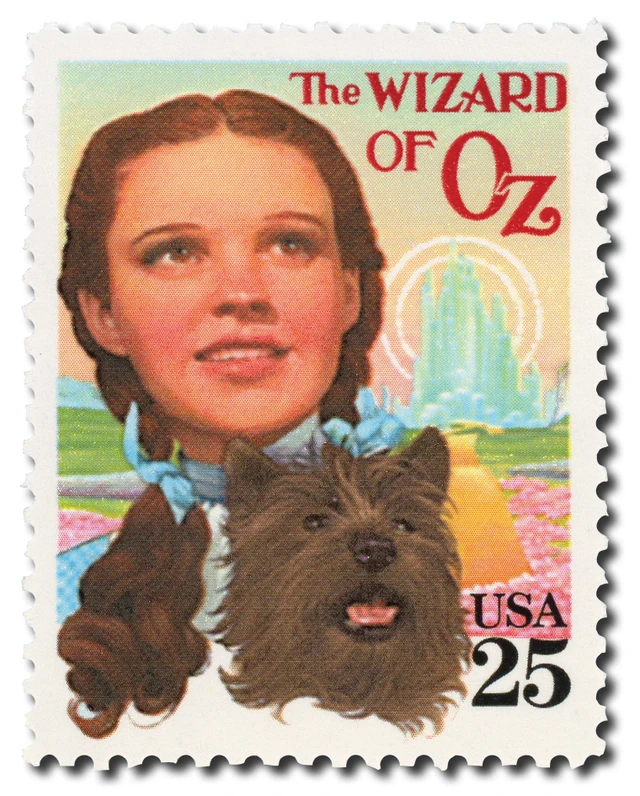
Lyman Frank Baum was born on May 15, 1856, in Chittenango, New York, about 30 miles from Mystic’s home in Camden. Long before he created Dorothy, Toto, and the Yellow Brick Road, Baum followed a winding path through printing, stamps, poultry, theater, newspapers, sales work, and children’s books.
Baum was the seventh of nine children born to Benjamin Ward Baum and Cynthia Ann Stanton Baum. His father made money in several businesses, including barrel-making and oil. The family later lived on Rose Lawn, a large estate near Syracuse that Baum remembered fondly. He was often sick as a child, so he spent much of his time reading, imagining, and making up stories.
At age 12, Baum was sent to Peekskill Military Academy. The strict setting did not suit him. He was disciplined for daydreaming and disliked the harsh routine. After about two years, he returned home. That early clash between discipline and imagination helped shape the kind of writer he became. His best-known stories later favored wonder, humor, and adventure over fear and punishment.

Baum’s first work in publishing began at home. His father bought him a small printing press, and Baum used it with his younger brother Harry to produce The Rose Lawn Home Journal. By his teens, he had also become interested in stamp collecting. He helped publish The Stamp Collector and compiled Baum’s Complete Stamp Dealers’ Directory, an early reference for collectors and dealers.
Baum’s interests kept changing. In his early 20s, he joined the national craze for fancy poultry breeding. He specialized in Hamburg chickens, a showy breed known for its dark plumage and spotted varieties. His poultry work led him to edit The Poultry Record. In 1886, he published his first book, The Book of the Hamburgs, a practical guide to breeding and raising the birds.

The stage came next. Baum loved theater and performed under stage names, including Louis F. Baum and George Brooks. In 1880, his father built him a theater in Richburg, New York. Baum wrote plays, managed productions, and acted. His most successful play was The Maid of Arran, based on William Black’s novel A Princess of Thule. Theater gave Baum experience with timing, spectacle, costumes, and audience appeal. Those lessons later helped him turn Oz into a stage success.
In 1882, Baum married Maud Gage. She was the daughter of Matilda Joslyn Gage, a leading women’s rights advocate. In 1888, Baum and Maud moved to Aberdeen, Dakota Territory, now South Dakota. Baum opened a general store called Baum’s Bazaar, but he often allowed customers to buy on credit. The store failed. He then edited the Aberdeen Saturday Pioneer, a local newspaper. That paper also failed during difficult economic times. His experiences on the dry plains later helped shape the gray Kansas setting at the start of The Wonderful Wizard of Oz.
Baum moved to Chicago in the 1890s. He worked as a newspaper reporter, then as a traveling salesman for a china company. The work was tiring, but it also sharpened his sense of what people wanted to buy and read. In 1897, he published Mother Goose in Prose, illustrated by Maxfield Parrish. It did well enough for Baum to leave the road. Two years later, he and illustrator W.W. Denslow published Father Goose, His Book, a collection of nonsense verse that became a major children’s bestseller.
In 1900, Baum and Denslow published The Wonderful Wizard of Oz. The book followed Dorothy, a Kansas girl swept by a cyclone into the strange Land of Oz. The story had witches, magic shoes, a Scarecrow, a Tin Woodman, and a Cowardly Lion. Yet its setting and spirit felt American. The Library of Congress later called it “America’s greatest and best-loved homegrown fairytale” and the first completely American fantasy for children.
The book was a success with readers and reviewers. It became the best-selling children’s book for two years. A 1902 stage version, called The Wizard of Oz, became a popular musical and toured the country. Baum wrote 13 more Oz books, though he also tried to create other fantasy worlds. Some, such as The Master Key, found readers, but none matched Oz.
In his last years, Baum moved into motion pictures and helped form the Oz Film Manufacturing Company in California. The venture brought little financial success. He suffered a stroke in May 1919 and died in Hollywood on May 6, just days before his 63rd birthday. His final words are often reported as, “Now we can cross the Shifting Sands,” a reference to the magical desert that surrounds the Land of Oz.
Click here to view photos of the All Things Oz Museum in Chittenango, New York and click here to see the cover of Baum’s Stamp Dealers’ Directory.
| FREE printable This Day in History album pages Download a PDF of today’s article. Get a binder or other supplies to create your This Day in History album. |
Discover what else happened on This Day in History.
Happy Birthday!!!
I love reading these daily posts.
Didn’t realize that Baum was so diversified in writing. Have to look around for a copy of “OZ”
Guilty I am. I am guessing that most of us are. I have never read the book but who has not seen and loved the movie that is based on the book. What is this magical desert that surrounds the Land of Oz? Oh if I only had a brain, a heart, the noive.
one more stamp as share birthday May 15th https://www.linns.com/news/us-stamps-postal-history/2016/may/born-may-15-james-gadsden.html
The Header days May 13th 1914, but the article says May 15th 1914 for Birthday