
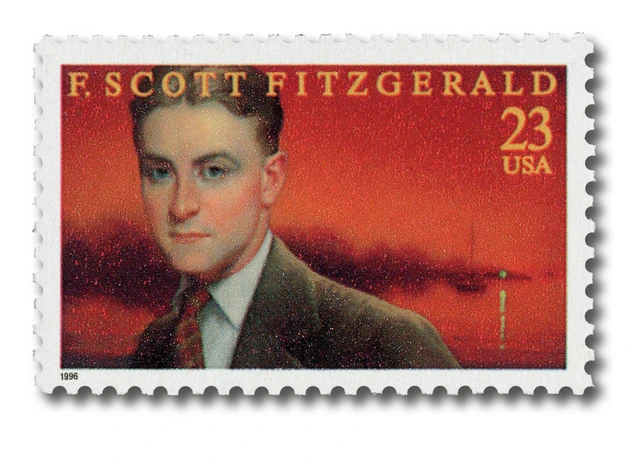
Francis Scott Key Fitzgerald was born on September 24, 1896, in St. Paul, Minnesota. He would become one of the best-known writers of the Jazz Age, recording its energy, wealth, restlessness, and disappointments in novels and short stories.

Fitzgerald was named for a distant relative on his father’s side, Francis Scott Key, who wrote “The Star-Spangled Banner.” His parents were Edward and Mary McQuillan Fitzgerald. Two years after his birth, the family moved to Buffalo, New York, where his father worked for Procter & Gamble. They also lived for a time in Syracuse before returning to St. Paul in 1908, after Edward Fitzgerald lost his job.
Fitzgerald showed an early interest in writing. At St. Paul Academy, he published a detective story, “The Mystery of the Raymond Mortgage,” in the school newspaper. In 1911, his parents sent him to the Newman School, a Catholic preparatory school in New Jersey. There he worked with Father Sigourney Fay, an influential teacher and mentor. Fay encouraged Fitzgerald’s writing and later served as a model for Monsignor Darcy in Fitzgerald’s first novel.

Fitzgerald entered Princeton University in 1913. He did not earn a degree, but he immersed himself in campus writing. He contributed to the Princeton Triangle Club’s musical productions, wrote for the Princeton Tiger humor magazine, and worked on the Nassau Lit literary magazine. He also began a novel. Scribner’s praised its promise but rejected the manuscript. His grades suffered, and he left Princeton in 1917 while on academic probation.
That year, the United States entered World War I. Fitzgerald joined the Army and wrote a first version of his novel, then called The Romantic Egotist, while in training. Scribner’s rejected it but encouraged him to submit future work. He was commissioned a second lieutenant in the infantry and assigned to Camp Sheridan near Montgomery, Alabama. There he met Zelda Sayre, the daughter of an Alabama Supreme Court justice. The Armistice ended the war before Fitzgerald’s unit was sent overseas.

Fitzgerald had already experienced another formative romance. In 1915, while still a Princeton student, he met Ginevra King, a wealthy Chicago-area debutante, in St. Paul. Their relationship ended after about two years. Her world of money and social status helped shape several of his fictional young women, including Isabelle Borgé in This Side of Paradise. It also influenced Daisy Buchanan in The Great Gatsby.
After leaving the Army, Fitzgerald moved to New York and worked for the Barron Collier advertising agency. He wrote short stories in his spare time and revised The Romantic Egotist. Scribner’s accepted the new version, retitled This Side of Paradise. Published in March 1920, the novel became a major success with young readers. Fitzgerald’s improved prospects persuaded Zelda to renew their engagement, and they married in New York on April 3, 1920.

The Fitzgeralds became associated with the decade’s parties, fashions, and new social freedoms. Yet their life was expensive. Fitzgerald supported himself in large part by selling short stories to magazines, especially The Saturday Evening Post. He later wrote for Collier’s and Esquire. Magazine work brought needed income, but it also took time from his novels.
His second novel, The Beautiful and Damned, appeared in 1922. In 1925, he published The Great Gatsby, a compact novel about ambition, class, love, and illusion on Long Island. It received respectful reviews but did not become a major commercial success during Fitzgerald’s lifetime. Its reputation grew after his death, especially when Armed Services Editions distributed it to American troops during World War II.
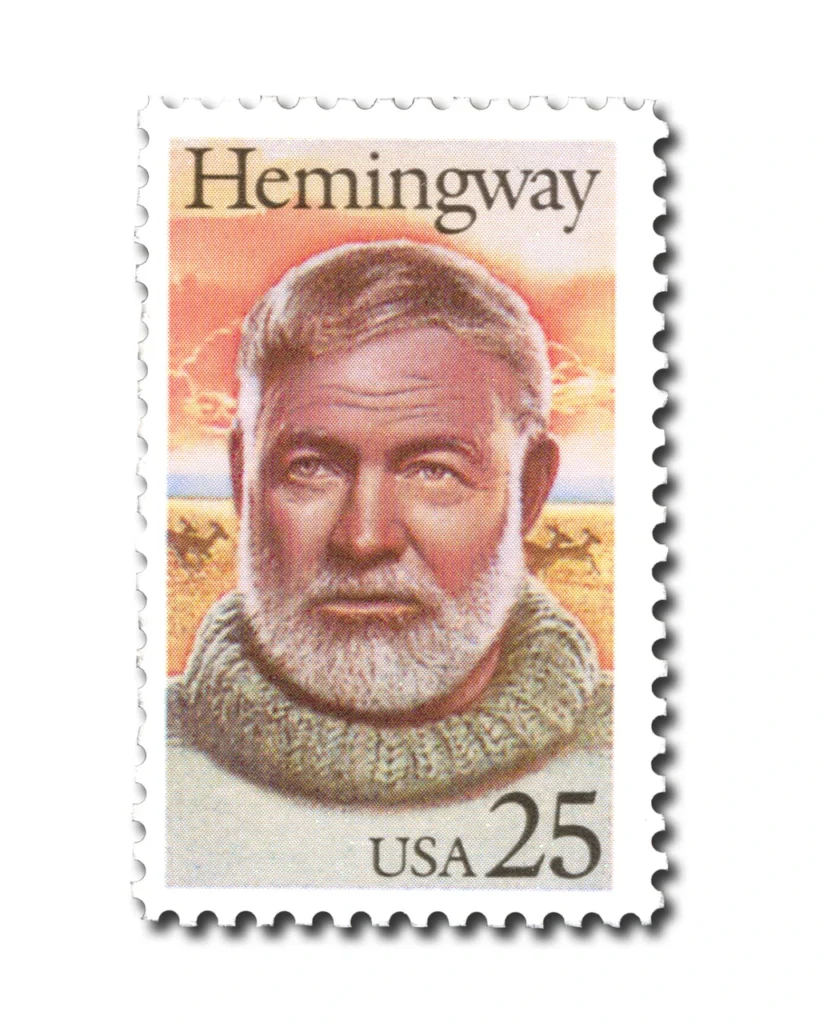
Fitzgerald and Zelda lived in France during much of the 1920s and became part of the American expatriate community in Paris. There he formed a complicated friendship with Ernest Hemingway. Fitzgerald’s fourth completed novel, Tender Is the Night, appeared in 1934 after years of work. Its sales were disappointing.
He returned to Hollywood in 1937 under contract to MGM. Fitzgerald worked on screenplays and received his only screen credit for Three Comrades in 1938. He also began an unfinished novel about the movie business, later published as The Last Tycoon. Fitzgerald died of a heart attack in Hollywood on December 21, 1940, at age 44. His work was reassessed in the years after his death, and The Great Gatsby became a lasting part of American literature.
| FREE printable This Day in History album pages Download a PDF of today’s article. Get a binder or other supplies to create your This Day in History album. |
Discover what else happened on This Day in History.