
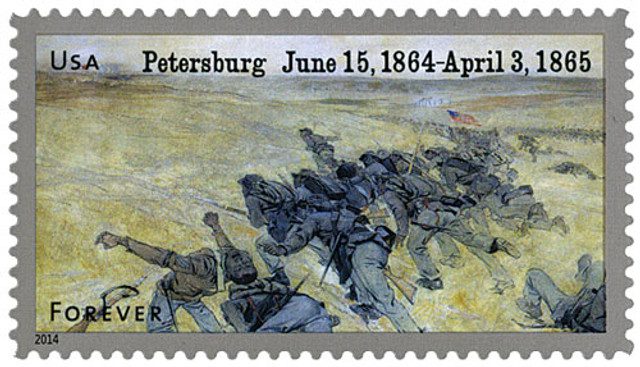
On April 3, 1865, Union forces entered Richmond, Virginia, the capital of the Confederacy, following their breakthrough at Petersburg. The fall of the city marked the collapse of the South’s political center and signaled that the Civil War’s end was close at hand.
Just 20 miles south of Richmond, Petersburg served as a critical transportation hub for General Robert E. Lee’s Army of Northern Virginia. Several major railroads converged there, delivering food, ammunition, and reinforcements to both the army and the Confederate capital. Recognizing its importance, General Ulysses S. Grant targeted Petersburg as the key to cutting off Richmond and forcing Lee into retreat.
The first major Union assault began on June 15, 1864. Major General William “Baldy” Smith led the attack and quickly pushed back a small Confederate force. However, he halted his advance at nightfall rather than pressing forward. That pause proved costly. Confederate reinforcements arrived overnight, allowing them to strengthen their defenses. What might have been a quick victory turned into a prolonged siege.

Over the next several days, both armies poured more troops into the area. Confederate forces dug in behind strong earthworks, making a direct Union assault difficult. Grant adjusted his strategy. Instead of trying to break through the fortifications, he focused on severing the rail lines feeding Petersburg and Richmond. His goal was to isolate Lee’s army and starve it of supplies.
Fighting continued through the summer of 1864. Early attempts to cut the railroads met with mixed success. One of the most dramatic efforts came on July 30, when Union forces detonated a mine beneath Confederate lines in what became known as the Battle of the Crater. The explosion created a massive gap, but poor planning and confusion led to a failed assault. Despite setbacks, Union forces gradually tightened their grip. By August, they had seized key sections of the Weldon Railroad, forcing the Confederates to move supplies farther south and haul them by wagon over longer distances.
The siege dragged on through the fall and winter. Conditions worsened for both sides, but the Confederates suffered more. Food grew scarce. Disease spread in the trenches. Desertions increased as soldiers lost hope. Lee’s army steadily weakened, while Union forces benefited from better supply lines and fresh reinforcements.
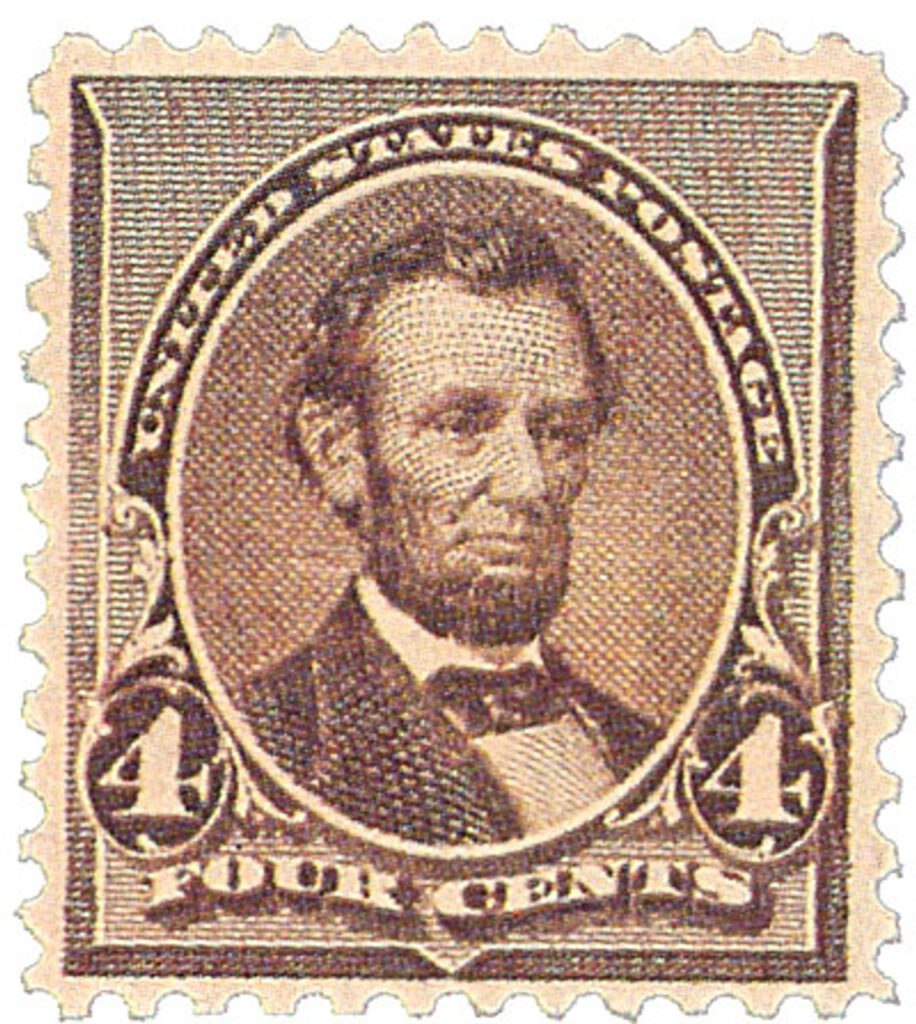
By the spring of 1865, the situation had reached a breaking point. Grant launched a series of coordinated attacks in late March and early April. Union troops captured the South Side Railroad, Lee’s last major supply and retreat route. With his position collapsing, Lee informed Confederate President Jefferson Davis on April 2 that Richmond and Petersburg could no longer be held. Davis and the Confederate government evacuated the city that night.
On April 3, Union forces moved into Richmond. Fires set by retreating Confederates, along with explosions from burning warehouses, caused widespread destruction. Union soldiers and local residents worked to bring the flames under control. The Confederate capital had fallen.
The next day, President Abraham Lincoln visited Richmond. He had been staying at Grant’s headquarters at City Point, just down the James River. With the city now secure, he decided to see it for himself. Lincoln arrived quietly on April 4, traveling by boat and then walking through the streets with only a small escort.

As he moved through the city, a group of newly freed African Americans gathered around him. Many knelt in gratitude. Lincoln quickly urged them to rise, reportedly telling them to kneel only to God and to give thanks for their freedom. He then toured several key sites, including the Confederate White House, where he briefly sat at Jefferson Davis’s desk. He also visited the Virginia State Capitol and Libby Prison, where thousands of Union soldiers had been held under harsh conditions.
The fall of Richmond did not officially end the war, but it made the outcome clear. Lee’s army was in full retreat, cut off from supplies and pursued by Union forces. Just five days later, on April 9, 1865, Lee surrendered to Grant at Appomattox Court House, about 90 miles west of Richmond. The long struggle was effectively over.
Click here for lots more Civil war stamps.
| FREE printable This Day in History album pages Download a PDF of today’s article. Get a binder or other supplies to create your This Day in History album. |
Discover what else happened on This Day in History.