

Shel Silverstein was born Sheldon Allan Silverstein on September 25, 1930, in Chicago, Illinois. Before he became known for children’s poetry, he had worked as a military cartoonist, a magazine illustrator, a playwright, a recording artist, and a songwriter.
Silverstein grew up on Chicago’s Northwest Side. He attended Roosevelt High School and briefly studied at the University of Illinois before leaving college. He later attended the Chicago Academy of Fine Arts. As a teenager, he began drawing cartoons because, as he later explained, he was not interested in sports and did not have a car. Drawing gave him a way to create his own world on paper.
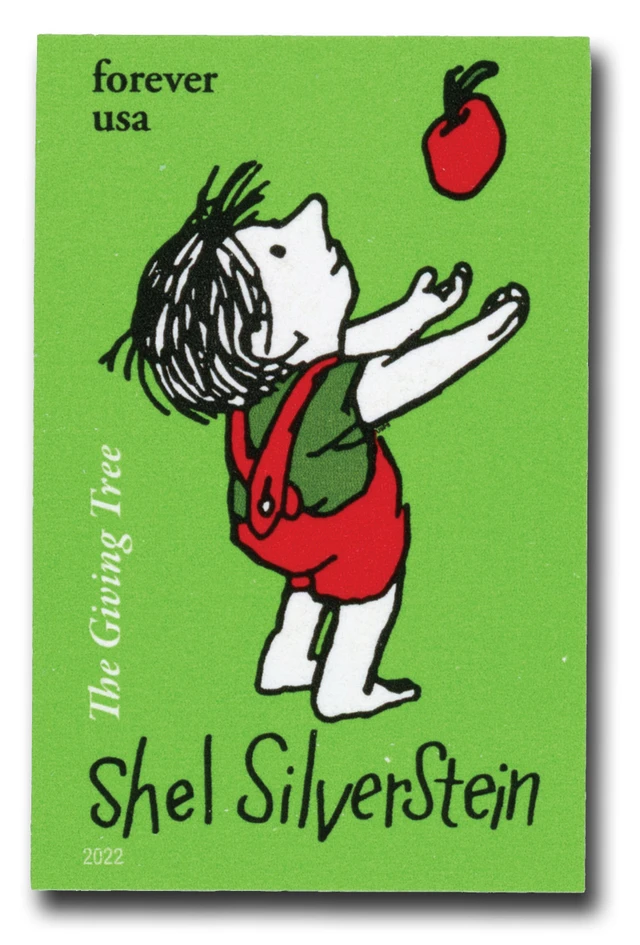
In 1953, Silverstein was drafted into the US Army. He served in Japan and Korea and became a cartoonist for the Pacific edition of Stars and Stripes, the military newspaper. From 1954 to 1956, he drew the comic feature Take Ten. The experience gave him regular deadlines and a wide audience. He later said his work for Stars and Stripes helped launch his career.
After leaving the Army, Silverstein began selling cartoons to magazines. He also published collections of adult humor and drawings, including Take Ten and Now Here’s My Plan. His early work was often aimed at adults and could be satirical, dark, or irreverent.

Music became another part of his career. Silverstein wrote songs in folk, country, and popular styles. He wrote “A Boy Named Sue,” which Johnny Cash recorded live at San Quentin State Prison in 1969. Cash’s recording became a major hit and won a Grammy Award for Best Country Vocal Performance, Male. Silverstein also wrote “The Cover of ‘Rolling Stone,’” recorded by Dr. Hook & the Medicine Show; “One’s on the Way,” recorded by Loretta Lynn; and “The Ballad of Lucy Jordan,” later recorded by several artists.
Silverstein did not originally plan to write for children. The illustrator and author Tomi Ungerer introduced him to Ursula Nordstrom, the influential children’s-book editor at Harper & Row. Nordstrom believed Silverstein’s spare drawings and unusual sense of humor could work for young readers. Their collaboration led to books that used few words, black-and-white line drawings, and open-ended stories.
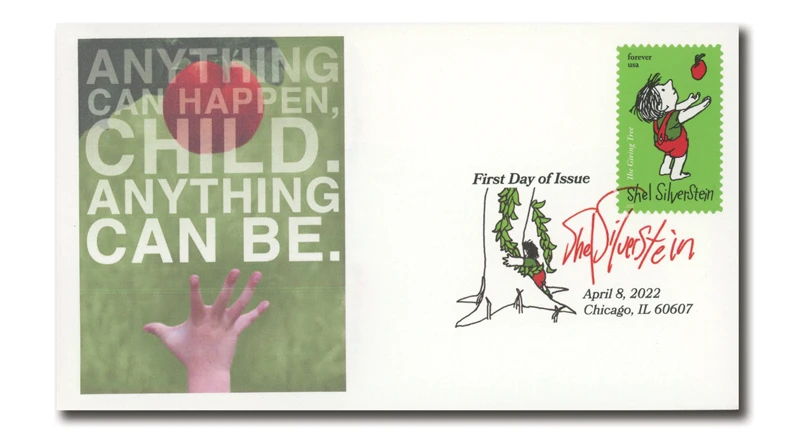
In 1963, Silverstein published Lafcadio, the Lion Who Shot Back, about a lion who leaves the wild to become a famous performer. The next year brought The Giving Tree, the story of a boy and a tree whose relationship changes as the boy grows older. The book has been interpreted in different ways. Some readers see a story of generosity, while others focus on its unequal relationship and the tree’s losses. Silverstein did not offer a single moral explanation for it.
His poetry collections brought his work into classrooms and libraries. Where the Sidewalk Ends, published in 1974, combined poems and drawings about children, animals, school, fears, wishes, and impossible situations. “Sick” follows a child inventing increasingly strange excuses to avoid school. “Sarah Cynthia Sylvia Stout Would Not Take the Garbage Out” turns a household chore into an outrageous disaster. Silverstein’s illustrations often supplied a second joke or changed how a poem could be read.
A Light in the Attic followed in 1981. It became one of the most successful poetry books for children of its era and spent years on The New York Times bestseller list. Silverstein recorded an album of poems from Where the Sidewalk Ends, which won a Grammy Award for Best Recording for Children in 1984. His later books included Falling Up in 1996 and The Missing Piece and The Missing Piece Meets the Big O, two fable-like stories about independence and relationships.
Silverstein kept a low public profile and rarely gave interviews in his later years. He died of a heart attack at his home in Key West, Florida, on May 10, 1999, at age 68. In 2005, Runny Babbit, a collection of poems built around switched beginning sounds in words, was published after his death.
| FREE printable This Day in History album pages Download a PDF of today’s article. Get a binder or other supplies to create your This Day in History album. |
Discover what else happened on This Day in History.