
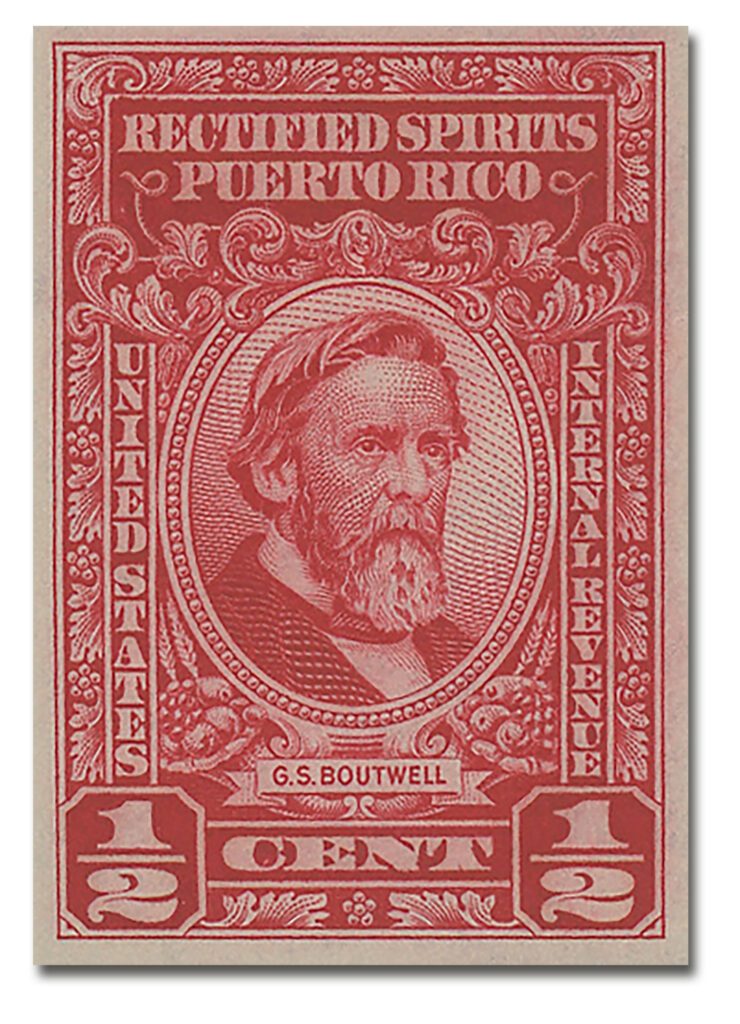
George Sewall Boutwell was born on January 28, 1818, in Brookline, Massachusetts, at a time when the young nation was still defining its political identity. Over the course of his long career, Boutwell became a key figure in state and federal government, shaping policy before, during, and after the Civil War.
Boutwell spent his childhood on his family’s farm, where hard physical work was part of daily life. He attended local public schools, which provided him with a practical education rather than elite training. This background influenced his later views on public service and responsibility. After completing his schooling, Boutwell supported himself by working as a teacher and later as a shopkeeper. These early jobs gave him experience with ordinary citizens and local business, knowledge that proved useful in politics.
In 1841, at just twenty-three years old, Boutwell was appointed postmaster of Groton, Massachusetts. The position placed him at the center of community communication and local administration. One year later, he entered elected office. Boutwell was chosen to serve in the Massachusetts House of Representatives in 1842. He served until 1844, then returned for additional terms from 1847 to 1850. During this period, he also worked as a state bank commissioner, overseeing financial practices at a time when banking regulation was limited and often unstable.
Boutwell’s rise continued when he was elected governor of Massachusetts, serving from 1851 to 1853. As governor, he supported public education reforms and worked to improve state finances. After leaving the governor’s office, he remained deeply involved in public affairs. He served at the Massachusetts Constitutional Convention, where delegates debated changes to the state’s governing framework. He also helped found the Republican Party, which emerged in the 1850s in opposition to the expansion of slavery.
From 1855 to 1861, Boutwell served as secretary of the Massachusetts Board of Education. In this role, he promoted standardized schooling and greater access to education. In 1861, as tensions between North and South reached a breaking point, Boutwell attended the Peace Conference in Washington, DC. The meeting sought to prevent the outbreak of civil war, though its efforts ultimately failed.
After the Civil War began, President Abraham Lincoln appointed Boutwell as the first commissioner of internal revenue in 1862. The position was newly created to fund the war effort. Boutwell helped establish systems for collecting federal taxes, including income and excise taxes, laying groundwork for modern federal revenue collection. In 1863, he was elected to the US House of Representatives, where he served for six years. While in Congress, he became known for his strong support of Reconstruction policies. He also served as one of the special prosecutors during the impeachment trial of President Andrew Johnson, arguing that Johnson had violated the law by defying Congress.
In 1869, President Ulysses S. Grant appointed Boutwell as secretary of the Treasury. In this role, he reorganized the department and improved bookkeeping practices. He worked to reduce the national debt left over from the Civil War. Boutwell also faced a major financial crisis during the Black Friday gold panic of September 23, 1869. To stop speculators from manipulating gold prices, he ordered Treasury gold released into the market, helping to stabilize the economy.
After leaving the Treasury, Boutwell returned to public service in Massachusetts, serving as one of the state’s senators in Congress. He later worked as US counsel for the French and American Claims Commission and practiced law in both Boston and Washington, DC. Boutwell died in Groton, Massachusetts, on February 27, 1905.
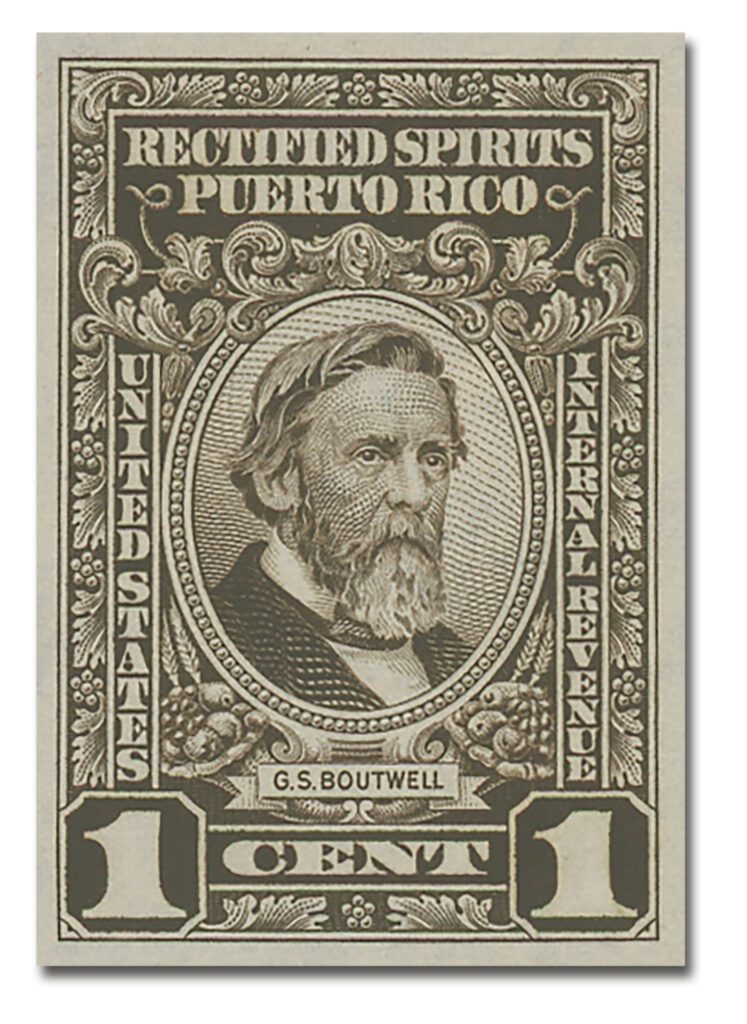
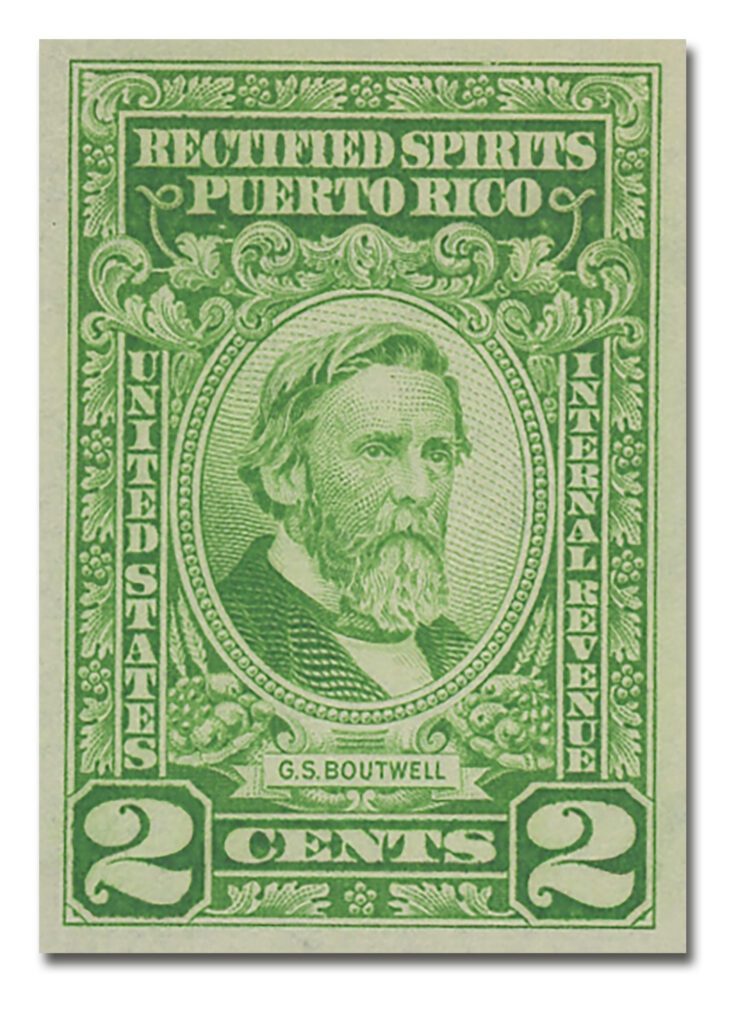
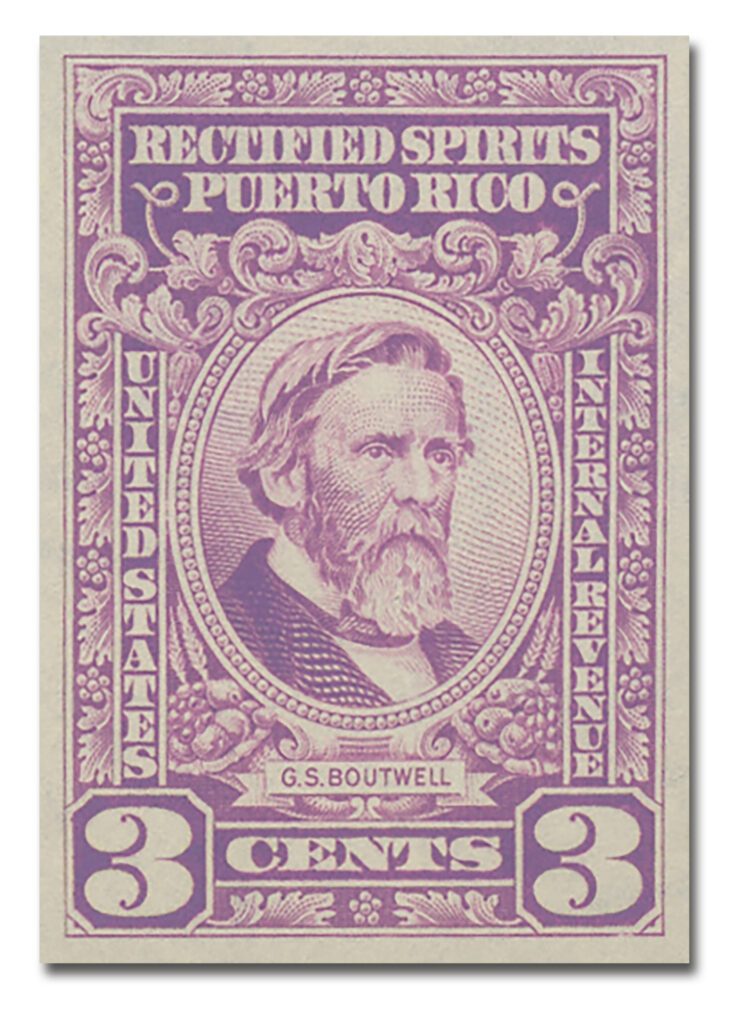
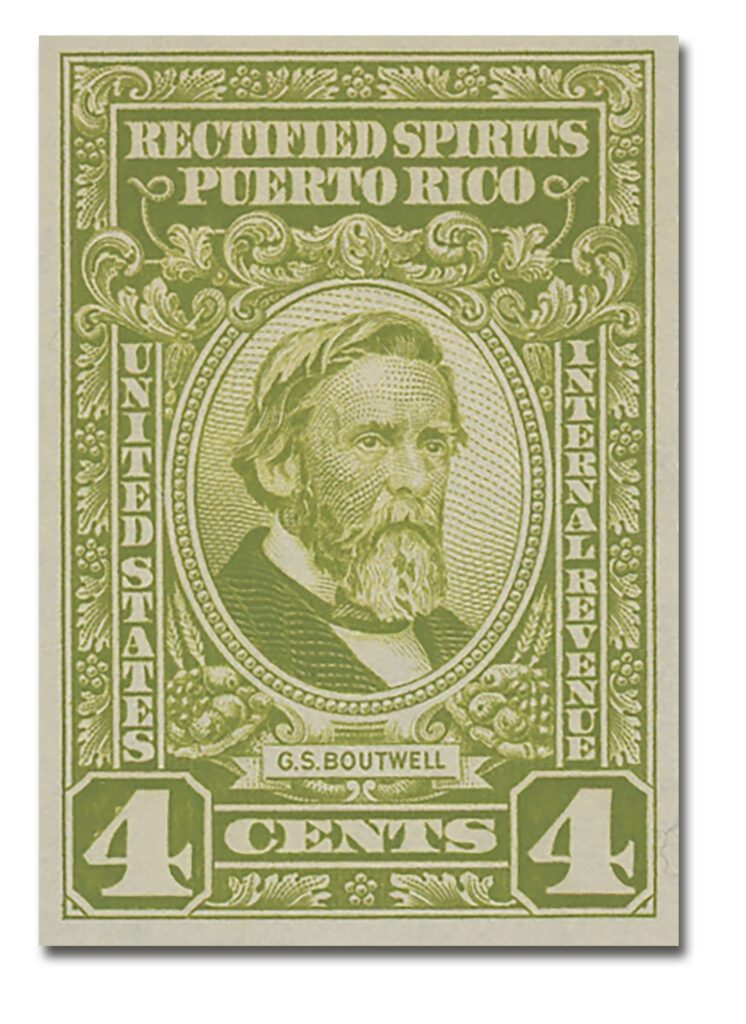
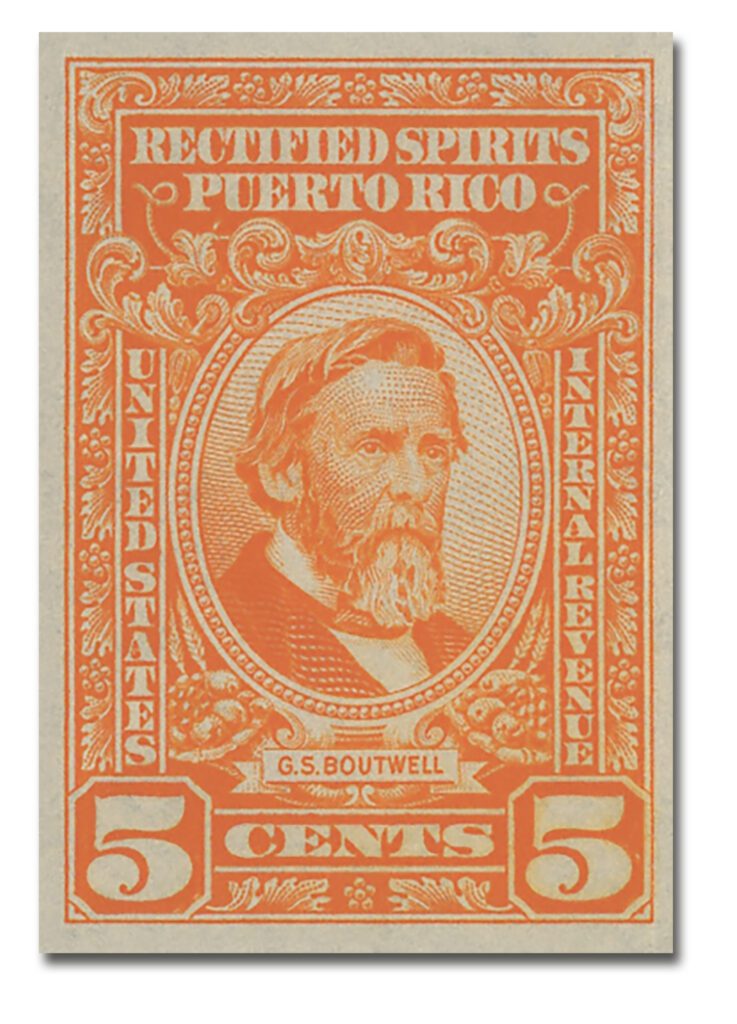
There is a historical irony in Boutwell’s appearance on Puerto Rico revenue stamps. Boutwell was a vocal opponent of American imperialism and strongly opposed the US acquisition of overseas territories, including the Philippines. He helped found the American Anti-Imperialist League and served as its first president. Other members included Mark Twain, Samuel Gompers, and former President Grover Cleveland. Despite his opposition, the United States acquired Puerto Rico after the Spanish-American War, and decades later, Boutwell’s image appeared on its tax stamps—an unexpected reminder of his lasting place in American history.
Click here for more stamps picturing Boutwell.
| FREE printable This Day in History album pages Download a PDF of today’s article. Get a binder or other supplies to create your This Day in History album. |
Discover what else happened on This Day in History.
Hello, I would love to know who wrote this article on George Boutwell. Extremely well done. I’ve just published a biography of George (WW Norton, 2025) and have been giving book talks around the country – see http://www.jeffreyboutwell.com It’s marvelous to see this remembrance of the anniversary of his birthday. I am related to George, we have common ancestors in the Boutwell line going back to the 1600s. One small correction. When he left his position as Treasury Secretary in 1873, he’d been elected to the U.S. Senate (not the Mass. state senate) and served for four years continuing to fight for Reconstruction civil rights with President Grant. Look forward to hearing from you.
best, Jeffrey