
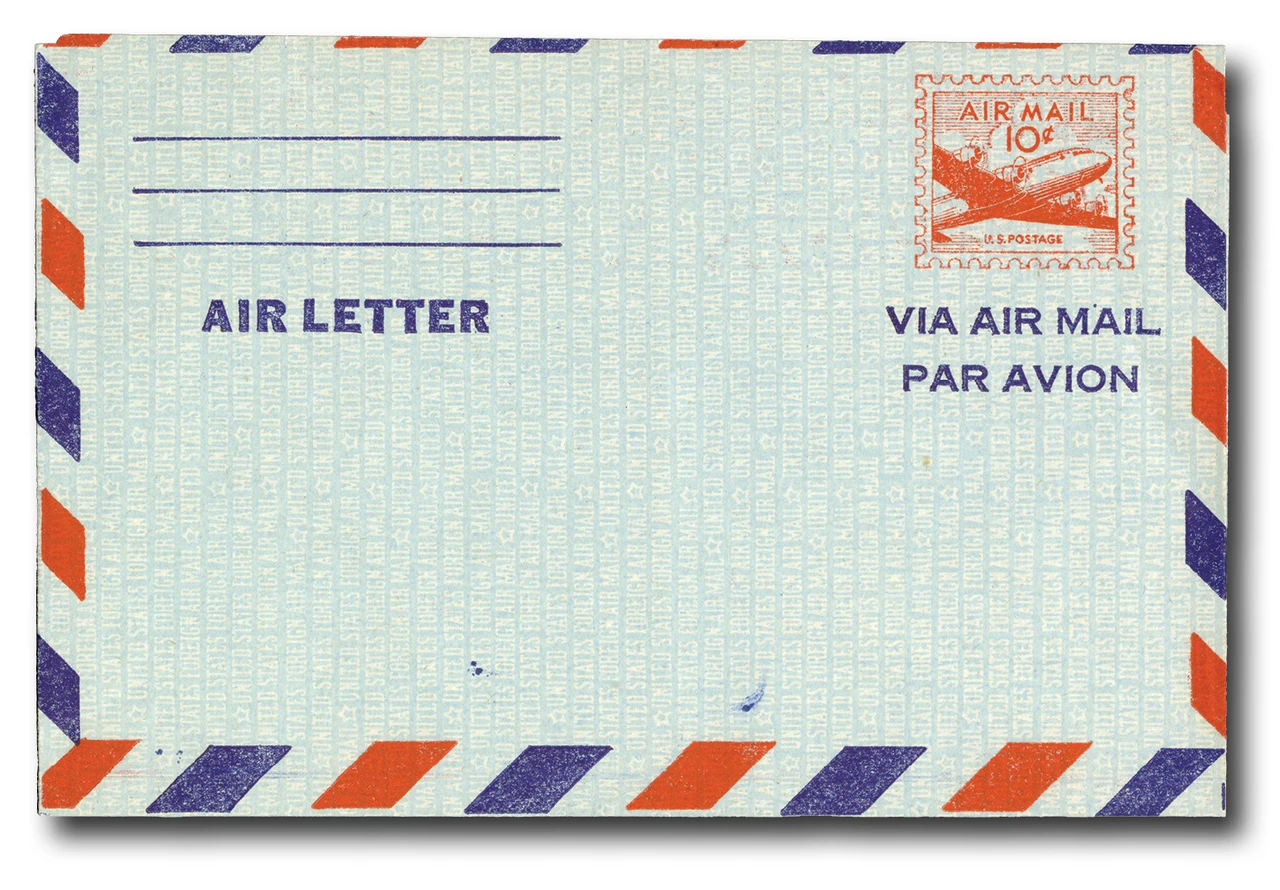
On April 29, 1947, the United States issued its first aerogram, then called an air letter sheet. It was a simple folded sheet of paper, but it offered Americans a cheaper and faster way to send personal messages overseas in the growing age of air travel.
Long before envelopes became common, many people wrote letters on a single sheet of paper that served as both message and wrapper. The writer filled one side with text, folded the sheet into a compact shape, and sealed it with wax or paste. The address was written on the outside. In many countries, postage rates were once affected by the number of sheets being mailed. That meant extra paper could raise the cost. Using one folded sheet was often the most practical choice.
As postal systems modernized during the 1800s, separate envelopes became more common. Better paper production, improved adhesives, and changing postal rules helped make envelopes easier to use. Even so, the idea of a single self-contained letter never fully disappeared. It returned in a new form once air mail began connecting distant parts of the world.
Air mail created a new challenge. Aircraft had limited cargo space, and weight mattered. Every ounce saved could help reduce costs and improve efficiency. Postal officials looked for ways to move more mail without adding bulk. A thin folded letter sheet was an obvious answer.

In 1933, Iraq introduced what were called air letter cards. These lightweight postal stationery forms were designed to be written on, folded, and sealed without needing an envelope. Iraq had been expanding its air routes, and lighter mail fit the needs of the new service. The concept soon drew attention beyond the Middle East.
During World War II, British military postal planners saw the value of the Iraqi design. Lieutenant Colonel R. E. Evans of the Royal Engineers, serving with the Army Postal Service in the Middle East, supported creating a similar form for British forces. Soldiers and officials needed a dependable way to send letters over long distances by air while keeping weight low.
The British approved the plan, and on March 1, 1941, a special air letter service began between the United Kingdom and the Middle East. These forms became popular because they were practical, light, and easier to transport than ordinary letters in envelopes. They also helped maintain contact between families separated by war. Over time, civilian versions spread to other parts of the British Empire and beyond.
After World War II, the United States adopted the idea. On April 29, 1947, the Post Office Department issued its first air letter sheet. Americans could buy the form with postage already imprinted, write their message inside, fold it along marked lines, and seal it for mailing. It was intended mainly for foreign air mail, where speed and lower cost were especially attractive.

The first US issue carried clear printed instructions. Users were told not to place anything inside the sheet. No photographs, no extra pages, and no enclosures of any kind were allowed. If extra material was added, the item could lose its special status and be sent at regular letter rates, often by slower service. The warning showed how carefully postal officials guarded the weight advantage that made aerograms useful.
The American public responded well. For families with relatives overseas, students studying abroad, business travelers, and members of the armed forces, the forms offered an economical way to stay in touch. Before email, texting, or cheap international calling, letters were often the best link between people separated by oceans. Saving money on postage mattered.

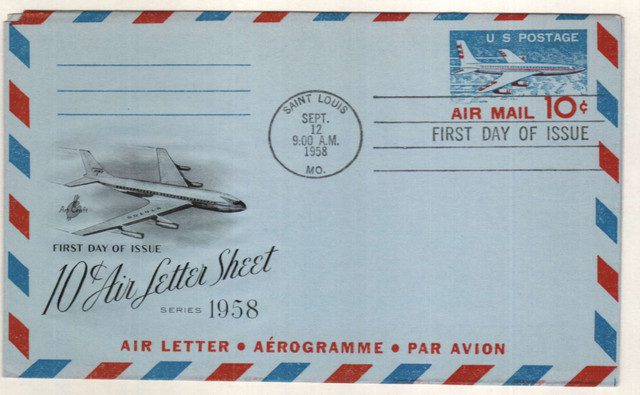
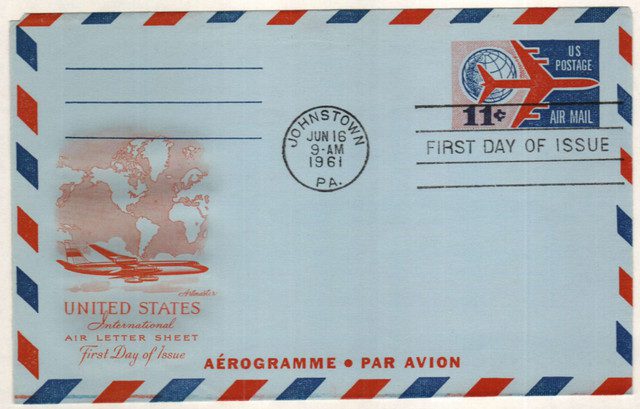
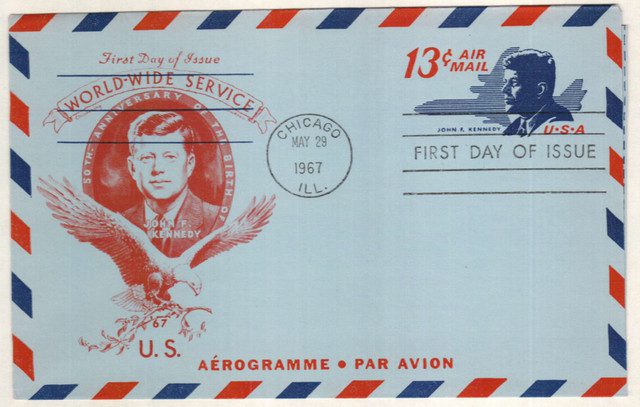
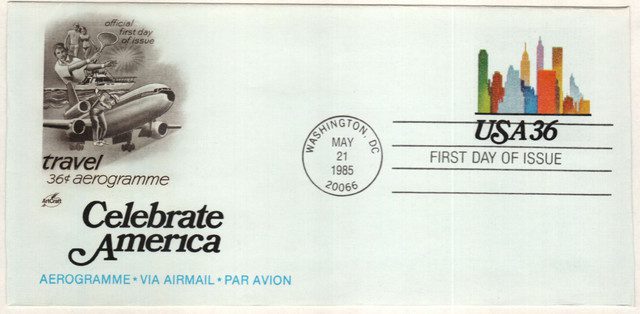
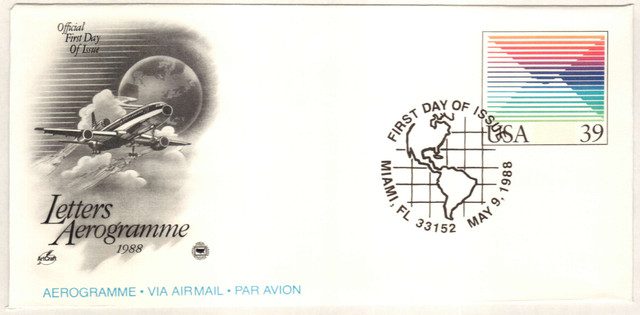
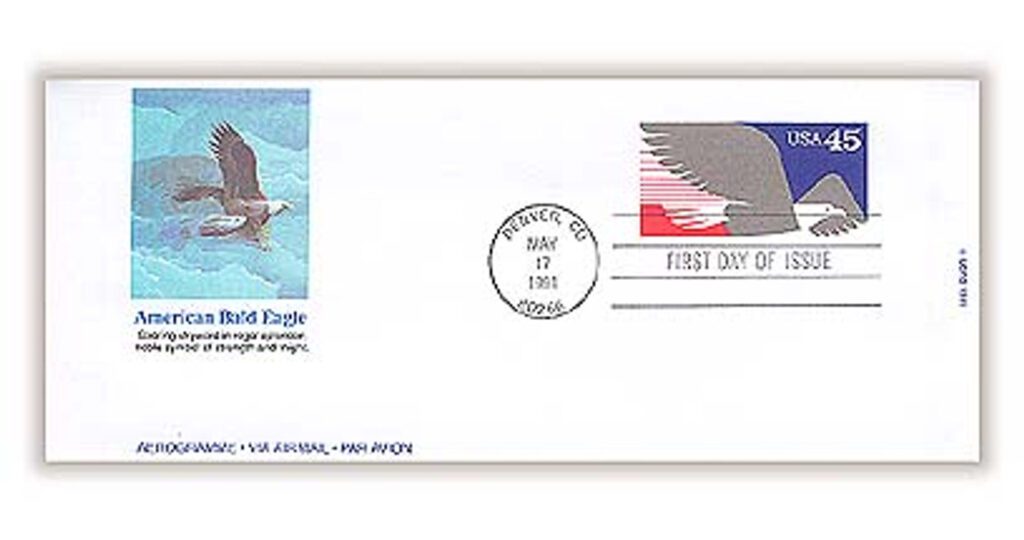
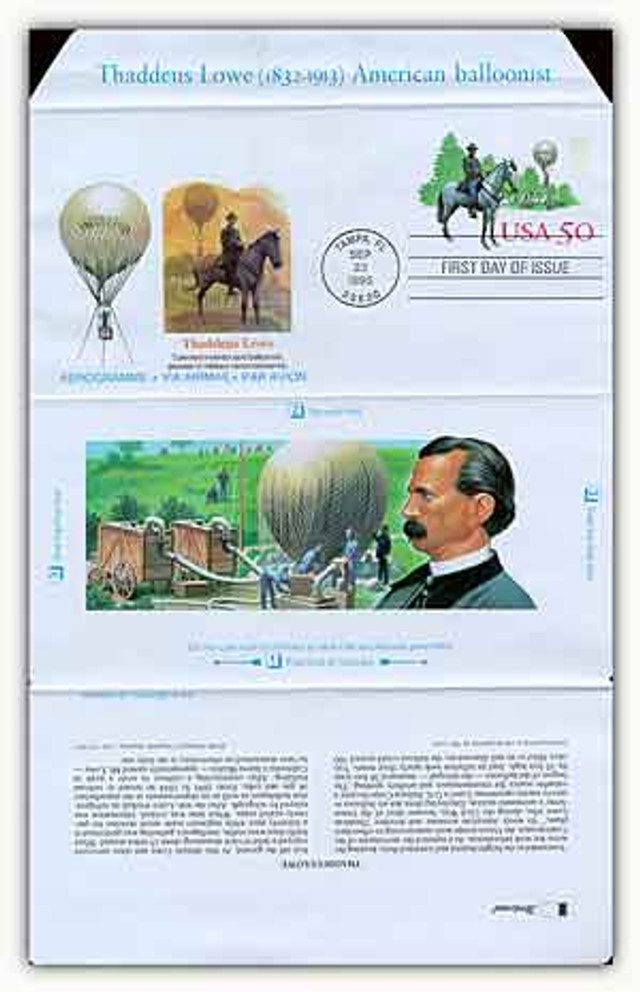
The design of the first US air letter sheet remained in use until 1958. Later issues included updated styles, colors, and commemorative themes. From 1947 through 1999, the United States issued a total of 25 aerograms.
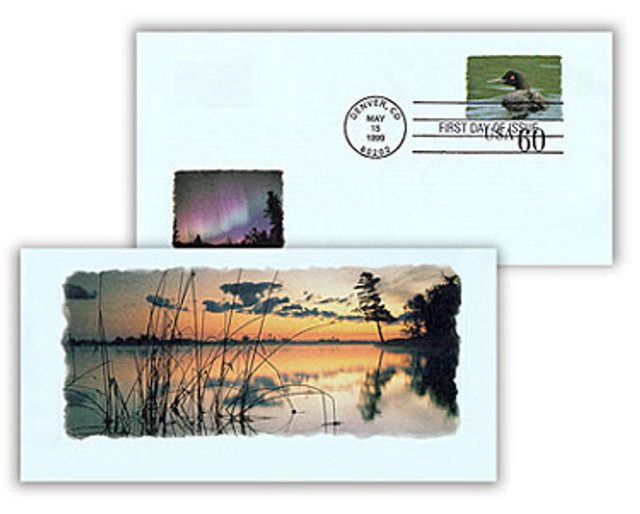
Today, aerograms are reminders of a time when global communication depended on paper, handwriting, and the speed of aircraft. They also show how postal systems adapted old ideas to meet modern needs. A folded letter sheet, once common centuries earlier, found new life in the aviation age.
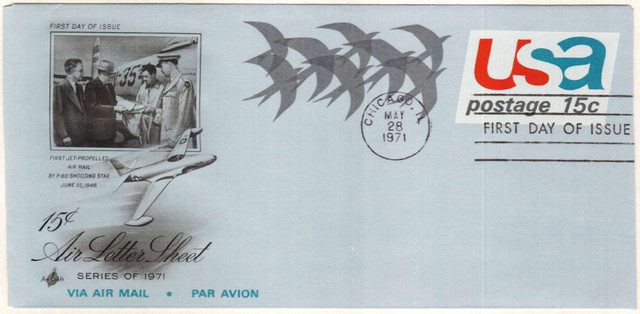
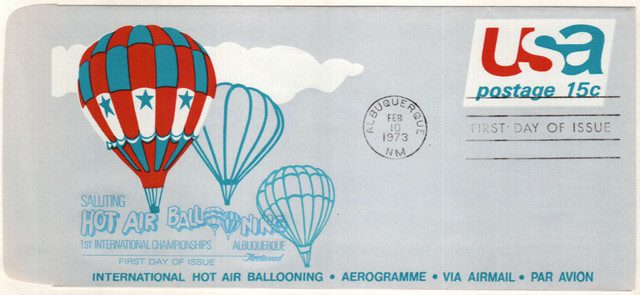
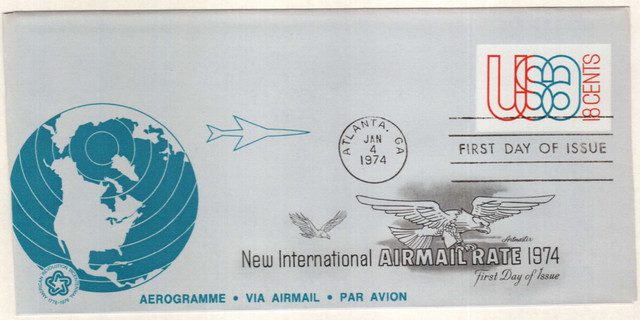
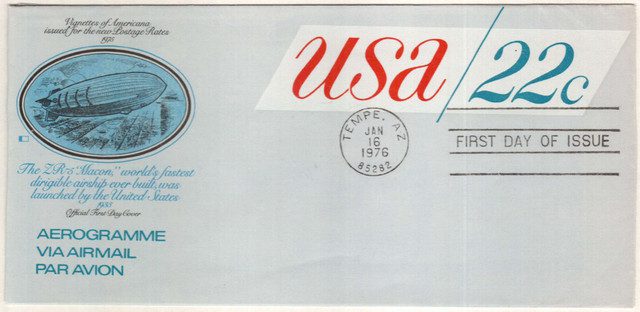
See more US aerograms below:
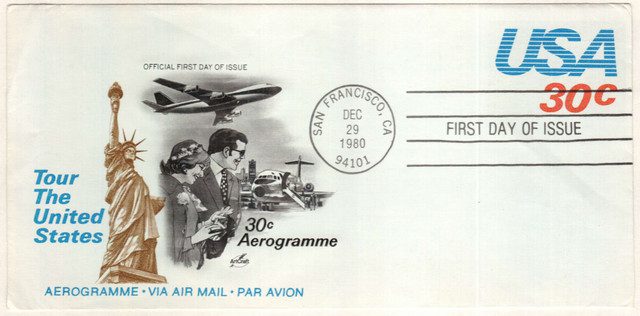
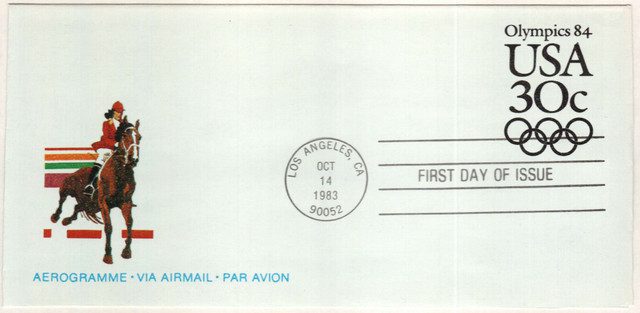
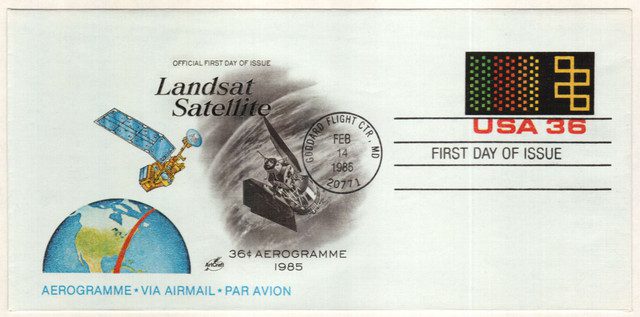
| FREE printable This Day in History album pages Download a PDF of today’s article. Get a binder or other supplies to create your This Day in History album. |
Discover what else happened on This Day in History.
I used alot of these when I was corresponding with friends overseas.
They make an especially interesting collectable because the correspondence remains with the identifying indicia on the face, just as with postal cards. It’s also satisfying to easily complete the collection of this format.
Very nice to look at. I do have some of the collection.
I used these for many year for overseas correspondence.
There was another such letter sheet used by military dependents to write to military personnel stationed overseas during WWII, wasn’t there /
Very Interesting …. are any of these for sale ??
Yes, just click on the images of the stamps or covers to make a purchase. Have fun!
I just found one amidst my stationery and wrote an old friend who will get a good laugh and lump in her throat from nostalgia. 😊