
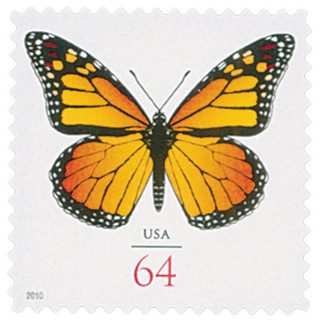
On May 17, 2010, the USPS issued the first stamp in what became the Butterfly Series.
In late 2009, the USPS unveiled the first butterfly stamp for greeting card envelopes that required additional postage beyond the standard one-ounce rate. This applied to envelopes that could not be sorted on the USPS’s automated equipment, otherwise known as “nonmachinable.” The delicate butterfly was selected to symbolize the special care needed for these unique mail pieces. It also served as a simple visual cue for customers buying cards that needed extra postage.
Before the Butterfly Series, there was no special stamp designed just for nonmachinable greeting-card envelopes. Customers used ordinary stamps in whatever combination paid the correct total. The surcharge itself was not new, however. USPS had added a surcharge for non-standard envelope sizes in 1979. The older “nonstandard surcharge” name was later changed to “nonmachinable surcharge” in 2002. The 2010 Butterfly stamp made that older rule easier for customers to understand at a glance.
Some nonmachinable envelopes include those that are square, oddly shaped, vertical, lumpy, rigid, or closed with clasps, ribbons, strings, or buttons. A square envelope is one of the clearest examples because it does not meet the shape requirements for automated letter processing. Even if an envelope weighed less than one ounce, it still needed extra postage if it was nonmachinable. However, letters that were simply heavier did not necessarily need the Butterfly stamp. A two-ounce letter could usually be mailed with the regular two-ounce rate, as long as it met machinable letter standards. Nonmachinable stamps covered the added cost of mail that could not be handled efficiently on letter-sorting machines and had to be processed by hand.
The first Butterfly stamp pictured a monarch butterfly and was issued at 64¢. At the time, the regular one-ounce first-class letter rate was 44¢, and the nonmachinable surcharge was 20¢. The two-ounce rate was 61¢, so customers using the Butterfly stamp on a regular two-ounce letter would have overpaid by 3¢.
The USPS worked closely with the greeting card industry on the new stamp. Prior to this issue, some greeting card envelopes were imprinted with “extra postage required.” With the creation of the Butterfly stamp, the Greeting Card Association encouraged its members to print a butterfly silhouette on envelopes for cards that required the nonmachinable surcharge. If customers saw that symbol, they knew they needed the Butterfly stamp or equivalent postage. Reflecting this close working relationship, the 64¢ monarch butterfly stamp was issued on May 17, 2010, at the National Stationery Show held at the Jacob Javits Center in New York.
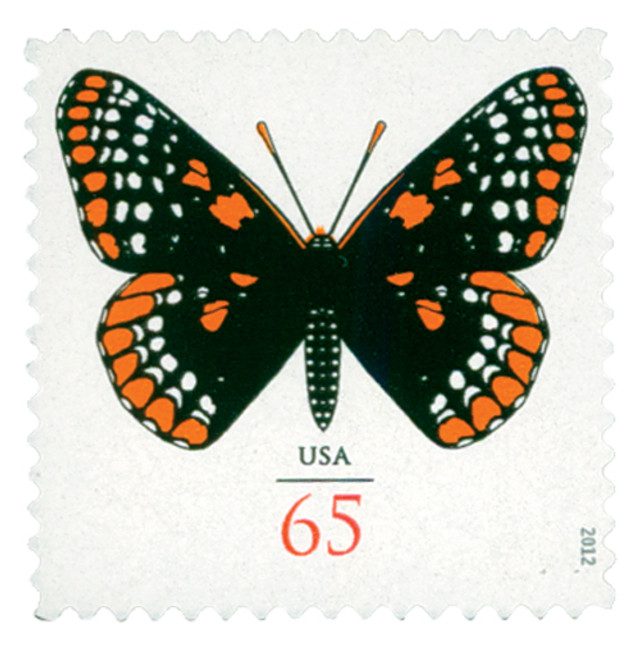
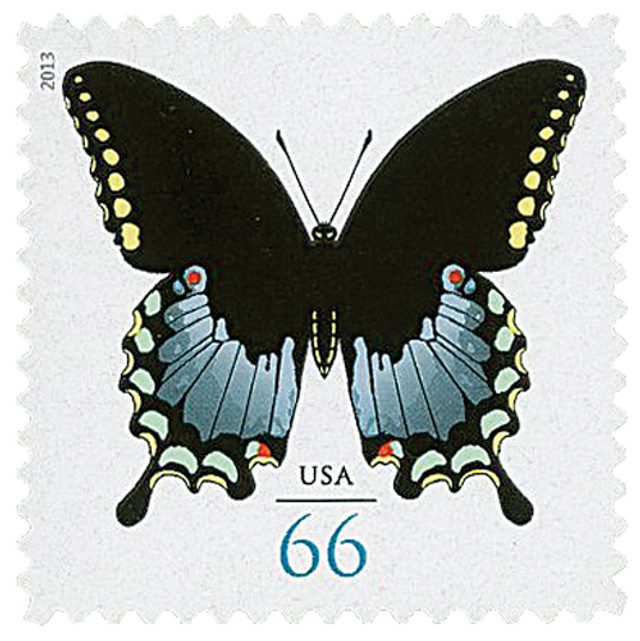
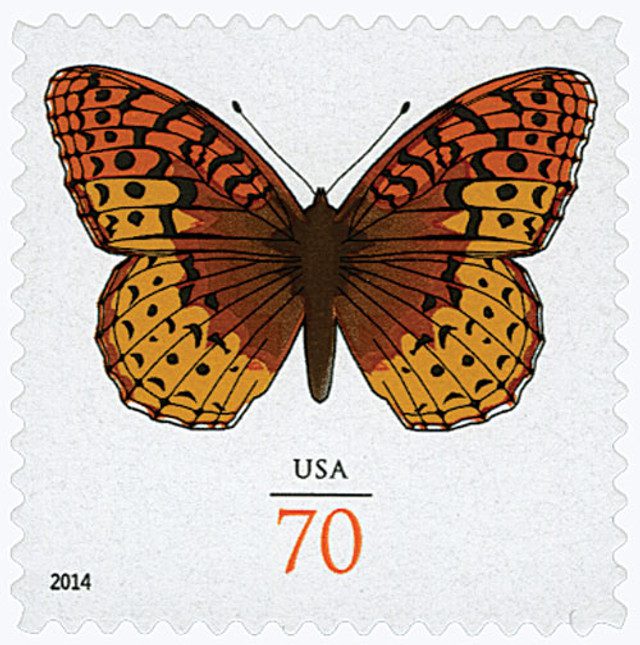
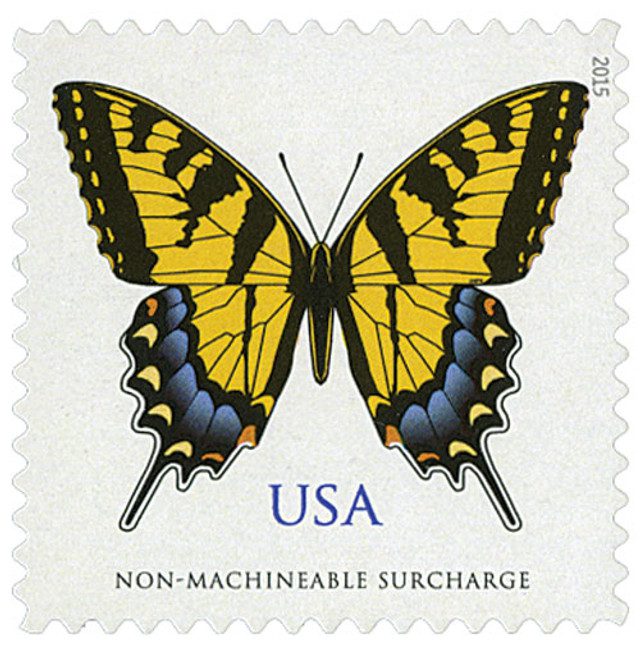
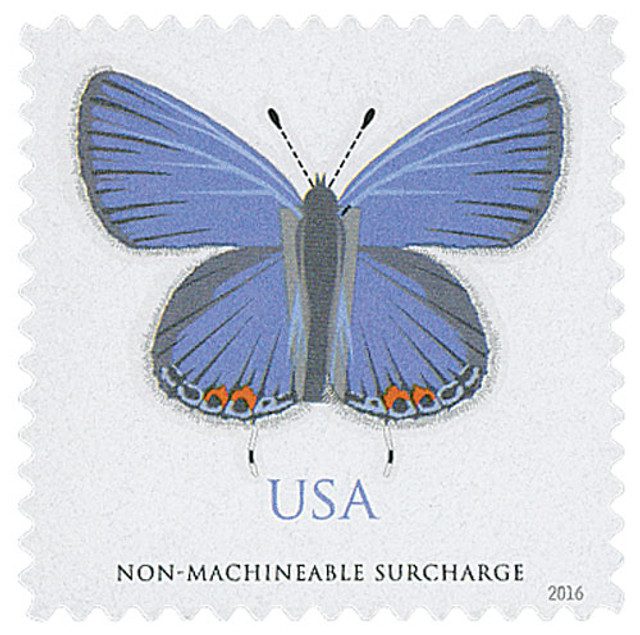
The monarch stamp remained in use for two years. It was replaced by the Baltimore checkerspot butterfly stamp in 2012, when the nonmachinable rate increased to 65¢. New stamps were issued each year through 2016. The 2015 and 2016 issues followed the Forever format by printing “non-machineable surcharge” on the stamp rather than a numerical denomination.
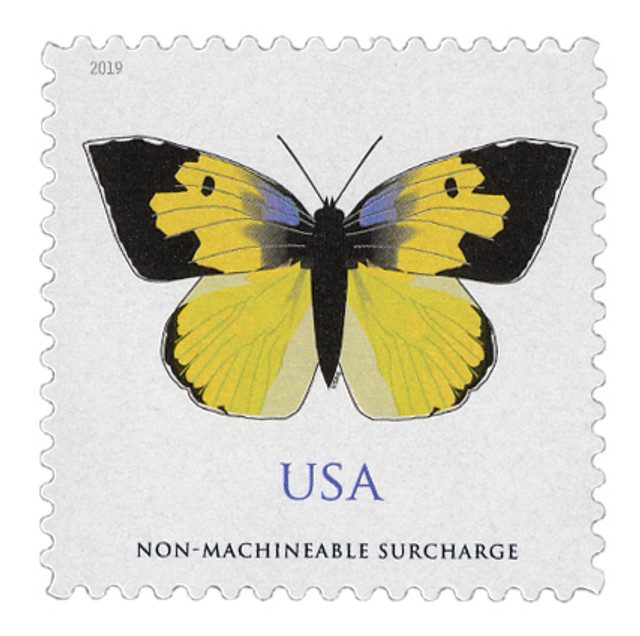
The California dogface butterfly stamp was initially announced in 2016 and expected for a 2017 release. However, the USPS said it had designed the stamp but would not produce it until supplies of existing butterfly stamps were nearly depleted. As a result, the California dogface stamp was not issued until 2019.
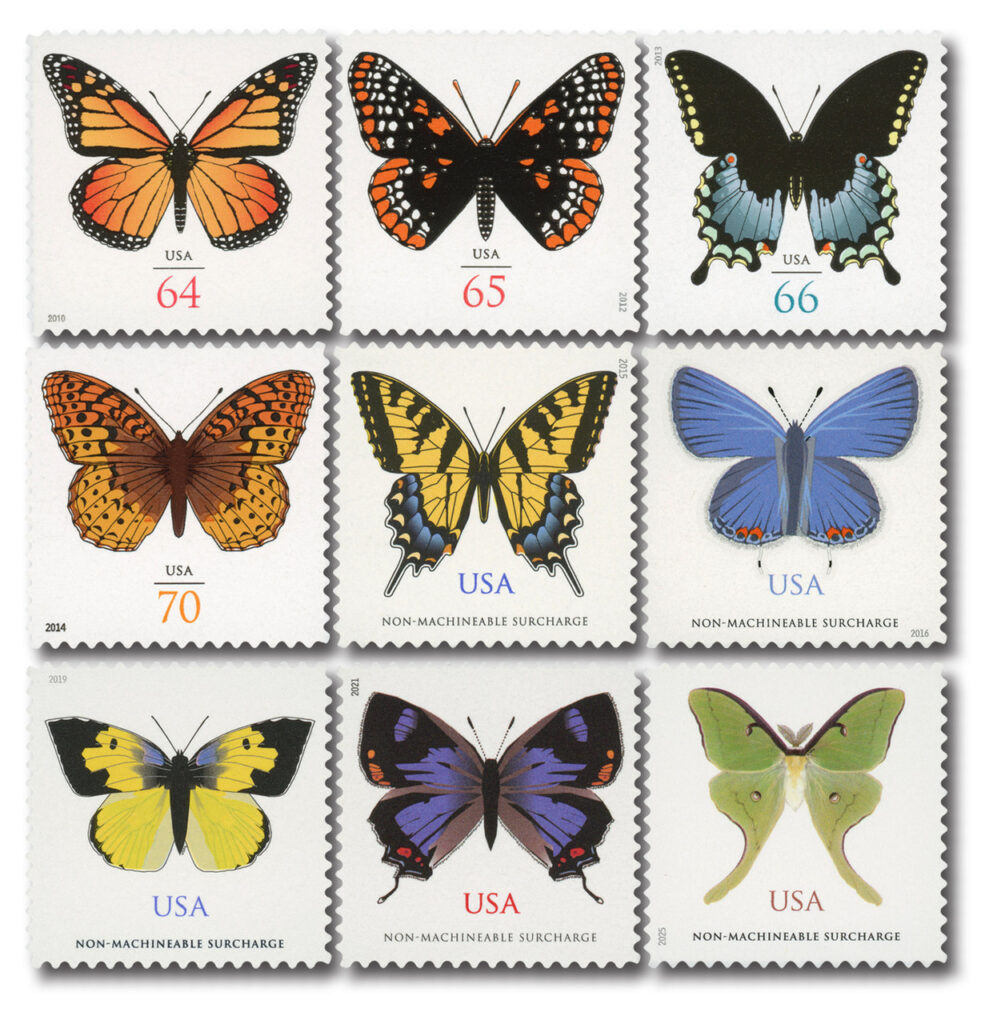
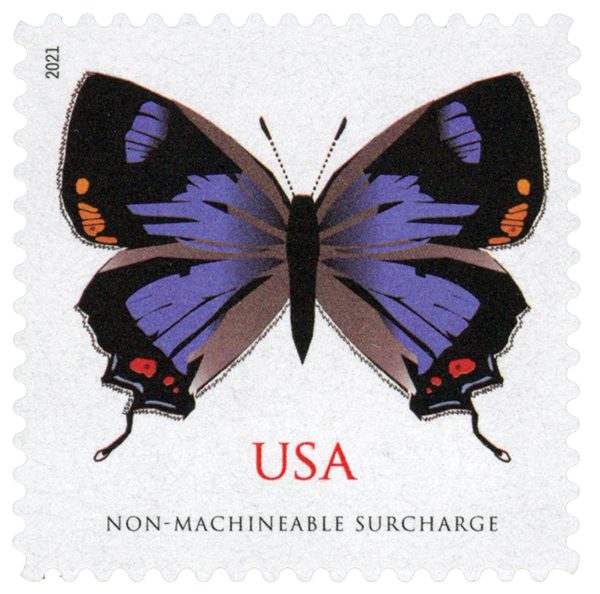
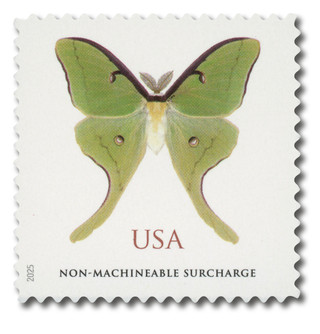
The California dogface stamp remained in use for two years. It was replaced in March 2021 with the Colorado hairstreak butterfly stamp, which met the new nonmachinable rate of 75¢. The next new stamp was issued in 2025. The $1.27 Luna Moth stamp covered the first-class letter rate of 78¢ plus the 49¢ nonmachinable surcharge.
Check out other US butterfly stamps.
View lots more worldwide butterfly stamps.
| FREE printable This Day in History album pages Download a PDF of today’s article. Get a binder or other supplies to create your This Day in History album. |
Discover what else happened on This Day in History.
I look forward to additions to this set as the years go by. Inflation will help this beautiful issue along. I’ve mainly used these on large envelopes, as it is those square greeting cards that require extra postage. i’ve always wondered why the cancelling machines can’t handle squares.
I remember when the first “butterfly series” stamp was issued back in ought nine. So far there have been eight different butterfly nonmachinable stamps issued. I wonder how many more will come?