

On March 3, 1931, the United States officially adopted “The Star-Spangled Banner” as its national anthem. The decision came more than a century after the song was written, ending years of debate and finally giving the nation a single, official anthem.

The story of the anthem began during the War of 1812. In September 1814, a 35-year-old Georgetown lawyer named Francis Scott Key was asked to help secure the release of Dr. William Beanes, a respected Maryland physician who had been captured by British troops. Key traveled under a flag of truce to a British ship anchored in the Chesapeake Bay. He successfully negotiated the doctor’s release. However, because Key and his companions had learned of British plans to attack Baltimore, they were not allowed to return to shore right away.
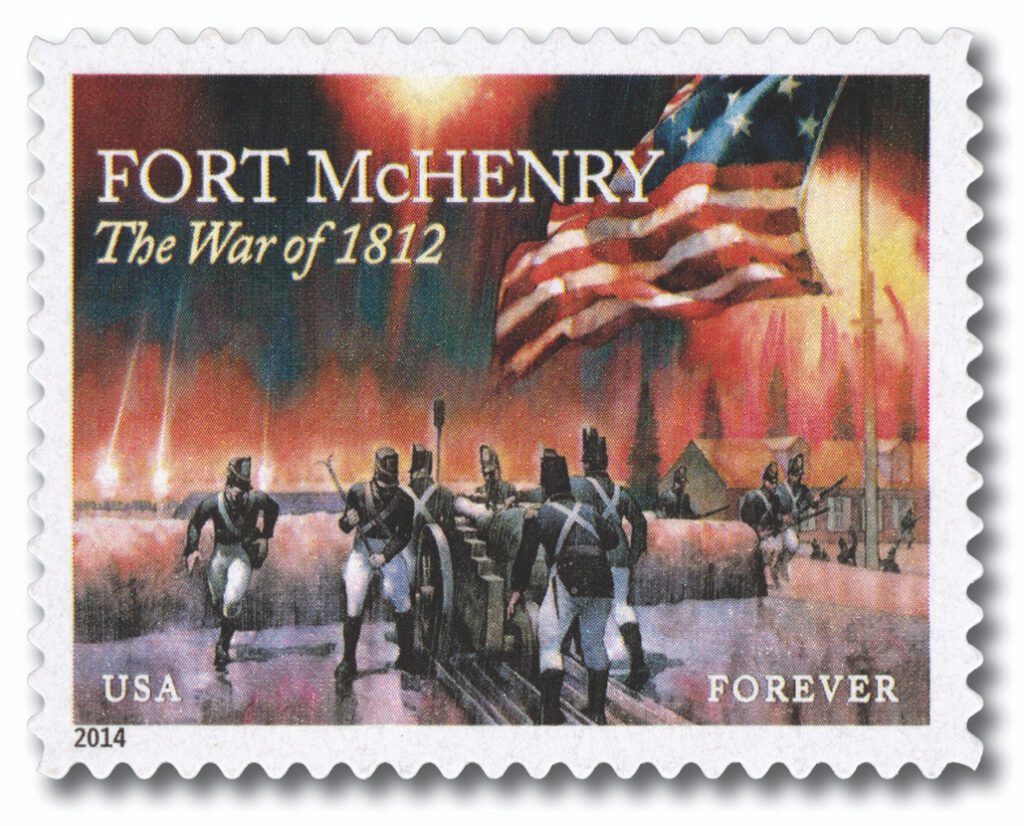
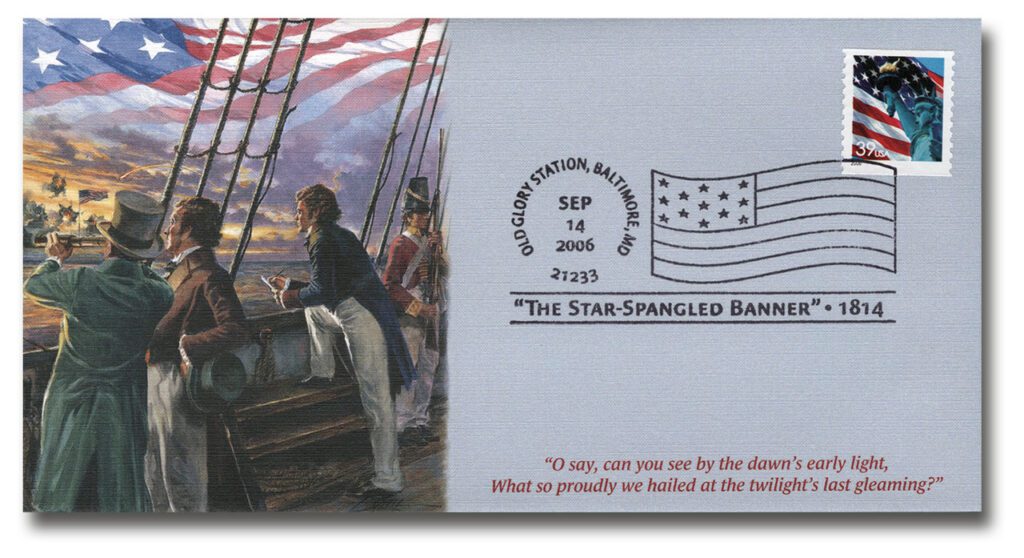
On September 13–14, 1814, Key watched from a British vessel as the Battle of Fort McHenry unfolded. The British navy bombarded the American fort for about 25 hours. Rockets and mortar shells lit up the night sky. At dawn, Key anxiously looked toward the fort to see which flag was flying. When he saw the large American flag still waving above the ramparts, he knew the fort had held. The British attack had failed.
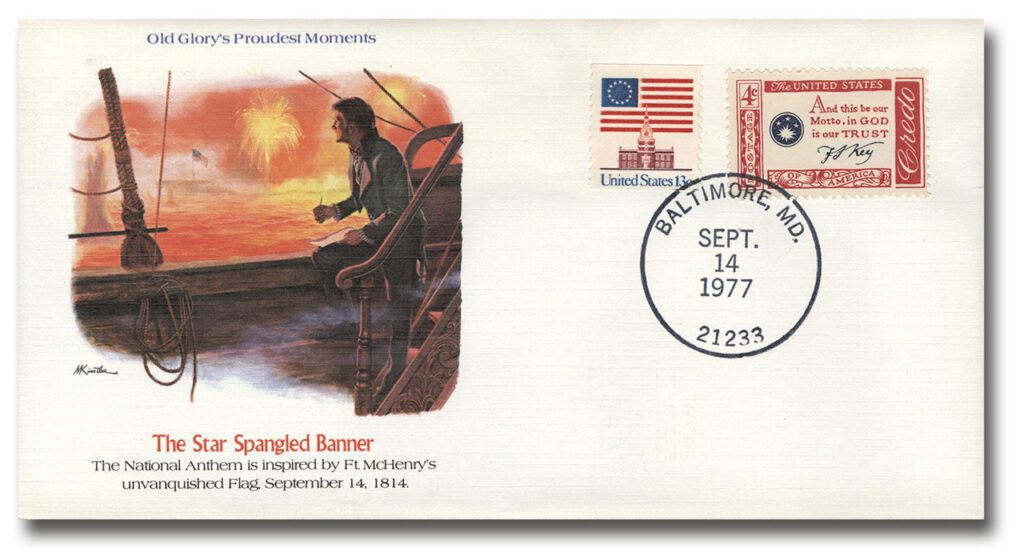
Deeply moved, Key began writing a poem titled “Defence of Fort McHenry.” He later revised it in Baltimore. The poem included vivid images of “the rockets’ red glare” and “the bombs bursting in air,” drawn directly from what he had witnessed. Some lines also echoed phrases from an earlier poem Key had written to honor naval officers Stephen Decatur and Charles Stewart for their service in the First Barbary War.
A few days after the battle, Key shared the poem with his brother-in-law, Judge Joseph Nicholson. Nicholson realized that the words fit the melody of a popular British tune, “The Anacreontic Song,” written by John Stafford Smith. The pairing worked well. On September 17, 1814, the first broadsides were printed in Baltimore. Three days later, the song appeared in The Baltimore Patriot and The American newspapers. Soon after, music store owner Thomas Carr published the words and music together under the new title “The Star-Spangled Banner.” In October 1814, Baltimore actor Ferdinand Durang gave one of the first public performances.
Over time, the song became a regular feature at Fourth of July celebrations and patriotic gatherings. Still, it was not the official national anthem. Other songs, such as “Hail, Columbia” and “America (My Country, ’Tis of Thee),” were also widely used at public events.
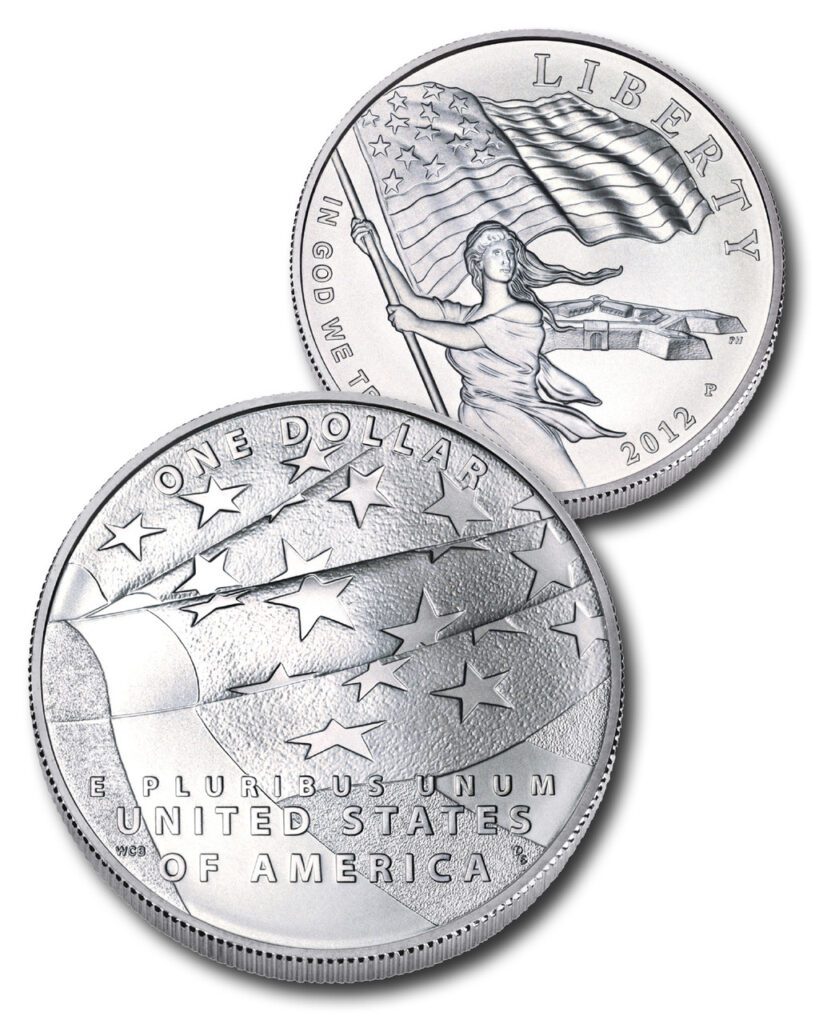
In 1889, the US Navy took an important step. The service made “The Star-Spangled Banner” the official song for flag-raising ceremonies. In 1892, Colonel Caleb Carlton, commander at Fort Meade in South Dakota, ordered the song to be played at military retreats and parades. He promoted the idea to state and national leaders. His efforts helped spread the custom throughout the armed forces.

By the early 1900s, different versions of the song were being performed. The tempo and arrangement varied. In 1916, President Woodrow Wilson ordered that an official version be prepared for military and other appropriate occasions. The Bureau of Education gathered five musicians to standardize the music. One of them was famous bandleader John Philip Sousa. The standardized arrangement was first performed in December 1917.
Efforts to make the song the national anthem continued in Congress. In 1918, Maryland Representative John Charles Linthicum introduced a bill to give the song official status. The measure did not pass at first. Linthicum reintroduced it several times over the next decade.

Public support grew in 1929 after cartoonist Robert Ripley pointed out in his “Believe It or Not!” feature that the United States did not have an official national anthem. The statement surprised many Americans. In 1930, the Veterans of Foreign Wars launched a nationwide campaign to support the bill. The group gathered a petition signed by about five million people. Their efforts helped move the legislation forward.
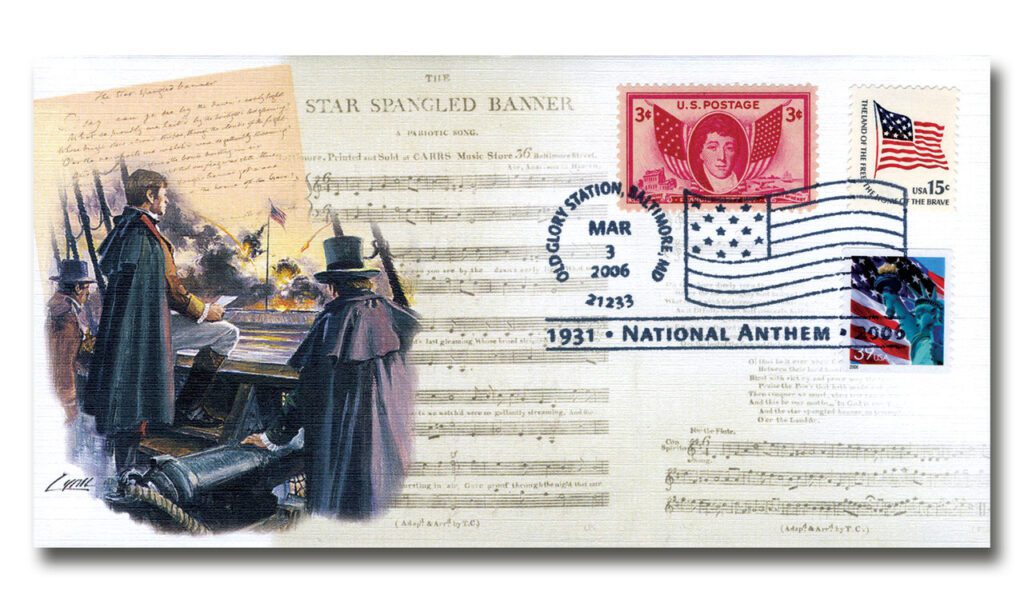
Both the House of Representatives and the Senate eventually passed the bill. On March 3, 1931, President Herbert Hoover signed it into law. “The Star-Spangled Banner” was now the official national anthem of the United States. The law did not change the song’s words or melody. It simply gave formal recognition to a song that Americans had been singing for more than a century.
| FREE printable This Day in History album pages Download a PDF of today’s article. Get a binder or other supplies to create your This Day in History album. |
Discover what else happened on This Day in History.
Great article.
Interesting history that shows the development from 1812. Little known actions.
Thanks for the link to the Ripley’s cartoon. It added an interesting and nice touch to this article.
I always said that you learn something new everyday, Mystic you sure are helping me do that
It is too bad that so many of the “award winning singers” who attempt to sing the “Star Spangled Banner” at sporting events do not know how to sing it properly. They sing it as if it were a funeral dirge, they add extra notes to it, etc. They should listen to how a military band plays it. Then maybe they would hear how the tune is supposed to be sung.
…..and it took a hundred years and an act of Congress.
Good job Mystic. Facts I never know about the Star Spangled Banner our national anthem.
I know of the: “Star Spangled Banner” from reading about Francis Scott Key, and the War of 1812. There was a suggestion at one time, to change the: “Star Spangled Banner” to: “God Bless America”, as the National Anthem of the United States. This would have been following the memorial for he fallen astronauts of the ill-fated Challenger Shuttle Mission. The National Anthem that is consider the ‘focus’ of hymns that represent a country and its people, is: “La Marseillaise”, the National Anthem of France. The words of the National Anthem of Japan, date to the ninth century, and the National Anthem of Iceland was written to commemorate the 1,000th anniversary of the founding of that country’s parliament.
AGAIN??? Just stop it!! “America” is nor a country, but two continents and cannot have a national anthem. Whoever is in charge of article titles is uneducated to many facts.
As an elementary school student, I remember getting corrected by my teachers to use “America” for the combined landmass of North and South America. In hindsight, I think the teachers were trying to expand our worldview. Perhaps this was even the first wave of political correctness?
However, I just did a quick online search, and it appears to me “America,” as the shortened name for the “United States of America,” appears as the 1st definition on most of the dictionary listings. So in 2023, it appears America is an expected and correct name for the good ol’ USA.
The United States of America has been know as “America” adinfinitum. What are you complaining about.