
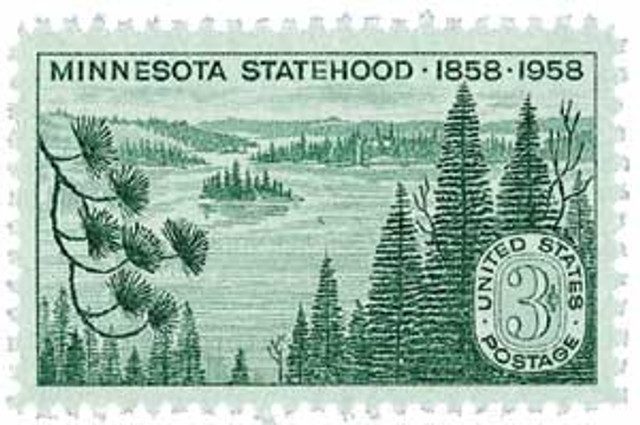
On May 11, 1858, Minnesota entered the Union as the 32nd state. Known today as the “North Star State,” Minnesota grew from fur-trade outposts, river forts, farms, forests, and iron mines into one of the Upper Midwest’s most diverse economies.
Long before statehood, the land that became Minnesota was home to Native peoples. The Dakota lived across much of southern and western Minnesota, while the Ojibwe, or Anishinaabe, became established in the north and east. Both peoples built communities around rivers, lakes, forests, wild rice beds, hunting grounds, and trade routes.
French explorers, missionaries, and fur traders reached the area in the 1600s. Pierre-Esprit Radisson and Médard Chouart, Sieur des Groseilliers, are often linked to early French exploration and trade in the upper Great Lakes region. Daniel Greysolon, Sieur du Lhut, entered the region in 1679 and worked to expand French influence around Lake Superior. Father Louis Hennepin, a Franciscan missionary, traveled through the upper Mississippi region in 1680 after being taken captive by Dakota people. His later writings helped make the area better known to Europeans.
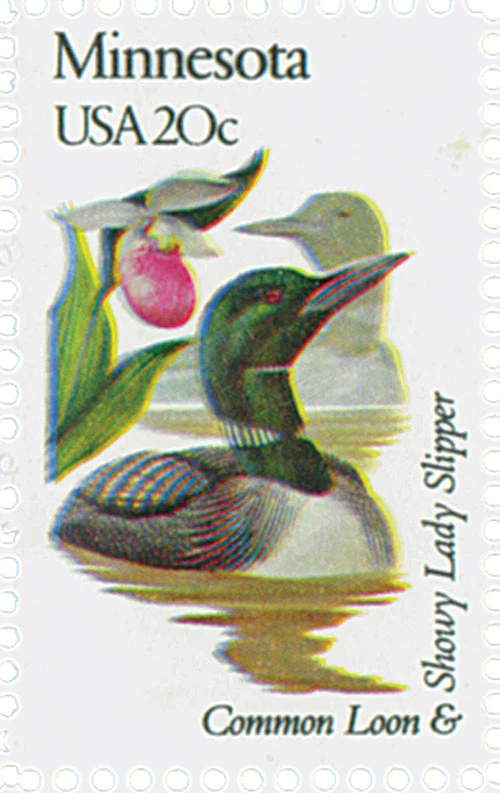
The fur trade shaped Minnesota’s early European contact. Beaver pelts and other furs moved through Native trade networks and then into French, British, and American markets. Native people were not simply bystanders in this trade. They guided travel, supplied food, controlled routes, and negotiated alliances. Over time, however, European rivalries and expanding settlement put more pressure on Native lands.
Control of the region shifted several times. France claimed much of the interior of North America as part of Louisiana. After the French and Indian War ended in 1763, Britain gained French lands east of the Mississippi River. The United States gained that eastern section after the American Revolution. Lands west of the Mississippi later came to the United States through the Louisiana Purchase in 1803. This meant that present-day Minnesota was assembled from both the old Northwest and the Louisiana Purchase.
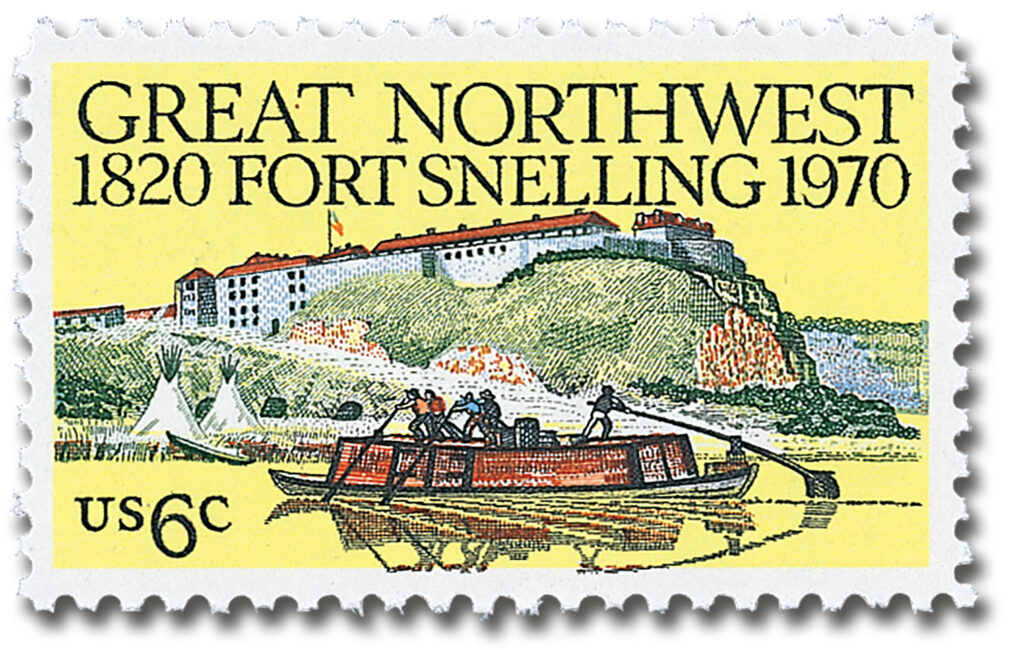
In 1805, Zebulon Pike explored parts of the upper Mississippi for the United States. He negotiated a land agreement near the junction of the Mississippi and Minnesota rivers. The US later built Fort St. Anthony there in 1819. In 1825, it was renamed Fort Snelling. The fort became an important military post, government center, and base for further settlement. Farms, mills, and small communities developed nearby.
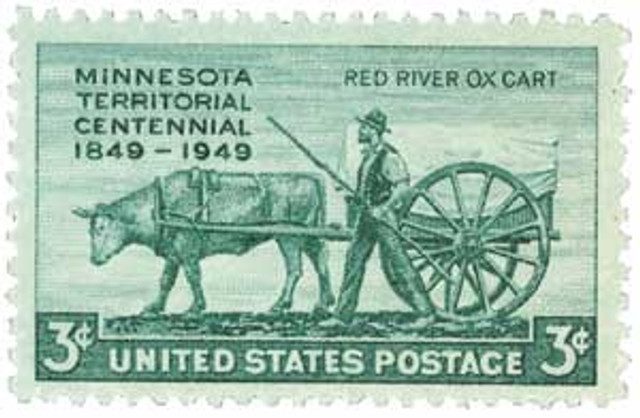
Minnesota Territory was created on March 3, 1849. Its eastern, northern, and southern borders were close to the state’s modern boundaries, but the territory stretched farther west into land that later became part of the Dakotas. At the time, the non-Native population was small, about 4,000 people in the territory.
Settlement increased quickly after treaties in 1851 opened large areas of Dakota land to white settlers. These treaties, including Traverse des Sioux and Mendota, were deeply unfair to the Dakota. Payments were delayed, land was lost, and promises were often broken. The pressure on Dakota communities helped set the stage for later conflict.
As the population grew, Minnesotans began pushing for statehood. The debate became tied to the national argument over slavery. Minnesota entered the Union as a free state on May 11, 1858. It had grown rapidly, with about 150,000 residents by the time of statehood.
When the Civil War began in 1861, Minnesota was the first state to offer troops to the Union. The 1st Minnesota Volunteer Infantry became especially well known for its costly charge at Gettysburg on July 2, 1863. Its action helped slow Confederate forces during a critical moment in the battle.
Minnesota also faced violence at home during the war. In 1862, the US-Dakota War broke out after years of broken treaty obligations, hunger, late payments, and anger over lost lands. Hundreds of settlers and soldiers were killed, along with many Dakota people. After the war, 38 Dakota men were executed at Mankato in the largest mass execution in US history. Many Dakota families were forced out of Minnesota.
After the Civil War, Minnesota’s economy expanded quickly. Railroads opened new markets and brought more settlers. Wheat became one of the state’s most important crops. Minneapolis grew around flour milling powered by St. Anthony Falls. Companies such as Pillsbury and Washburn-Crosby helped make the city famous as a flour-milling center. Minneapolis became known as “Mill City.”
Iron mining later added another major force to Minnesota’s economy. The Mesabi, Vermilion, and Cuyuna ranges in northern Minnesota produced huge amounts of iron ore. This ore helped supply American industry and later became important during both world wars. When high-grade ore declined, Minnesota companies developed taconite processing, which kept iron mining alive in the state.
Immigration also changed Minnesota. During the late 1800s and early 1900s, many immigrants arrived from Germany, Norway, Sweden, Finland, Ireland, and other countries. They built farms, worked in logging and mining towns, opened businesses, and shaped the state’s churches, schools, politics, and culture.
In the 20th century, Minnesota’s economy became more varied. Farming, flour milling, lumber, and mining remained important, but new industries grew. Food processing, medical technology, retail, finance, electronics, printing, and manufacturing all became part of the state’s economy. The Twin Cities became a business center, while Rochester became known worldwide through the Mayo Clinic.
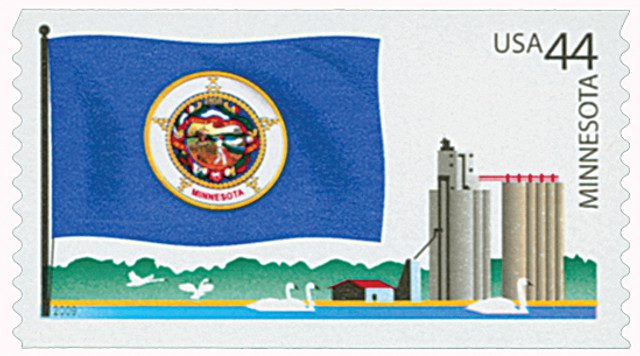
Today, Minnesota’s economy is still broad. State economic development officials identify several key industries, including advanced manufacturing, life sciences, clean technology and renewable energy, food production and agriculture, technology and innovation, and business support services. Major companies with Minnesota roots or headquarters include 3M, Cargill, Target, Medtronic, General Mills, UnitedHealth Group, Best Buy, Land O’Lakes, Hormel, Polaris, and US Bancorp.
Agriculture remains important, especially corn, soybeans, sugar beets, dairy products, hogs, poultry, and processed foods. Mining continues in northern Minnesota, especially through taconite iron ore production. Manufacturing includes medical devices, machinery, electronics, and food products. Health care is one of the state’s strongest modern sectors, led in part by Mayo Clinic and a large medical technology industry. Minnesota’s economy also includes finance, retail, insurance, education, tourism, and technology. This mix reflects the state’s history: farms, forests, rivers, mines, mills, and research centers all helped build the Minnesota that exists today.
| FREE printable This Day in History album pages Download a PDF of today’s article. Get a binder or other supplies to create your This Day in History album. |
Discover what else happened on This Day in History.
Interesting history previous to the annexation of Minnesota but it sounds so familiar. Could it be that you plagiarized Dr. Gabriel Des Rosiers’ at length reply to the annexation of Iowa in your article dated December 28, 2015? The similarities are remarkable. At any rate, your writing as well as his are worthy of note.
Well done; the article was clearly written and factual.
Sometimes known as the Viking state, the name Minnesota comes from the Lakota language. The root (mini or minne) means ‘water’ and ‘tÅ’ (ta) means ‘blue’. Many places in the State have similar names, such as Minnehaha Falls (laughing water or waterfall), Minneiska (white water), Minneota (much water), Minnetonka (big water), Minnetrista (crooked water), and of course Minneapolis. The State is informally known as the land of 10,000 Lakes with 11,842 lakes over 10 acres in size.
Its official motto is L’Étoile du Nord, or North Star as once proudly sported by their hockey team. Minnesota is the 12th-largest, and 21st most populous, of the U.S. States, with an estimate of 5 million people in 2015, according to the US Census Bureau.
Minnesota shares a water border with Michigan (lake Superieur), and a land and water border with Wisconsin to the east. To the south is Iowa, while North and South Dakota are to the west, and Ontario and Manitoba (Canada) define its northern border. A great day for all of us to celebrate.
I like to tell people we share a border with Minnesota and I live in Michigan.
The articles you publish are very interesting. I was fortunate to always have electricity when I was growing up in the 40’s and 50′ except when we had storms. The above ground poles were a good target for trees. Our major problems were with phone service. You first had to go thorough an operator and if you had a free line (we were on party lines) you were able to talk five minutes before being disconnected. I think the “modern conveniences” made it worthwhile.