
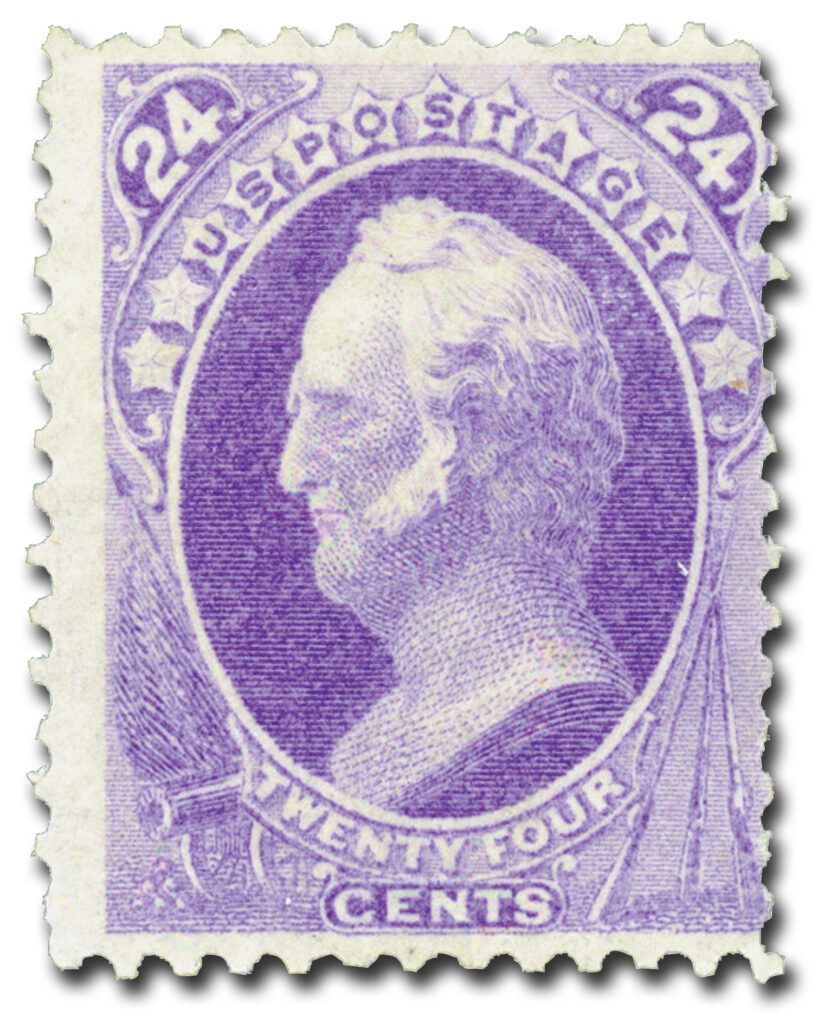
On May 3, 1861, General-in-Chief Winfield Scott presented a strategy to defeat the Confederacy with limited bloodshed. Later nicknamed the “Anaconda Plan,” it aimed to squeeze the South through blockade and control of its rivers rather than by one dramatic battle.
When the Civil War began in April 1861, many people in Washington believed the rebellion would be crushed quickly. Some newspapers predicted one short campaign. Many politicians wanted Union armies to march straight to the Confederate capital of Richmond and end the war at once.
Scott disagreed. He was one of the most experienced soldiers in the country. He had fought in the War of 1812, led American forces in the Mexican-American War, and served as commanding general for years. By 1861 he was elderly, overweight, and suffering from illness, but he understood the scale of the coming conflict better than many younger men. He believed the Confederacy covered too much territory to be defeated quickly.
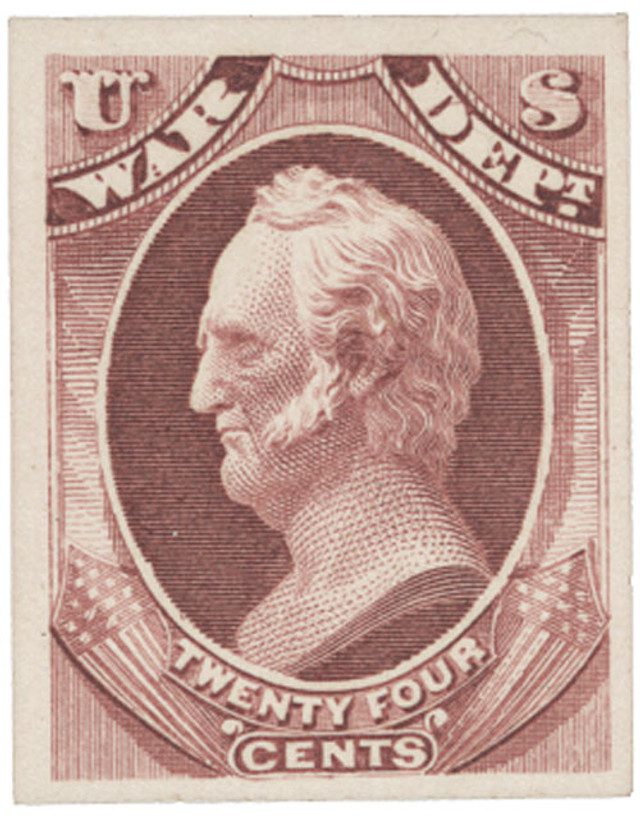
In a May 3 letter to Major General George B. McClellan, Scott outlined a broad plan. First, the Union Navy would blockade Southern ports along the Atlantic and Gulf Coasts. Second, Union armies and gunboats would move down the Mississippi River, capture forts, and split the Confederacy in two. Scott believed this would “envelop the insurgent States” and force surrender with fewer casualties than repeated frontal assaults.
Critics mocked the idea. They said it was too slow and lacked drama. Some journalists compared it to a snake slowly crushing its prey, and the nickname “Anaconda Plan” stuck. Many Northern citizens wanted immediate action, not patience. They expected one decisive battle to restore the Union.
Scott’s plan did require time and resources. At the start of the war, the United States Navy was too small to seal thousands of miles of coastline. The Confederacy had about 3,500 miles of shore and numerous inlets, bays, and rivers. The Union had to buy, build, or convert hundreds of vessels. Crews had to be trained. River gunboats and transports had to be assembled for Western operations.

Even before Scott’s memo, President Abraham Lincoln had moved in a similar direction. On April 19, 1861, he proclaimed a blockade of Southern ports, later expanding it to additional states. At first, enforcement was weak. But over time, the Union blockade became tighter and more effective.
The blockade hurt the Confederate economy. Southern leaders had hoped cotton exports would win foreign support or bring in money for weapons and supplies. Instead, many ports were watched by Union warships. Fast blockade-runners still slipped through, especially early in the war, but they carried much smaller cargoes than regular merchant ships. Over the course of the conflict, the Union captured or destroyed large numbers of these vessels.
Another major step came in November 1861 at the Battle of Port Royal. Union forces captured an excellent harbor on the South Carolina coast. Port Royal became an important coaling, repair, and supply base that strengthened the blockade in the Southeast.

Scott’s river strategy also began to unfold. In the West, Union forces targeted Confederate strongholds on the Tennessee, Cumberland, and Mississippi river systems. Victories at Battle of Fort Henry and Battle of Fort Donelson opened key waterways. Then came one of the war’s most important campaigns.
In April 1862, Union naval forces under Flag Officer David G. Farragut attacked forts guarding New Orleans. After heavy bombardment and a daring nighttime run past the forts, Farragut reached the city. New Orleans, the South’s largest city and busiest port, fell to the Union. Its capture damaged Confederate trade and gave the North control of a vital section of the lower Mississippi.
Scott did not remain in command long enough to direct these later successes. Political tensions and declining health led to his retirement in late 1861. McClellan replaced him. Yet as the war continued, Union strategy increasingly followed the path Scott had suggested.
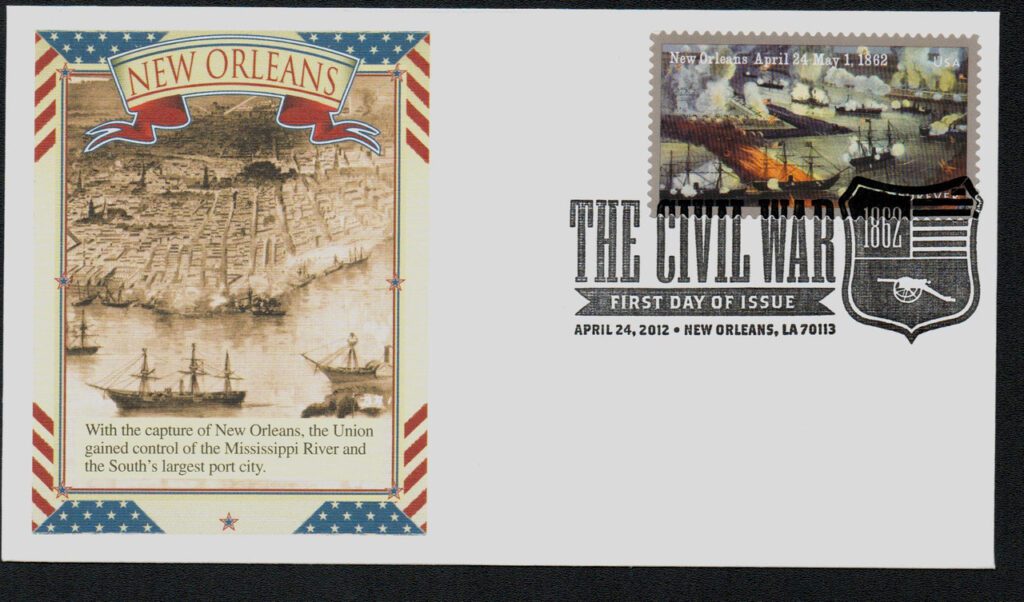
The final piece came in July 1863 when Union forces captured Vicksburg. That victory gave the North full control of the Mississippi River and split the Confederacy geographically. Combined with the blockade, it restricted Southern movement, trade, and supply lines.
Though ridiculed in 1861, Scott’s plan proved realistic. He understood that logistics, industry, rivers, and sea power could matter as much as battlefield glory.
Click here to view an 1861 drawing depicting Scott’s Anaconda Plan.
| FREE printable This Day in History album pages Download a PDF of today’s article. Get a binder or other supplies to create your This Day in History album. |
Discover what else happened on This Day in History.
I love U S History, thank you Mystic. I am puzzled though. Your article states General Scott presented his plan on May 3, 1861 and President Lincoln ordered the blockade on April 19, 1861. Did the President order the blockade prior to the presentation? Did he have knowledge of some components of the plan before the full release?
I understood Scott’s Anaconda Plan was a blockade of the Atlantic Coast, the Gulf Coast and the port/city of New Orleans, and the Mississippi River. However, the maps displayed appear to indicate that the blockade went through western Texas and quite a bit west of the Mississippi River as it went north. I always thought the Union ships were right on the Mississippi and fought their way south, and were not any where as far west into the plains states as suggested by the map. What is correct?
A small but important comment. Many of the blockade runners that got to through the Union blockade carries luxury goods that brought a good price in the Confederate states but did little good for the South’s military shortages,
Wow. Everything old is new again. History repeats.
Thank you for sharing this! Stamps tell a story worth repeating over and over again.
So interesting how the older and “war experienced” Scott knew what would work in this war and that it would not end overnight while younger officers thought it would be a short war – sort of “ one and done.”Loved the map depicting the Anaconda plan. Thanks Mystic for such a thorough write – up as usual.
Fascinating. This reminds me of Pompeii’s strategy dealing with Julius Caesar. Pompeii had maneuvered to the best position and over time could starve Caesar’s army and simply refuse battle. Pompeii’s fatal weakness was a large Roman Senate contingent that was in a hurry to stamp out the troublesome Caesar and were over-confident about their larger army. They compelled Pompeii to risk battle at Pharsalus. At the time Caesar’s smaller but veteran army was the best in the world and with their stomachs growling with hunger routed Pompeii’s army, a huge turning point in history.