

On October 16, 1962, President John F. Kennedy learned that the Soviet Union was building nuclear missile sites in Cuba. The discovery began thirteen days of tense negotiations and military alert that brought the United States and the Soviet Union dangerously close to nuclear war.
The crisis grew from years of conflict between the United States and Cuba. In April 1961, a force of Cuban exiles trained and supported by the CIA invaded Cuba at the Bay of Pigs. The invasion failed within days, and Fidel Castro’s government emerged stronger. The United States continued efforts to undermine Castro, including a covert program known as Operation Mongoose. Castro feared another invasion and sought Soviet protection.
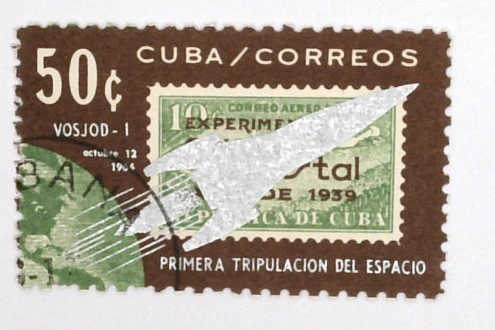
In July 1962, Soviet leader Nikita Khrushchev and Castro secretly agreed to place Soviet nuclear missiles in Cuba. The missiles could threaten targets in the southeastern United States from a location only about 90 miles from Florida. The Soviets also hoped to strengthen their position in the Cold War and balance US missiles stationed in Turkey, within range of the Soviet Union. Construction of missile sites began later that summer.
US intelligence had detected a growing Soviet military presence in Cuba, but bad weather interrupted high-altitude surveillance flights. On October 14, an American U-2 reconnaissance plane photographed suspected missile sites. Analysts studied the images the next day and identified Soviet medium-range ballistic missiles under construction. On the morning of October 16, National Security Adviser McGeorge Bundy showed Kennedy the evidence. The sites were not fully operational, but the missiles could soon carry nuclear warheads to US cities and military bases. The photographs showed launch areas and Soviet construction activity.
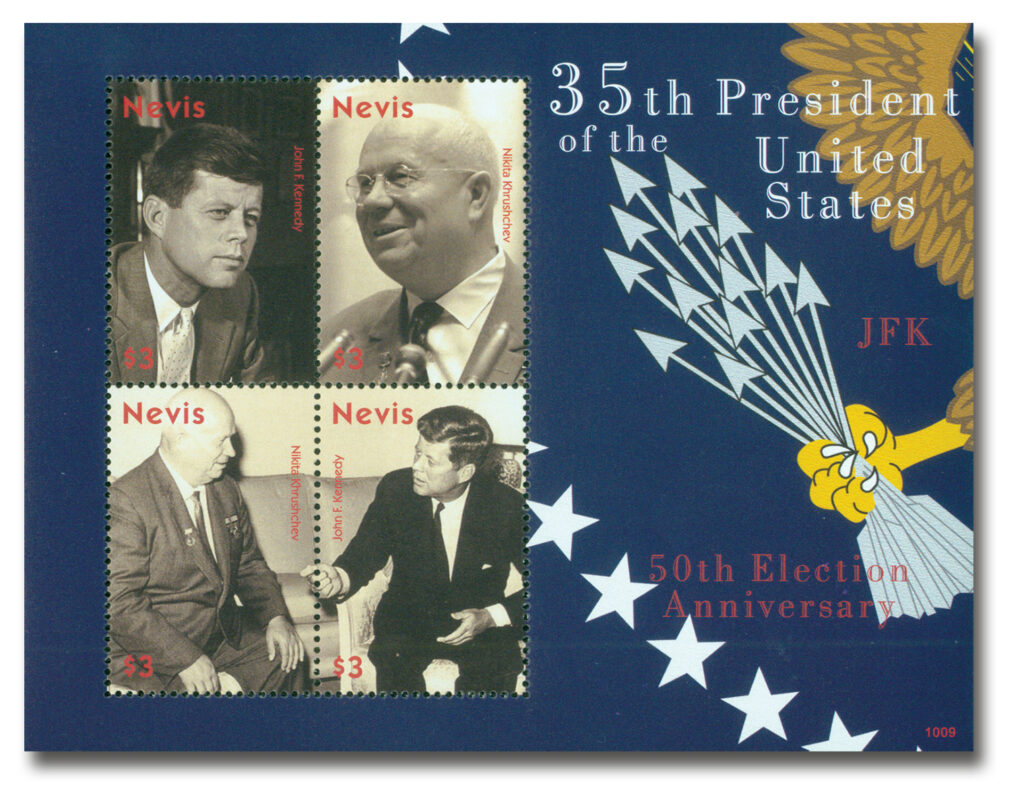
Kennedy met with senior advisers, later known as the Executive Committee of the National Security Council, or ExComm. Some military leaders urged an air strike followed by an invasion of Cuba. Kennedy feared an attack could kill Soviet personnel and trigger retaliation against US forces or allies. A conflict between the nuclear powers could quickly escalate beyond anyone’s control.

On October 22, Kennedy announced a naval “quarantine” of Cuba. He chose that term instead of “blockade,” which could be treated as an act of war. The quarantine would stop ships carrying offensive weapons from reaching the island. US forces prepared for further action, while Kennedy demanded that the Soviet Union dismantle and remove the missiles. The interception area was set far enough from Cuba to give ships time to turn away. The quarantine took effect on October 24.
For several days, Soviet ships approached the quarantine area. Some slowed or changed course, and US ships did not fire. Meanwhile, work continued at the missile sites. On October 27, a Soviet surface-to-air missile shot down a U-2 plane over Cuba, killing its pilot, Major Rudolf Anderson. That same day, Khrushchev sent Kennedy a public message proposing that the Soviet Union remove its missiles in exchange for a US pledge not to invade Cuba. A second message raised the issue of American Jupiter missiles in Turkey.

Kennedy accepted the first proposal publicly. He pledged that the United States would not invade Cuba if the Soviet missiles were removed. In private, Attorney General Robert Kennedy also told the Soviet ambassador that the United States would remove its Jupiter missiles from Turkey within months, but that this part of the understanding could not be made public. On October 28, Khrushchev announced that the Soviet Union would dismantle and remove the missiles. The crisis eased, though the United States kept the quarantine in place until the Soviet bombers were also withdrawn in November.

The settlement avoided an immediate military clash, but it did not end the Cold War or resolve the rivalry over Cuba. Soon afterward, Washington and Moscow established a direct communication link, as both governments sought ways to reduce the risk of another crisis spiraling toward nuclear war.
Click here for lots more Cuba stamps and click here for more Soviet Union stamps.
| FREE printable This Day in History album pages Download a PDF of today’s article. Get a binder or other supplies to create your This Day in History album. |
Discover what else happened on This Day in History.
Thank you, Mystic, for this wonderful story. Almost sounds like the news of the day.
Great story. I remember this event just like it happened yesterday.
Great story. I remember this event very well.
I remember it well, watching the President discuss it on TV. The Mystic writer seemed to capture the essence of the event well. Many US citizens believed we were going to war and the event left our citizens uneasy for quite a while. Everyone started preparing for the worst. Thanks Mystic for the history review…..
VERY INTERESTING ARTICLE.I OFTEN WONDERED WHAT WAS GOING ON
Thank the heavens for Kennedy’s leadership and wise counsel. Without that decision our country could be a very different place today. Thanks to him, we can continue to collect stamps in a free country. ‘Merica!
At 5:30 AM on the morning of 22 Oct, 1962, I was recalled to my squadron which had been called up on alert. We watched as our aircraft were loaded with nukes. We were surprised when half the fleet was ordered to launch those airplanes to a remote base. It had never been done before. The remainder of the squadron was sent home and told to turn on our TV’s at 8PM. President Kennedy came on and announced the Cuban Blockade. We thought that WWIII was about to take place. It was a scary time and many today have no idea how close we came to a nuclear war.
Interesting that we never commemorated this peaceful resolution to a possible nuclear war. The proper design of such a stamp would be a challenge. It was certainly a foreign policy victory for JFK. He also agreed to remove missiles from Turkey in return if I remember correctly.
When he agreed to remove missiles from Turkey, he snookered Khrushchev. The missiles were operationally obsolete and already scheduled for decommissioning and removal!!
Thank you for giving the truth of President Kennedy that is forgotten by many. I look forward to each day about the history of our great country. Mystic Stamps is the best. I collected coins and stamps growing up. I was honored to serve my country in the military.
Being in the military at the time was an interesting experince even on the west coast.
I am an avid fan of watching the news and daily events. However, on October 15th,1962 my new bride and I were on our way to the Grand Canyon for our honeymoon and we vowed that we would not watch TV, listen to the radio or read a newspaper for the duration ( One Week). What a shock and surprise when we returned and found out that we were this close to a potential nuclear disaster. Thanks for the reminder. It brought back happy memories in our case.
Maybe our current President could learn that some times you have to show force to get the negotiating advantage.
I had just been separated from the US Navy. I was called back to help outfit many different types of US Navy ships and send them south to become part of the blockade. Many things happened between US ships and Cuban “speed” boats (armed w 30 and 50 cal. machine guns… during that terrible time. Most people have no idea how close we really were to a nuclear WWIII…
I really look forward for “This DayIn History” every morning. Very interesting read. Great job Mystic. Keep it going.
Similar to Stu Hoyt’s reply, I was serving on a Canadian Frigate. We went in to Pearl Harbour, but, our frigate was told to refuel and store ship. That same day we headed out for the north. We spent the entire crisis watching for Russian movement southward. thankfully, none were spotted.
As a radio operator, I think I copied every word President Kennedy said in his speeches, 22 words per minute by pencil with Mr. Morse’s famous code.
It was tense for a while!
I was on the US Destroyer ,John King DDG 3 off the coast of Cuba, I was extended for 1 year due to the crisis, later recinded, We did not know what was happening at first, then we has orders to turn back a Russian ship that was on its way to Cuba, I saw the missiles on the Russian ship.I am glad Russia backed down.
I remember it well. I was stationed at M.C.A.S. El Toro, CA during this crisis.
The details in this article, and from some of the replies to “This Day In History – October 16, 1962,” are not only helpful and explaining in how serious the possibility of the beginning of WW III was under the circumstances at the time . But President Kennedy understood the situation and did a GREAT job in preventing a WW III possibility. His decision and actions were well-thought-out and worked ! I graduated from NCSU in 1960 and remember a lot about this dangerous situation. at the time. I SINCERELY appreciate Mystic’s article further explaining things about the early 1960’s that most Americans today may not have understood or realized about how serious the possibility of beginning WW III really was in 1962. Mystic’s details in this story should solve any misunderstandings about the situation then.
A great leader and a wonderful story. What is odd is that I heard about the crisis while in a shower Jr. High School and was really scared. Then, when JFK was assassinated I was again in the shower after football practice. What two horrible events is US history. Thanks Mystic as usual. Perhaps I should not shower on election day!!!
You had football practice on a Friday afternoon at 12:15 CST?
Robert Charles Paxton was born on 16 October 1939 to Walter and Doris Paxton.
Walter Paxton played an important role in helping to build the Golden Gate Bridge which opened in 1936.
He had 2 brother in laws who also worked on the bridge as painters
My Father was home on annual leave and we were painting our house, when my Mother came out and informed him that he had a call from his boss. My Dad told her to tell him he would call his boss back later. She did and returned to inform my Father that he needed to take the call. He got cleaned up, packed a suitcase, and we drove him to “the office”. We didn’t see him for two weeks. It wasn’t until years later that my Father spoke about his involvement in the planning for an invasion of Cuba. As a decorated World War II veteran of the 82nd Airborne Division, he was glad that President Kennedy avoided World War III. Thank you for reminding us of our history.
Thank you those that have served. I Salute You! I used to work in one of the Public Libraries in Long Beach, CA. One of the librarians told that she remembers the military maneuvers of “Touch and Go”, performed by military jets at the Naval Air Base in San Diego, CA. The aircrafts would land and take off every few seconds. We were living in Cuba. I was one year old at the time. My parents remember the situation, and what they were asked or required to do.
I was there, October 1962, during the blockade on board the USS Warrington DD843. We were on picket duty just a few miles off the coast of Cuba’s Havana. As the Russian freighters approached to run the blockade, we were given the approval to fire on their lead ship. I was stationed by the Mark 1a (mechanical computer) with head phone on, lessoning to CIC (Combate channel in one ear) and the sighter in the forward 5 inch gun mount (in the other ear). After our ship signaled the lead Russian freighter to heave to so we could board and inspect their cargo; their response was in the negative. Upon their action and response, we were given the order to fire a five inch projectile across the lead Russian’s freighter’s bow. Part of my job was to monitor the Mark 1a Computer’s mechanical dials and also to pull the trigger the electrically fires the forward gun in the 5 inch 38 twin barrel mount. I then depressed the warning trigger three times and on the third warning sound, I pressed the trigger to fire the gun.
Years later, I told my Russian grandfather about the events and he said “I good”.
I was being discharged from the USAF, having spent 12 months on a radar site in Labrador, the day of the crisis announcement. Many of the critical afscs (job classifications, i,e, radar operators) that were also being processed out that day , had their enlistments extended. Our civil engineering section was exempted, but still very scary.