

On October 19, 1864, Confederate troops launched a surprise attack on Union camps at Cedar Creek, Virginia. The battle became the final major engagement of the Shenandoah Valley Campaign and the last major Confederate attempt to break Sheridan’s hold on the Valley.
After Union victories at Opequon and Fisher’s Hill in September, Confederate General Jubal Early’s army fell back south. Union General Philip Sheridan believed Early could no longer threaten his army or Washington. In early October, Sheridan ordered a campaign to cripple the Valley’s value to the Confederacy. Union troops burned barns, mills, crops, and other supplies that could feed or support Confederate forces.

Lee sent Kershaw’s division to reinforce Early, who then studied Sheridan’s position near Cedar Creek. On October 12, Confederate commander Robert E. Lee wrote that if Sheridan crossed the Blue Ridge and sent troops to Grant, Early “had better move against him and endeavor to crush him.” Early planned a surprise assault on Sheridan’s larger army. On the night of October 18, Confederate columns began a difficult march through darkness and rough terrain. They crossed Cedar Creek and the North Fork of the Shenandoah River, reaching the Union left flank undetected. Dense fog helped hide their approach.
At about 5:00 a.m., the Confederates attacked. The Union Army was caught off guard. Many soldiers fled, and the Union left collapsed. Captain Henry du Pont kept his artillery moving under fire. He saved two of his three batteries and delayed the Confederate advance long enough for other Union troops to form defensive lines. General William Emory’s XIX Corps also turned to face the attack. Its resistance slowed the Confederates and helped the Union withdraw supply wagons and troops to safer positions.

The Confederates pushed the Union line north toward Middletown. They captured more than 1,000 prisoners and 24 cannons. But Early’s men were tired, hungry, and scattered. Some stopped to plunder Union camps. Early paused to reorganize and wait for his divisions. General John Gordon urged him to keep pressing the attack. “My heart went into my boots,” Gordon later wrote, as he watched the pause give the Union time to regroup.

Sheridan was returning from a conference in Washington and had spent the night in Winchester, about twelve miles away. Around 7:00 a.m., an officer reported hearing artillery, but Sheridan initially thought it was routine reconnaissance. By about 9:00, he set out for the battlefield on horseback. Along the road, he passed fleeing soldiers and supply wagons. He ordered Captain William McKinley, the future president, to stop retreating units and direct them back toward the fight. Sheridan reached his army around 10:30. His arrival raised morale. He promised the soldiers, “We’ll make coffee out of Cedar Creek tonight!”
Sheridan and his commanders formed a new line north of Middletown. At about 4:00 p.m., the Union counterattack began. Infantry struck the Confederate center while cavalry attacked both flanks. Union cavalry broke through the Confederate left. The Southern army retreated in disorder, leaving behind captured Union guns and supplies. Sheridan’s troops reclaimed the ground lost that morning. That evening, they made coffee with water from Cedar Creek, fulfilling Sheridan’s prediction.

The Union victory ended Early’s ability to mount another major campaign through the Shenandoah Valley. Sheridan’s destruction of Valley supplies also limited the region’s usefulness to the Confederacy. The victory boosted Northern morale just weeks before the presidential election. General Ulysses S. Grant ordered a 100-gun salute at Petersburg in Sheridan’s honor.
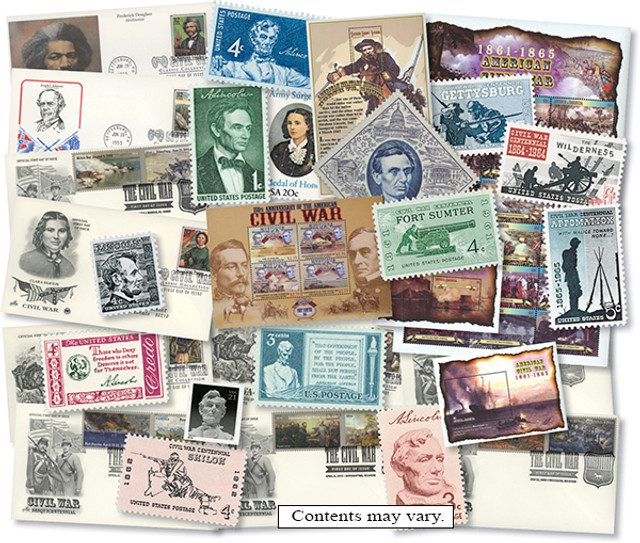
Early remained in the valley through the winter with a much smaller force. In March 1865, Sheridan defeated him at Waynesboro, and Lee relieved Early of command. Cedar Creek had been an alarming Union defeat in the making, but Sheridan’s return and the afternoon counterattack turned it into a major victory.
Click here for more Civil War stamps.
| FREE printable This Day in History album pages Download a PDF of today’s article. Get a binder or other supplies to create your This Day in History album. |
Discover what else happened on This Day in History.
Nicely written account of what had to be a clearly chaotic situation.
Love this history.
Sheridan’s victory in the Shenandoah joined with Sherman’s capture of Atlanta and Farragut’s naval victory in Mobile Bay assured Lincoln’s re-election that fall, dooming the Confederacy to final defeat the following year.
nice account
Such beautiful countryside but now turning into “million square foot warehouse alley” along I-81!
William ‘Tecumseh’ Sherman’s ‘March to the Sea” He arrived around Christmas Day. He let Lincoln know by stated a now famous phrase: “may I present Atlanta to you, Mr President as my Christmas gift.”