


On September 20, 1863, the first major battle fought in Georgia, the bloody Battle of Chickamauga, came to a close.
Union General William S. Rosecrans had previously had great success in his Tullahoma Campaign and hoped to push Confederate General Braxton Bragg’s Army of Tennessee, out of Chattanooga. Rosecrans consolidated his forces and forced Bragg to flee Chattanooga. Bragg then assembled his troops in Lafayette, Georgia, and prepared to retake Chattanooga.

Bragg followed the Union Army and engaged them in a small fight at Davis’ Cross Roads. He then received reinforcements from John Bell Hood’s Virginia division and Bushrod Johnson’s Mississippi Division. Early in the morning of September 18, Bragg marched his troops to the Chickamauga Creek, aiming to separate the Union troops from Chattanooga. Bragg’s men then crossed the river, though his arrival wasn’t a surprise – Rosecrans had seen them marching toward his position and called in reinforcements.

Though there was some small skirmishing on the 18th, the battle began in full force after dawn on September 19th. All day, Bragg’s men launched vicious attacks but could not break through the Union line. Then, at 11:00 that night, General James Longstreet arrived with a massive force that gave the Confederates the upper hand.
The battle began again at 9:30 the next morning, September 20, with a large Confederate attack on the Union left flank. As the battle continued, Rosecrans believed a gap had formed in his line and ordered Thomas Wood’s division to fill it. However, the gap didn’t exist and when they left their positions to obey his orders, they actually created a large gap. The Confederates used this mistake to their advantage and flooded the line, rushing the Union troops from the field.
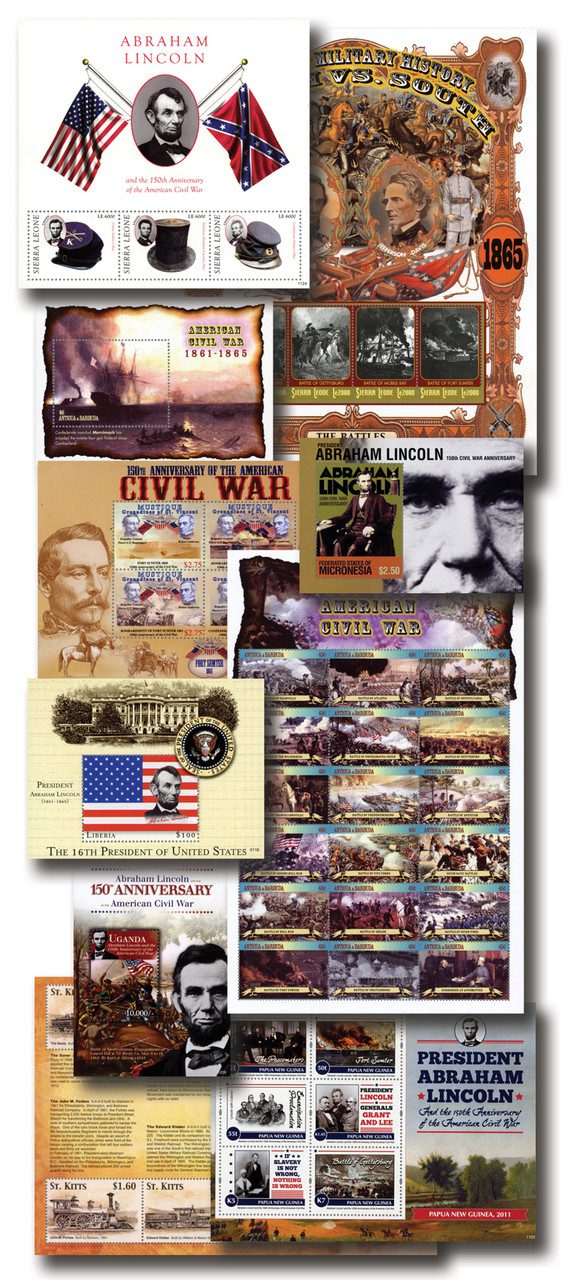
Union General George H. Thomas then worked to consolidate the fleeing Union troops and establish a defensive position. Though the Confederates brought the battle to them, the Union troops held their position. Thomas was then known as “The Rock of Chickamauga” for his leadership. Rosecrans was later relieved of his command and Thomas took control of the Army of the Cumberland.
Though Bragg had succeeded in the driving the Union troops from the field, Rosecrans and the Union Army still held Chattanooga. The Confederates would then occupy the heights surrounding the city, blocking their supply lines. The Union Army responded by launching the two-month-long Chattanooga Campaign, which finally pushed the Confederate forces out of Tennessee.
Chickamauga was one of the bloodiest battles of the war, with the highest number of casualties in the Western theater. In fact, it had the second-highest number of casualties after Gettysburg, with about 16,000 Union and 18,000 Confederate soldiers killed, wounded, missing, or captured.
| FREE printable This Day in History album pages Download a PDF of today’s article. Get a binder or other supplies to create your This Day in History album. |
Discover what else happened on This Day in History.
The Civil War (or the War Between the States) was the biggest waste and most unnecessary
war ever fought by the U.S. The South (like the Japanese) thought they could hold off long
enough to make the other side sue for peace. Both made the mistake of over estimating
their abilities (Industrial and man power) and under estimating the resolve of the other
side. The North had a HUGE advantage in manpower, industry, railroad capacity. communications and eventually would wear down the enemy. As Clark Gable said
in ‘”Gone With the Wind” all the South had were Cotton, Slaves and arrogance.
Thank you Mystic for today’s article. A lesson that all of us should have knowledge of and understand the impact it had on our nation.
Excellent comments….philatelists are often accomplished historians too..
Recently history is being erased by removing memorials to southern combatants, and especially the officers like Lee, Jackson, Stewart, Longstreet, Hood etc. Such a set of stamps would no longer be issued with these Confederates on the issued sheets. But there were many Southerners who fought simply for their State, and for pride, not for slavery or any political issue. These are the grunts of all wars. They bare the burden while the higher up political types watch from a safe place. Remember the gallant and brave, but also listen to Bob Dylan’s song, “Masters of War”.
Well, let’s put southern soldiers on Civil War stamps, but not the Confederate leaders who had taken an oath to support and defend the Constitution of the United States became traitors by supporting the rebellion to break up the only democratic republic on earth at that time. The statues of those Confederate leaders belong in museums not in public places like town squares and parks.
Ulysses Grant commented, and this is a paraphrase as best that I can recall, that the South assembled one of the finest armies ever put together, but they fought for one of the worst causes for which a people ever fought. A direct quote from his memoir states that, “The cause of the great War of the Rebellion against the United States will have to be attributed to slavery.”
WWI?
The start of the war had to do with tariffs placed on materials into the South.
Grant was one of the 3 POTUS that saved the country.
Thank you Mystic for the great history lesson, and every day as well. This one subject stirs more comments that most any other. It is not difficult to imagine another ‘civil war’ is brewing today. Just wait unit next year. 2024. Its coming, do not bet against it. In the future i wonder what the commerative stamps will be ?
“Wait ‘till next year” – the battle cry of losers. No civil war is coming. “Regressors” in charge are about to be voted out and the majority will finally rule.
You were just two years too early.
The battle of Chickamauga demonstrated how the railroads changed warfare. Elements of the Army of Northern Virginia were transferred to Georgia and reinforced the CSA in the field and turned the battle into a Northern Federal Army defeat.
I love these history lessons as they are portrayed on postage stamps and explained in detail by Mystic. The replies are also interesting.
Dr Mary Walker, Army Surgeon during this time, was given a Medal of Honor and then they decided she couldn’t have it.
Notice how the story isn’t there for us to read
Every one of the state constitutions of the Confederacy listed slavery as the reason for leaving the Union. Ironically, when East Tennessee tried to secede from the Confederacy they wouldn’t allow it. All wars are a waste of human life. WW1 was even worse.
The quote on General Grant above is correct.
States Rights killed the Confederacy. The Confederate States would not submit to being bound to a “National” theory of government even in a crisis. The states withheld resources from the government in Richmond when they were so badly needed. Georgia had enough shoes and clothes to out fit Lee’s entire army but wouldn’t send them to him because they saw that as Richmond’s problem. Richmond couldn’t require plantation owners to plant food crops instead of cotton and people starved and rioted.
I love history and these comments prove that others do as well. Politicians who represent their constituents often misinterpret a large group of their constituents, and even in todays time, often to their own advantage.
What happened to “…with a firm Reliance on the Protection of divine Providence, we mutually pledge to each other our Lives, our Fortunes, and our sacred Honor.” For those who have forgotten their grade school U. S. national history that is the end of our Declaration of Independence. Are our public schools systems still teaching this Declaration??? And the Constitution as well. What was not mentioned as Federal responsibilities in the Constitution are specifically left to the States, What happened to that?
To Kenneth Snyder, Steve, Carl Scott, Mary. I absolutely welcome your comments. The American Civil was and is still is an event that should not have taken place. The North was as I remember in High School American History class, had the advantage because of the industrial might, as opposed the the South, which was primarily rural. I believe that the Southern officers should be recognized as components, that make up the entire military epic. And yes, Mary. Mary Walker should receive much recognition, for her contributions as a medical professional, during this momentus event in the History of the United States of America.