

On July 10, 1943, the Allies launched Operation Husky, the invasion of Sicily, with troops dropping from the sky and ships crowding the coast. The attack opened the road to mainland Italy, but it also showed how hard the next stage of the war would be.
By early 1943, the Allies had won a major victory in North Africa. More than 250,000 Axis troops surrendered in Tunisia in May. The question was where to strike next. Soviet leader Joseph Stalin wanted Britain and the United States to open a second front in western Europe. President Franklin D. Roosevelt leaned toward an invasion of northern France as soon as possible. British Prime Minister Winston Churchill warned that a cross-Channel attack before the Allies were ready could end in disaster.
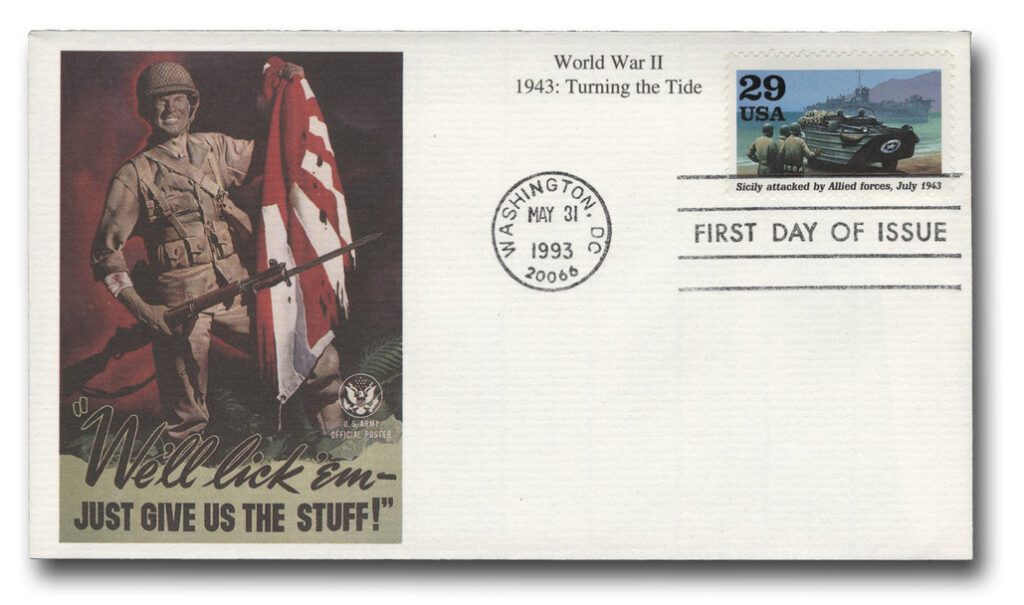
Churchill favored striking through the Mediterranean instead. He called Italy the “soft underbelly” of Europe, though the fighting there would prove anything but soft. At the Casablanca Conference in January 1943, Roosevelt and Churchill agreed that Sicily would be the next target. Taking the island could make Mediterranean shipping safer, weaken Axis control, and put pressure on Benito Mussolini’s Fascist government.
Sicily was an obvious target. That was the problem. British intelligence launched Operation Mincemeat, one of the strangest deceptions of the war. They dressed a dead man as a Royal Marine officer named “Major William Martin” and placed false papers in a briefcase. The documents suggested the Allies planned to attack Greece and Sardinia, while Sicily would only be a diversion. The body was released near Spain, where German agents were expected to learn of the papers. The trick worked. German attention shifted away from Sicily.
Operation Husky began during the night of July 9-10, 1943. American and British airborne troops went in first. High winds scattered many paratroopers and glider troops far from their landing zones. Some were lost at sea. Others landed in the wrong places but still caused confusion behind Axis lines.
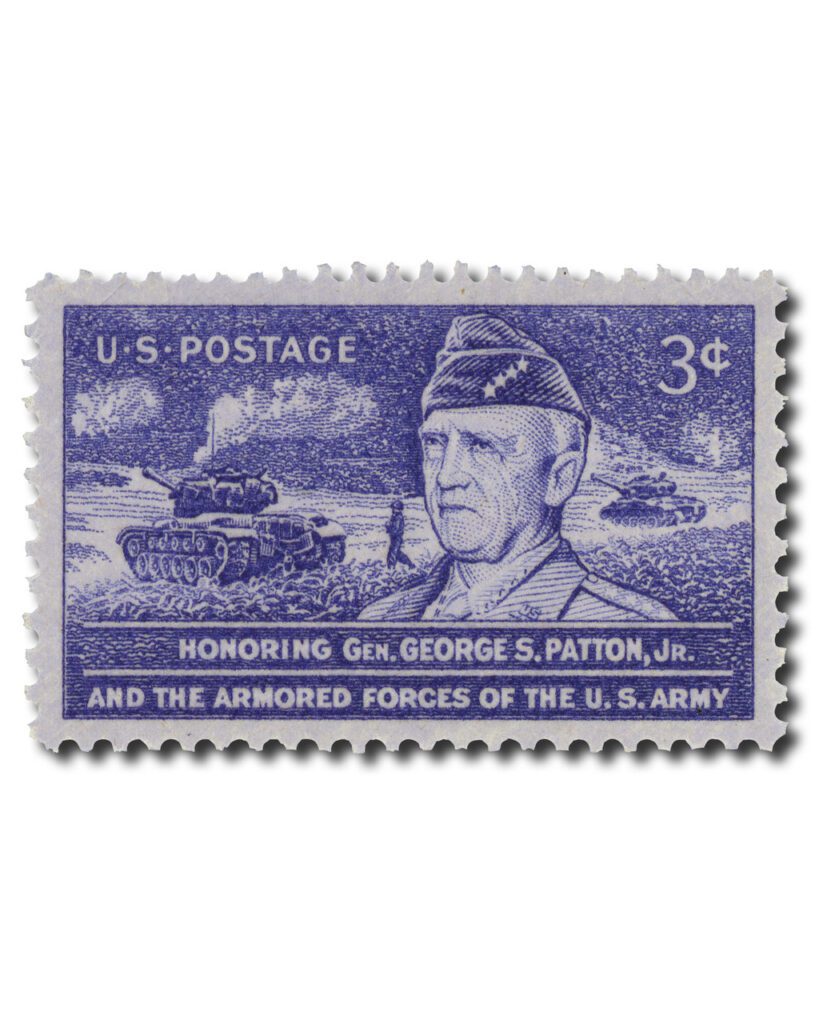
Before dawn on July 10, the main invasion began along Sicily’s southern and southeastern coasts. It was one of the largest amphibious operations of World War II. More than 3,000 ships and landing craft carried over 150,000 Allied troops in the first days. They were supported by more than 4,000 aircraft. General Dwight D. Eisenhower commanded the overall operation. Lieutenant General George S. Patton led the US Seventh Army around Gela, Licata, and Scoglitti. General Bernard Montgomery led the British Eighth Army, with Canadian troops on the eastern side.

The Axis defenses were uneven. Italy’s Sixth Army held much of Sicily, but many Italian units were poorly equipped and tired of the war. German troops offered much harder resistance as the campaign moved inland. Heavy fighting took place at Gela, Troina, and along the route toward Catania. Sicily’s mountains, narrow roads, and summer heat slowed the Allied advance.
As the fighting continued, the political effect in Italy was swift. On July 25, King Victor Emmanuel III dismissed Mussolini and had him arrested. Marshal Pietro Badoglio became prime minister and began secret talks with the Allies. Still, German forces kept fighting and prepared to save as many troops as possible.
By mid-August, the Axis position in Sicily was collapsing. Patton’s forces captured Palermo, then raced east toward Messina. Montgomery’s army pressed from the southeast. When the Allies entered Messina on August 17, German and Italian forces had already escaped across the narrow strait to the mainland. More than 100,000 troops got away, along with vehicles and equipment.
Sicily had fallen after 38 days of fighting. Operation Husky helped bring down Mussolini and led to the Allied invasion of mainland Italy in September. But it was not a clean ending. Italy’s armistice was announced on September 8, 1943, and German troops quickly occupied much of the country. The campaign in Italy would continue for nearly two more years.
Click here for a video from the invasion.
| FREE printable This Day in History album pages Download a PDF of today’s article. Get a binder or other supplies to create your This Day in History album. |
Discover what else happened on This Day in History.
Very interesting story. I have seen the stamps before but the story behind the stamp makes it alive.
Churchill again was right.
It would have been better to listen to Churchill, and attack northern France
instead of Sicily in July, 1943. The Germans were heavily engaged on the
Russian front, and the many patriotic French civilians could have assisted the American,British, Canadian and other Allied troops on the campaign
in northwestern France. The extra year awarded to the Germans allowed their more extensive fortification of their Atlantic Wall, and gave Germany
an extra year to kill more millions of innocent civilians in their barbaric
genocide. Roosevelt was wrong in this decision.
Churchill advocated attacking through Sicily. He said not to attack through France.
Except the allies weren’t ready for an invasion of France in 1943. It would have been a bloodbath.
I believe that the last sentence should read “By September, Sicily was under Allied control.”, not Italy. That was the month when the Allies landed in southern Italy. Although Rome finally was taken on June 4, 1944, after a nine month slug fest, the Italian campaign dragged on for almost another year.
There is an error. Italy was not secure by September. I think the autor meant to say Sicily was secure
The full name of the marshal is Pietro Badoglio.
I Learn more every day.
The “British pilot with a briefcase handcuffed to his wrist” was not a British pilot but a man who had died of pneumonia (& thus would appear to superficial examination to have drowned) in a British hospital. A 1956 movie about this, with some liberties taken with the history, “The Man Who Never Was”, can be found here -https://www.youtube.com/watch?v=xemGlAV6TAw . It’s a bit less than 1.5 hours long.
Was Roosevelt right…should the Allies have invaded France in 1943? Or was Churchill right…the invasion of France should be delayed until the Allies were better prepared? The invasion at Normandy came eleven months later, Operation Overlord, began on June 6, D-Day, and it was a slugfest. The Allies were better prepared but so were the Germans who had those eleven months to prepare costal defenses. Churchill referred to Italy as the “soft underbelly” of the Axis, but as Dr. Zeimat has pointed out, the Italy campaign was no soft underbelly.
Definitely like these Daily Vignettes that combine several Stamps into a cohesive story, bringing US History alive within Stamp Philately.
Great article, as always, and the link to the videos was most impressive! Thanks so much.
My father’s birthday is July 10th. That year, he would have turned 24 years of age.