
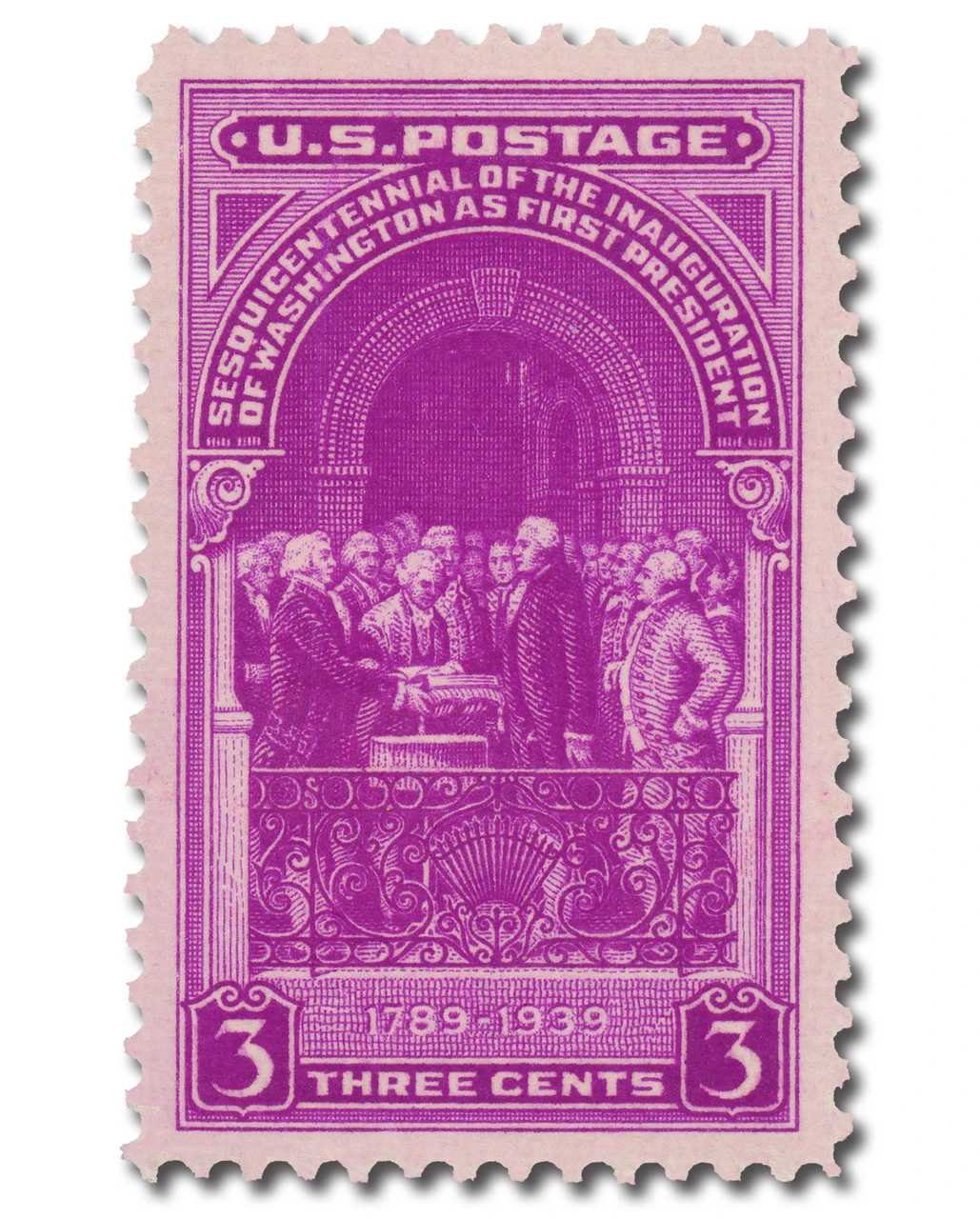
On April 30, 1789, George Washington was inaugurated as America’s first president. The ceremony in New York City marked the formal beginning of the new federal government created by the Constitution and placed the Revolutionary War hero at the head of a nation still finding its footing.
The road to that moment began earlier in the year. Under the new Constitution, presidential electors met and cast their votes on February 4, 1789. All 69 electors voted for George Washington, making him the only president ever elected unanimously by the Electoral College. John Adams received the next highest total and became vice president under the original system.
Washington had not campaigned for the office and did not seek power in the modern sense. After leading the Continental Army to victory and then returning to private life at Mount Vernon, he hoped to remain retired. Yet many Americans believed no other figure carried the same level of trust. Washington later wrote that accepting the office filled him with anxiety, but he felt duty required him to serve.
Traveling to the capital was not simple. Washington borrowed about $600 to cover expenses for the trip from Virginia to New York City, then the temporary capital of the United States. He left Mount Vernon in mid-April and moved north through towns eager to honor him. Crowds gathered at bridges, roadsides, and taverns. Church bells rang, militia units paraded, and civic leaders delivered speeches. In Philadelphia, he was greeted by cheering citizens and decorated streets. In Trenton, women and girls honored him with flowers and an arch recalling the wartime crossing of the Delaware.

Washington reached New York City on April 23. The city had prepared for days. Buildings were dressed with banners and flags. Ships in the harbor displayed colors. Residents packed the streets hoping to catch a glimpse of the man many already saw as the symbol of the new republic.
Inauguration day, April 30, began with military ceremony. At sunrise, guns fired from Fort George. At 9 a.m., church bells rang throughout the city for half an hour. By midday, crowds had filled the streets near Federal Hall, where Congress met.
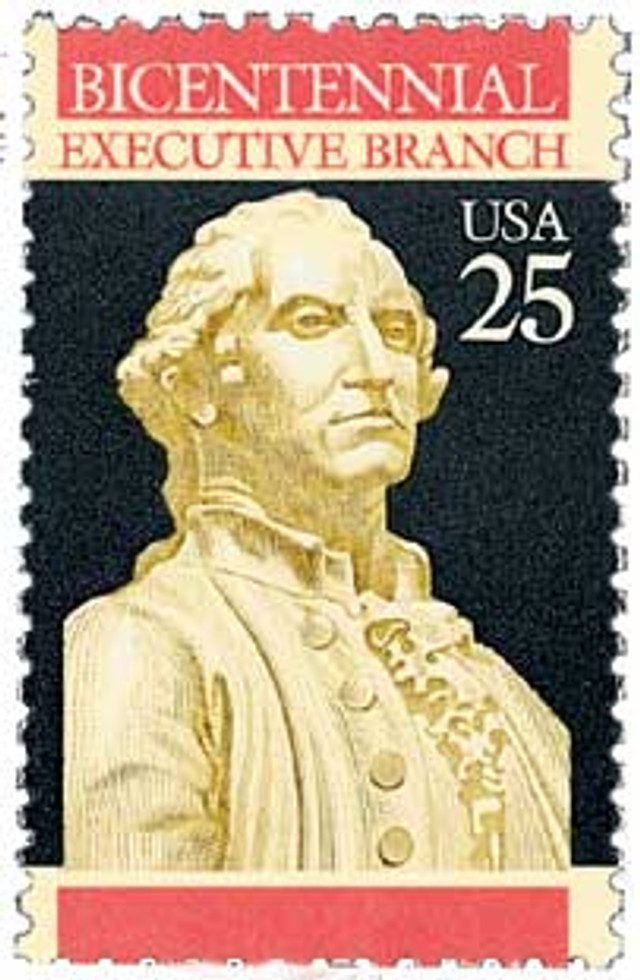
At about 12:30 p.m., Washington departed Franklin House, where he had been staying. He rode in a cream-colored coach escorted by troops that included cavalry, artillery, grenadiers, infantry, and ceremonial units. The route was short, but progress was slow because so many people lined the streets.
Inside Federal Hall, Washington first met with members of the Senate and House of Representatives. At 2 p.m., officials led him to the outdoor balcony so the largest possible crowd could witness the oath. There was no Supreme Court in operation yet, and no chief justice had taken office. Because of that, the oath was administered by Robert R. Livingston, the highest-ranking judicial officer in New York State.
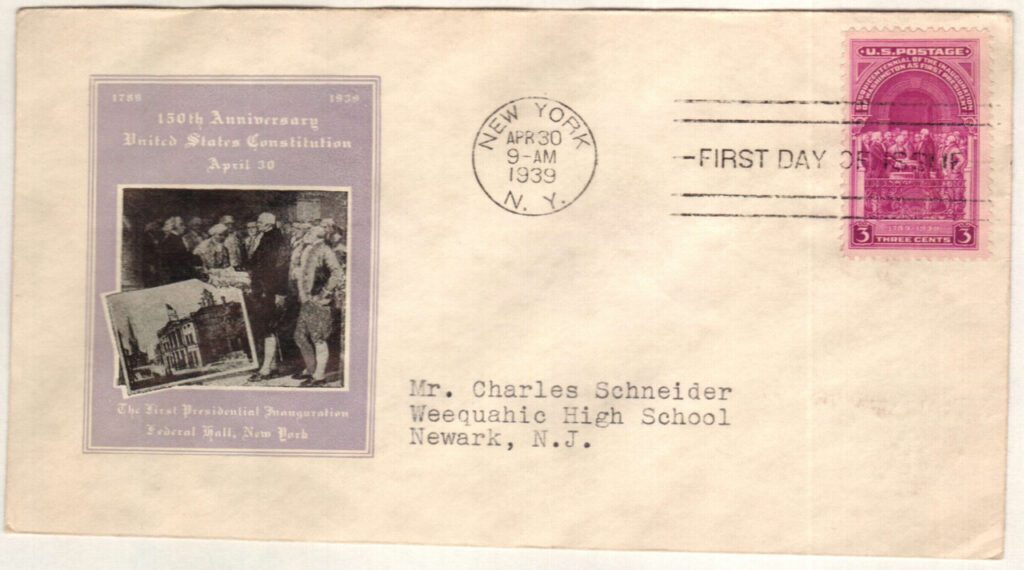
At the last minute, it was decided George Washington would swear his oath on a Bible. One was borrowed from nearby St. John’s Lodge No. 1, where Jacob Morton, who was marshal of the inaugural parade, was the lodge master. Washington placed his hand upon it and repeated the constitutional oath. Tradition holds that he added the words “So help me God,” though the only contemporary account doesn’t mention that phrase was spoken. After the oath, Livingston turned to the crowd and proclaimed, “Long live George Washington, President of the United States!” A 13-gun salute followed, honoring the original states.
Washington then returned inside and delivered the first inaugural address to Congress. He spoke modestly, again noting his reluctance to accept the office and the heavy responsibilities before him. He also emphasized the importance of public virtue, constitutional government, and national unity.
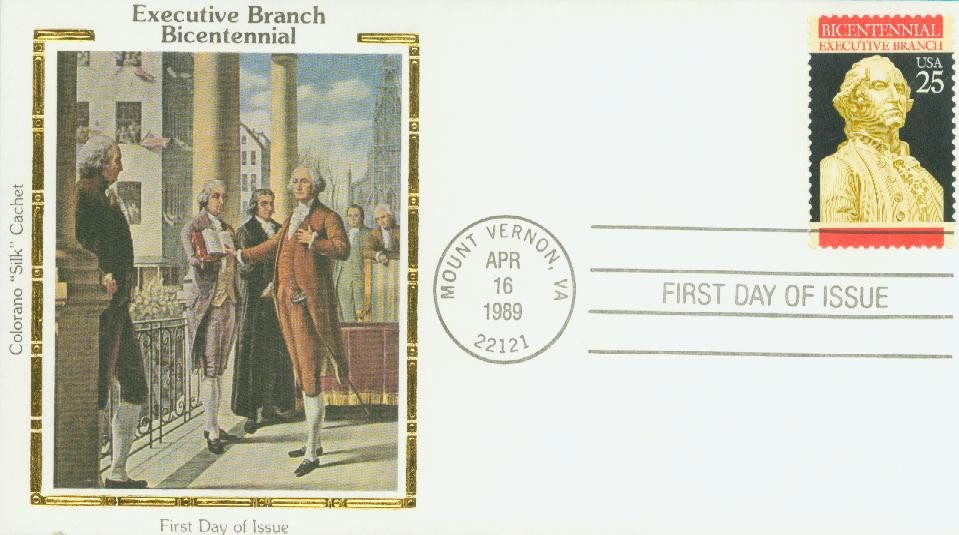
After the ceremony, confusion in the packed streets made it difficult to locate Washington’s carriage. Rather than delay, he walked with Vice President John Adams and members of Congress to a thanksgiving service at St. Paul’s Chapel. That evening, illuminations and fireworks—paid for by private citizens—closed the celebration.
The day established patterns that would echo through future inaugurations: a public oath, an inaugural address, military honors, religious observance, and large crowds gathering to witness a peaceful transfer of authority. More importantly, it showed that the new Constitution had moved from paper to practice.
Click here for more Washington stamps.
| FREE printable This Day in History album pages Download a PDF of today’s article. Get a binder or other supplies to create your This Day in History album. |
Discover what else happened on This Day in History.
I enjoy reading about the history of our nation. Thank you Mystic for today’s lesson!
Yes, nicely done.
I really enjoyed the article about Washington. Well done!
What American would not give this story a five star rating? Shame on you if you didn’t!
Wort all 5 stars…Very interesting…but who were the two presidents who did not say “So help me God” ?
An interesting side note–the church service referred to was held at Trinity Episcopal Church in St. Paul’s Chapel which is a short distance from Ground Zero. On 9/11/01 with death, devastation and destruction all around the Church stood unscathed and provided support, aid and comfort to the first responders and other rescue workers for days on end. The injured and exhausted were assisted and tended to on Washington’s pew.
An astute observation! Thank you!
As one stares up Wall Street and across Broadway to the steeple of Trinity Church, events remind any thoughtful person that you’re viewing a piece of America’s hallowed ground, unbowed by the tragedy of 9/11.
Interesting article. In response to an earlier question, did some digging. Seems there is a lack of clarity on the exact words used at the end of the oath in the first half of the 19th century since historians can only deal with what witnesses remember being said. As far as I can tell, President Hoover did not say “So help me God” since he did not repeat the oath but simply responded “I do” after the Chief Justice read it. President Obama did not initially use the words, but did say them after he was prompted by the Chief Justice, so I’m not sure that really counts as not using the phrase. Did anyone else find anything different?
A truly inspiring read …
Another bit of history we were not taught in school. Keep up the good work.
Oh, come on. If everything this minute was taught in school, kids wouldn’t graduate until they were about 25 years old.
For a man who gave so much to establish this great country, George Washington has taken a back seat when it comes to celebrating his birthday. Only four state officially recognize his birthday. Since he was the first President, George Washington established many of the precedence used by this office today to include the “State of the Union” address.
Washington was selected unanimously by the Electoral College in 1789, not Congress. The latter merely accepted the result. The EC, as we were reminded of in both 2000 & 2016, determines who wins an election.
I was very surprised that Washington had to borrow $600 for the trip to NYC. I thought that he was a wealthy land owner and I had read that he owned on of the largest distillery in the country.
Washington was rich in land and slaves, but he was a little short in cash which was needed to stay in inns, feed his retinue, put up his horses etc.
Very good article…interesting and informative. Thank you, John, for doing the legwork on the question asked earlier.
I admire the words you chose.
“He delivered the first inaugural address to Congress. He spoke modestly, again noting his reluctance to accept the office and the heavy responsibilities before him. He also emphasized the importance of public virtue, constitutional government, and national unity.”
His speech was in itself a public reminder of the critical attributes that would enable America to carry forward it’s Independence gained at such a high cost in lives, treasure, effort and Patriotic determination!