
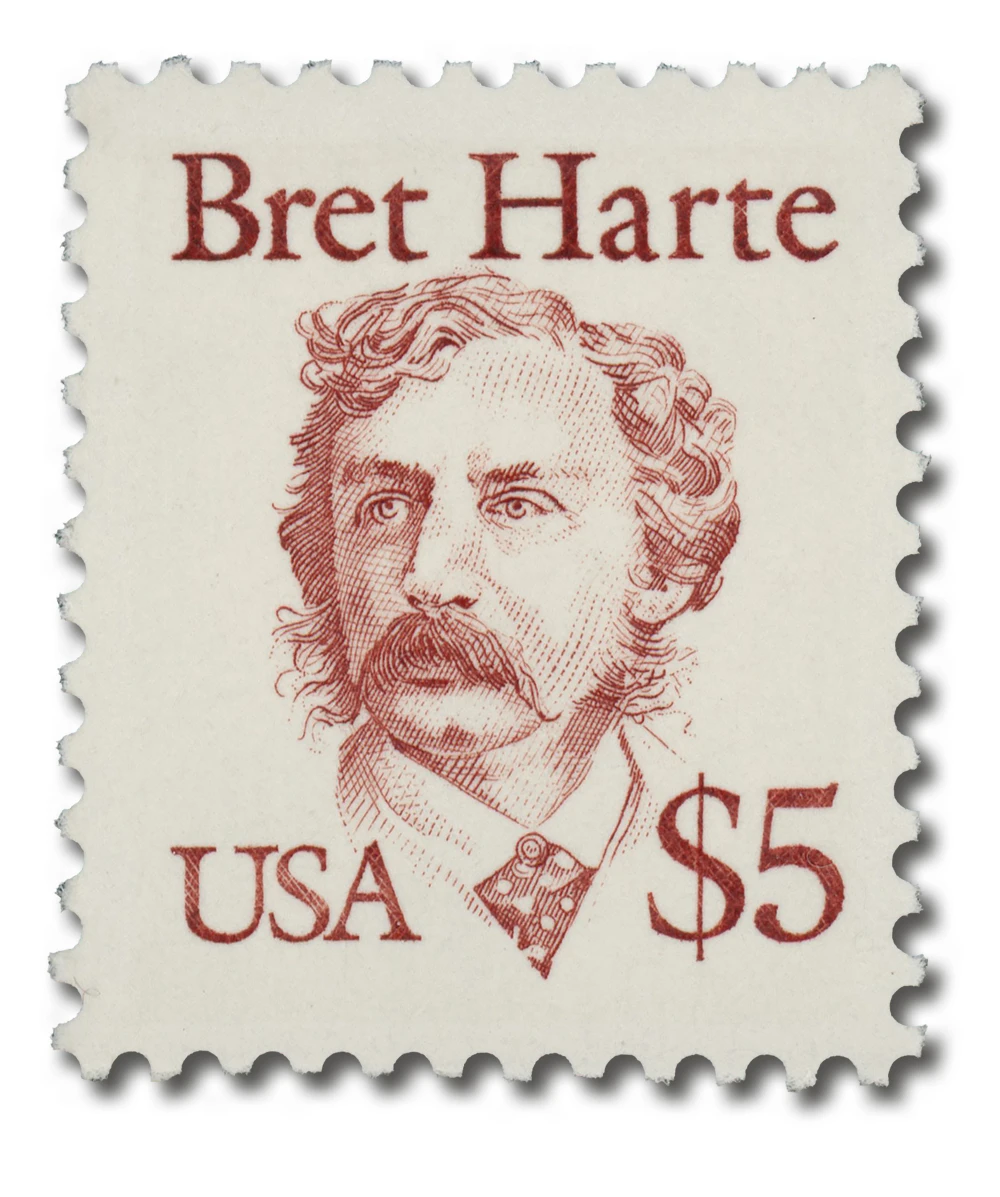
Writer Francis Bret Harte was born on August 25, 1836, in Albany, New York. His stories of California mining camps later brought him national fame and gave eastern readers a vivid, if literary, picture of life in the American West.
He was born Francis Brett Hart and was called Frank as a boy. His father, Henry Hart, was a teacher who later added an “e” to the family surname. Harte’s grandfather, Bernard Hart, had an important connection to Wall Street. Bernard Hart signed the 1792 Buttonwood Agreement, an early foundation of what became the New York Stock Exchange. Harte’s formal schooling ended when he was 13, but he remained an eager reader. At age 11, he reportedly published a satirical poem called “Autumn Musings.”

As a teenager, Harte followed his family to California during the years after the Gold Rush. He tried several occupations, including teaching and mining. For a short time, he worked for Wells Fargo & Co. Express, experience that later helped him portray stagecoaches, drivers, gamblers, prospectors, and isolated settlements. He eventually turned toward printing and journalism.
By the late 1850s, Harte was working for the Northern Californian in Union, now Arcata, on Humboldt Bay. One night in February 1860, white settlers massacred Wiyot people on Tuluwat Island while the tribe was observing its World Renewal Ceremony. The attack came at night when nearly all of the able-bodied adult men were on the mainland gathering supplies. The vast majority of the estimated 40-70 victims were therefore women, children, and older people. Further attacks over the next two days on nearby settlements killed over 120 more Wiyot. Harte published an editorial condemning the killings in unusually forceful language, saying, “How a human being, with the faculty of memory, who could recall his own mother’s gray hairs, who could remember how he had been taught to respect age and decrepitude, who had ever looked upon a helpless infant with a father’s eye – could with cruel, unpitying hand carry out the ‘extermination’ that his brain had conceived – who could smite the mother and a child so wantonly and cruelly – few men can understand … a more shocking and revolting spectacle never was exhibited to the eyes of a Christian and civilized people.” His stand angered some local residents, and he soon left the area for San Francisco.
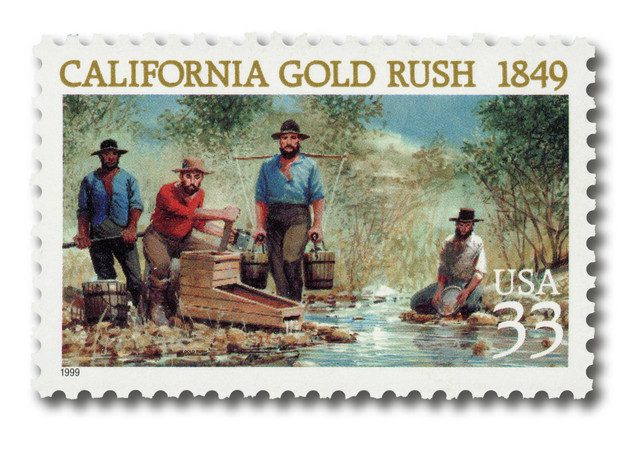
There, Harte wrote for newspapers and literary journals and became part of the city’s growing literary community. He contributed to and sometimes edited The Californian. In 1868, he became the first editor of the new Overland Monthly. Its second issue contained “The Luck of Roaring Camp,” the story of a baby born in a rough mining settlement whose presence changes the men around him. The story attracted attention far beyond California. “The Outcasts of Poker Flat,” published in 1869, further established Harte’s reputation for stories that mixed frontier settings, irony, sentiment, and morally complicated characters. His 1870 collection, The Luck of Roaring Camp and Other Sketches, helped carry these California tales to a much wider national audience.
His most widely circulated poem appeared in the Overland Monthly in 1870 as “Plain Language from Truthful James.” It became popularly known as “The Heathen Chinee.” Harte intended the poem to satirize anti-Chinese prejudice by exposing the hypocrisy of white characters who tried to cheat a Chinese man at cards. Many readers interpreted it in the opposite way, however, and the poem was repeatedly used in anti-Chinese caricatures. Harte later regretted the fame it brought him.

By 1871, Harte’s popularity was so great that he moved east and received a remarkable $10,000 agreement to write for the publishers of The Atlantic Monthly. The success did not last. His later American writings drew less attention, and financial problems followed.
Harte entered diplomatic service in 1878 as US commercial agent at Krefeld, Germany. In 1880, he became US consul at Glasgow, Scotland. After leaving the post in 1885, he remained in Britain and continued producing stories, sketches, and novels, many still set in the California he had left years earlier. He died on May 5, 1902, at Camberley, England.
On Harte’s 151st birthday, August 25, 1987, the Postal Service honored him with a $5 Great Americans definitive stamp. Issued at Twain Harte, California, it was the first US definitive stamp issued in miniature-sheet format, with panes of 20 stamps.
Click here to read some of Harte’s writing.
| FREE printable This Day in History album pages Download a PDF of today’s article. Get a binder or other supplies to create your This Day in History album. |
Discover what else happened on This Day in History.
My paternal grandmother got me interested in stamp collecting back in 1948.
She gave me her collection…which I still have….including a Washington
stamp issued in the late 1700s. It has been a source of intellectual stimulation
for me for many years…… I am now 83. Regards….
Dr. Larry Morrell
Can you tell us more about the Wiyot massacre in 1860 and what Harte wrote in his controversial editorial about it?
My father was a big admirer of FDR and served in the CCC in 1933. He did not have a stamp collection but knew FDR did. So my father encouraged me to collect stamps too. I am over 70 now and still enjoy the collection I started at 16. Stamp collecting is a wonderful hobby. Wish more younger folks would enjoy it.
These historical events surrounding the issuance of our commemorative stamps is mentally invigorating. Thank you Mystic for these tidbits. It has prompted me to do research on peripheral events surrounding the issuance of these stamps. One such lookup involves the Wiyot massacre (of 1860), which I had never heard of. It is terrible what we did to the native Americans in the past, and much of which has been covered up or omitted from our history. This terrible event is on such event. There is much to atone for in our history and this is just one event of many. Man’s inhumane cruelty to man seems to have no bounds.
The book from Harte that I was familiar with was The Outcast of Poker Flats.
I attended Bret Harte Junior High School as a teen, ages and ages ago (long, long, time ago!). Thanks for all the history and your great daily messages. I appreciate them very much.